
You have a favorite pair of jeans that fit perfectly, but you wish they had a retro flare. Cutting into them feels like a huge risk, and you're worried about ruining them forever.
The best method is to open the inseam or outseam from the hem upwards and then sew in a triangular fabric panel. This panel adds the necessary width at the bottom, creating the classic bell shape while preserving the jean's original fit.
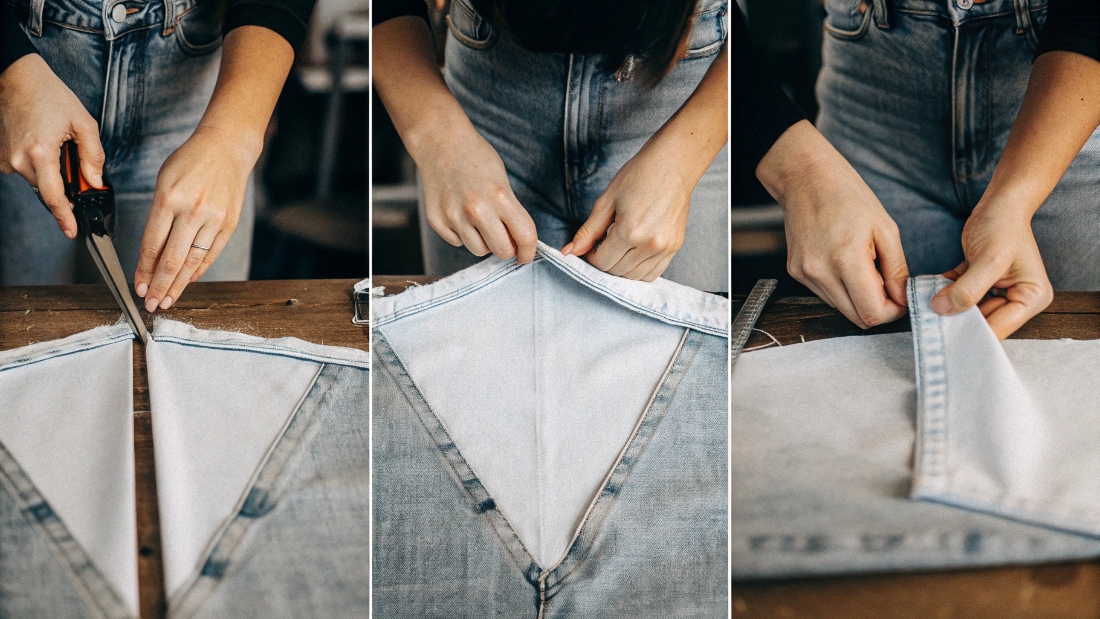
In my 20 years of running a denim factory, I've seen every style imaginable. The bell-bottom is timeless. While we create this shape from the pattern up, the core principle is the same: you need to add more fabric at the hem. The beauty of doing it yourself is the customization. You can choose a contrasting denim, a vintage floral print, or even corduroy. This is a simple alteration that completely transforms a garment. Let’s look at how you can do it right.
Can you make regular jeans into bell-bottoms?
You're looking at your straight-leg jeans and wondering if a transformation is even possible. You are hesitant to make the first cut, fearing you'll just end up with a ruined pair of pants.
Yes, absolutely. Any pair of straight-leg or bootcut jeans is a perfect candidate for becoming bell-bottoms. The process involves carefully opening a seam and inserting a new piece of fabric.

This is one of the most common and effective jean modifications. The key is that you are not trying to stretch the existing fabric; you are strategically adding more. The process is straightforward. You first decide how high you want the flare to start. Then, you use a seam ripper—not scissors—to open up either the inseam or the outseam to that point. This preserves the original fabric. Next, you cut a triangular panel from your chosen fabric and sew it into the opening. It's a method that requires some patience, but it is fundamentally simple and yields fantastic, professional-looking results.
Dive Deeper: The Seam and Panel Method
The choice of seam and fabric panel is where the design work really happens. A designer like Dean would consider these details carefully.
-
Inseam vs. Outseam:
- Outseam: This is the seam on the outside of your leg. It's easier to open and sew, making it the best choice for beginners. A contrasting panel on the outseam can also be a strong style statement.
- Inseam: The inside seam is a bit trickier to work with, but placing the panel here can create a more subtle, integrated look.
-
Choosing Your Fabric Panel:
The fabric panel is your opportunity to get creative.
| Fabric Choice | Look & Feel | Professional Tip |
|---|---|---|
| Matching Denim | Creates a seamless, almost original look. | Try to match the weight (oz) of the original denim to ensure it hangs correctly. |
| Contrasting Denim | A classic, color-blocked '70s vibe. | A dark panel on light jeans (or vice versa) is a simple but powerful design choice. |
| Printed Fabric | Adds a bohemian or custom feel (e.g., floral, paisley). | Use a durable fabric like cotton twill or canvas. A thin fabric won't hold up. |
| Corduroy/Velvet | Introduces a rich texture and vintage aesthetic. | Be mindful of the fabric's nap (the direction of the fibers) when you cut your panels. |
How to turn jeans into bell-bottoms without sewing?
You love the idea of custom flares but you don't have a sewing machine. You're looking for a solution that doesn't require stitching but won't fall apart after one wear.
For a no-sew option, you can use a high-strength permanent fabric glue or an iron-on fusible bonding web. These are effective for quick projects but lack the long-term durability of a sewn seam.
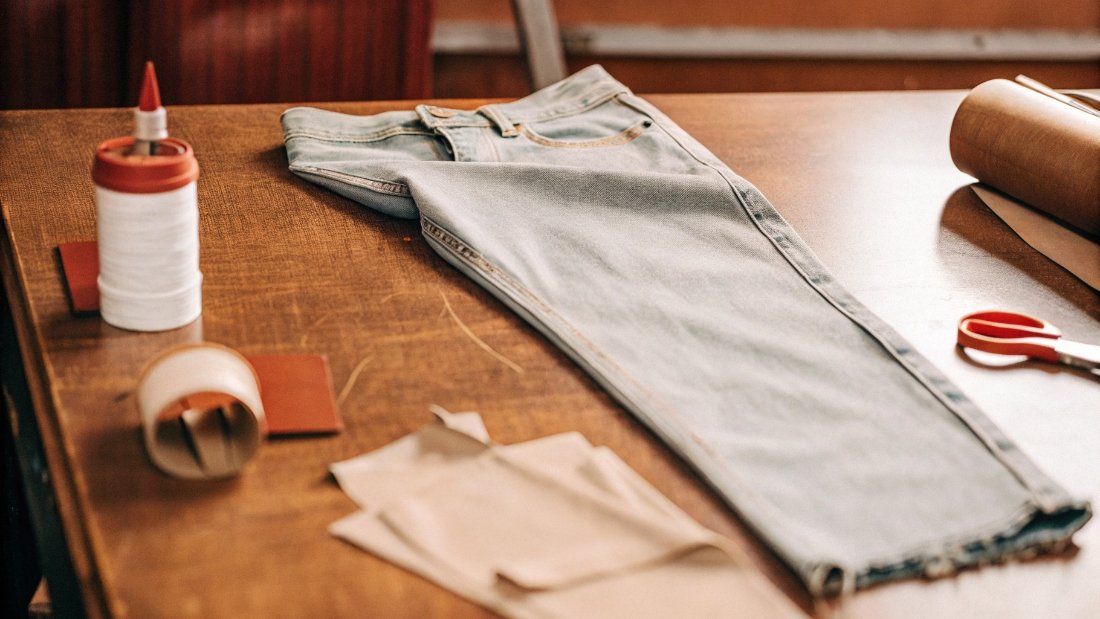
While in my factory we would never produce a garment without sewing, I understand the need for accessible alternatives. For a no-sew version, you follow the same steps of opening the seam and cutting your panel. The difference is in how you attach it. With fabric glue, you apply a thin, even bead along the seam allowance and press the panel firmly in place. With fusible web, you place the adhesive tape between the jean and the panel and activate it with a hot iron. Both can work, but they are best for garments that won't see heavy use or frequent, high-heat washing.
Dive Deeper: Fabric Glue vs. Fusible Web
Each no-sew method has its own strengths and weaknesses. Choosing the right one depends on your fabric and how you plan to wear the jeans.
| Method | How It Works | Pros | Cons |
|---|---|---|---|
| Fabric Glue | A liquid adhesive that creates a permanent chemical bond. | Very easy to apply, requires no special tools. | Can make seams stiff, bond can be weakened by repeated washing. |
| Fusible Web | A mesh-like adhesive on a paper backing that melts when ironed. | Creates a stronger, more flexible bond than most glues. | Requires an iron, can be tricky to apply without puckering the fabric. |
From a professional standpoint, the biggest issue with these methods is stress. A seam on a pair of jeans is a high-tension area. Walking, stretching, and washing put a lot of strain on that join. A sewn seam with strong thread can handle it. Glue and fusible web are simply not designed for that level of long-term mechanical stress.
What's the easiest way to fray jeans?
You've added your bell-bottom panels, but now the new hem looks too perfect and clean. You want to create a natural, frayed edge to complete the relaxed, vintage look.
The simplest way is to cut the hem to your desired length and then run the jeans through a hot wash and dry cycle. The agitation will naturally start the fraying process.
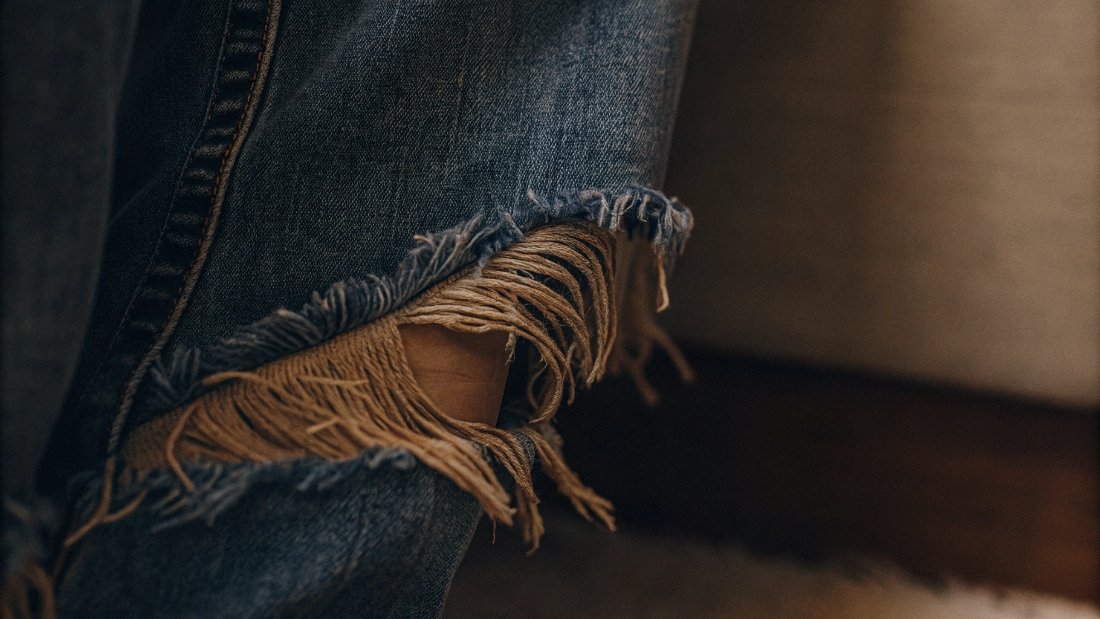
This is a technique we often use in the factory to give a garment a lived-in feel. The heat and tumbling action of the machines are very effective at loosening the fabric's weave. To understand why it works, you need to know that denim is made of blue (warp) and white (weft) threads. Fraying is simply the process of removing the horizontal white weft threads to expose the vertical blue warp threads. The washing machine does this for you. For a more controlled or intense fray, you can use simple tools to speed up the process before washing.
Dive Deeper: Techniques for Controlled Fraying
You can achieve different levels of distressing depending on the tool you use.
-
Level 1: The Machine Wash
As mentioned, this is the easiest. Cut the hem, then wash and dry. It creates a soft, subtle fray. Perfect for a clean, minimalist look. -
Level 2: The Manual Pick
Use a pair of tweezers or a seam ripper to pull out the white, horizontal weft threads one by one. This is more time-consuming but gives you complete control over the length of the frayed strands. -
Level 3: The Abrasion
Use a piece of low-grit sandpaper, a pumice stone, or a wire brush. Rub it vigorously along the cut edge of the hem. This will break up the weft threads quickly and create a more textured, aged look.
Pro-Tip: To prevent the fray from traveling too far up the leg, sew a single, straight line of stitching about a half-inch above where you want the fray to stop. This acts as a barrier and is a common technique we use in professional production.
Can you turn skinny jeans into flares?
You have a pair of old skinny jeans that you don't wear anymore. The tight fit from the knee down seems like it would make it impossible to create a convincing flare.
Yes, you can, but the key is to start the panel much higher up the leg. You'll need to open the seam to at least the mid-thigh to allow for a gradual, natural-looking flare.
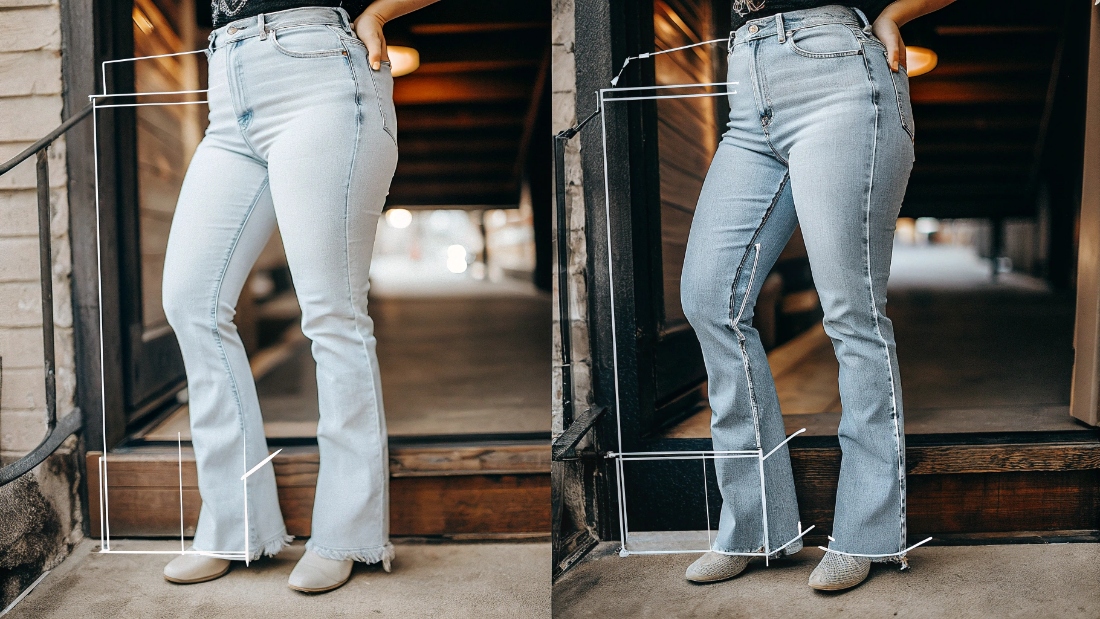
This is more challenging than converting a straight-leg jean, but the principle is the same. With skinny jeans, the fabric is cut to be very narrow all the way down the calf. If you only insert a small triangle at the ankle, it will look like a strange, abrupt triangle, not a flowing bell. To make it work, you must open the side seam to a point where the leg starts to widen, usually around the mid-thigh. This means your fabric insert will be much longer and larger, creating a gentle slope from the thigh down to the hem.
Dive Deeper: The Skinny Jean Challenge
The main challenge with skinny jeans is managing the transition from tight to wide.
- The High Starting Point: As stated, you must open the seam much higher. Measure your leg to find the point where you want the flare to begin, and mark it. This will be the top point of your triangular insert.
- The Panel Shape: A simple, straight-edged triangle might not be enough. You may need to cut a panel with a very slight curve to match the natural shape of your leg and the cut of the jeans. This is an advanced technique where a designer's eye for silhouette is crucial.
- The Stretch Factor: This is critical. Most skinny jeans contain elastane for stretch. If you insert a non-stretch panel (like a heavy cotton canvas), it will pucker and pull against the stretchy denim. Your insert fabric should have a similar amount of stretch to the original jean for the best result. This is a rule we follow strictly in the sample room.
Conclusion
Creating your own bell-bottoms by inserting a fabric panel is a powerful way to customize your wardrobe. It’s a simple technique that gives you full creative control over the final look.