Skip to content

Your jeans ship from the factory, and their story ends. You have no deep inventory insight, and your customers can't connect with the unique craftsmanship behind their purchase, a missed opportunity.
Yes, a modern factory can embed RFID or QR code tags1 directly into your jeans. This technology provides powerful tools for inventory tracking, product authentication, and creating interactive experiences that connect customers directly to your brand.
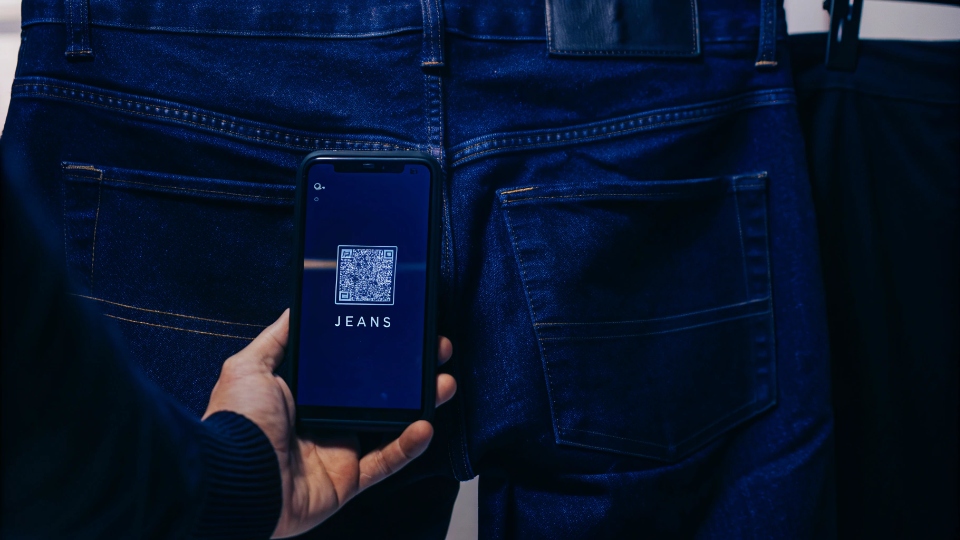
This technology is more than just a gimmick. I recently worked with a designer, a visionary much like Dean, who was facing two big problems: a growing counterfeit market and a desire to tell the complex story of his unique, eco-friendly wash process.
The solution was a small, intelligently placed QR code. It led customers to an authentication page and a video showing the jean's journey.
It protected his brand and created a powerful connection with his audience. Smart tags transform your garment from a static object into a dynamic communication channel. Let's explore the critical questions you need to ask to get it right.
You want the benefits of a smart tag, but you can't have a clunky piece of plastic ruining the feel of your jeans or digging into your customer's skin.
Yes, we can seamlessly integrate flexible, fabric-based tags2 by sewing them into existing seams or behind your main brand label. This makes them invisible and comfortable without affecting the garment’s look or feel.
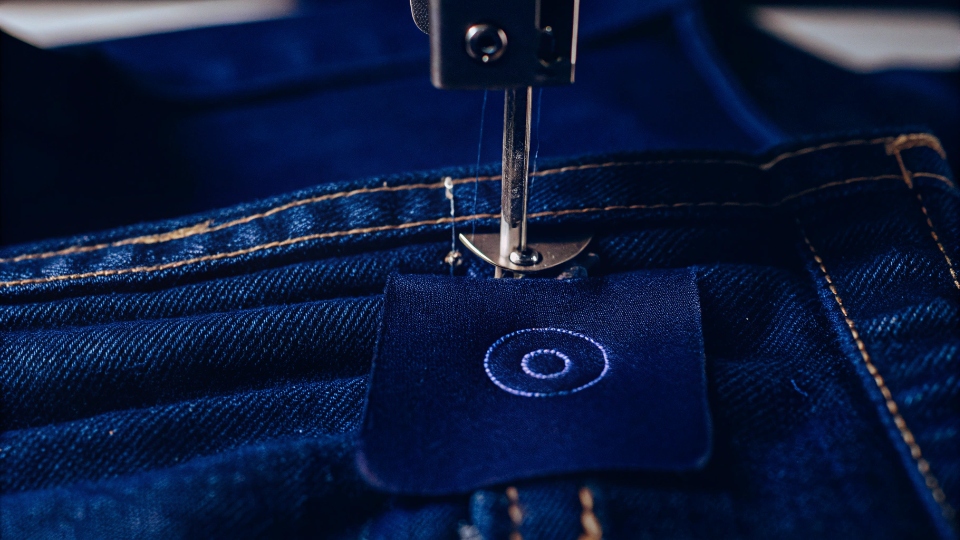
The placement of the tag is everything. You need it to be permanent and scannable, but also completely forgettable for the person wearing the jeans. A poorly placed tag is worse than no tag at all.
We have developed several methods over the years, each with specific advantages. We never just stick a tag on as an afterthought. We design its integration into the sewing process. Typically, this happens during the final labeling stage, right before packing.
This timing is crucial as it protects the sensitive tag from the harsh chemicals and physical stress of our industrial washing processes. The goal is to make the technology feel like a natural part of the garment, not an add-on.
| Placement Method | Pros | Cons | Best For |
|---|---|---|---|
| Sewn into Waistband Seam | Completely invisible, durable, comfortable. | Harder for a consumer to find and scan. | B2B RFID inventory tracking. |
| On a Separate Hang Tag | Easy to scan at point-of-sale, great for initial marketing. | Removed by the customer after purchase. | One-time QR code marketing. |
| Woven into the Main Label | Looks fully integrated, permanent and accessible. | Can add slight bulk to the main label. | Brand storytelling with QR or NFC. |
| Heat-sealed on Pocket Lining | Very discreet and easy for a customer to scan. | Can degrade or peel off after many washes. | Product authentication checks. |
How do they ensure tag durability through the wash cycles?
You've invested in this great technology for every pair of jeans. But what happens if the tag stops working or the QR code fades to an unreadable blur after just a few washes?
We only use specialized, industrial-laundry-proof tags3 designed to withstand water, heat, and chemicals. Before we even offer a tag to you, we test it relentlessly in our own stone wash and acid wash cycles.
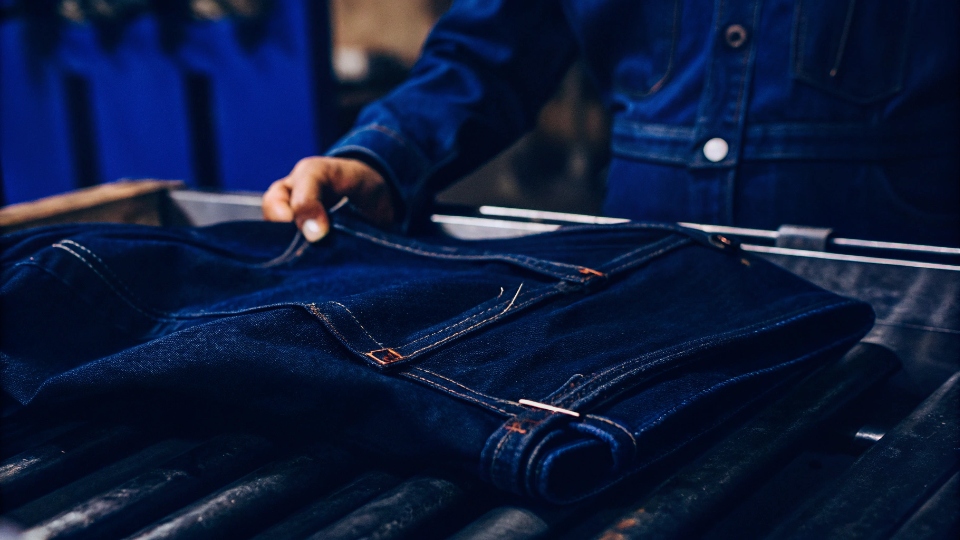
Your smart tag must be as tough as the denim it's attached to. When we evaluate a new tag supplier, we don't just trust their spec sheet. We become their worst nightmare. We take their sample tags and put them through our most brutal production processes.
This includes heavy stone washing, enzyme treatments, and even acid washes that can destroy weak materials. We test for performance after these treatments and then simulate 50 home laundry cycles to ensure long-term readability.
The tags that survive are the only ones we will ever recommend to our clients. The technology itself is also key. The RFID inlays are encased in flexible, waterproof TPU housing.
For QR codes, we don't just print them; we use high-adhesion inks that chemically bond with the fabric or label substrate. Durability comes from choosing the right materials and proving they work in a real-world factory environment.
What consumer-facing data can be retrieved via scans?
You have a general idea for a digital experience, but you're unsure what's actually possible. You don't want to go through the effort just to have a QR code that links to your homepage.
A simple scan can open a universe of content. It can lead to a dynamic landing page4 showcasing the jean's origin story, video styling tips, detailed care instructions, or an instant authenticity check.
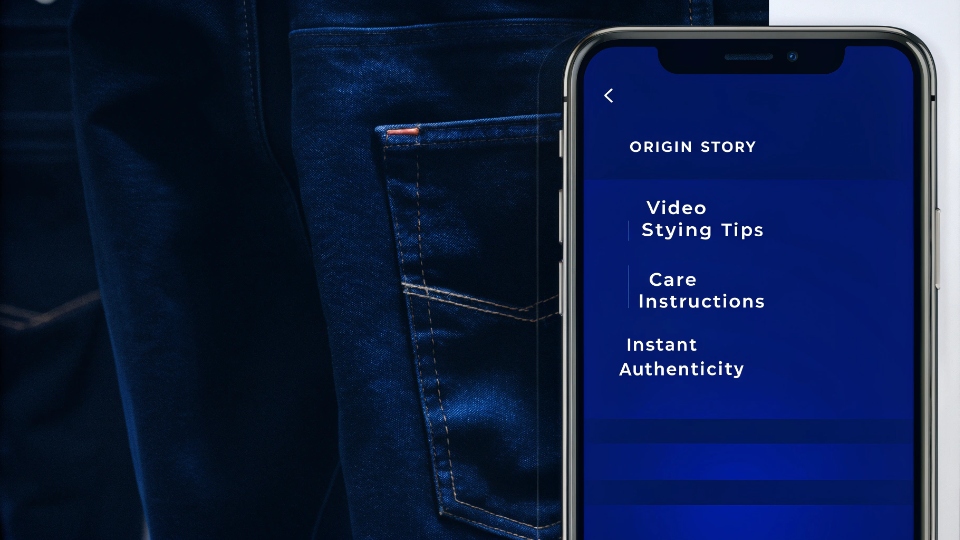
This is where you, the designer, can truly get creative. The tag is a doorway, and you get to decide what's behind it.
Think of it as a "Digital Product Passport5." We can link the QR code or NFC tag to a web page that you control. This allows you to give your customers an experience that goes far beyond the physical product. We recommend using dynamic QR codes.
A static code has a fixed destination URL, but a dynamic code can be updated at any time. This means you can change the content your customers see without ever changing the code on the garment.
In the spring, it could link to a festival styling guide. In the winter, you could change the link to a video on how to layer your denim. This turns every pair of jeans you've ever sold into an active marketing channel.
| Potential Feature | Benefit for Your Brand | Benefit for Your Customer |
|---|---|---|
| Authenticity Check | Fights counterfeits, protecting your brand's value. | Guarantees they bought a genuine product. |
| Video Styling Guides | Increases customer lifetime value by cross-selling. | Provides inspiration and value beyond the initial purchase. |
| Detailed Care Instructions | Reduces returns from improper washing or shrinkage. | Helps them extend the life of their favorite jeans. |
| Sustainability Story | Communicates your brand's values and ethics. | Allows them to make a more informed, conscious purchase. |
How do they secure my code database?
You're creating a unique digital identity for every single jean you produce. But what if a hacker gets that list of codes, allowing them to create perfect counterfeits with legitimate digital IDs?
We treat your data with the same security as your most confidential designs. Your unique code database is managed on an isolated system, delivered to you via encrypted transfer, and then permanently wiped from our records.

Protecting your data is fundamental to our partnership. We understand that the list of unique IDs for your products is a highly sensitive asset. Our process is built on a foundation of security and a clear separation of duties.
You can either provide us with a list of unique codes, or we can generate them for you. During production, at a dedicated QC station, we scan the physical garment and its corresponding tag to link them in a temporary, offline database.
This system is not connected to the internet. Once the order is complete and packed, we export this master list. We then encrypt the file and deliver it to you through a secure channel.
After you confirm that you have received and can access the data, we perform a secure digital wipe of the file from our system. We are your manufacturing partner, not a data company. We are the guardians of your data while it's in our factory, but it ultimately and always belongs to you.
Conclusion
Integrating smart tags transforms your jeans from a simple product into a secure, interactive asset. It protects your supply chain, strengthens your brand, and opens a direct dialogue with your customers.
-
Explore how RFID and QR codes enhance inventory tracking and customer engagement. ↩
-
Understand the benefits of using flexible tags in garment manufacturing. ↩
-
Learn about the durability and reliability of tags designed for industrial laundry. ↩
-
Discover how dynamic landing pages can improve customer engagement and satisfaction. ↩
-
Explore how Digital Product Passports enhance transparency and customer trust. ↩