Skip to content

You spent weeks perfecting a tech pack, only for the sample to come back completely wrong. The fit is off, the wash is flat, and now you're facing endless revisions, wasting time and money.
A collaborative design workshop bridges the gap between your vision and the factory's technical reality. It brings you, the pattern makers1, and wash technicians together to get the sample right the first time.
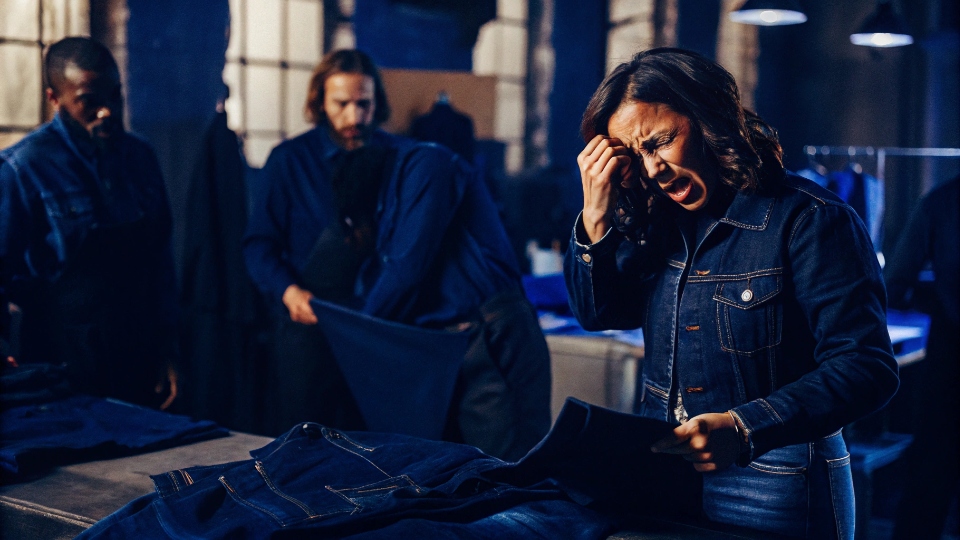
I've seen the frustration on a designer’s face too many times. A client like Dean, who has an incredible eye for detail, once told me his old process felt like a game of broken telephone.
He’d email a sketch from New York, a factory in China would interpret it, and weeks later a sample would arrive that looked like a distant cousin of his original idea.
This back-and-forth could kill a season. That’s why we stopped being just an order-taker and started hosting what we call "Creative-Technical Workshops."
It's about closing the distance—whether in person or virtually—to ensure your vision is translated perfectly, not just translated.
Do they host joint concept sessions at their facility?
You're trying to explain a specific fabric feel or wash effect over email, but it's not working. Designing in a vacuum is risky, and you're guessing how your ideas will translate to real denim.
Yes, the best workshops happen right here at the factory. You can work side-by-side with our pattern master and wash technicians, with all the real fabrics and machinery at your fingertips.
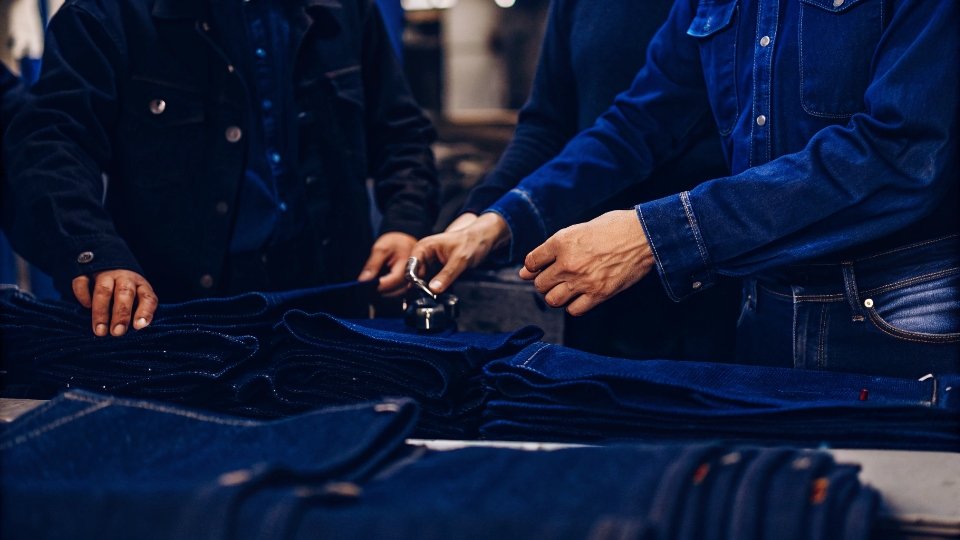
An in-person workshop is the fastest way to turn an idea into a perfect sample. Imagine walking into our development center.
To your left, there's a library of denim from mills all over the world. To your right, our head pattern maker is at his CAD station2, ready to adjust a seam on your command.
Down the hall, our wash technician is waiting with small fabric squares to test different abrasion levels in real time. This isn't a meeting; it's a live creation session. In a single day,
we can finalize fabric selection, dial in the fit on a live model, and approve a new wash standard. It's a process that can solve in hours what used to take weeks of shipping samples back and forth across the ocean.
| Key Factory Personnel in a Workshop | Their Role | What They Help You Achieve |
|---|---|---|
| Pattern Master | Expert in fit, grading, and construction. | Translates your sketch into a perfectly fitting pattern. |
| Wash Technician | Artist and scientist of denim finishing. | Creates the exact vintage look, color, and hand-feel. |
| Fabric Specialist | Manages our denim library and mill relationships. | Finds the perfect fabric for your desired drape and price. |
| Merchandiser | Your project manager and translator. | Ensures communication is clear and documents all decisions. |
Can remote teams join design reviews virtually?
You can't fly to China for every design detail, but you can't afford misunderstandings. You’re worried that a video call won't be good enough to judge the fit and feel of a new jean style.
Absolutely. We use a professional multi-camera setup for virtual workshops. You can direct a live fit session and review 3D models from anywhere in the world, making remote collaboration highly effective.
A virtual session has to be more than just a single laptop webcam. We have a dedicated setup for this. We put a live fit model on a rotating platform in a room with bright, even lighting.
We use two high-definition cameras: one for a full-body view and a second handheld camera that you can direct. You can say, "Zoom in on the knee distressing," or "Show me the drape of the fabric when she walks," and our team will follow your every instruction.
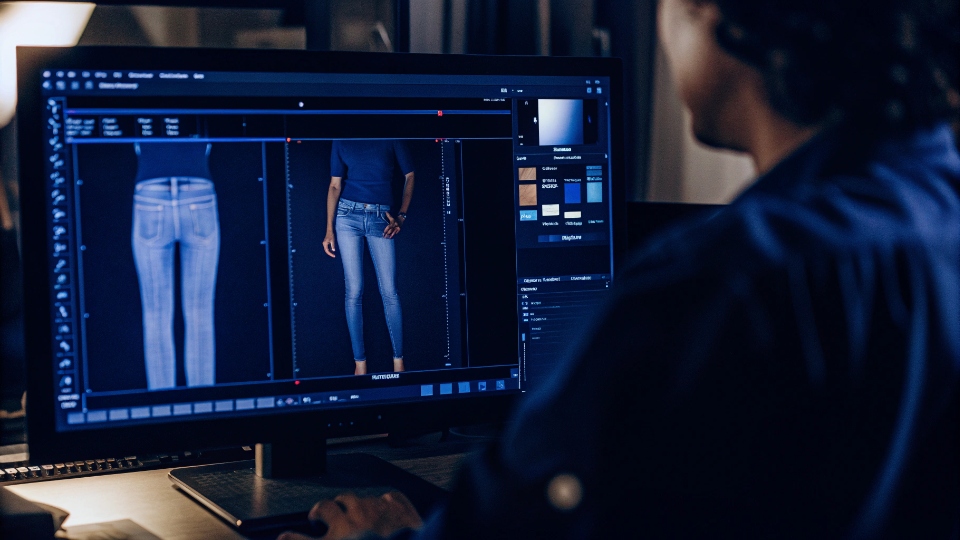
Even better, we can share our screen and show you the design in a 3D software like CLO3D. We can adjust the leg opening by half an inch in the software, and you’ll see a realistic digital rendering of the change instantly.
This combination of live video and 3D modeling removes the guesswork and makes you feel like you're right there in the room with us.
What mood boards3 or materials do they provide?
You're constantly searching for new ideas, but your current supplier only shows you what's easy to make. Their lack of inspiration is limiting your brand's creativity and ability to stay on trend.
We don't just wait for your ideas; we bring our own. We maintain a huge "denim library4" of fabrics, a "wash bible" of finishes, and trend boards5 to inspire your next collection.
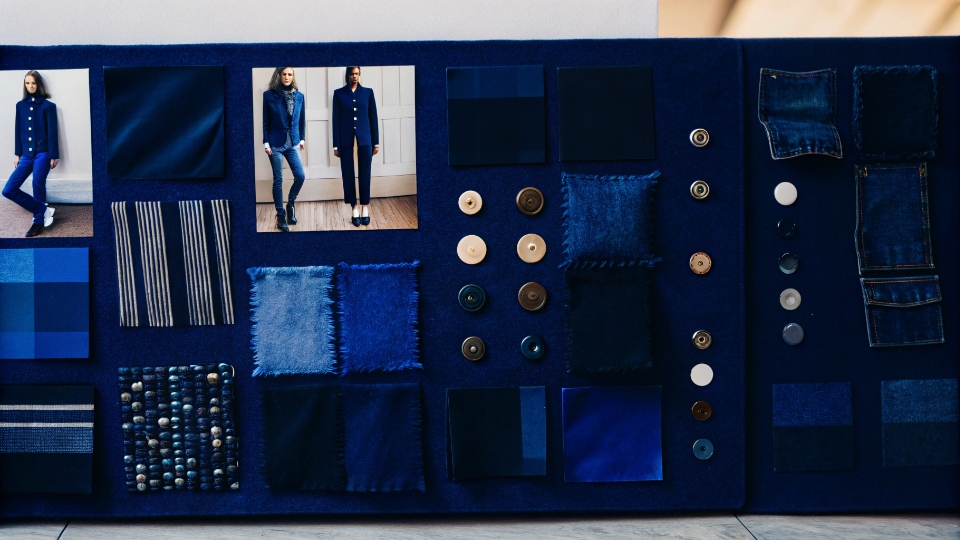
A true partner should inspire you, not just produce for you. That’s why we invest heavily in our own R&D. We built what we call our "Denim Library."
It's a room filled with hundreds of denim fabrics, organized by weight, stretch, and composition, including sustainable options like GRS-certified recycled cotton and Tencel®.
Next to it is our "Wash Bible," a physical collection of hundreds of approved wash samples, each with a detailed recipe card. Before a workshop, we don't just ask what you want to make.
We can also present our own research based on WGSN trend reports, showing you new wash techniques, emerging fits, and innovative fabrics that are gaining traction.
This way, our workshop becomes a two-way conversation, blending your unique brand vision with our technical innovation to create something truly new and exciting.
How are workshop outcomes documented?
You had a great, productive workshop, but a week later, nobody seems to remember the exact details. The sample arrives with the wrong thread color, proving that verbal agreements are worthless.
Every decision is captured in a formal Workshop Summary Report within 24 hours. This document, filled with photos and updated specs, becomes the new "single source of truth" for the project.
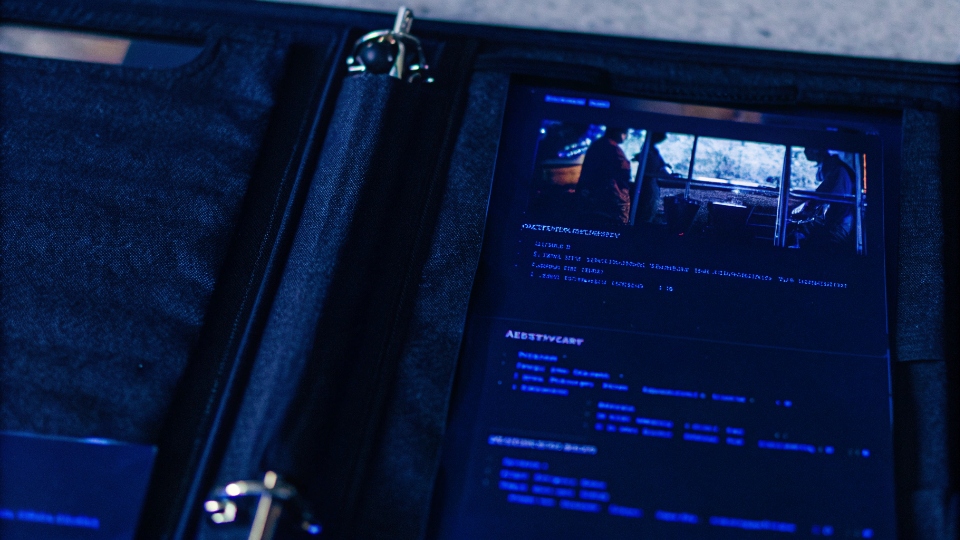
A workshop's value disappears if its outcomes aren't perfectly documented. To prevent this, we create a comprehensive summary report immediately after the session.
This is our non-negotiable rule. This isn't just a list of bullet points; it's a legally binding technical document that will guide production.
We physically tape the approved fabric swatch and trim samples onto a page, take high-resolution photos, and embed them in the report. The pattern master updates the tech pack with any fit changes in real-time.
All wash parameters, stitch colors, and hardware model numbers are recorded. Before we end the session, we review the cost implications of any changes to ensure complete transparency.
This document is then emailed to you for digital sign-off. This rigorous process eliminates "he said, she said" and ensures that the sample you approved in the workshop is the exact one that goes into production.
| Component of Workshop Summary | Its Purpose |
|---|---|
| Visual Approvals | Photos of signed-off fabric, wash, and trim samples. |
| Updated Tech Pack | Finalized measurements and construction details. |
| Bill of Materials (BOM)6 | Precise codes for all hardware, threads, and labels. |
| Costing Summary | Confirmed per-unit cost based on final decisions. |
| Project Timeline | Agreed-upon deadlines for samples and production. |
Conclusion
Collaborative workshops are not a meeting; they are the most effective tool for transforming your creative vision into a perfect, production-ready jean, saving you time, money, and frustration.
-
Learn about the crucial role pattern makers have in translating designs into wearable garments. ↩
-
Discover how CAD stations are used for pattern making and garment design. ↩
-
Discover how mood boards can inspire creativity and guide design direction in fashion. ↩
-
Understand the importance of a denim library in sourcing and selecting the right fabrics. ↩
-
Learn how trend boards help designers stay ahead of fashion trends. ↩
-
Understand the role of a BOM in ensuring accurate production and sourcing. ↩