Skip to content

You have a groundbreaking idea for RFID-enabled jeans. But your factory has never heard of it, fearing it will destroy their machines and your product. Your futuristic vision is stuck.
To successfully integrate tech, ask if they can embed wash-proof RFID chips (UHF for inventory, NFC for customer experience) into seams or labels, test their durability through 50+ wash cycles, and have clear QC protocols. A capable partner makes tech integration seamless.
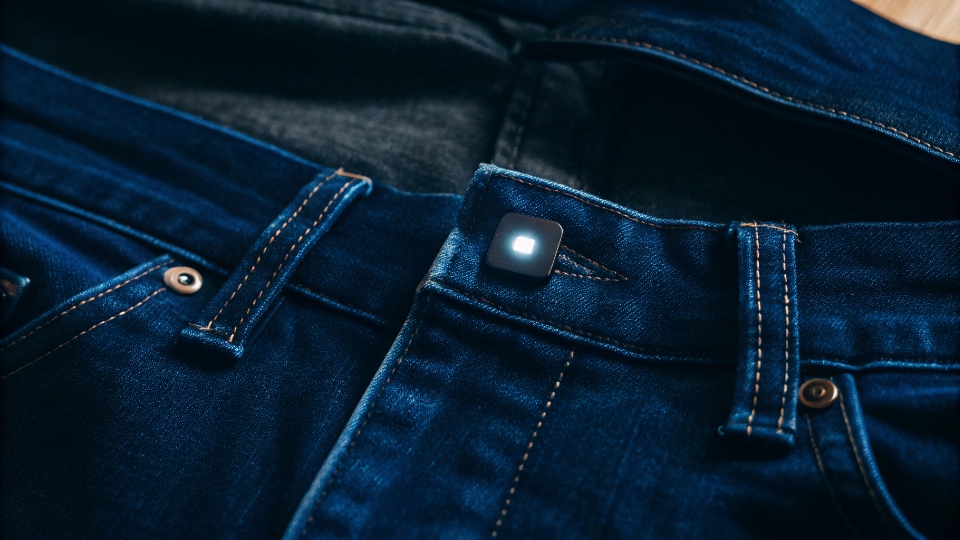
I've seen the future of denim, and it's interactive. A few years ago, a forward-thinking client, much like Dean, came to us with a wild idea: jeans that could connect to a customer's phone.
Most factories would have said no. They would see only problems—broken chips, damaged needles, production delays. But with my background in complex washing techniques, I see challenges as engineering problems to be solved.
We approached it with the same precision as a new wash formula. It's not just about adding a chip; it's about making the technology invisible and invincible, ensuring your smart jean is as durable as it is brilliant.
Do they embed tech components in the waistband or label?
You want to add a chip, but a bulky tag will ruin the jean's comfort and look. A poor placement choice makes your smart jean feel cheap and awkward.
Yes, we embed tech components for invisibility and comfort. We typically sew wash-proof RFID/NFC tags1 into the waistband seam, behind the main label, or even integrate them into custom-molded brand patches2 or buttons.
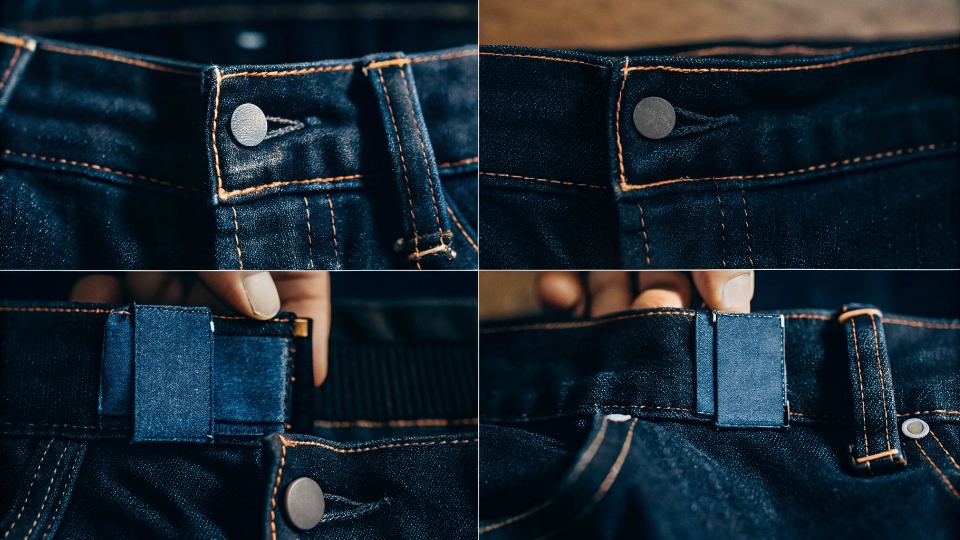
The placement of a chip is a critical design decision. It balances scannability, durability, and comfort. We don't just pick a spot and sew.
We treat it like part of the pattern-making process. For inventory tracking3 (UHF RFID), the chip needs a clear line of sight, so placement in the upper waistband or on the back pocket is effective.
For customer engagement (NFC), where a phone will tap it, placing it in a custom jacron patch or even a rivet is more intuitive. We consult with you on the use case first. We've developed a few standard, pre-tested placements that we know can withstand our toughest stone washes.
| Placement Option | Use Case | Pros | Cons |
|---|---|---|---|
| Waistband Seam | Inventory (UHF) | Invisible, comfortable, protected | Can be harder to find for user interaction |
| Jacron Patch | Customer Engagement (NFC) | Intuitive tap point, branding opportunity | Patch material must be flexible |
| Sewn-in Label | NFC or UHF | Easy to integrate, cost-effective | Can be cut off by the consumer |
| Custom Button/Rivet | Premium NFC Experience | Highly durable, unique feature | Higher MOQ and tooling cost |
How is electronic durability tested through wash cycles?
You launched your smart jeans, but after a few washes, the chips are dead. Angry customers are returning products, and your brand's reputation for quality is destroyed.
We test electronic durability by putting RFID-embedded jeans through a rigorous 50-cycle industrial wash and dry test. Each chip is scanned for functionality and read range after the tests to guarantee it outlasts the garment.
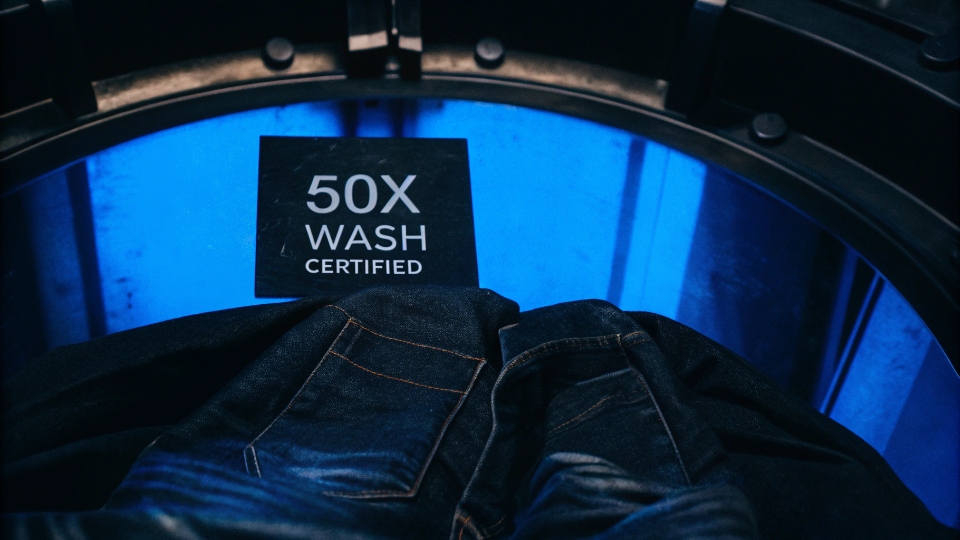
As a denim washing specialist, I know what a garment goes through. It's a brutal process of friction, high heat, and chemical treatments.
An electronic chip must be chosen and embedded to survive this. Our testing protocol is tougher than any domestic washing machine. We use our industrial laundry equipment to simulate a lifetime of wear and tear in just a few days. We don't just test one sample; we test a batch to check for consistency.
After the cycles, our QC team uses a professional RFID reader to test two things: first, does the chip still work (functionality)? And second, can it be read from the intended distance (read range)? We provide you with a formal test report showing the pass/fail rate. This guarantees that your customer's smart jean remains smart for its entire life.
Can I collect consumer usage data via chips?
You want to understand your customers better, but you have no data after the sale. You're guessing what they like, hoping your next collection will be a hit.
No, you cannot actively track or collect consumer usage data without their consent, as NFC/RFID chips4 are passive. However, you can offer them a digital experience when they tap the chip, which can ethically gather voluntary data.
This is a common point of confusion. The RFID/NFC chips we embed are passive. They have no battery and cannot "broadcast" a signal or track a user's location.
They only activate when a reader is brought within inches. You cannot spy on your customers. However, you can create a powerful marketing channel. The chip acts as a digital key. When a customer taps their phone on the jean's tag, it can direct them to a unique web link that you control. You can use this for:
- Product Authenticity: A page that confirms "This is an authentic product."
- Styling Tips: Videos showing how to wear the jeans.
- Exclusive Content: Access to a "members-only" part of your website.
- Loyalty Programs: An easy way to register their product and earn points.
It's through these voluntary interactions that you can build a relationship and gather valuable feedback from your most engaged customers. The data collection is a result of the value you offer, not the chip itself.
What security measures protect my data streams?
You’ve linked your NFC chips to an exclusive marketing campaign. But a competitor clones the chip's link, stealing your traffic and diluting your brand's unique customer experience.
To protect your data streams, we can help you source NFC chips with anti-cloning features5. These chips can generate unique, one-time URLs for each tap or have encrypted IDs, making it impossible for someone to copy the experience.
In the world of smart products, your digital experience is part of your intellectual property. Protecting it is crucial.
A standard, unlocked NFC chip simply points to a static URL. Anyone could read that URL and program their own cheap tags to point to it. To prevent this, we work with specialized chip suppliers to implement advanced security.
We don't manufacture the chips ourselves, but we know which ones to source for your specific needs. There are two primary methods we recommend.
The first is using chips with encrypted IDs, where each chip has a unique serial number that your website can verify, like a key and lock.
The second, more advanced method uses dynamic URLs, where the chip works with a cloud platform to generate a new, temporary URL for every single tap. This makes the link itself worthless to a cloner.
During our workshop, we discuss the security level you need and help you choose the right technology to keep your digital experience exclusive.
Conclusion
Integrating technology into jeans isn't futuristic; it's the new standard for brand engagement and supply chain efficiency. With the right factory partner, it's a simple, reliable process.
-
Learn about the technology behind wash-proof RFID/NFC tags and their durability in garments. ↩
-
Explore the use of custom-molded brand patches in fashion and their benefits. ↩
-
Discover how RFID technology revolutionizes inventory tracking in the fashion industry. ↩
-
Explore how RFID chips function in clothing, enhancing inventory management and customer experience. ↩
-
Discover how anti-cloning features protect your brand's digital experience from competitors. ↩