
You see the reverence for Japanese denim everywhere, but the deep cultural story behind it remains a mystery. It's frustrating to try and separate the genuine history from the marketing hype you see online.
Japan's love for denim began post-WWII when American soldiers introduced "jiipan" (G.I. pants). These rare jeans became a powerful symbol of American rebellion and pop culture, sparking an intense cultural obsession that evolved into a national pursuit of denim perfection.
This history fascinates me as a manufacturer. It's the ultimate story of how a product becomes a cultural icon. The initial obsession with American jeans wasn't just a short-lived fad.
It laid the groundwork for an entire industry built on respect, obsession, and the relentless pursuit of perfection. When scarcity met desire, the Japanese didn't just want to wear jeans; they began to study them, deconstruct them, and ultimately, improve upon them.
This journey from imitation to innovation is the key to understanding everything about Japanese denim today.
Why Does Japan Love Denim So Deeply?
You know that Japan loves denim, but the reason "why" often feels vague. It seems to go much deeper than just a fashion trend, but the historical connection isn't always clear.
Japan's deep love for denim is rooted in a post-war admiration for American culture. Jeans symbolized the freedom, rebellion, and effortless cool of icons like James Dean, making them a highly coveted and symbolic garment.
The story begins right after World War II. American soldiers stationed in Japan would sell or trade their used jeans on the black market. The Japanese youth, who were captivated by imported American culture like rock'n'roll music and movie stars, saw these pants as more than just clothes.
They called them "jiipan," a slang term from "G.I. pants." These weren't easy to find. You'd have to search for them in markets like Tokyo's Ameyoko. This scarcity made them incredibly expensive and desirable. Owning a pair of authentic American jeans was like owning a piece of that rebellious, next-generation cool.
As a manufacturer, I know that when a product is hard to get, people learn to appreciate every detail. The Japanese didn't just want to wear jeans; they wanted to understand them. This curiosity is the true seed of their future mastery.
Dive Deeper: The Evolution of "Jiipan"
| Phase | Time Period | Key Characteristics | Meaning & Impact |
|---|---|---|---|
| Introduction | 1940s-50s | Used American jeans ("jiipan") sold by G.I.s on black markets. Extremely rare and expensive. | Jeans become a powerful symbol of American rebellion, freedom, and the "cool" of movie stars. |
| Imitation | 1960s-70s | First domestic Japanese brands emerge. The focus is on perfectly replicating vintage American jeans. | The beginning of a national craft. Japanese makers study every stitch and detail to master the art. |
| Innovation | 1980s-Present | Japanese mills and brands begin to innovate, creating unique fabrics and improving upon the originals. | Japan transitions from student to master, becoming the global leader in premium denim quality. |
Why Is Japanese Denim Considered So Much Better?
You constantly hear "Japanese denim" spoken with reverence, as if it's a magical material. But when you look at it, it just looks like denim, making you wonder if the high price is justified or just clever marketing.
Japanese denim is better because of a cultural obsession with craftsmanship. They use inefficient vintage shuttle looms and complex dyeing methods to create fabrics with unparalleled texture, character, and an ability to age beautifully.
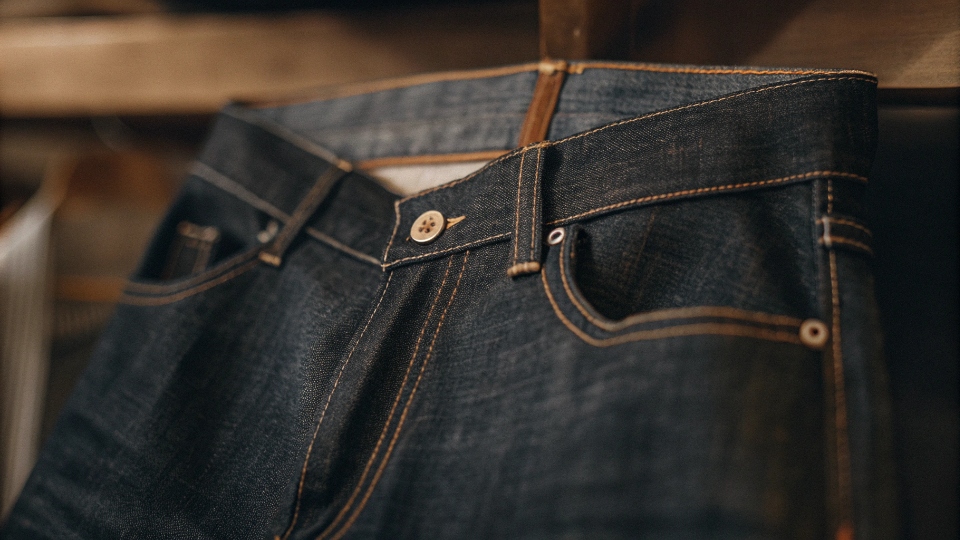
As someone who works with denim all day, the difference is clear to me. It comes down to a mindset of perfection, or "monozukuri." First, they use old-fashioned shuttle looms. These machines are slow and can only produce narrow strips of fabric, but they create a looser weave with natural imperfections, known as "slub."
This gives the fabric a unique, uneven texture that you can't get from modern, efficient looms. Second, their dyeing techniques are legendary. Many mills use a method called rope dyeing, where thick ropes of cotton yarn are repeatedly dipped in indigo.
This process leaves the core of the yarn white. Why does that matter? Because as the jeans are worn, the outer indigo chips away, revealing the white core and creating beautiful, high-contrast fades.
A designer like Dean would appreciate that the fabric itself is designed to tell a story over time. It’s not just about making pants; it’s about creating a canvas for the wearer's life.
Do Japanese People Actually Wear Denim Today?
You know that Japan produces some of the world's best denim, but you might wonder if it's all for export. Do people on the streets of Tokyo and Osaka actually wear it?
Yes, Japanese people absolutely wear denim. It is a fundamental part of their fashion landscape, from the everyday wardrobe to dedicated subcultures like "Amekaji" (American casual) that celebrate vintage-style jeans.
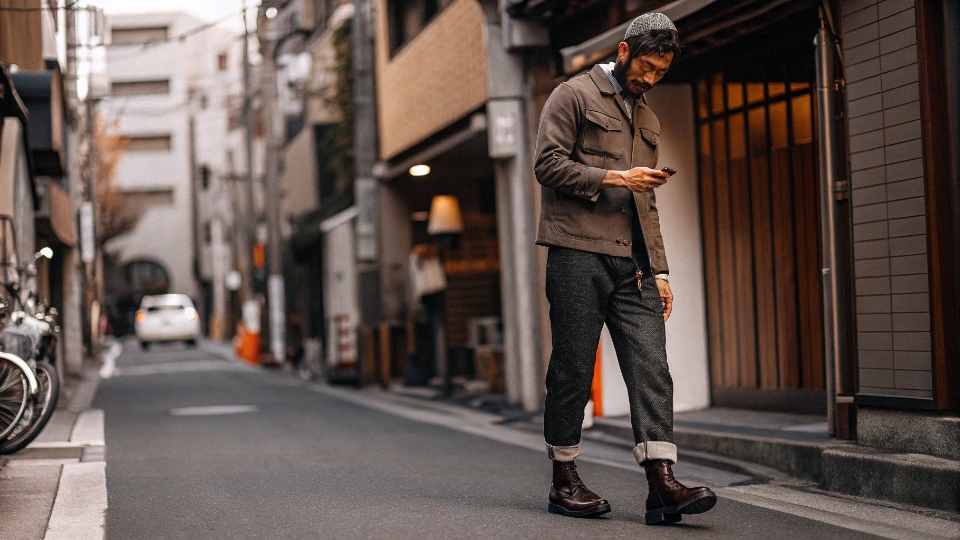
Denim is everywhere in Japan, but it's often worn with a unique appreciation for detail. The most famous example is the "Amekaji" style. This is a subculture completely dedicated to the Japanese interpretation of classic American workwear, military gear, and Ivy League clothing.
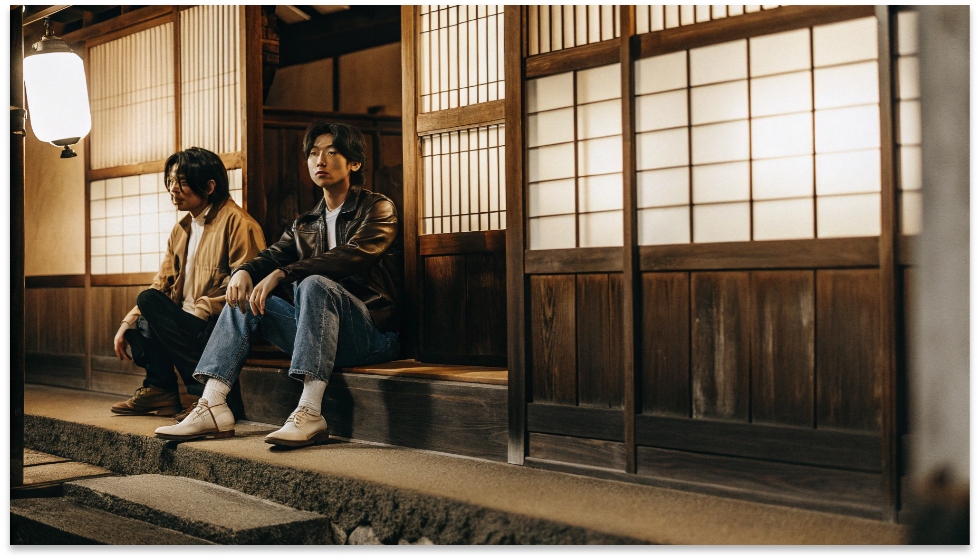
For these enthusiasts, a pair of heavyweight selvedge jeans is the uniform's foundation, often paired with rugged boots and a leather jacket. They are experts on brands, fabric weights, and historical details. But it's not just for subcultures.
Denim is also a staple in high-fashion and street style, used by famous avant-garde designers and worn creatively by the youth in districts like Harajuku. More broadly, it's just a normal part of everyday life.
The key difference is that the average Japanese consumer has a high standard for quality. They might own fewer items, but they expect them to be well-made and to last, a philosophy that fits perfectly with good denim.
Is Denim the Most Popular Clothing in Japan?
With such a deep history and dedication to quality, it's easy to assume that jeans are the most popular item of clothing in Japan. You're trying to get a complete picture of the fashion landscape.
While denim is incredibly popular and culturally significant, the most popular clothing in Japan often comes from brands like Uniqlo, which specialize in high-quality, functional, and affordable basics for everyday life.
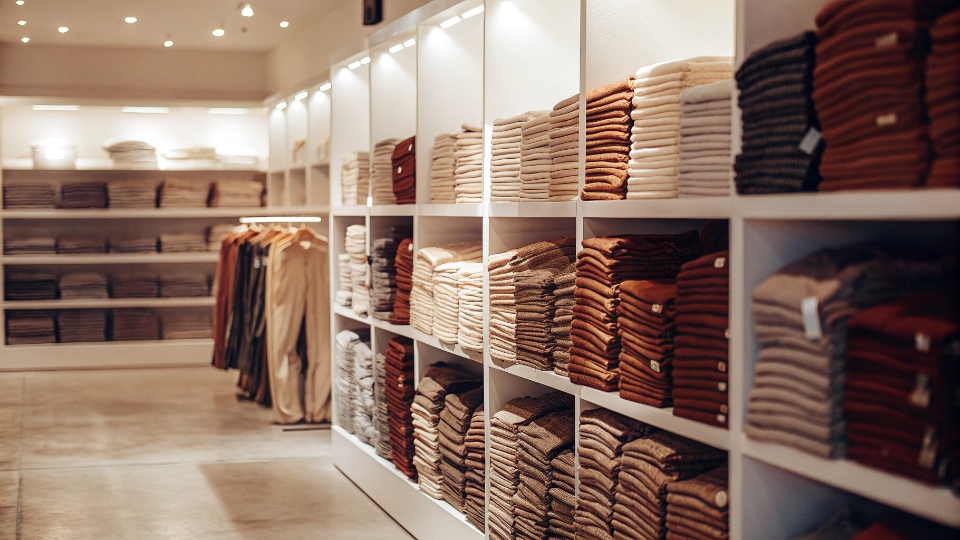
This might seem like a contradiction, but it actually makes perfect sense. Think of it as two sides of the same coin: both philosophies are built on a foundation of quality. On one side, you have the heritage and craft of denim. This is clothing that is bought as an investment, designed to gain character and last for years, even decades.
It's about personal history and artisanal quality. On the other side, you have Uniqlo's "LifeWear" concept. This is about providing simple, beautifully designed, and highly functional basics for modern life. It’s about democratic, accessible quality for everyone. A Japanese consumer can easily appreciate both.
They might wear a pair of expensive selvedge jeans from a heritage brand, but pair it with a perfectly engineered t-shirt from Uniqlo. The common thread is a rejection of disposable, low-quality fashion. Whether it's a timeless pair of jeans or a modern technical jacket, the underlying expectation is that it should be made well.
Conclusion
Japan's passion for denim began as a post-war fascination with American culture. This evolved into a national obsession with perfecting the craft, making jeans a beloved and masterfully produced staple.