Skip to content

You crave that perfect, custom-distressed look for your jeans. But buying pre-ripped feels unoriginal, and one wrong snip can ruin your favorite pair, creating an obvious, awkward hole.
Start by weakening the fabric in your target area using sandpaper or a razor. Then, carefully cut horizontal slits and use tweezers to pull out the vertical blue (warp) threads, exposing the white (weft) threads for a natural-looking rip.
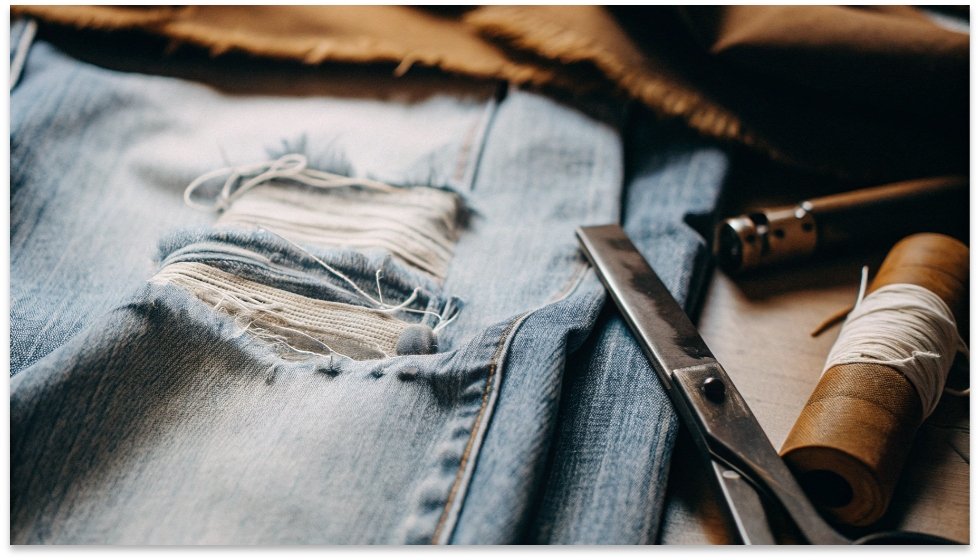
As a designer, Dean, you know authenticity is key. A machine can make a hole, but a story creates character. After two decades of distressing denim on an industrial scale, I can tell you the best results often come from a patient hand.
Your insight about starting small is the most important rule. Holes always grow. Let's explore the techniques, from creating controlled effects to encouraging organic wear.
How Do You Create a Rip Effect on Jeans?
You want to achieve that soft, faded, about-to-tear look, not a clean-cut hole. But it’s easy to be too aggressive and completely ruin the spot you’re trying to distress.
Use abrasive tools like sandpaper, a pumice stone, or even a cheese grater to thin the denim. Work in a small area, rubbing until the fabric lightens in color and the fibers begin to fray and weaken.
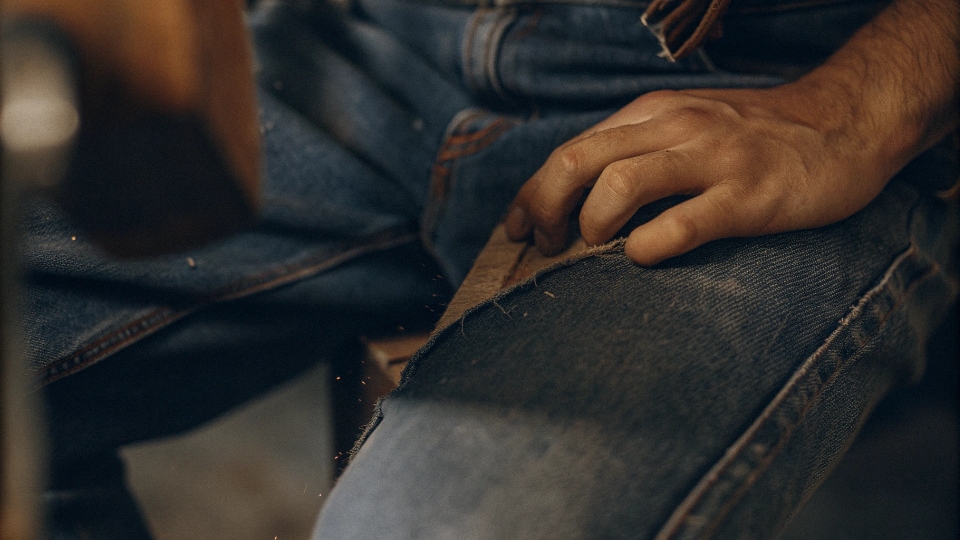
This process is all about abrasion, not cutting. In the factory, we use industrial grinders and hand-sanding tools to create these effects on a massive scale, but the principle is the same. You are physically breaking down the cotton fibers and removing the surface indigo dye.
Dive Deeper: The Art of Abrasion
| Tool | Best For | Pro Tip |
|---|---|---|
| Sandpaper (80-120 grit) | General fading and weakening fabric. | Wrap it around a small block of wood for even pressure and control. |
| Pumice Stone | Soft, fuzzy texture and softening edges. | Use it on seams and pocket edges for a naturally worn look. |
| Cheese Grater/Zester | Creating small, textured snags and tears. | As you wisely noted, do this with the jeans OFF, and place a magazine inside the leg for a firm surface. |
When you do this, you'll see the area start to turn white. This is good. You're revealing the white weft threads that run horizontally through the fabric. The key is to check your progress often. Feel the fabric. Is it getting thin and soft? Stop before you go all the way through. This creates a base for a future natural tear or a more controlled rip.
What's the Easiest Way to Fray Jeans?
You want that effortlessly cool, frayed hem on your jeans. But just cutting them can look too clean and unfinished, missing that naturally unraveled style you are aiming for.
The simplest method is to cut the hem to your desired length, then throw the jeans in a hot wash and tumble dry. The machine's agitation will naturally fray and soften the raw edge.
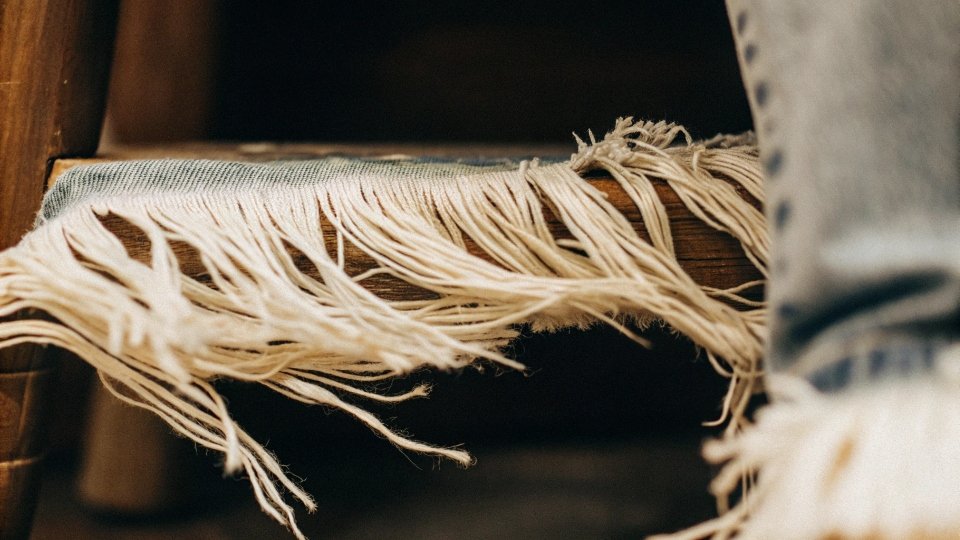
This is a trick we use in the wash house all the time, just on a much larger scale. The combination of water, heat, and friction from tumbling is incredibly effective at separating the fibers at a raw edge.
What's happening is that the vertical blue (warp) threads are getting agitated loose, revealing the horizontal white (weft) threads underneath.
This creates that perfect, soft fringe. To enhance the effect before washing, you can take a few extra steps. After cutting the hem, take a stiff brush or some sandpaper and vigorously brush the raw edge.
You can even use a seam ripper or tweezers to carefully pull out a few of the blue threads along the edge. This gives the washing machine a head start and will result in a more dramatic and feathered fray after just one cycle.
How Do You Rip Jeans at the Knee?
Ripping the knee is a classic look, but it often goes wrong. You can end up with a huge, gaping hole that just gets bigger and bigger with every step you take.
Put the jeans on and mark the top and bottom of your kneecap. Take them off, then use a sharp blade to make several horizontal cuts between your marks. Use tweezers to pull out the vertical blue threads, leaving the horizontal white threads intact.
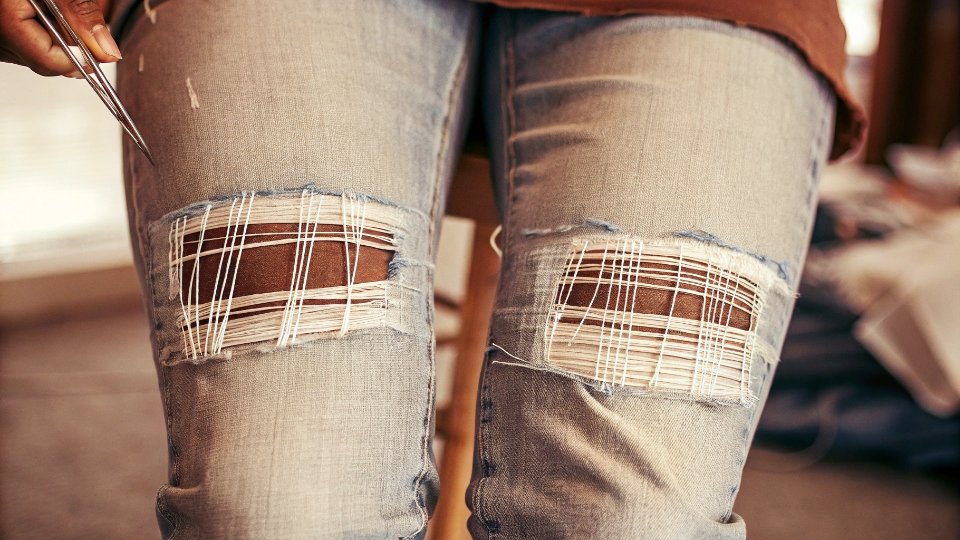
This is the most requested type of distressing, and it requires a specific technique to look right. Just cutting a square out of the knee looks amateur. The goal is to make it look like the fabric has worn through over time.
Step 1: Mark Your Spot
Put the jeans on and stand up straight, then bend your knee slightly. Use a pencil or tailor's chalk to make a small mark just above and just below your kneecap. This is your target zone.
Step 2: Make Your Cuts
Take the jeans off and lay them on a flat surface. Slide a cutting board or thick magazine inside the leg to protect the back. Use a very sharp craft knife or box cutter to make a series of horizontal cuts between your two marks. Vary the lengths of the cuts for a more natural look. Start with 5-6 cuts spaced about half an inch apart.
Step 3: Expose the Weft
This is the magic step. Use a pair of tweezers to start pulling out the short, vertical blue threads from the cut area. It's tedious, but you will quickly see the horizontal white threads emerge. Keep going until you have a patch of only white threads. You can then use your fingers or sandpaper to rough them up a bit.
How Can You Quickly Break in Jeans?
You just invested in a new pair of stiff, raw denim. You love the potential for a personal fade, but the initial break-in period feels like it will take forever to get comfortable.
For a quick break-in, wear them while doing active tasks like biking or yard work. You can also give them a 30-minute cold soak, put them on while damp, and wear them until they dry to your body.
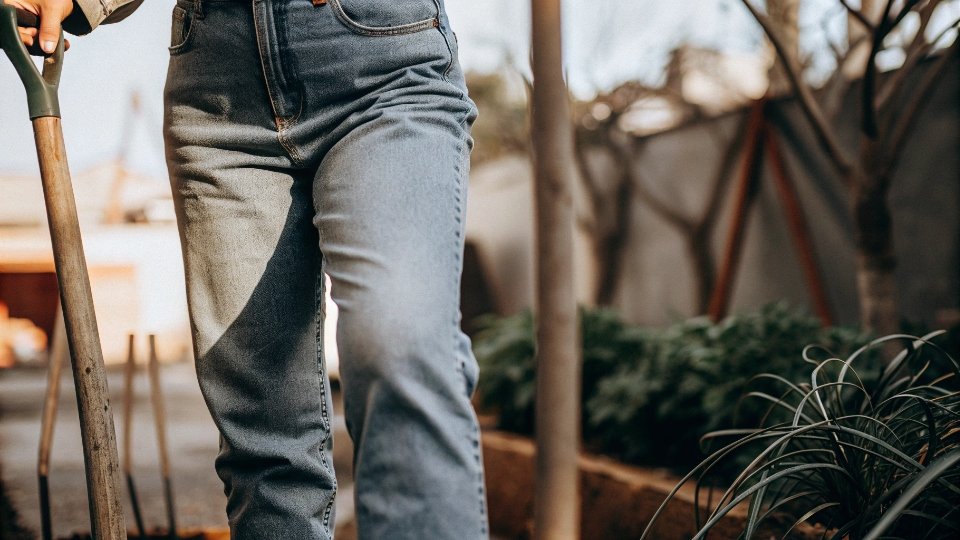
This brings me to your most profound insight: the best way to get a unique look is to simply live in your jeans. The artificial methods we've discussed are great for achieving a specific look instantly.
But as a denim purist, nothing beats natural wear. The stiffness in raw denim comes from the starch (sizing) used in the milling process. Movement and moisture break this down.
Wearing them during active chores creates natural stress points. Creases behind the knees (honeycombs) and at the hips (whiskers) will form based on your specific body shape. The "soak and wear damp" method is a classic shortcut.
It softens the entire garment and allows the wet fabric to stretch and mold perfectly to your frame as it dries. It's not the most comfortable afternoon, but it can shave weeks off the break-in period.
Conclusion
Creating the perfect rip is a craft. Whether using tools for a quick, controlled effect or earning it through wear, the ultimate goal is to create authentic character that tells a story.