
You’re walking through a store and see Rustler jeans. They look like a classic American brand, but the incredibly low price makes you question their origin and quality. Who is behind them?
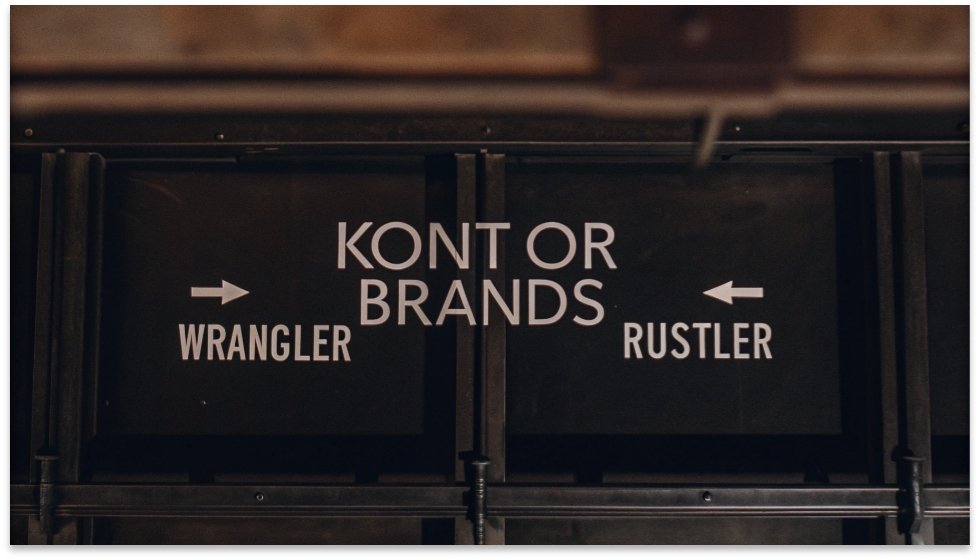
Rustler jeans are made by Kontoor Brands Inc., the same parent company that owns Wrangler and Lee. Rustler was specifically created to be Wrangler's budget-friendly sub-brand, primarily sold through mass-market retailers like Walmart.
Dean, as a designer, you understand that a product's price tells a story about its origins. The story of Rustler is a classic lesson in brand strategy that I've seen play out many times from my factory floor.
Knowing who makes them is one thing, but understanding why they exist and how they are made is crucial. It’s a perfect example of how a single company can capture completely different segments of the market by creating distinct brand identities, even if the products look similar from a distance.
Are Rustler and Wrangler the Same Company?
You see the similar western styling and denim focus, but the branding and price points are worlds apart. It creates confusion: are they competitors, or is there a direct connection?
They are not the same company, but they are sister brands owned by the same parent, Kontoor Brands. Think of them as two different product lines from one manufacturer, targeting different customers.
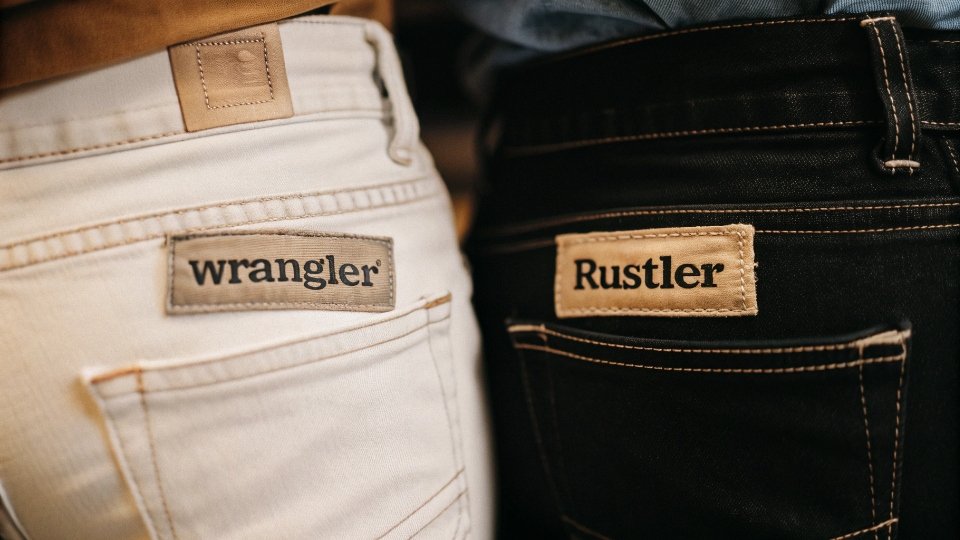
This is one of the most common strategies in the apparel industry, and it's brilliant from a business perspective.
The parent company, Kontoor Brands, wants to sell jeans to everyone. But they know the customer buying a $50 pair of Wranglers at a specialty western store is different from the customer looking for a sub-$20 pair at Walmart.
By creating Rustler, they can attack that budget market head-on without damaging the Wrangler brand's image and price point.
It allows them to compete with store brands and other low-cost options while keeping the Wrangler name associated with a higher tier of quality and its authentic western heritage. It's a way to be in two places at once.
Do They Still Make Rustler Jeans?
You don't see Rustler jeans in department stores or fashion boutiques. This could easily lead you to believe they are a defunct brand from a bygone era, lost to time.
Yes, Rustler jeans are still in full production and are a massive seller. Their availability is just concentrated in mass-market channels like Walmart, which is why you may not see them elsewhere.
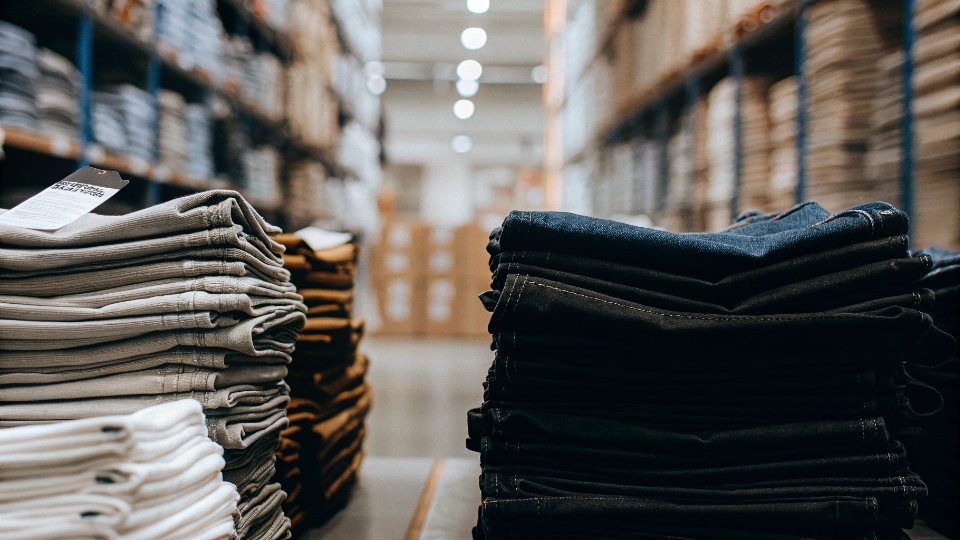
Rustler jeans are a quiet giant in the denim world. They don't rely on fashion trends or marketing campaigns. Their success is built on a very simple, and very large, market: people who need a durable, no-frills pair of pants for a low price.
From my manufacturing perspective, these jeans are a model of efficiency. The patterns are simple and rarely change. The washing process is minimal, often just a basic rinse to soften the fabric, which saves huge amounts of time and money compared to the complex, multi-step washes we do for premium brands.
They use sturdy, 100% cotton heavyweight denim that is economical to produce. The entire operation is built for high-volume, low-cost output. They are a workhorse product, not a fashion statement, and that's a market that never goes away.
Did Wrangler Buy Out Rustler?
You're trying to piece together the brand history. A common story is a big brand buying a smaller competitor, so you wonder if Rustler was once an independent company.
No, Wrangler never bought Rustler. Rustler was developed internally in the 1970s by Blue Bell, the company that owned Wrangler at the time. It was a strategic creation, not an acquisition.
The origin of Rustler is a textbook case of smart brand management. In the 1970s, mass retailers like K-Mart and Walmart were growing rapidly, and they needed products at very low price points.
The team at Blue Bell faced a choice: they could either lower the price of Wrangler jeans to compete, which would risk cheapening the brand's image, or they could create something new. They chose the second option.
They launched Rustler as a new brand, built from the ground up to meet the specific cost and durability requirements of that market channel. This move protected the core Wrangler brand's value while allowing the parent company to capture a whole new customer base.
It's a strategy I often discuss with clients who want to reach a different market without disrupting their main brand.
Do Rustler Jeans Last?
The low price tag immediately screams "poor quality." Your professional instinct tells you they must fall apart quickly, but you wonder if there’s more to the story.
For their price, Rustler jeans are surprisingly durable for everyday wear. They are not built for extreme use but will outlast many fashion jeans because they use heavy, 100% cotton denim.
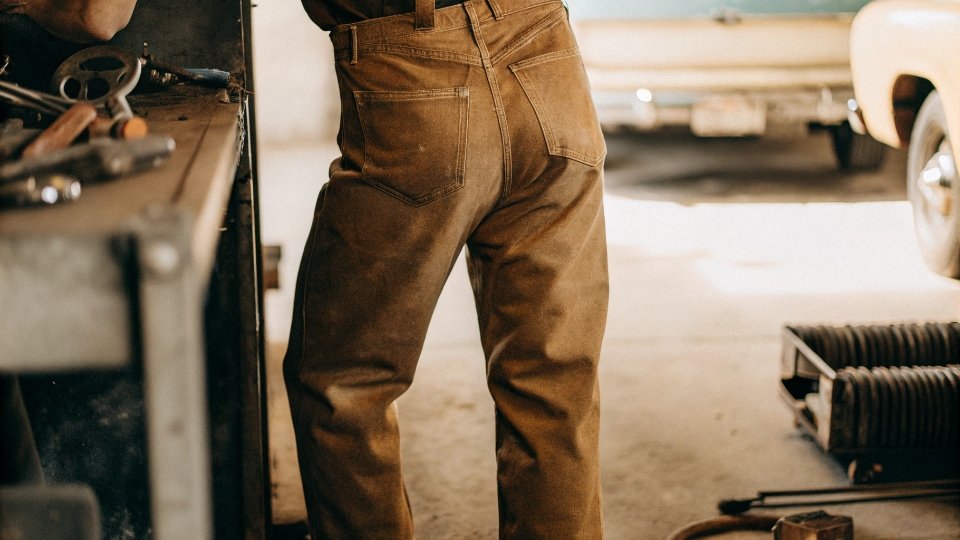
Your insight is spot on, Dean. You can't expect a $15 pair of jeans to last for ten years, especially if you're a contractor putting them through daily abuse. But their longevity comes from the material, not the construction. The secret is the fabric: it's typically a 14.5 or 15 oz rigid denim.
It’s not fancy, but it's thick and tough. Where they save money is in the details. The stitching might be less precise, there are fewer reinforcing bar tacks, and the pocket bags use a lighter material.
For general wear—walking, driving, light work—the tough fabric holds up very well. The failure points will be at the seams and stress points under heavy, repetitive strain.
They offer incredible value, but it's important to have realistic expectations. They are built to be functional and affordable, and in that, they succeed completely.
Conclusion
Rustler is a strategic sub-brand of Wrangler, offering exceptional value by using heavy, basic denim with simplified construction. It's a lesson in how to build a product perfectly for a specific market.