
You bought beautiful, raw denim jeans, but they're incredibly stiff. Wearing them feels impossible, yet you want that soft, broken-in comfort now. How can you speed it up?
The best way to soften denim is a combination of a wash cycle with vinegar or fabric softener, followed by a low-heat tumble dry with dryer balls. This combination chemically removes sizing and mechanically breaks down stiff fibers.
Dean, this is a classic problem. As a designer, you appreciate the beauty of raw denim, but for the end customer, that initial stiffness is a major hurdle. In my factory, we soften denim by the thousands, but you can use some of our core principles right at home.
The stiffness isn't a flaw; it's a feature of untreated denim, a blank canvas. But you don't have to suffer for weeks to start painting your picture. Let's break down the methods.
How to Soften Hard Denim Jeans?
That new pair of raw denim feels more like armor than clothing. The fabric is so rigid, it's uncomfortable to even sit down in. Is there an easy at-home fix?
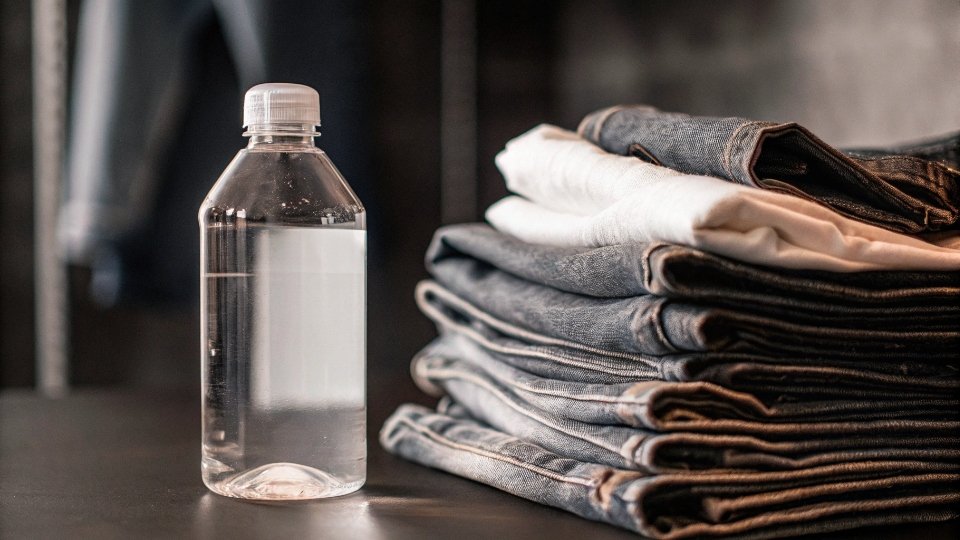
The most effective home method is to wash your jeans inside out in cold water, substituting one cup of white vinegar for detergent. Vinegar's mild acid helps dissolve the starches and sizing that make new denim stiff.
From a manufacturing perspective, this is all about chemistry. The raw denim we get from the mill is coated in "sizing"—which is essentially starch—to make the fabric stiff and stable for cutting and sewing.
Your first job at home is to remove that sizing. White vinegar is a mild acetic acid. It's gentle on the cotton fibers and the precious indigo dye, but it's very effective at breaking down that starchy coating.
Harsh detergents can strip too much color and damage the cotton, but vinegar is the perfect gentle solution. Just be sure to follow it up with a low-heat tumble dry.
Air-drying after a wash can make the fibers seize up and feel stiff all over again. The heat and tumbling action keep the fibers pliable and soft.
How to Break in Denim Jeans Fast?
Waiting months for your raw denim to break in feels like an eternity. You want those natural fades and that soft feel now, not next season. How do you fast-track it?
The fastest way is the "wear-damp" method. After a 30-minute soak in lukewarm water, put the jeans on and wear them until they are almost dry. Your body's movements will stretch and mold the pliable fibers.

This is a trick old-school denim heads swear by, Dean, and it works because it's about personalizing the fit while the fabric is in its most malleable state. The goal is to mold the denim to your unique shape.
The cotton fibers, when swollen with water, are much more flexible. As the jeans dry on your body, they stretch perfectly in high-stress areas like the hips and thighs.
At the same time, they'll form creases—the beginnings of whiskers and honeycombs—that are unique to how you sit, stand, and walk. This is a massive shortcut to achieving what would normally take weeks of consistent, hard wear.
It's not the most comfortable afternoon, but it's the single best way to accelerate the break-in process and make a pair of jeans truly your own.
How Do Professionals Soften Denim?
You've tried home methods, but how do brands sell jeans that are buttery-soft from day one? There must be an industrial process that gets these results at scale.
Professionals use large-scale industrial washing machines for stone washing, enzyme washing, or a combination. These methods use physical abrasion or bio-catalysts to break down fabric stiffness for a perfectly soft and aged finish.
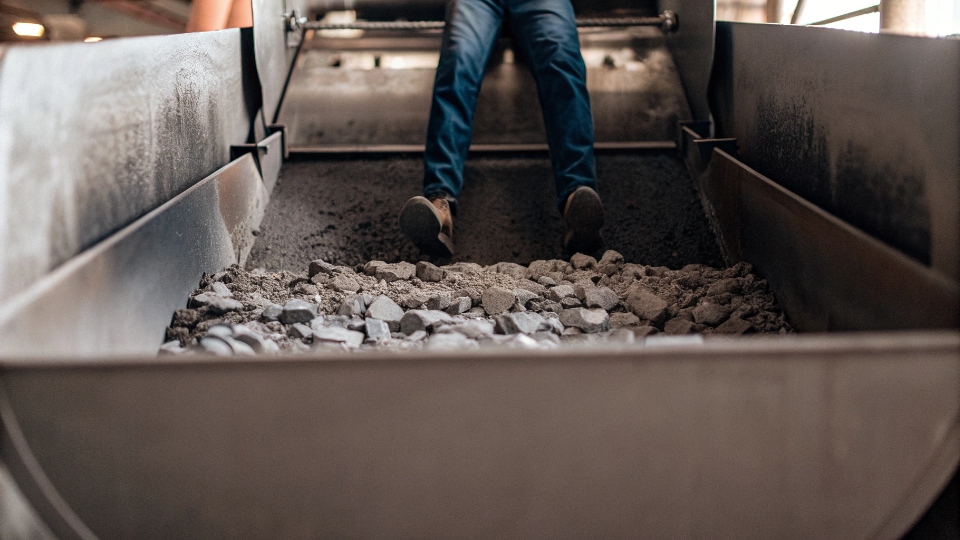
This is my world, Dean. We don't use small bottles of vinegar; we use giant, computer-controlled machines and precise chemical formulas to achieve a specific "hand-feel."
Dive Deeper: Industrial Softening Techniques
| Method | Process Description | Primary Result |
|---|---|---|
| Stone Wash | Washing jeans with porous pumice stones that physically beat and abrade the fabric surface. | A soft, faded, and physically distressed look. The classic "worn-in" feel from the 80s and 90s. |
| Enzyme Wash | Using cellulase enzymes in a wash that act as bio-catalysts to eat away at the surface cellulose of the cotton. | An incredibly soft hand-feel, often without significant color loss. It's a more modern and eco-friendly alternative to stone washing. |
| Silicone Softener | A final rinse cycle with liquid silicone softeners that coat the fibers of the denim. | A slick, smooth, and soft surface feel. It enhances comfort but doesn't create a "worn" look on its own. |
Often, we combine these. A light enzyme wash followed by a silicone rinse gives you incredible softness while preserving the dark indigo color. It's a balance of science and artistry to hit the exact look and feel a designer like you envisions.
How Long to Soak Denim in Vinegar to Soften?
You're ready to try the vinegar soak, but for how long? Thirty minutes? Overnight? You need a clear answer to get the best results without damaging the denim.
A 30-minute to one-hour soak is ideal for most jeans. For extremely heavy and rigid denim, you can soak them overnight, but it's usually not necessary for a significant improvement.
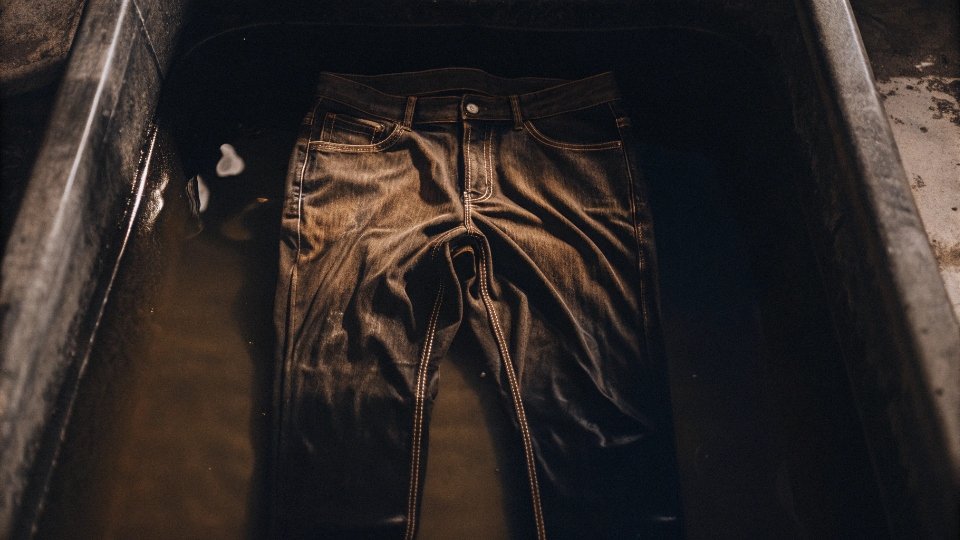
The duration of the soak is less critical than the solution itself and what you do afterward. Vinegar works relatively quickly to dissolve the sizing. After the first hour, you've already achieved most of the chemical softening benefit.
The key is using the right ratio—about one part white vinegar to three or four parts cold water. But the most important step comes after the soak. If you simply rinse and hang them to dry, they will feel stiff again once the water evaporates.
After soaking, you should put them through a machine rinse cycle to remove all the vinegar, then immediately tumble dry on low heat with wool dryer balls.
The combination of the vinegar soak (chemical softening) and the tumble drying (mechanical softening) is what truly delivers that comfortable, ready-to-wear result.
Conclusion
Softening denim is about removing starches and breaking down stiff fibers. You can achieve great results at home with a simple vinegar wash and a tumble dryer for a personalized feel.