
You design jeans, the ultimate symbol of freedom, individuality, and casual American style. But in one specific place, this iconic garment is strictly forbidden: prison. This stark contrast is jarring.
Blue jeans are banned in prisons primarily for security reasons1. Their resemblance to the denim uniforms2 worn by guards and their extreme durability make them a significant risk for identification confusion and potential misuse.

It's one of the great ironies of my trade, Dean. For over two decades, I've manufactured a product that represents freedom and rebellion. Yet, the very qualities that make jeans so successful—their toughness and their status as a universal uniform—are the exact reasons they are banned from environments that restrict freedom.
This isn't just a random dress code rule; it's a decision rooted in security, control, and the powerful symbolism of the clothing we create. Let's break down exactly why our favorite garment isn't welcome behind bars.
Why Can't You Wear Jeans to Prison?
As a designer, you see jeans as a canvas for self-expression and style. But prison systems view that same canvas as a potential security threat and a tool for creating chaos.
You can't wear jeans to prison because they dangerously blur the visual lines between inmates, staff, and visitors. Their tough fabric can also be torn into ropes or used to conceal contraband far better than standard-issue clothing.
From a practical, factory-floor perspective, this comes down to two things I deal with every day: identity and durability. In many prison systems3, correctional officers wear uniforms made of blue denim or a similar navy twill. If inmates or visitors are also wearing blue jeans4, it creates instant visual confusion. In a riot, an escape attempt, or even just a medical emergency, staff need to identify who is who in a split second. A sea of blue makes that impossible. Second is durability. I build jeans to be tough. That's their primary selling point. But that strength is a liability in prison. The fabric can be twisted into a strong rope, the thick seams can hide contraband5, and the metal hardware can be sharpened. The garment is simply too functional for an environment that demands total control.
Do Prisoners Still Wear Denim?
You might have a classic image from old movies of prisoners in denim work shirts and pants, breaking rocks on the side of the road. But is that picture still accurate today?
Yes, some prisoners still wear denim, but it's not the iconic indigo blue jean. Many institutions use brightly colored, striped, or specially marked denim for work uniforms to maintain durability while eliminating security risks.
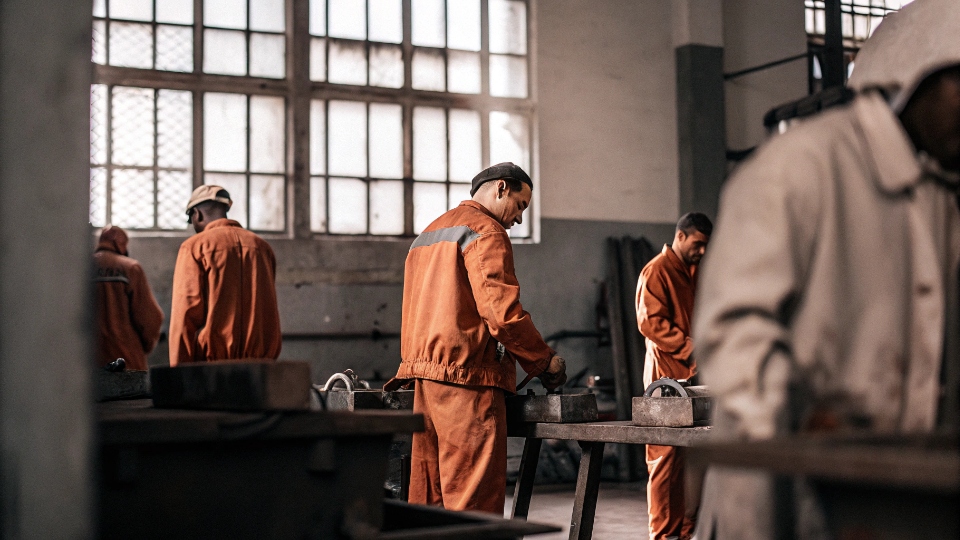
That classic image has a basis in truth. Historically, denim was the perfect prison fabric for the same reason it was perfect for miners: it was cheap, tough, and could withstand hard labor. My industry supplied prisons with denim for decades.
However, as the security concerns around the color blue grew, the system adapted. They kept the fabric but changed the look. The goal was to keep the function (durability) but remove the form (the iconic blue jean). Today, if you see denim in a prison, it has been modified for security.
You might see bright orange or yellow denim jumpsuits for road crews, making them highly visible. Or you might see work pants made of tan or green denim. The classic "jailbird" stripes are even sometimes printed on denim jackets. It's a testament to the fabric's utility that it's still used, but it's always in a form that screams "inmate," not "citizen."
Why Were Blue Jeans Banned?
The ban on blue jeans seems logical now, but it wasn't always the case. Understanding when and why the shift happened reveals a lot about both prison management and the power of clothing.
The widespread ban on blue jeans began in the 1990s following a series of incidents where their similarity to guard uniforms created dangerous confusion. This policy shift prioritized clear visual identification over the tradition of using denim as workwear.
This wasn't a single, overnight decision but a gradual policy change across state and federal systems. For most of the 20th century, the pros of denim (cost and durability) outweighed the cons. But as prison populations grew and security tactics evolved, the risk of misidentification became too great.
I remember the industry talk around this time. Orders for traditional blue denim from correctional facilities began to dry up, replaced by requests for the same durable fabric but in those bright, institutional colors. It was a direct response to real-world security breaches.
An escaped inmate in blue jeans could blend into a crowd instantly. A fight in the yard could become lethal if guards couldn't be distinguished from inmates. The ban was a pragmatic security decision that officially ended the era of the classic blue jean as prison workwear.
What Are the Color Codes in Prison?
You know that color is a powerful tool in design. In prison, it’s not about aesthetics; it’s a critical tool for communication, classification, and control.
Prisons use a strict color-coded system for inmate clothing to quickly identify their security level, work assignment, or special status. Common colors include orange for new or high-risk inmates, and khaki or green for the general population.
This is a level of "functional design" that goes beyond anything we do in the commercial world. The color of an inmate's uniform is instant information. While the specific codes vary between facilities, the system generally follows a clear logic.
Common Prison Uniform Color Meanings
| Color | Typical Meaning | Security Implication |
|---|---|---|
| Orange | New intake, maximum security, or transit | High risk, highly visible, needs close monitoring. |
| Red | Highest security risk, "Supermax" | Considered extremely dangerous, often isolated. |
| Khaki/Tan/White | General population, low-risk | Standard inmates who have been classified. |
| Blue/Green | Medium security or specific work details | Often indicates a trustee or worker status. |
| Yellow | Special protection or medical issues | Marks an inmate who is vulnerable. |
This system removes all individuality, which is the point. In fashion, you and I use denim to help people build an identity. In prison, the system uses color to assign one. It's the most extreme example of how clothing can be used not for expression, but for absolute control.
Conclusion
Blue jeans are banned from prisons because their core strengths—universal appeal and rugged durability—create unacceptable security risks. Their iconic color blurs identity, while their tough construction offers potential for misuse.
-
Understanding the security implications can shed light on prison management and safety protocols. ↩
-
Learn how denim uniforms contribute to security challenges in correctional facilities. ↩
-
Gain insights into various prison systems and their unique regulations regarding inmate clothing. ↩
-
Explore the reasons behind the ban on blue jeans in prisons, revealing insights into security and identity. ↩
-
Explore the ways clothing can be misused to hide contraband, highlighting security concerns. ↩