
You look at the current runway trends and see wide legs returning, but nothing compares to the absolute madness of the JNCO era. It was a time when pants were more like architecture than clothing.
JNCO jeans1 hit their absolute peak of popularity between 1995 and 1999. While the brand started in the mid-80s, the massive, wide-leg2 "raver" and "skater3" look became a cultural phenomenon in the late 90s before vanishing rapidly by the spring of 2000.
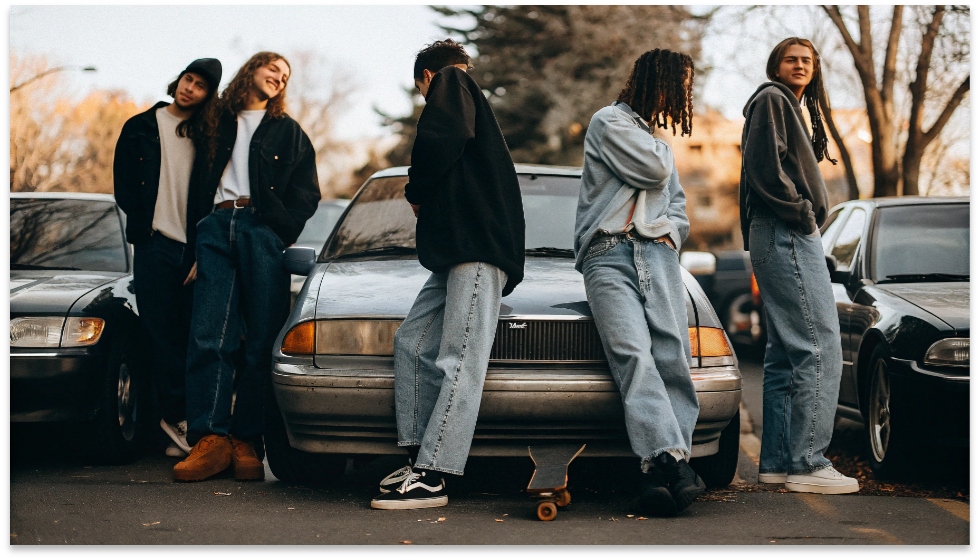
Dean, looking back at those patterns, it was a nightmare for factory efficiency. A standard pair of jeans fits nicely onto a fabric roll. JNCOs? They were essentially two skirts sewn together.
The fabric consumption was double, sometimes triple, that of a normal jean. But the demand was there. It wasn't just a trend; it was a tribal signal. If you wore these, you were part of a specific scene.
But like all extreme trends, it burned out fast. By the time we hit the new millennium, the silhouette collapsed, literally and figuratively.
Were JNCOs Popular in the 2000s?
You might associate baggy jeans with the 2000s, but you need to distinguish between "baggy" and the cartoonish proportions of JNCO. The timeline is tighter than you think.
No, JNCOs were not popular in the 2000s; they fell out of fashion sharply by early 2000. While baggy pants remained, the style shifted to "form-fitting baggy" and bootcut4s as Nu Metal and Pop trends took over, replacing the extreme rave aesthetic.
It is important to understand the nuances of the "baggy" timeline. By the Spring of 2000, the extreme wide-leg look was already dying. In my experience, once the mass market adopts a subculture look, the cool kids abandon it.
By the time 2001 rolled around, the "freak" look was over. We saw a shift in orders. The kids weren't nostalgic for the 70s anymore; they were looking toward the 80s.
The defining look of the early 2000s wasn't the JNCO "Mammoth." It was a controlled baggy. Think of the transition in music—from the underground rave scene to more polished Nu Metal5 and Boy Bands. The jeans had to fit better.
We started making what I call "form-fitting baggy." These jeans were loose in the thigh but had a structured waist and a reasonable leg opening that didn't drag on the floor. Then, the bootcut really took over.
It was cleaner. If you were still wearing JNCOs in 2002, you weren't fashionable; you were behind. The industry moves fast. We went from using 3 yards of fabric per pair back down to 1.5 yards in the blink of an eye.
How Much Did JNCO Cost in the 90s?
You might think these were cheap novelty items, but they carried a premium price tag. The cost wasn't just branding; it was physically baked into the product.
In the 90s, JNCO jeans typically cost between $50 and $70 USD. This was considered expensive for teenagers at the time, equivalent to over $120 today, due to the massive amount of denim fabric and intricate embroidery required to make them.
From a manufacturing standpoint, JNCOs were expensive to produce, which drove up the retail price. Let me break down the math for you. A standard straight-leg jean usually consumes about 1.4 to 1.5 meters of fabric. Some of the JNCO models, with leg openings ranging from 23 to 50 inches, required over 3 meters of fabric. You are literally paying for double the material.
Then you add the embroidery. These weren't simple prints. They had massive, high-stitch-count logos of crowns, bulldogs, and graffiti art on the back pockets. That machine time costs money. For a kid in 1996, dropping $60 on a pair of pants was a huge investment. It was a status symbol.
It showed you were committed to the lifestyle. Parents hated buying them not just because they looked ridiculous, but because they were pricey. Today, if you wanted to recreate that same quality—heavyweight 14oz denim, full embroidery, huge yardage—the wholesale cost would be incredibly high.
90s Denim Cost Factors
| Feature | Standard 90s Jean (e.g., Levis) | JNCO Wide Leg | Factory Implication |
|---|---|---|---|
| Fabric Yield | ~1.5 Yards | ~3.0+ Yards | Double raw material cost. |
| Decoration | Leather patch, red tab | Giant embroidery | High thread cost and slow production time. |
| Weight | 12oz - 14oz | 14oz+ (often rigid) | Harder to sew, breaks more needles. |
| Retail Price | $30 - $40 | $50 - $70 | Premium pricing for a niche market. |
Who Wore JNCO Jeans in the 90s?
To design for the current revival, you need to know who the original customer was. It wasn't the mainstream preppy kid; it was a very specific, marginalized group.
JNCO jeans were primarily worn by the "outcasts" of the 90s school social hierarchy—skaters, ravers, and a group often referred to as "freaks." They were the anti-fashion choice for kids involved in alternative subcultures who rejected the preppy aesthetic.
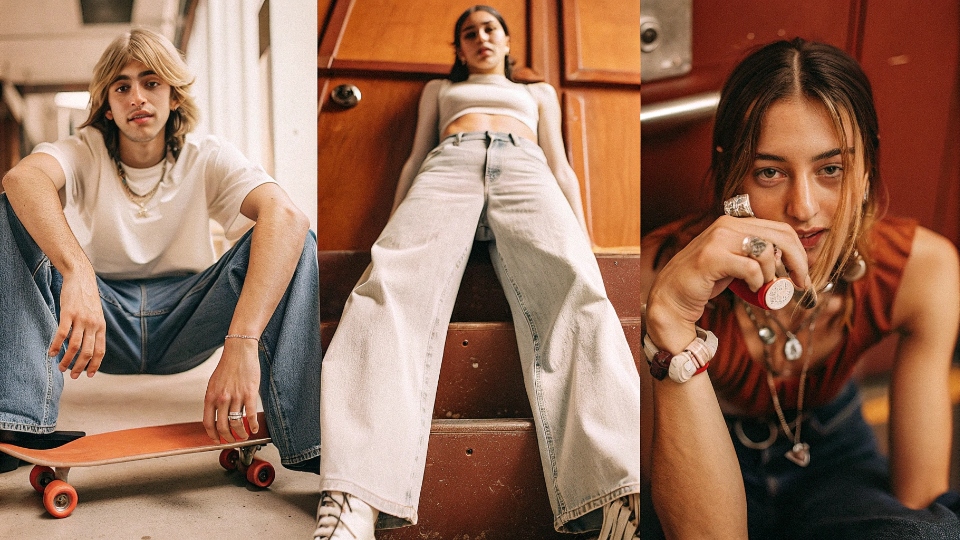
The insight you have about the "freaks" is accurate. In the Northeast and across America, high school cafeterias were divided. You had the Hip-Hop crowd wearing Tommy Hilfiger and Nautica—that was a baggy look, but it was "clean" and expensive. Then you had the JNCO crowd. These were the kids listening to Korn, heavy techno, or skating.
The "Freaks" (punks, goths, burnouts) wore them as a shield. The jeans were armor. They were heavy, wide, and aggressive. They took up space. Practically speaking, they were popular with these groups because the pockets were deep enough to hide a skateboard tool, a 40oz bottle, or drugs for the rave.
It was functional fashion for a chaotic lifestyle. Unlike the "jocks" or the "preps," the JNCO wearer wanted to signal that they didn't care about looking "nice." They wanted to look distinct. As a designer, when you tap into this energy, you aren't designing for the captain of the football team. You are designing for the rebel.
What Jeans Are Gen Z Wearing?
You see the wide-leg trend returning, but it doesn't look exactly like 1998. It is crucial to understand how Gen Z has updated the "freak" look for the modern era.
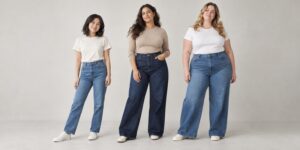
Gen Z6 is wearing "managed" wide-leg jeans that channel the 90s spirit without the extreme proportions. Popular styles include baggy skater jeans, puddling straight-legs, and cargo denim, focusing on a relaxed drape rather than the structural stiffness of the original JNCOs.
We are definitely in a wide-leg cycle, but it has evolved. Gen Z likes the idea of JNCOs, but they generally don't wear the 50-inch bottoms. That is too like a costume. What I am manufacturing now are jeans that fit well on the waist and hips (sometimes even low rise) and then stay loose through the leg.
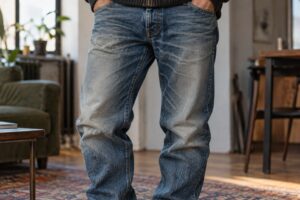
The key difference is the fabric. The old JNCOs were stiff canvas. They stood up on their own. The modern Gen Z wide leg is softer. They want "puddling"—where the fabric stacks softly over the sneaker.
It’s about flow and comfort, heavily influenced by TikTok and K-Pop fashion7, which mixes that 90s Hip-Hop vibe with a cleaner, more minimalist aesthetic. They are borrowing the silhouette of the "freaks" but polishing it up.
They want to look relaxed, not ridiculous. We use a lot of open-end cotton to get that vintage texture, but we wash it down so it drapes. It is a more sophisticated version of the rebellion.
Conclusion
JNCOs peaked from 1995 to 1999, defining the "freak" and raver subcultures. They vanished by 2000, replaced by cleaner cuts, but their spirit lives on in Gen Z’s more refined baggy fits.
-
Explore the fascinating history of JNCO jeans and their impact on 90s fashion and culture. ↩
-
Discover the latest trends in wide-leg jeans and how they are being reinterpreted today. ↩
-
Understand the impact of skater culture on 90s fashion and its lasting legacy. ↩
-
Explore the history and evolution of bootcut jeans in fashion. ↩
-
Explore the rise of Nu Metal and its influence on music and fashion in the early 2000s. ↩
-
Discover the latest fashion trends among Gen Z and how they reinterpret past styles. ↩
-
Explore the influence of K-Pop on global fashion trends and styles. ↩