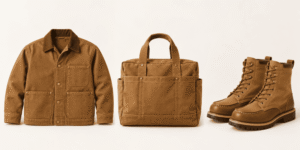

Heavy tools rip weak pockets quickly. Flimsy seams ruin good work pants fast. Let me show you how tiny metal pieces solve this massive problem forever.
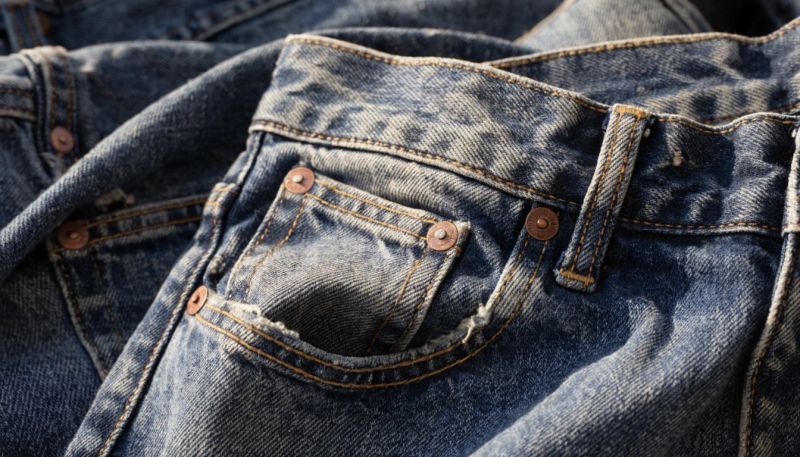
Jeans have metal rivets to reinforce weak points where fabric tears easily. In 1873, tailors added solid copper dots to pocket corners.1 Rivets stop seams from ripping under heavy stress. They keep denim garments intact during hard physical labor today.
Bad designs fail in my factory every day. You must understand basic denim rules to avoid costly production mistakes completely.
What is the purpose of rivets in jeans?
Miners lost their gold when pockets split open. Weak thread hurts your clothing brand2 deeply. Learning basic rivet functions prevents angry customer returns easily.
The main purpose of rivets in jeans is to stop tears at high-stress points. Rivets clamp fabric layers tightly together. They bear heavy loads when workers carry tools. Modern rivets also act as a permanent brand mark to prevent fake copies.
I started working with denim twenty years ago. I quickly found out that thread alone fails. During the 19th-century American Gold Rush, miners dug for gold on their knees. They stuffed heavy metal tools into their pants. The standard cotton string snapped constantly. Tailor Jacob Davis saw this massive failure daily. He partnered with fabric merchant Levi Strauss.
Solving the Ripped Pocket Problem
They mapped out the exact stress points on the raw pants. They placed metal pins at the pocket edges and the front fly. This locked the thick fabric securely.
| Problem | Old Solution | New Rivet Solution |
|---|---|---|
| Pockets tear open | Weak cotton thread | Solid metal clamp |
| Heavy tool weight | Triple stitching | Structural anchor point |
| Cheap fake copies | Printed brand label | Custom engraved metal |
They patented this brilliant idea together in 1873.3 This historical event launched the classic 501 jeans. Today, I build strong garments with top New York designers like Dean. We use custom rivets to guarantee real durability. Small functional details build true brand value.
What pair of jeans cost $10,000?
You want to build a profitable luxury brand. Selling cheap pants keeps your profit low. Discover how historical metal details make vintage denim incredibly valuable.
An original pair of Levi's from the late 1800s can cost over $10,000.4 Collectors pay high prices for authentic early workwear. Intact copper rivets, original stitching, and single-pocket designs prove their historical age. These old details turn work pants into expensive investments.
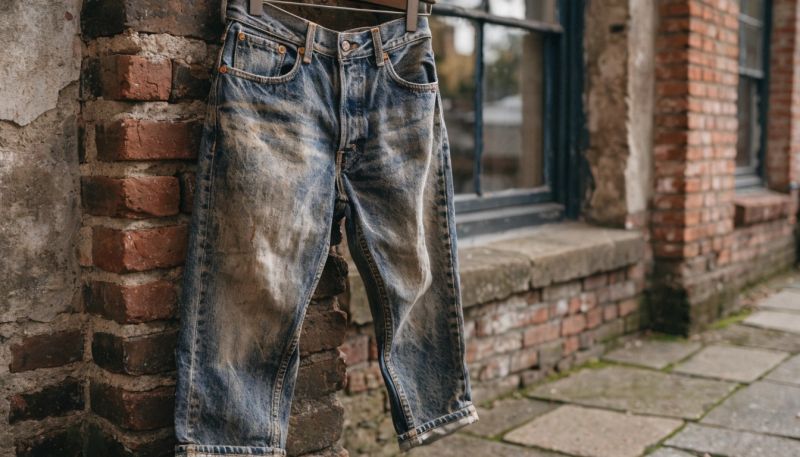
People often ask me why old denim costs a fortune today. True historical details push the retail price tag extremely high. An original 1890s pair of pants sells for more than $10,000 at modern auctions. The high price comes directly from the hardware evolution.
The Evolution of Back Pocket Hardware
Early jeans had exposed rivets heavily pounded into the back pockets. These big metal pieces scratched horse saddles.5 They ruined fine wooden chairs fast.
| Time Period | Hardware Style | Practical Reason |
|---|---|---|
| 1873 to 1930s | Exposed back rivets | Maximum work strength |
| 1937 to 1960s | Hidden inside fabric | Stop scratching furniture |
| 1960s to Present | Bar tack stitching | Fast machine sewing |
Brands eventually hid these metal dots under the soft fabric.6 Later, they removed them completely. An exposed back rivet proves the extreme age of the garment. I study these old pairs carefully at DiZNEW. I replicate these old production methods for my clients. Dean asks me to recreate this classic 1890s look often. We use custom oxidized copper. We place the heavy hardware in exact historical spots perfectly.
Why does Gen Z hate skinny jeans?
Tight pants restrict your daily movement badly. Modern shoppers reject clothes that cause actual pain. You lose young buyers if you ignore simple comfort trends.
Gen Z hates skinny jeans because they prefer casual comfort and relaxed fits. Tight denim restricts blood flow and makes sitting uncomfortable. Younger generations favor wide-leg, baggy, and straight vintage cuts. These looser styles offer better freedom of movement today.
Fashion constantly shifts toward practical daily comfort. I see this trend shift clearly on my factory floor every week. We produce much less tight stretch denim now. Gen Z buyers want pants that let them breathe deeply. Tight skinny jeans press hard against the legs. They restrict active daily movement completely.
The Move Toward Relaxed Styles
Young people value their personal comfort above rigid style rules. They look back at pure 1990s fashion for fresh inspiration.
| Denim Style | Fit Characteristics | Gen Z Opinion |
|---|---|---|
| Skinny Jeans | Very tight legs and waist | Uncomfortable and old |
| Straight Leg | Equal width top to bottom | Classic and wearable |
| Baggy Jeans | Wide legs and deep crotch | Trendy and very comfortable |
This change affects how we construct the garment entirely. Loose jeans put different physical stress on the fabric seams. We adjust our sewing patterns to match these big shapes. I tell my client Dean to focus heavily on soft vintage washes. Looser fits require stronger pocket corners anyway. Proper hardware placement stays vital even when the leg silhouette gets much wider.
What is the 2 finger test for jeans?
Wearing tight waistbands hurts your stomach fast. Guessing your correct size causes frustrating store returns. Learn a quick trick to find your perfect fit instantly.
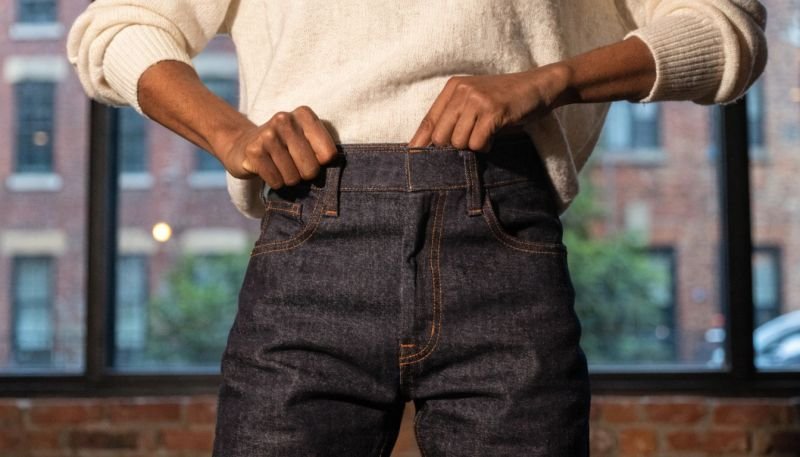
The 2 finger test helps you find the perfect fit for your jeans waistband. You slide two fingers inside the front waistband of buttoned pants. If two fingers fit securely but snugly, the size is correct. This easy method ensures you have enough room to breathe.
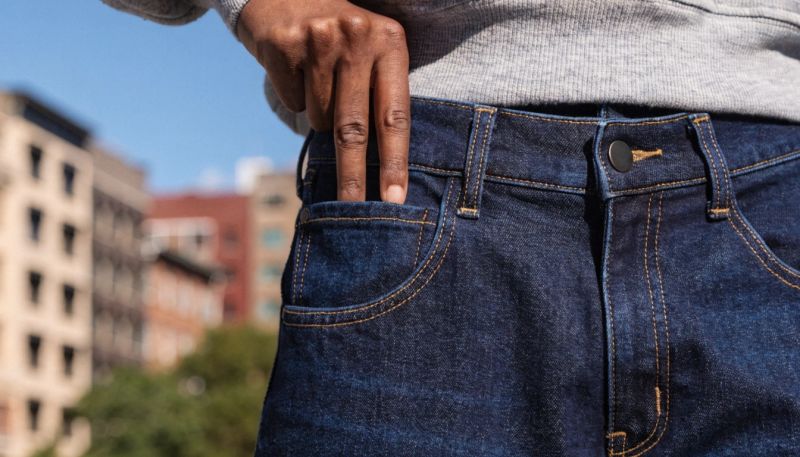
Getting the right fit solves many simple manufacturing headaches. I always check sizing strictly before I ship raw products. The two finger rule remains a golden standard in our industry.
Finding the Perfect Waist Space
You must leave enough room for your body to move naturally. Stiff denim does not stretch easily. Tight waists pull hard on the main button. This heavy stress rips the top button completely off.
| Fit Result | Space Inside Waistband | Comfort Level |
|---|---|---|
| Too Tight | Cannot fit any fingers | Painful when sitting down |
| Perfect Fit | Fits exactly two fingers | Comfortable and secure |
| Too Loose | Fits whole hand easily | Needs a tight belt |
I discuss fit tolerances with Dean every single season. We use heavy metal buttons and thick rivets at DiZNEW to secure the front fly. But strong hardware cannot fix a bad size. We pre-shrink our fabrics during the washing phase. This vital step prevents the thick jeans from shrinking later. The two finger space guarantees the final customer feels comfortable all day long.
Conclusion
These tiny metal dots solve real structural problems daily. They crossed 150 years of rich history. They remain a perfect example of form following function in true garment design.
-
"Forever in Blue Jeans…and in Court - Pieces of History", https://prologue.blogs.archives.gov/2010/05/20/forever-in-blue-jeansand-in-court/. The 1873 U.S. patent record for improved fastening of pocket openings supports the historical use of metal rivets on work-pant stress points, although it should be cited as a patent history rather than proof of every later jeans design. Evidence role: historical_context; source type: government. Supports: Riveted pocket reinforcement for jeans originated in 1873.. Scope note: The patent supports the historical origin of riveted pocket reinforcement but may not describe the phrase “solid copper dots” in modern article wording. ↩
-
"[PDF] Customer Satisfaction, Loyalty and Repurchase: Some Evidence ...", https://commons.erau.edu/cgi/viewcontent.cgi?article=1020&context=db-management. Studies of apparel consumer behavior link perceived garment quality—including durability and construction performance—to satisfaction, trust, and brand loyalty, supporting the claim that weak construction can damage a clothing brand. Evidence role: general_support; source type: paper. Supports: Weak thread hurts your clothing brand deeply.. Scope note: The source may support the broader relationship between apparel quality and brand outcomes rather than specifically isolating thread strength as the only cause. ↩
-
"Forever in Blue Jeans…and in Court - Pieces of History", https://prologue.blogs.archives.gov/2010/05/20/forever-in-blue-jeansand-in-court/. The U.S. patent record for Davis and Strauss’s 1873 improvement in fastening pocket openings supports that the riveted-work-pants design was patented that year. Evidence role: case_reference; source type: government. Supports: Jacob Davis and Levi Strauss patented riveted pocket reinforcement in 1873.. Scope note: The source establishes the patent event but does not support evaluative language such as “brilliant.” ↩
-
"19th-century Levi's jeans found in mine shaft sell for over ... - CNN", https://edition.cnn.com/style/article/19th-century-levis-jeans-intl-scli. Auction records or museum reporting on nineteenth-century Levi’s jeans can support that authenticated late-1800s pairs have sold for more than $10,000, although sale prices vary by provenance and condition. Evidence role: statistic; source type: other. Supports: Authenticated late-1800s Levi’s jeans can sell for more than $10,000.. Scope note: Auction prices are case-specific and do not establish a universal market value for all late-1800s Levi’s jeans. ↩
-
"The 80-Year Coverup - Levi Strauss & Co", https://www.levistrauss.com/2017/07/06/80-year-cover/. Historical accounts of Levi’s back-pocket rivets support that exposed rivets were later concealed because they could scratch saddles and furniture, although the exact extent of saddle damage is contextual rather than quantitatively measured. Evidence role: historical_context; source type: institution. Supports: Exposed back-pocket rivets were known to scratch saddles or furniture.. Scope note: The evidence is likely historical explanation rather than controlled testing of saddle damage. ↩
-
"Hidden Rivets - Devil In The Details - Heddels", https://www.heddels.com/2011/11/hidden-rivets-devil-in-the-details/. A denim-history source should support that back-pocket rivets were concealed under fabric in the twentieth century to reduce scratching, particularly in Levi’s 1937 design change. Evidence role: historical_context; source type: institution. Supports: Jeans makers hid back-pocket rivets beneath fabric after exposed rivets caused practical problems.. Scope note: The evidence may document a prominent brand’s change rather than every jeans manufacturer’s practice. ↩