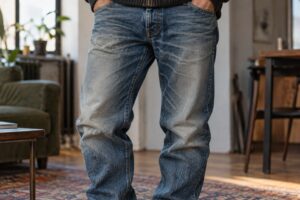

You find the perfect pair of jeans, the fit is amazing. You wash them once, and they're too tight. You wear them for a day, and they're baggy. It's a frustrating cycle. I'll explain this denim paradox.
Jeans shrink and stretch because of the natural properties of cotton fiber1. Cotton absorbs water and shrinks when washed, then stretches out from the physical force of being worn2. It's a constant battle between tension and relaxation.
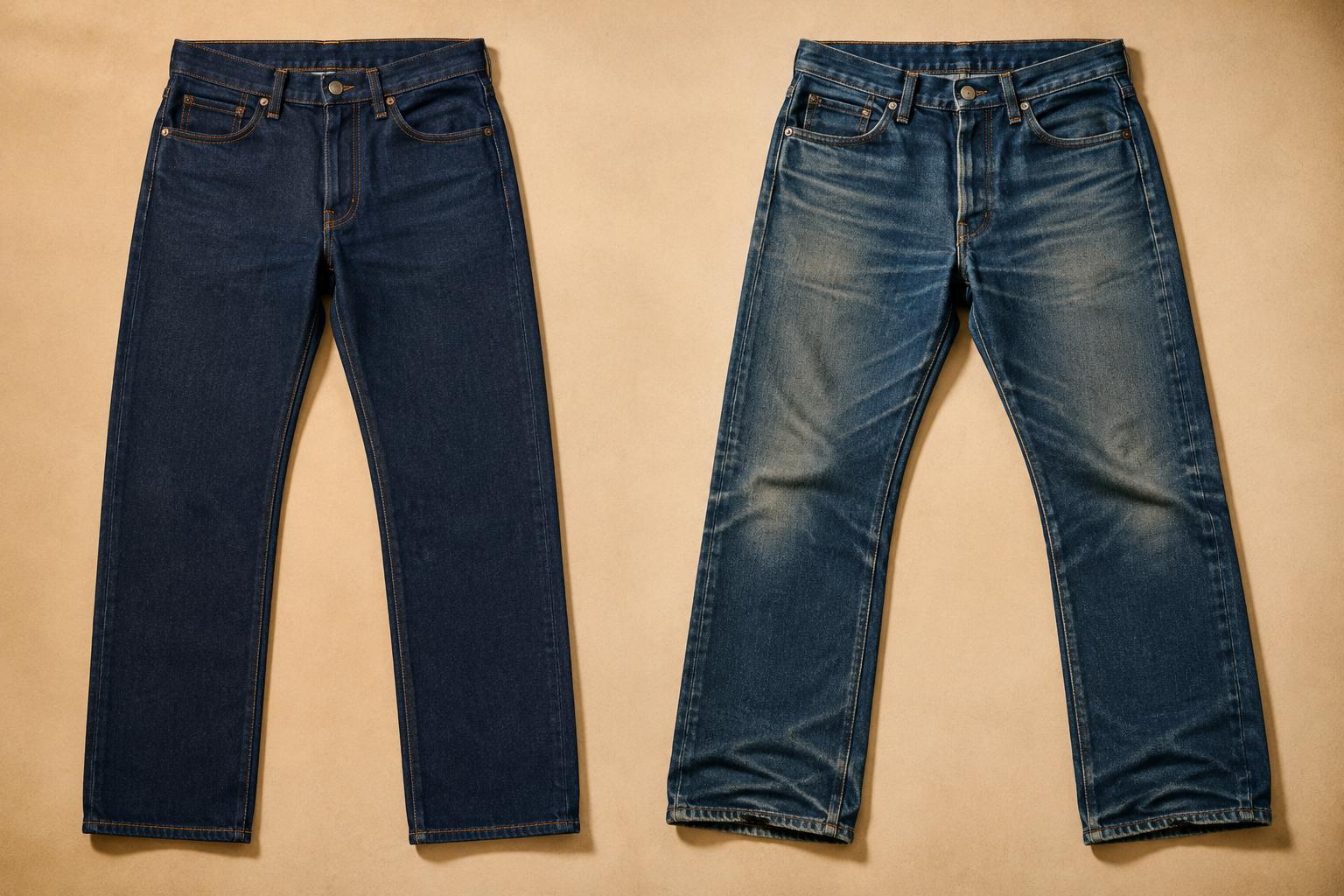
For two decades, I've lived with this reality on my factory floor at DiZNEW. This isn't a defect; it's the fundamental character of the material we love. For a designer like you, understanding this behavior at a fiber level is the key to creating a product that not only looks good on the hanger but lives well with the customer. Let's get into the science of why this happens and how we can manage it.
How do I stop my jeans from shrinking?
You're afraid to wash your brand-new jeans. You know they fit perfectly now, but washing them feels like a gamble. I'm here to tell you how to win that bet.
To stop your jeans from shrinking, you must avoid heat. Wash them inside out, in cold water, on a gentle cycle. Most importantly, hang them to air dry. The high heat from a tumble dryer is the number one cause of significant shrinkage.3

Dive Deeper: Releasing Manufacturing Tension
The biggest reason for shrinkage, especially on the first wash, is the release of tension. Think about my factory floor. To create a massive roll of denim, the cotton yarns are spun, woven, and finished under immense tension4. They are pulled tight through the entire process. The fabric you receive is essentially a collection of stretched-out cotton fibers, held in place.
When you wash them, particularly for the first time, all that changes. Cotton is incredibly absorbent; it's like a sponge. As the fibers soak up water, they swell up and relax5, trying to return to their original, unstretched state. This collective release of tension causes the entire garment to shrink. Heat supercharges this process. Hot water and a hot dryer make the fibers contract much faster and more dramatically. Cold water minimizes this shock, allowing the fibers to relax more gently.
| Wash Method | Heat Level | Fiber Reaction | Expected Shrinkage |
|---|---|---|---|
| Hot Wash & Hot Dry | High | Aggressive contraction | Significant (can be 1-2 sizes) |
| Warm Wash & Warm Dry | Medium | Moderate contraction | Noticeable |
| Cold Wash & Air Dry | Low / None | Gentle relaxation | Minimal (often recovers with wear) |
Do jeans go back to normal after shrinking?
So you forgot, and you threw them in the dryer. Now they're a size too small. Is it time to panic, or can they be saved? Let's talk about recovery.
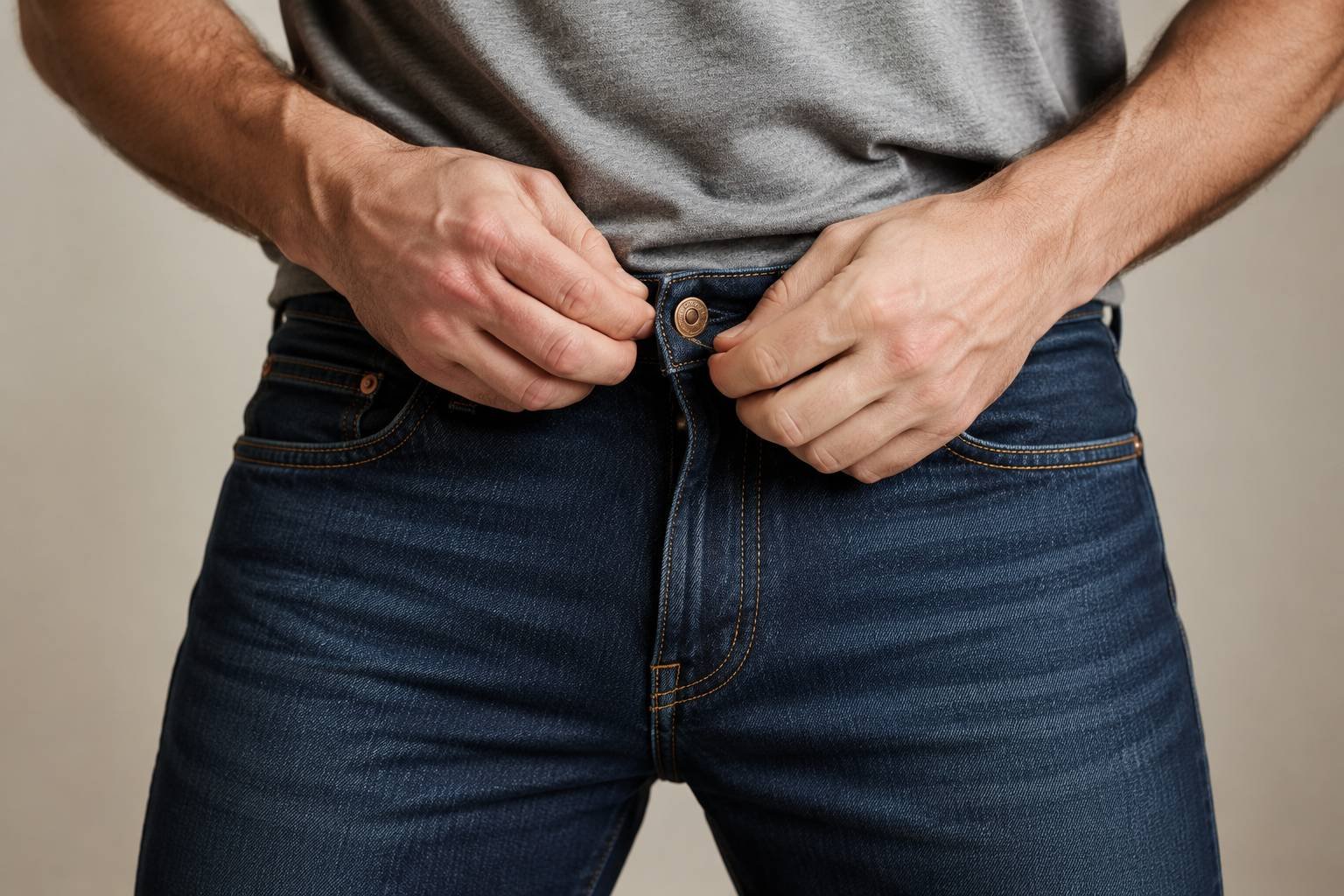
Yes, in most cases, jeans will stretch back out after shrinking in the wash6. The shrinkage tightens the weave, but it doesn't permanently shorten the cotton fibers. Simply wearing them will apply tension and pull the fibers back into their stretched state.
Dive Deeper: The Bounce Back Effect
Think of the denim weave like a chain-link fence. After a wash, all the links have pulled closer together, making the fence smaller. But the individual metal links aren't any shorter. When you start pulling on the fence, the links separate again, and the fence expands back to its original size. It's the same with your jeans.
The physical act of wearing them—walking, sitting, bending—puts the fabric under tension. Your body heat and natural moisture also help the fibers relax and become more pliable. The jeans will feel tight at first, but within a few hours, the weave will loosen up, and they should feel comfortable again. This is the natural "bounce back" of 100% cotton denim. The only time this doesn't work is in cases of extreme shrinkage from very high heat, which can sometimes "set" the fibers in their contracted state more permanently. But for normal shrinkage, a little bit of wear is the best cure.
Do jeans get looser or tighter over time?
You have a favorite pair of jeans. When they're fresh out of the laundry, they're perfect. But by the end of the week, they're baggy. What's the long-term trend?
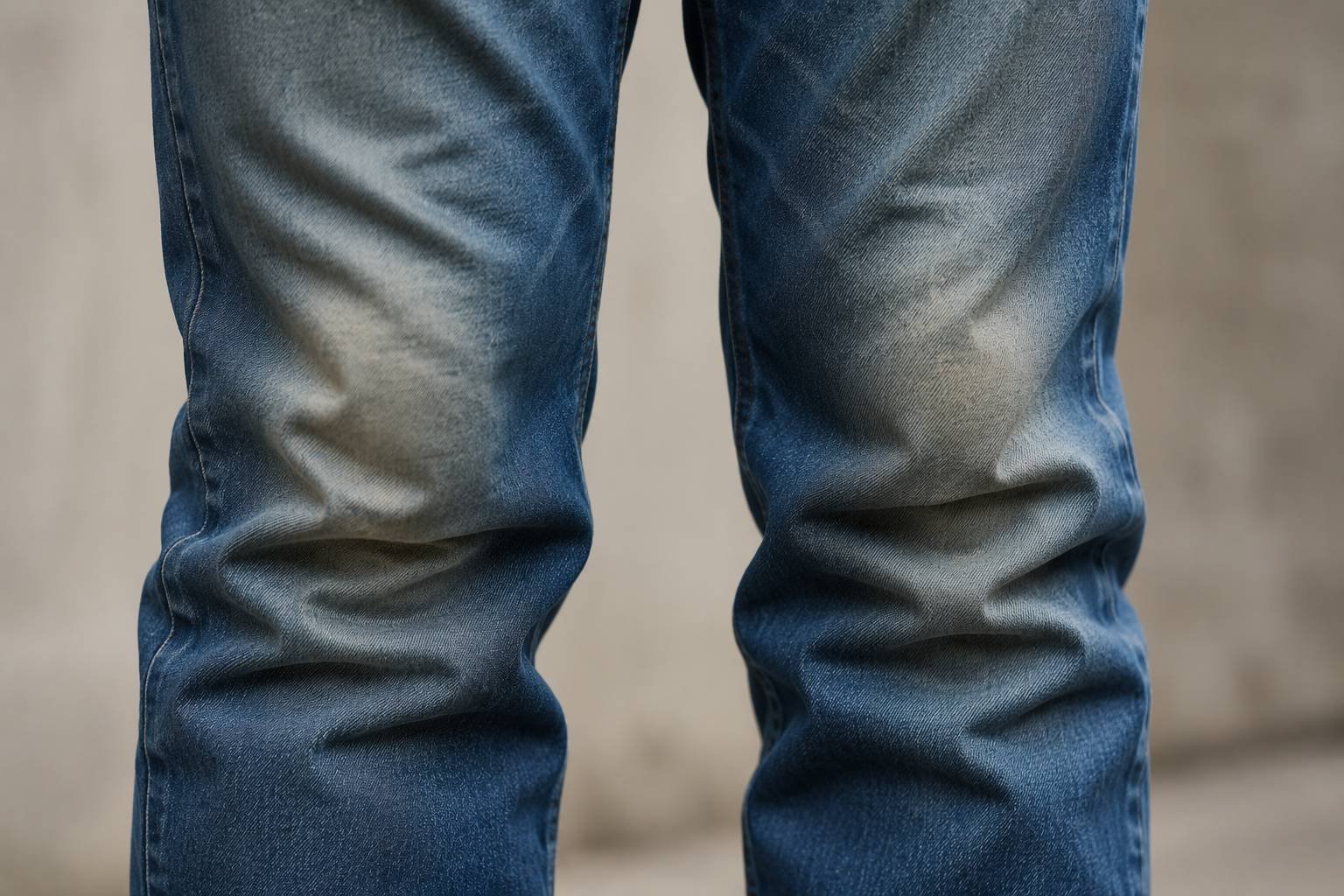
Jeans definitively get looser over time with wear. The constant stress from daily activities like sitting and walking physically stretches the cotton fibers, especially in high-movement areas like the knees, hips, and seat. A wash will temporarily tighten them, but the overall trend is toward loosening.
Dive Deeper: The Physics of Wear and Tear
Cotton fibers have a certain amount of natural elasticity, but it's not perfect. Imagine stretching a small spring over and over again. Eventually, it won't return to its original tight coil. It will be slightly longer. The cotton fibers in your jeans behave in a similar way.
Every time you bend your knee, you are physically stretching the fibers in that area. Every time you sit down, you are stretching the fibers across the seat and hips. Over thousands of repetitions, these fibers lose a small fraction of their ability to bounce back. The weave of the fabric becomes slightly more open and relaxed in these high-stress zones. This is why you see "baggy knees" or a loose seat. It's not that the whole jean is getting bigger, but rather that specific areas are conforming and molding to your body and your movements. As a designer, this is why the choice of fabric density and weave is so critical—a tighter, heavier weave will resist this stretching much better than a loose, lightweight one.
How do I stop my jeans from stretching out?
Your jeans have become a shapeless, baggy mess. You miss the crisp fit they had when they were new. Is there a way to turn back the clock?
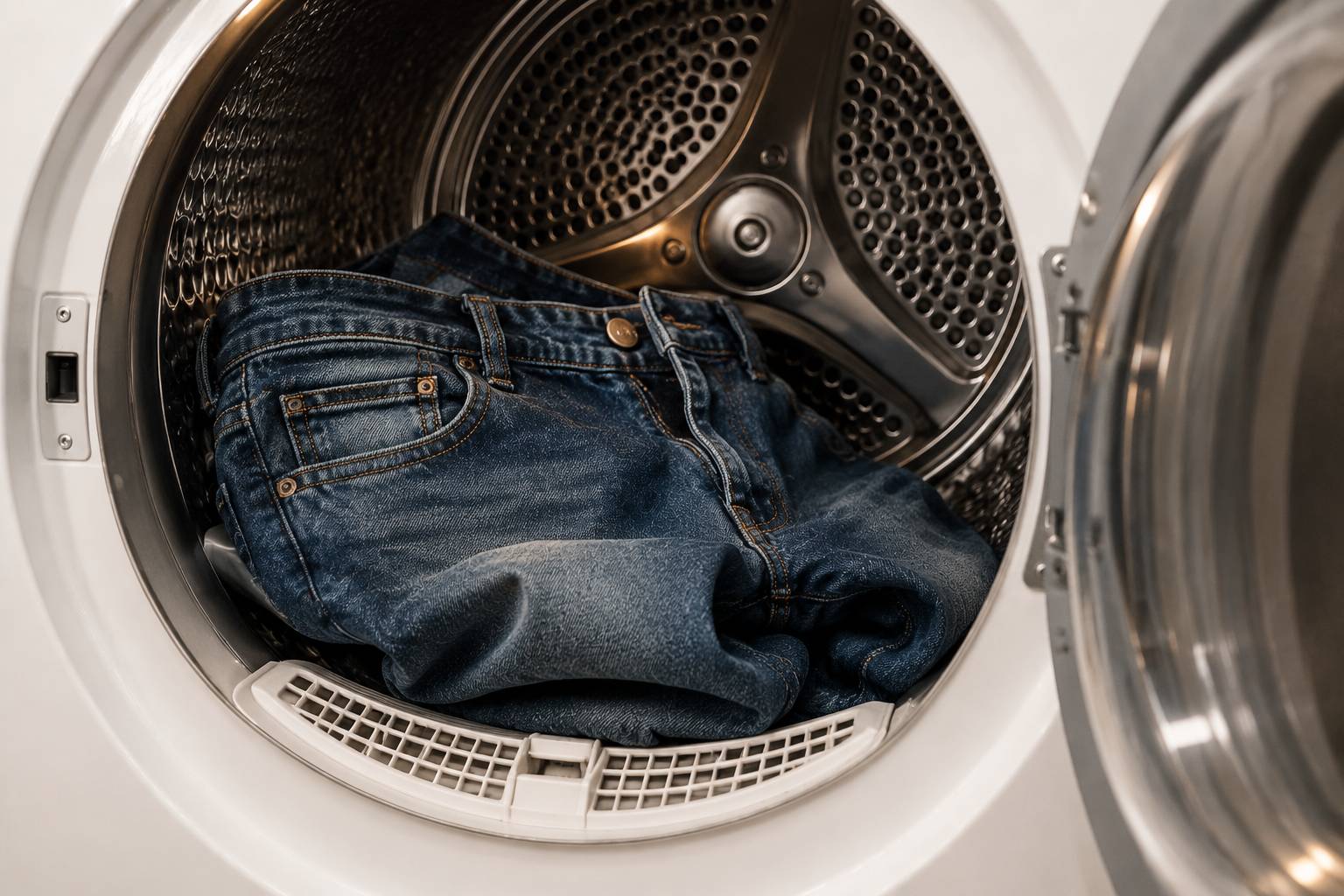
To stop jeans from stretching out, you can use a hot wash and a tumble dry to "reset" the cotton fibers and tighten the weave. For a more permanent solution, choose jeans that are designed for shape retention, which may include high-quality spandex or a small amount of polyester.
Dive Deeper: Building a Stronger Jean
While a hot wash and dry cycle is an effective quick fix, it's a trade-off. That same heat that tightens the cotton can damage any spandex (elastic) fibers in the blend, causing them to become brittle and lose their elasticity over time. It's a short-term solution that can cause long-term problems.
The best way to prevent stretching is during the design and manufacturing phase. This is something you and I can partner on. If we are using a stretch fabric, I would recommend a high-quality Lycra that has excellent "recovery" properties. For non-stretch jeans, we can look at fabric construction. Sometimes, blending a very small percentage (1-2%) of polyester with the cotton can create an internal "scaffold" for the fabric. The polyester acts as a strong, stable core that helps the cotton fibers return to their original shape. The customer won't feel the polyester, but they will notice that the jeans hold their shape much, much better. It's about engineering the fabric to fight stretching from the very beginning.
Conclusion
Jeans live a dynamic life of shrinking and stretching. Understanding this is key. Care for them with cold water and air drying, and they will adapt and last for years.
-
"Transitional properties of cotton fibers from cellulose ... - BioResources", https://bioresources.cnr.ncsu.edu/resources/transitional-properties-of-cotton-fibers-from-cellulose-i-to-cellulose-ii-structure/. A textile-science source should document that cotton’s cellulosic fibers are hydrophilic and dimensionally responsive to moisture, supporting the explanation that denim’s behavior is linked to cotton fiber properties. Evidence role: mechanism; source type: paper. Supports: Jeans shrink and stretch because of the natural properties of cotton fiber.. Scope note: This supports the material mechanism generally; it may not quantify shrinkage or stretch for a specific denim fabric. ↩
-
"[PDF] Note on flexural fatigue of textiles", https://nvlpubs.nist.gov/nistpubs/jres/29/jresv29n1p69_A1b.pdf. A textile mechanics source should support that repeated mechanical loading during wear can cause fabric deformation and growth, especially in areas subject to bending and tension. Evidence role: mechanism; source type: paper. Supports: Denim stretches out from the physical force of being worn.. Scope note: The evidence will likely address fabric deformation generally rather than consumer jeans specifically. ↩
-
"(PDF) Effects of Various Home Drying Practices on Smoothness ...", https://www.academia.edu/87062493/Effects_of_Various_Home_Drying_Practices_on_Smoothness_Appearance_Shrinkage_Handle_and_Other_Properties_of_Woven_Fabrics. A laundry-care or textile-testing source should show that elevated drying temperatures increase cotton fabric shrinkage compared with low-heat or air drying conditions. Evidence role: general_support; source type: government. Supports: High heat from a tumble dryer is the main cause of significant shrinkage in jeans.. Scope note: The phrase “number one cause” may be stronger than the available evidence unless a comparative study ranks causes directly. ↩
-
"Effect of Warp Yarn Tension on Crimp% in Woven Fabric", https://www.academia.edu/50855891/Effect_of_Warp_Yarn_Tension_on_Crimp_in_Woven_Fabric. A textile manufacturing source should describe that yarn and fabric production processes, including spinning, weaving, and finishing, impose tension on yarns and fabrics. Evidence role: mechanism; source type: education. Supports: Cotton yarns in denim are spun, woven, and finished under substantial tension.. Scope note: The source may describe industrial textile processing generally rather than denim production at a specific factory. ↩
-
"Relaxation phenomenon and swelling behavior of regenerated ...", https://pubmed.ncbi.nlm.nih.gov/31888833/. A fiber-science source should document that cotton cellulose absorbs moisture and swells, which can relax yarn and fabric stresses during wetting. Evidence role: mechanism; source type: paper. Supports: Cotton fibers swell and relax when they absorb water.. Scope note: The link from fiber swelling to whole-garment fit change is indirect and depends on construction and finishing. ↩
-
"[PDF] Effect of Laundering on Dynamic Elastic Behavior of Cotton and ...", https://jtatm.textiles.ncsu.edu/index.php/JTATM/article/viewFile/2593/1790. A textile-performance source should explain that cotton fabrics can regain some dimensions under mechanical tension after laundering shrinkage, supporting partial recovery through wear. Evidence role: mechanism; source type: paper. Supports: In most cases, jeans will stretch back out after shrinking in the wash.. Scope note: The support is likely for partial dimensional recovery, not a guarantee that all jeans return to their original size. ↩