Skip to content

You've bet your entire season's collection on a new color. By the time your jeans hit the market, that color is old news, leaving you with dated inventory and lost profits.
A strategic factory partner doesn't just sew; we provide data-driven color forecasts1 and rapid sampling. This helps you validate trends and adapt quickly, ensuring your collection is always on point.
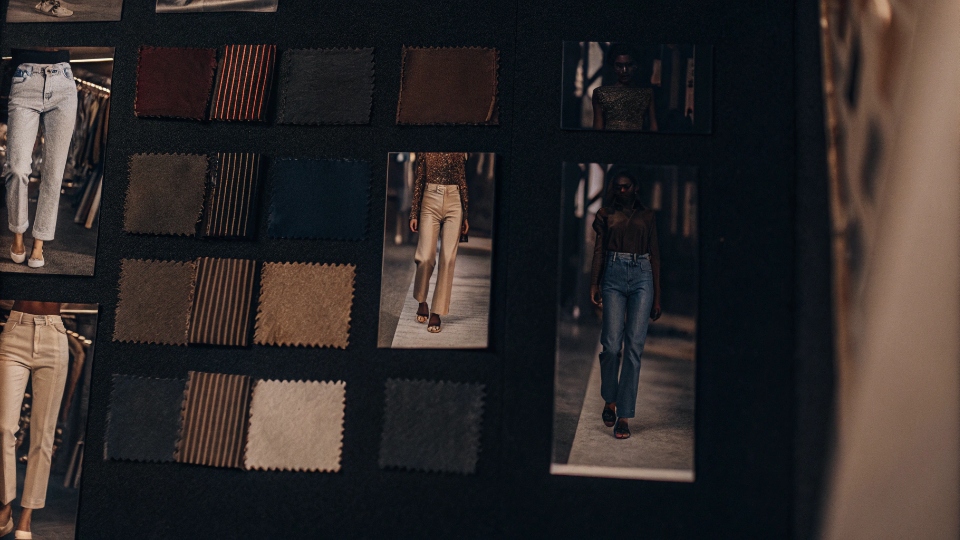
I've seen so many color trends come and go in my 20 years. I remember when every brand wanted the same dark, raw indigo. Then came the era of bright, bold colors. One year, a European client asked me for a pale, dusty rose color for a men's jean.
My team thought he was crazy. But he was looking at trend forecasts from WGSN2 that we hadn't seen yet. We developed the color, and it became his best-seller that summer. That taught me a valuable lesson: manufacturing isn't just about making things.
It's about seeing what's next. Now, my job for designers like Dean is to connect those future trend insights with the practical reality of what can be made, dyed, and washed right here in my factory.
Do They Provide Trend Insights for My Next Collection?
You are designing for next year, but feel like you're guessing what colors will be in demand. You need reliable data, not just a gut feeling, to build a commercially successful collection.
Yes. We subscribe to professional trend services like WGSN and analyze real-time market data. We provide you with a curated forecast 18 months out, tailored to your target market and customer profile.
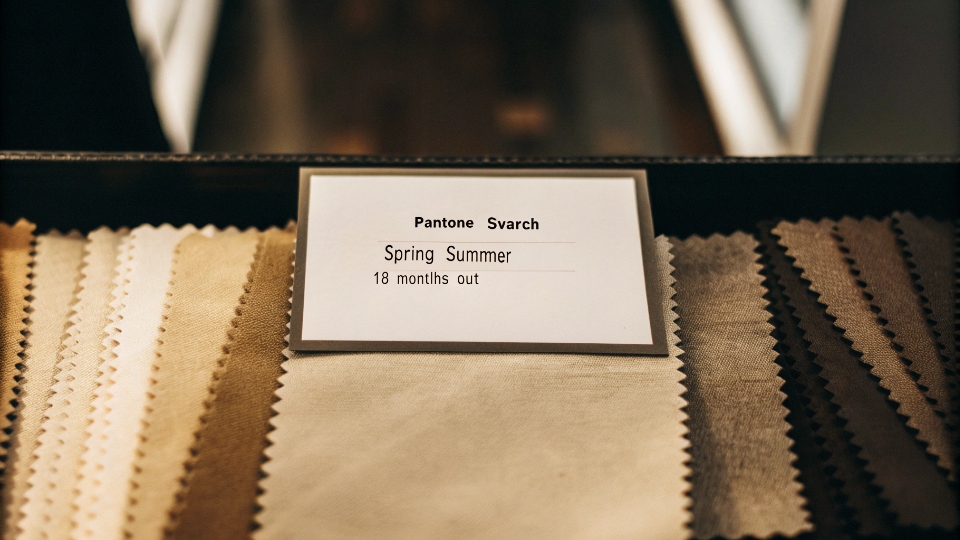
We invest in trend forecasting so you don't have to navigate it alone. Our support is a two-part process. First, we provide Long-Range Strategic Forecasts.
Eighteen months before a season, we compile a report based on insights from WGSN, Première Vision fabric shows, and global fashion weeks.
This gives you the big picture, like the shift towards earthy tones or the return of pastels. Second, we offer Short-Range Market Intelligence3. This is our unique advantage.
I see what dozens of brands from the US, Europe, and Asia are sampling right now. If five different brands are suddenly requesting samples in olive green, I can tell you that this color has real commercial heat behind it.
We can tell you if 'Digital Emerald Blue' is trending in North America while 'Watermelon Magenta' is taking off in Europe, helping you fine-tune your collection by region.
Can They Recommend Popular Wash Colors This Season?
You see a trend color like "Muted Olive" on a runway, but you have no idea how to translate that into an attractive and sellable denim wash. You need technical an technical recommendation, not just a color chip.
Absolutely. Our expertise is turning a flat color concept into a dynamic wash. We recommend specific dye types and wash processes, like sulfur dyeing4 and enzyme washing5, to achieve your desired trendy look.
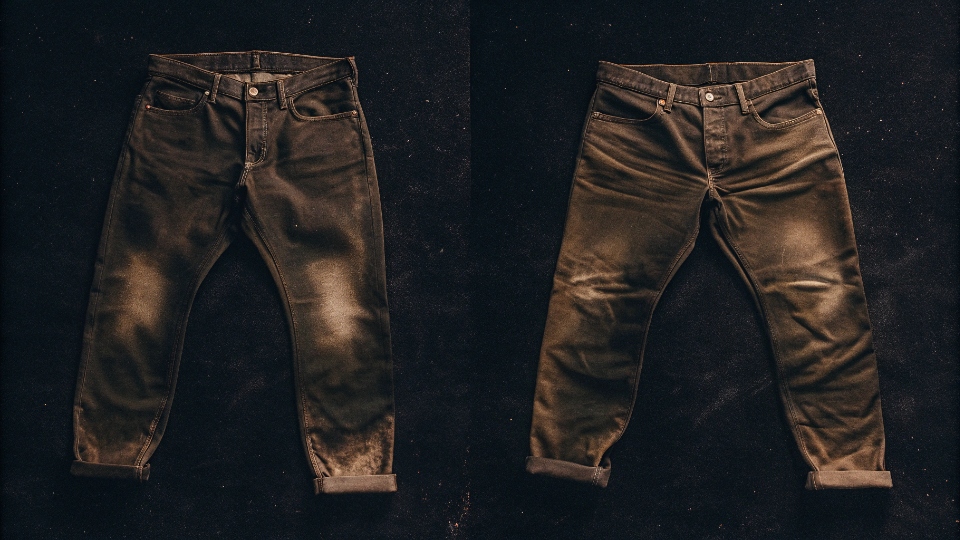
A color name is just the beginning; the wash is what brings it to life. Translating a trend into a denim product is my specialty.
For every key trend color, we develop specific "recipes" that create a beautiful, commercial finish. Denim's magic comes from how it wears and fades, and our job is to replicate that in a controlled, beautiful way.
We don't just dye fabric a flat color. We use specialized techniques to give the color depth and character. This combination of the right dye chemistry and the right mechanical washing process is how we take a simple idea like "olive" and turn it into a jean with a soft hand-feel and a vintage soul that customers will love.
Translating Trend Colors into Washes
| Trend Color Concept | Recommended Process | Resulting Look & Feel |
|---|---|---|
| Pastel Lavender | Garment Dye + Enzyme Wash | A soft, uniform color with a very smooth, clean hand-feel. |
| Earthy Terracotta | Pigment Dye + Stone Wash | A worn-in, sun-faded look with visible texture and highs and lows. |
| Vibrant Coral | Reactive Dye + Ozone Fade | A bright, stable color with a modern, clean finish and eco-friendly credentials. |
How Do They Update Me On New Fabric Lots?
You've approved a perfect color sample. Months later, you hear the factory is using a new batch of raw denim, and you panic that the color will be inconsistent across your production run.
We enforce strict color consistency. Before we touch your bulk production, we send you a cutting from the new fabric lot, dyed to your standard, for your mandatory approval.
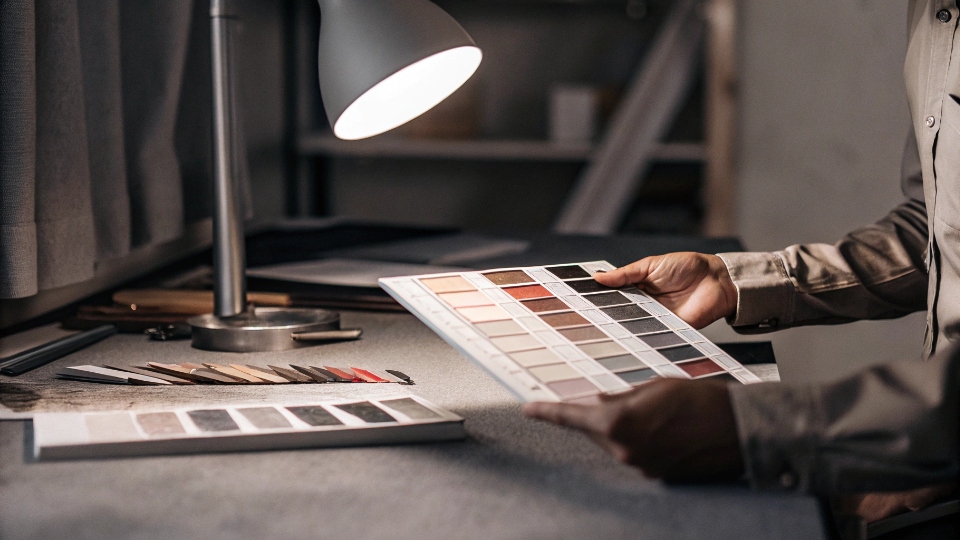
Managing color consistency is a non-negotiable part of our quality control. Denim is a natural product, and tiny variations between different weaving lots are inevitable.
Our job is to manage this process transparently so there are no surprises. When a new shipment of raw greige denim arrives, we immediately take a sample. We then dye this sample using the exact formula we created for your approved color.
This swatch is called a "production lot lab dip6." We send it to you for review. You compare it against your original approved sample. While a 100% perfect match is impossible, it must be within a very tight, commercially acceptable tolerance.
We will not cut a single pair of jeans for your bulk order until we receive your signed approval on this new lot sample. This simple but critical step guarantees consistency and protects your brand's quality standard.
What Sampling Support Validates Trend Concepts?
A new color looks great on a small swatch, but you're not sure how it will look on a finished garment with stitching, hardware, and washes. You can't commit to 1,000 units based on a guess.
We provide a full prototype garment sample for every new color. This allows you to see the color on a 3D product, test the wash, and make final adjustments before committing to bulk production.
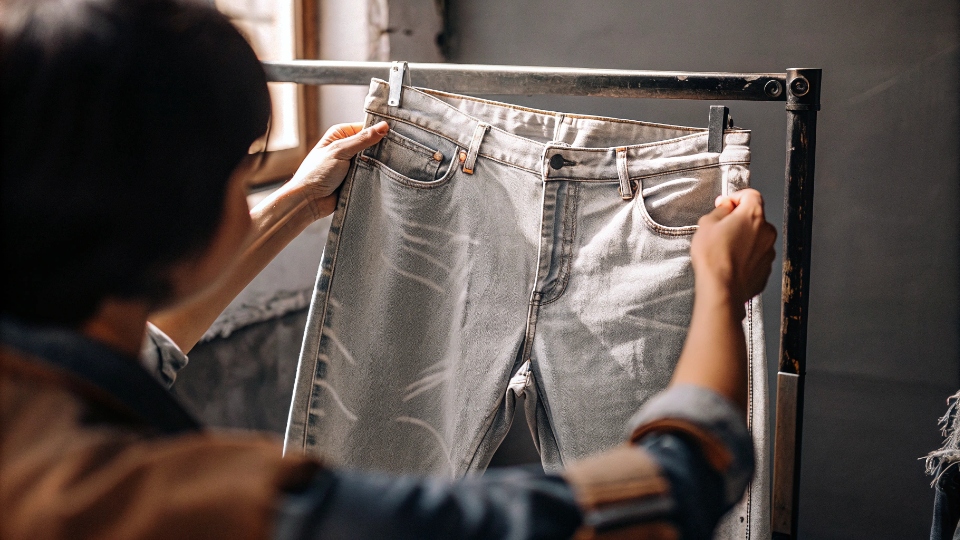
Seeing is believing. Our sampling process is designed to give you complete confidence before you place a large order. It's a structured, collaborative process.
- Color Standard: You provide a target, usually a Pantone color chip7 or a small piece of fabric you like.
- Lab Dip Submission: We create 2-3 small dyed swatches for you, often labeled A, B, and C. These will be slight variations on your target color, allowing you to pick the one that feels most accurate.
- Prototype Garment: Once you approve a lab dip, we create a full, finished jean. This is the most important step. You can see how the color interacts with thread colors, how the wash brings out highs and lows at the seams, and how it looks with your branded hardware.
- Final Approval: You can then approve the garment to go to production, or you can request minor tweaks, like "make the sanding on the thighs a little lighter." This hands-on validation process removes all guesswork and ensures the product in the box is the product you envisioned.
Conclusion
A great factory is a partner in trends, not just production. We help you de-risk seasonal colors by providing data, technical expertise, and a rigorous sampling process to ensure your vision succeeds.
-
Explore how data-driven color forecasts can help you stay ahead of trends and make informed design decisions. ↩
-
Discover the impact of WGSN's trend forecasts on fashion design and how they can guide your collections. ↩
-
Find out how Short-Range Market Intelligence can provide insights into current market trends. ↩
-
Discover the process of sulfur dyeing and its role in achieving trendy denim looks. ↩
-
Explore enzyme washing and how it enhances the quality and feel of denim products. ↩
-
Understand the significance of production lot lab dips in ensuring color consistency in denim. ↩
-
Explore the importance of Pantone color chips in achieving accurate color representation in fashion. ↩