Skip to content

Your brand is taking off, but your factory's capacity is maxed out. You need to produce a huge order, but the risk of splitting it across unknown factories is a quality control nightmare.
A true manufacturing partner manages large orders by coordinating production across a network of vetted sister factories. They use a centralized system1 to ensure identical materials, processes, and quality control, delivering one unified, high-quality shipment.
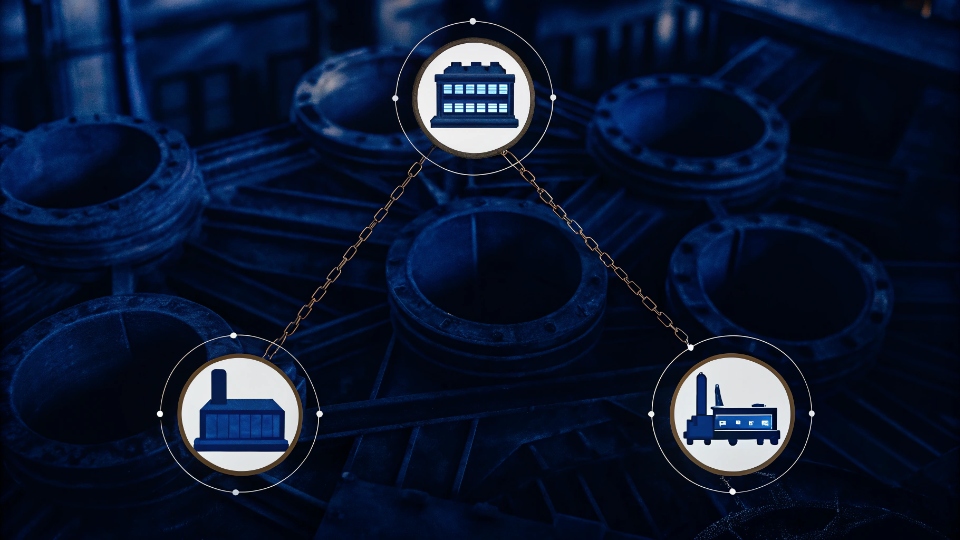
I see this challenge all the time. A talented designer like Dean finds success, and suddenly a major retailer places an order for 50,000 jeans. It's a dream come true, but also a logistical panic.
His current factory can only make 10,000 in the required timeframe. The common solution is to find other factories to produce the rest. But this path is filled with risk—different fabric shades, inconsistent stitching, and a lot of headaches.
The secret isn't finding more factories. The secret is finding one partner who can manage multiple factories for you, making a 50,000-unit order feel as simple as making 5,000. It requires a system.
Can they split my volume across sister factories for capacity?
You just landed a huge order, but your factory can't make it all in time. The delivery deadline is non-negotiable, and you risk losing the whole contract if you're late.
Yes, we can split your volume across our network of trusted sister factories2. We analyze each factory's specific strengths and allocate production intelligently to meet your deadline without sacrificing the details of your design.
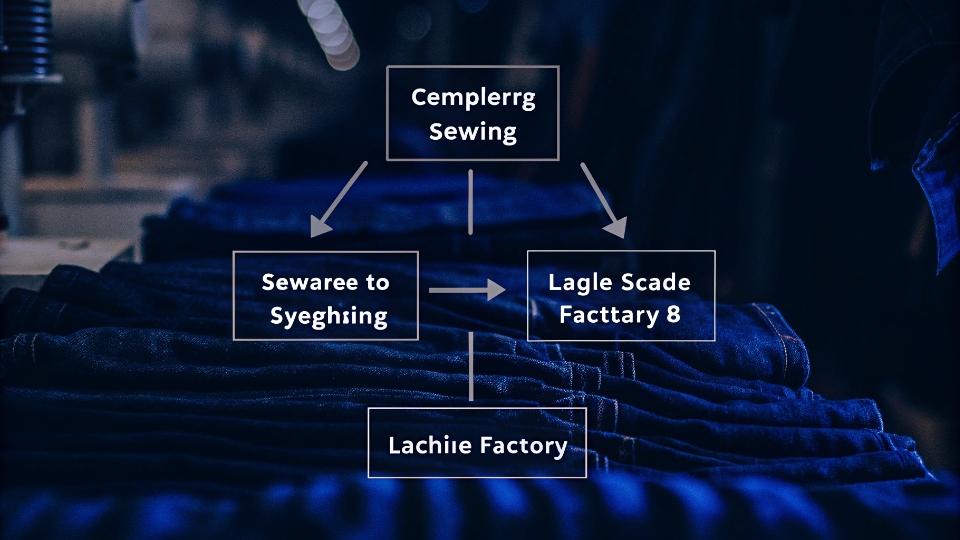
When we talk about "sister factories," we aren't talking about random factories we find online. These are facilities we have worked with for years. We've audited their operations, trained their teams on our standards, and integrated them into our management system.
For a large order, we don't just split the quantity 50/50. We create a smart production plan. For example, if your design has very complex pocket stitching, we might assign all the sewing to Factory A, which has a team of highly skilled sewers.
Then, we might move all the garments to Factory B, which has a larger capacity for the specific eco-friendly enzyme wash3 you require. This is managed manufacturing, not simple subcontracting.
You still only have one point of contact—me. You don't need to explain your vision to three different factory managers. You explain it once, and we manage the execution across our network.
| Production Stage | Factory A (Specialty Sewing) | Factory B (Bulk Washing) |
|---|---|---|
| Material prep | Receives fabric & trims | Receives fabric & trims |
| Cutting & Sewing | Executes 100% of order | Does not sew |
| Washing & Finishing | Does not wash | Executes 100% of order |
| Final QC | Central QC team inspects | Central QC team inspects |
How is consistency maintained across different sites?
You split an order between two factories and got two different products. The thread color is slightly off, the wash is a shade lighter, and the fit isn't identical. This inconsistency kills brand trust.
Consistency comes from centralized control over all key inputs. We purchase the entire lot of fabric, thread, and hardware centrally. Then we distribute these materials along with a single "Golden Sample4" to every factory.
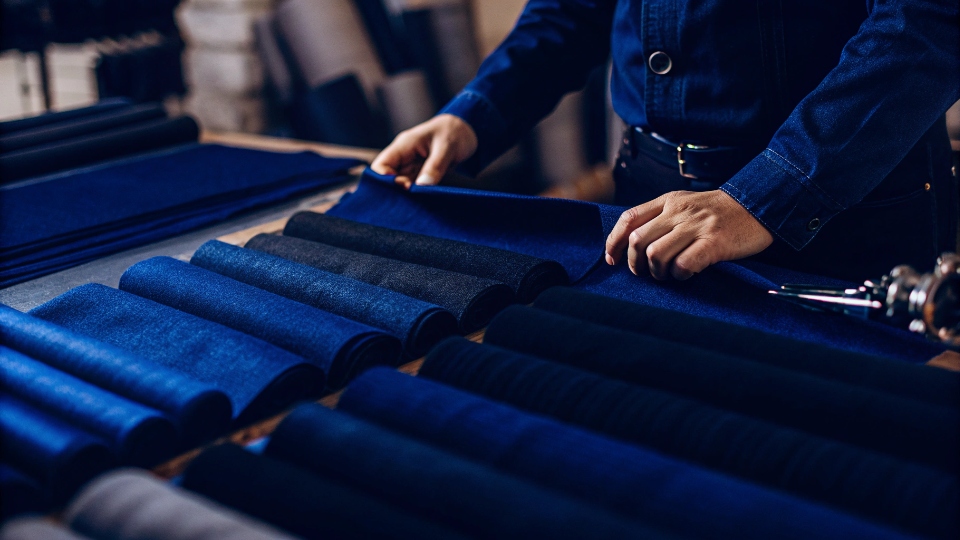
The number one rule in multi-factory production is to eliminate variables. You cannot have two factories sourcing their own materials, even if they are ordering from the same supplier.
Different dye lots of fabric can have slight variations, and that's all it takes to ruin an order. To prevent this, we operate from a "single source of truth." For a 50,000-unit order, we purchase all 60,000 meters of denim in one go.
We buy all the thread, buttons, rivets, and zippers. These materials are received and inspected at our central warehouse and then distributed in kits to the sister factories.
Furthermore, my master technician creates one perfect "Golden Sample" and a highly detailed Standard Operating Procedure (SOP)5. This document is the law. It dictates every stitch-per-inch and every second in the washing machine. There is no room for interpretation.
What central QC ensures uniform standards?
Each factory has its own quality control team, but their standards are different. You are left worrying that poor-quality products might slip through from one factory, damaging your brand's reputation.
We deploy our own independent, central Quality Control team. This team is not employed by any single factory. They travel between all sites, conducting surprise audits using one universal checklist to enforce our high standards.
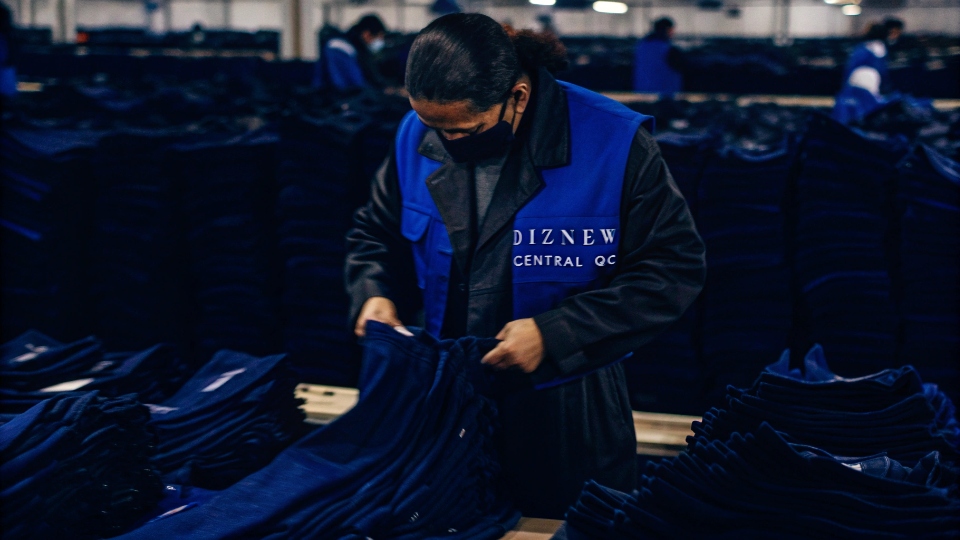
You cannot expect a factory's own QC team to be completely objective. Their main goal is to get the products out the door. That's why we have a separate layer of protection. My central QC team reports directly to me, not to the factory managers.
They are our clients' eyes and ears on the ground. This team uses a single, exhaustive checklist based on the approved "Golden Sample." They don't just check the finished goods at the end.
They show up unannounced to check the fabric when it arrives, the accuracy of the cutting, and the sewing quality mid-production. They have the authority to halt a production line if it deviates from the standard.
This structure creates accountability and ensures that the jean packed in Factory A is identical to the jean packed in Factory B. It's the only way to guarantee uniformity at scale.
| Quality Control Type | Responsibility | Goal |
|---|---|---|
| Factory In-Line QC | Checks their own production line. | Meet daily output targets. |
| Factory Final QC | Checks finished goods from their factory. | Pass final inspection. |
| Our Central QC Team | Audits all factories at all stages. | Ensure 100% uniformity to the Golden Sample. |
How do they consolidate shipments from multiple locations?
Your huge order is finally ready, but it's sitting in three different cities. Now you have a logistics disaster on your hands: three sets of paperwork, three containers to track, and triple the shipping cost.
We simplify everything by consolidating your entire order. We truck the finished goods from all factories to our central warehouse near the port. There, we perform a final audit6 and pack everything into a single, unified shipment.
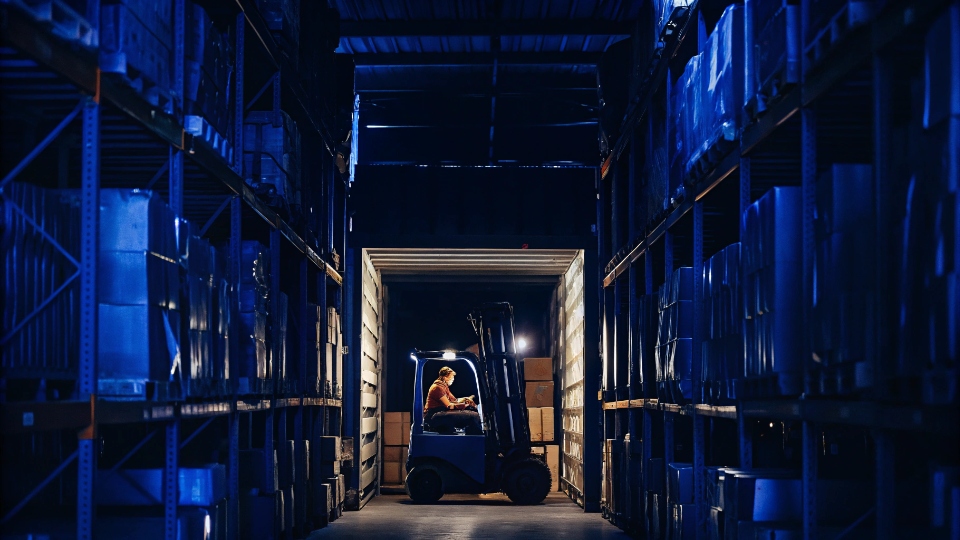
The job isn't done until the product is on its way to you in the simplest way possible. Managing multi-factory production also means managing multi-location logistics. Instead of shipping directly from each site, we bring everything back to our home base. This serves two vital purposes.
First, it’s a final quality checkpoint. Our central QC team can review the combined order from all locations, side-by-side, one last time.
Second, it streamlines your logistics. We combine everything into one shipment, on one bill of lading, with one commercial invoice and one packing list.
This drastically reduces your shipping costs, simplifies customs clearance, and minimizes the risk of logistical errors. For you, the experience is seamless.
You get one tracking number for one container, making it feel like your 50,000 jeans all came from a single place—because, from a management perspective, they did.
Conclusion
Scaling production should never mean sacrificing quality or simplicity. A true partner manages multi-factory coordination, allowing you to grow your brand while maintaining perfect consistency with a single point of contact.
-
Understand how a centralized system can enhance production efficiency and quality. ↩
-
Learn about sister factories and how they can help manage large orders efficiently. ↩
-
Discover the benefits of eco-friendly enzyme washes in sustainable manufacturing. ↩
-
Learn about the Golden Sample and its role in maintaining product consistency. ↩
-
Explore the significance of SOPs in ensuring uniformity and quality in production. ↩
-
Understand the importance of audits in maintaining quality and consistency in production. ↩