Skip to content

You have a pair of jeans that are too light or the color just isn't right. You love the fit, but you don't wear them, wishing they were a darker, more versatile wash.
Yes, you can easily dye your jeans darker1 at home using a bucket or sink and a commercial fabric dye. The key is to prepare the jeans properly, use hot water, and stir constantly for an even result. A color fixative is essential to lock in the new shade.
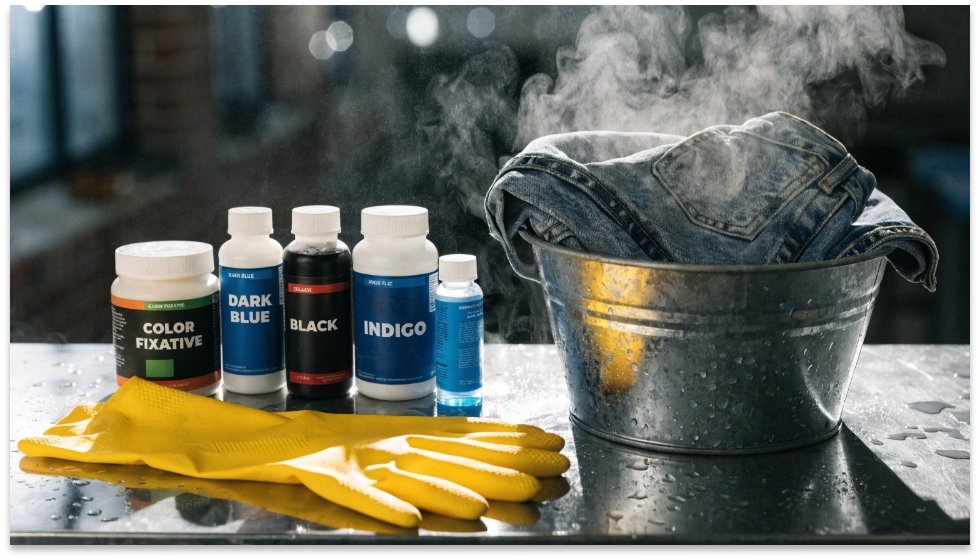
Over my 20 years in the denim business2, I've seen every kind of wash imaginable. But sometimes, the perfect wash is the one you make yourself. Last month, I fell into this exact trap. I bought two pairs of jeans online that looked like different shades of blue.
When they arrived, they were almost identical. It bothered me. Instead of returning them, I decided to take matters into my own hands and darken one pair myself. It's a simple process that can completely transform your denim3. Let's walk through how to do it right.
Is there really a way to dye jeans darker at home?
You have a pair of jeans you wish were a darker blue or even a soft black. You've heard about DIY dyeing but wonder if it actually works and if you can do it without ruining your clothes.
Absolutely. Dyeing jeans darker is a straightforward and effective DIY project. Using a standard fabric dye like Rit on high-cotton jeans4 will give you a new, darker wash. The process is simple and can be done right in your kitchen sink.
I can tell you from personal experience that it works. The key is choosing the right jeans to dye. This process works best on jeans with a very high cotton content—ideally 98% or more. Synthetic fibers like polyester and spandex don't absorb dye in the same way, which can lead to a less intense or uneven color.
For my own project, I was working with a pair of 98% cotton Agolde jeans. They were already a deep blue, and I wanted an inky, black-blue result. So, I chose a black dye, knowing it would mix with the existing blue. The process involves a hot water bath, the dye itself, some salt to help the fabric absorb the color, and constant movement. It's less of a science and more of a craft project, but the results can be fantastic.
How do you prepare jeans for dyeing?
You are ready to start dyeing, but you want to make sure you do it right. You're worried that if you miss a step, the color will turn out patchy and uneven.
To prepare jeans for dyeing, you must wash them first. Use a regular detergent and an extra rinse cycle to remove any factory finishes, sizing, or dirt. Dye the jeans immediately after washing, while they are still thoroughly wet.
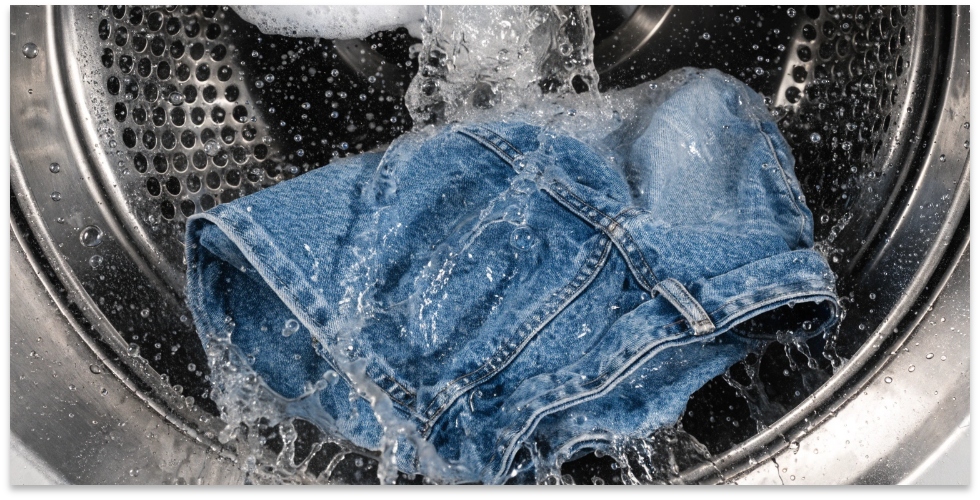
This is the most important step for getting an even, professional-looking result. Don't skip it. New jeans come with chemicals and finishes called "sizing" that help them look crisp in the store. If you don't wash these out, the dye can't penetrate the fabric evenly, and you will get splotches.
I washed my brand-new jeans in the washer with detergent and added an extra rinse cycle just to be sure. Then, you want to move them directly from the washer to the dye bath. The jeans must be completely wet and saturated with water.
If you put dry jeans into a dye bath5, they will absorb the color too quickly in some spots, creating a tie-dye effect you probably don't want. A wet fabric absorbs the dye slowly and evenly. Also, prepare your workspace. I used my stainless steel kitchen sink, which won't stain, and wore heavy-duty rubber gloves.
Does Rit All-Purpose Dye work on jeans?
You're at the store looking at dyes and see Rit All-Purpose Dye. It seems easy enough, but you wonder if it is strong enough for heavy fabric like denim.
Yes, Rit All-Purpose Dye6 works very well on cotton-rich denim. Because most jeans are made of cotton, the dye adheres effectively. However, be aware that the synthetic thread used for stitching usually won't change color, which can preserve the classic denim look.
I used a half-bottle of Rit black dye for my project. The instructions call for very hot water (around 140°F), salt, and a drop of dish soap. I followed this closely.
The most important part of the dyeing process is constant agitation. You must keep the jeans moving for the entire time they are in the dye bath, which for me was about 30 minutes. I just used my gloved hands to swish them around, making sure every part was exposed to the dye equally. One interesting thing happened: the contrast stitching on my jeans didn't dye.
This is because most brands, even high-end ones, use a polyester thread for strength. Rit All-Purpose dye is for natural fibers, so it just slides off the synthetic thread. This was actually a great result because it kept that classic "jean" look. If the stitching had dyed, they might have looked more like plain cotton pants.
How do you make denim lighter or darker?
You want to change your jeans' wash but aren't sure if you should go lighter or darker. You want to know what's possible and which process is easier to control.
To make denim darker, you add color using fabric dye. To make it lighter, you must remove color using a product like bleach or a color remover. Dyeing is a more predictable process, while bleaching can be uneven and damage the fabric if not done carefully.
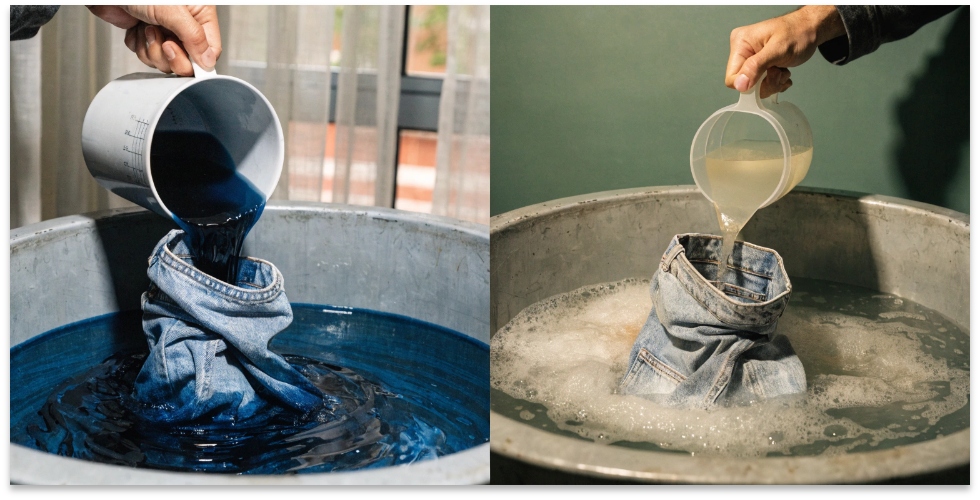
Making denim darker is an additive process, which is why it's more forgiving. After I dyed my jeans for 30 minutes, I did another critical step that many people skip: I used Rit's ColorStay Dye Fixative. This is a separate 20-minute bath that helps lock in the color and prevent it from bleeding in the wash. Do not skip this. It's inexpensive and makes a huge difference in how long your new color lasts.
Making denim lighter is a subtractive process. It involves chemicals that strip the indigo dye from the cotton fibers. While effective, it's harder to control. Here’s a quick comparison:
| Process | Goal | Method | Control Level |
|---|---|---|---|
| Dyeing | Make Darker | Add color with dye & hot water | High |
| Bleaching | Make Lighter | Remove color with bleach/remover | Low to Medium |
Bleaching can sometimes result in a yellowish or uneven tone and can weaken the cotton fibers. For someone looking to change their jeans, dyeing them a shade or two darker is almost always the safer and more reliable option.
Conclusion
Dyeing your jeans darker is a simple, effective way to give them a new life. With the right preparation and by following the steps, you can create a custom wash you'll love.
-
Explore this resource to learn step-by-step methods for successfully dyeing your jeans at home. ↩
-
Stay updated on the latest trends and insights in the denim industry. ↩
-
Discover creative techniques to transform your denim and give it a fresh look. ↩
-
Discover why high-cotton jeans are ideal for dyeing and how to choose the right pair. ↩
-
Get detailed instructions on how to create the perfect dye bath for your jeans. ↩
-
Check out reviews and tips on using Rit All-Purpose Dye for denim projects. ↩