Skip to content

You want that perfectly relaxed, voluminous silhouette of baggy jeans. The thought of transforming a pair of standard jeans into your ideal baggy fit is tempting, but the process seems confusing and complex.
You cannot easily alter regular jeans to make them truly baggy. The baggy silhouette is created from a specific, wider pattern from the very beginning, not by simply adding fabric to an existing pair of slim or straight-leg jeans.
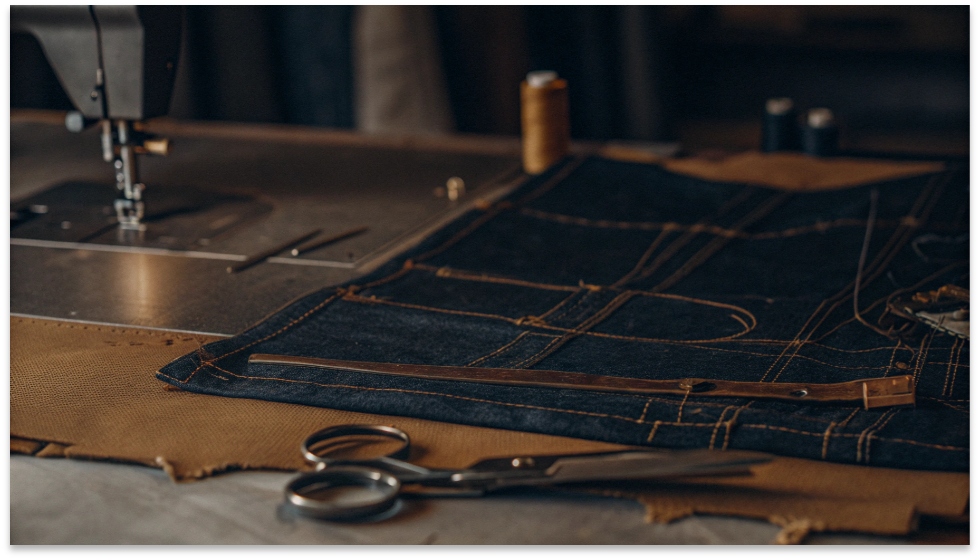
As someone who has spent two decades turning patterns into finished denim, I can tell you that the soul of a garment is in its initial cut. A designer like you, Dean, knows that you can't force one silhouette to become another without major reconstructive surgery.
The insight you shared about the difficulty of adding panels is spot on. Trying to make a straight-leg jean baggy is less of an alteration and more of a rescue mission, and it rarely ends well. The real magic happens at the pattern-making stage stage.
How Do I Make My Jeans More Baggy?
You have a pair of jeans that fits well in the waist, but you wish the legs were wider. You're wondering if there's a simple DIY trick to add that coveted baggy volume.
Making existing jeans baggy requires opening the outseams and inseams to sew in extra panels of fabric. This is an extremely difficult alteration that I wouldn't recommend, as it's nearly impossible to match the fabric and maintain a clean look.
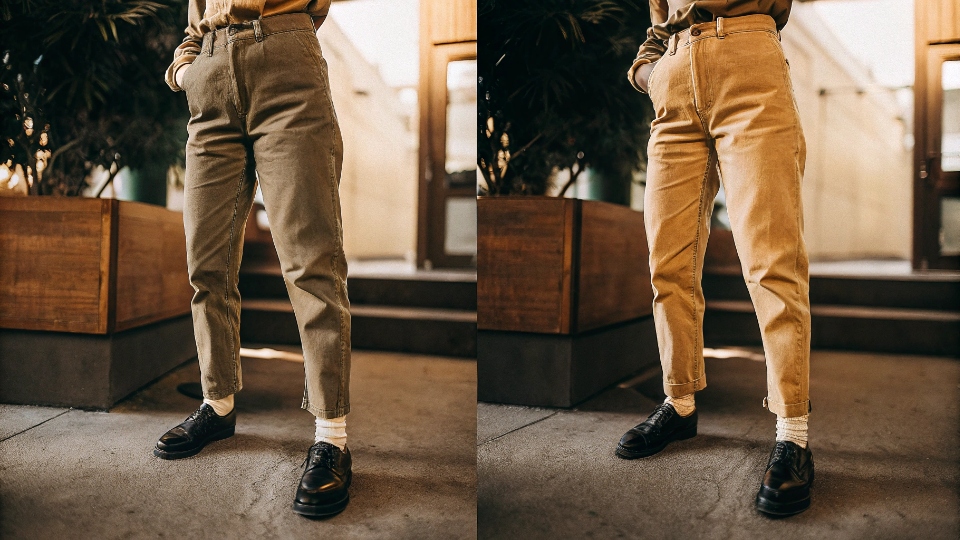
Your intuition about this being a tough project is correct. It's a headache even for a seasoned sewer. First, you have to unpick the seams.
Jeans often have double-stitched flat-felled seams, which are incredibly durable and tedious to take apart without damaging the surrounding fabric. Then comes the biggest challenge: finding a perfect fabric match. The new panel would need to match the original denim in weight, weave, color, and, most difficultly, the wash pattern.
Any mismatch will make the alteration look obvious and amateurish. The new panel has to be tapered perfectly to blend in, which involves a lot of calculation. It's far more work than it's worth.
Dive Deeper: Alteration vs. Original Design
| Aspect | DIY Alteration (Adding Panels) | Professional Design (Pattern-Making) |
|---|---|---|
| Process | Deconstruct existing seams, cut and insert new fabric, re-sew complex seams. | Draft a new pattern with wider measurements, cut fresh fabric, and construct. |
| Fabric | Mismatched fabric is almost guaranteed, creating a patched look. | Consistent fabric and wash throughout the entire garment for a clean, cohesive look. |
| Drape & Fit | Awkward, as the added panels disrupt the natural drape of the original pattern. | The garment is designed to be baggy, so the fabric drapes correctly and moves with the body. |
| Result | Often looks like a repair job, not an intentional style choice. | A professionally finished garment with a deliberate, stylish silhouette. |
How Much Fabric Do You Need for Baggy Jeans?
You're designing a pair from scratch and need to calculate your material costs. It's clear that a baggy silhouette will use more fabric, but you need a more precise estimate for your production plan.
On average, a pair of men's baggy jeans requires 2 to 2.5 yards (approx. 2.3 meters) of 60-inch-wide denim. This is a significant increase from the 1.5 yards needed for a typical slim-fit pair.
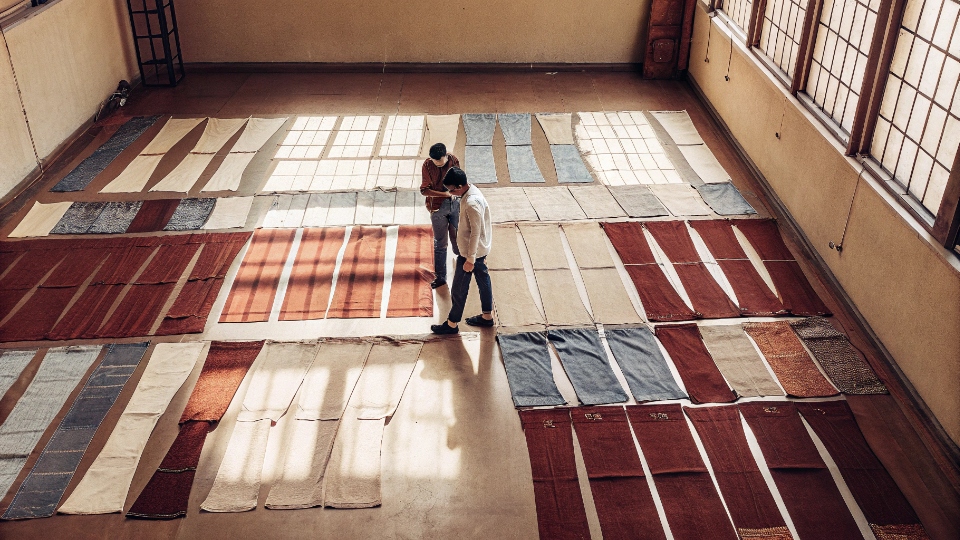
This is a critical calculation we deal with daily at the factory. The extra fabric usage, what we call "consumption," directly impacts the cost of the garment.
The main reason for the increase isn't just that the pattern pieces are wider, but also how they fit on the fabric roll. For production, we lay out patterns on a "marker" to maximize fabric use and minimize waste. The wide, less tapered shapes of baggy jean patterns are harder to nest together efficiently.
This leads to more scrap fabric. For you as a designer, factoring in this lower yield and higher consumption is essential for accurate pricing and budgeting. A baggy silhouette is not just a style choice; it's a cost consideration.
What Makes Baggy Jeans Baggy?
You understand the general concept, but you want to know the specific technical details. What are the key pattern measurements that create that distinct, voluminous baggy silhouette?
The "baggy" feel comes from specific pattern dimensions: a lower crotch from a longer rise, combined with significantly wider measurements at the thigh, knee, and leg opening compared to a standard fit.
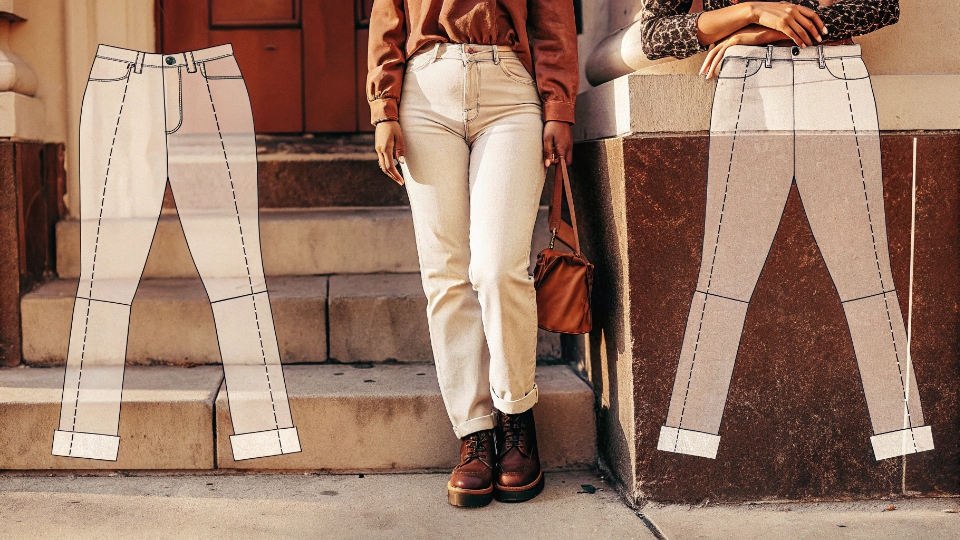
Let's break it down from a pattern-maker's perspective. The foundation is the "top block"—the area from the waist to the crotch. In many well-designed baggy jeans, the top block is actually quite standard to ensure a good fit around the hips.
The volume explodes from the thigh downwards. The front and back rise measurements are often extended, which physically lowers the crotch point, giving that classic relaxed look. But the most dramatic changes are in the leg.
Compared to a straight-fit jean, the thigh measurement might be 2-3 inches wider, the knee 3-4 inches wider, and the leg opening could be 4-5 inches wider. It's this generous, minimally tapered tube-like shape from the hip down that defines the style.
Dive Deeper: Key Measurement Comparison
| Point of Measure (POM) | Typical Slim Fit (Size 32) | Typical Baggy Fit (Size 32) |
|---|---|---|
| Front Rise | ~10 inches | ~12 inches |
| Thigh (1" below crotch) | ~24 inches | ~27 inches |
| Knee (14" below crotch) | ~16 inches | ~20 inches |
| Leg Opening | ~14 inches | ~18 inches |
What's the Easiest Way to Fray Jeans?
You've created your jeans and now you want to add a finishing touch. A raw, frayed hem is the perfect detail for a relaxed, baggy style, but you want a method that's quick and effective.
The simplest way to fray jeans is to cut them to your desired length and then run them through a hot wash and tumble dry cycle. The agitation will naturally start the fraying process.
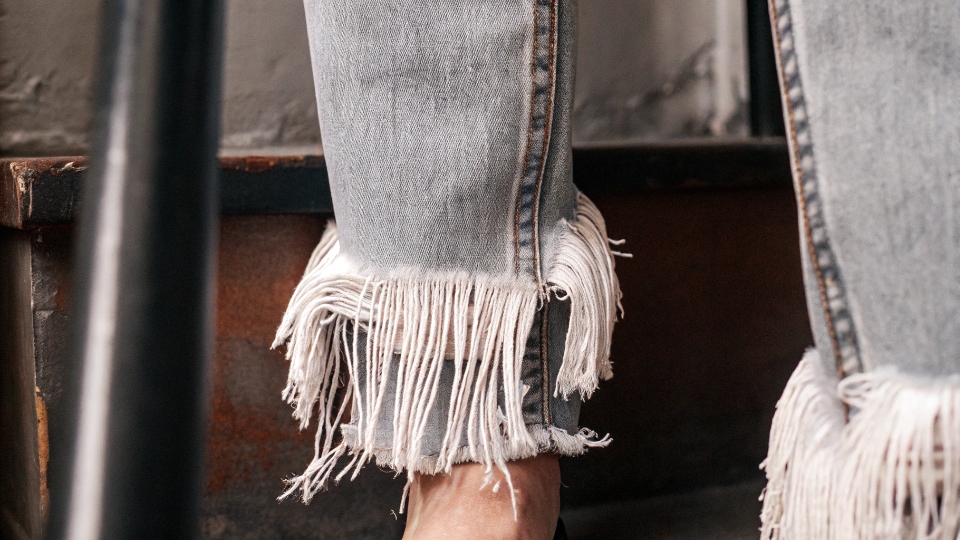
This is a finishing technique we use in the wash house, just on a much larger scale. The heat and friction from washing and drying are very effective at loosening the cotton fibers at a raw edge.
The white horizontal threads (the weft) will start to separate from the blue vertical threads (the warp), creating that signature frayed look. If you want to speed up the process or create a more dramatic effect, you can take a few extra steps before washing.
Use a block of sandpaper to rough up the cut edge. Then, take a pair of tweezers and gently pull out a few of the white weft threads. This will give the washing machine a head start, resulting in a more pronounced and beautifully feathered fringe.
Conclusion
Making true baggy jeans is an act of creation, not alteration. The perfect pair is born from a specific pattern and an understanding of how fabric, cut, and finishing work together.