Skip to content

Your customers buy a pair of jeans that fit perfectly in the store. But after the first wash, they are too short and tight. This leads to angry returns and damages your brand's reputation.
We stop shrinkage with a proven, three-step process. First, we test every fabric lot. Second, we apply industrial pre-shrinking treatments1. Finally, we adjust the cutting patterns to guarantee the final jeans fit perfectly even after washing.
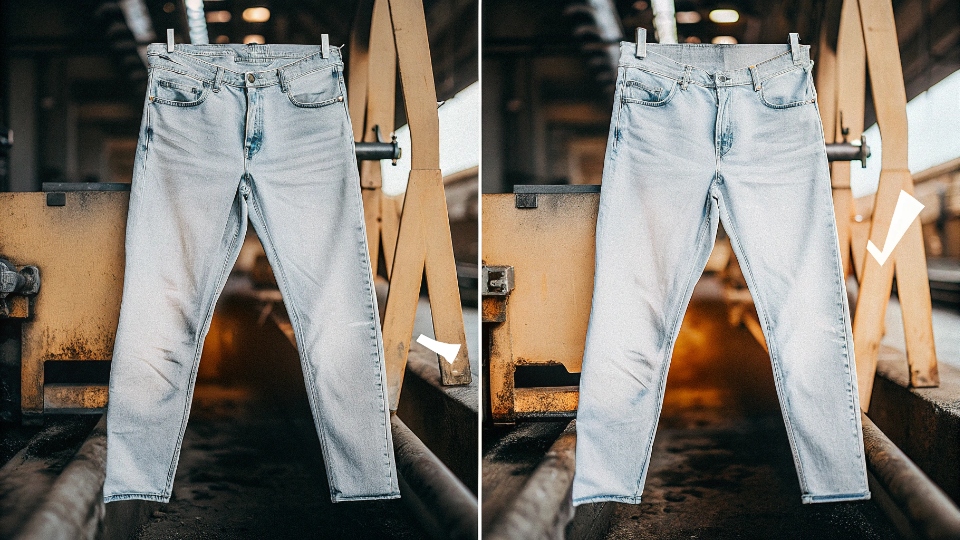
Over my 20 years in this business, I have learned one hard lesson: the customer's washing machine is the final quality inspector.
If a pair of jeans fails that test, it doesn't matter how great they looked on the shelf. The brand takes the blame. That is why we treat shrinkage control not as an option, but as a core part of our craft.
It is a science that protects your design integrity and your customer's trust. Getting this right is a non-negotiable part of our promise to you.
How do you measure post-wash shrinkage percentages?
You get a spec sheet that says "3% shrinkage," but you do not know how they got that number. You worry if it's just a guess, leaving the final fit of your product to chance.
We follow strict international standards, like AATCC 1352, to measure shrinkage precisely. We test a fabric swatch in a special lab machine to get a reliable, scientific result that you can trust.
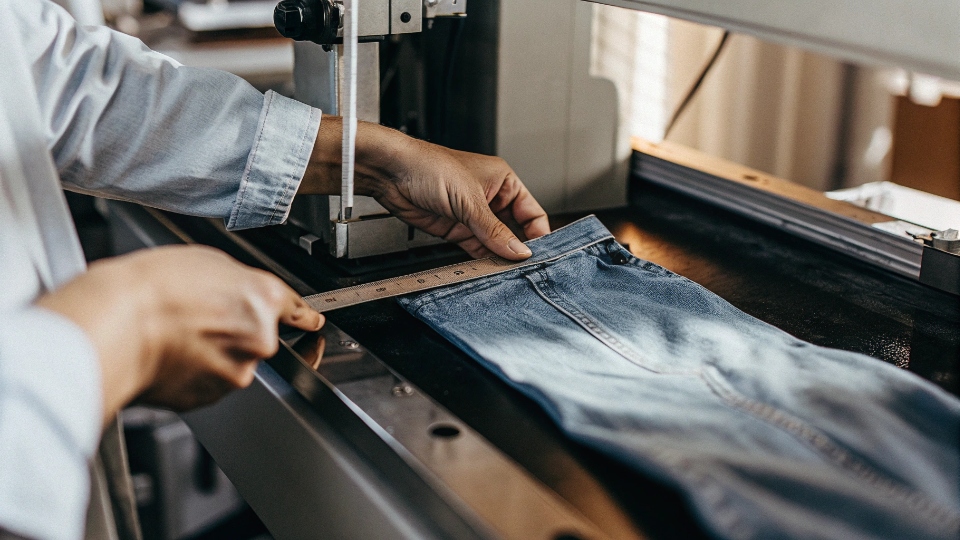
We take the guesswork out of shrinkage by using a standardized, repeatable process. It is a science, not an opinion.
Our quality control team starts by cutting a precise square from the new fabric roll, usually 10cm by 10cm. We then wash this sample in a special lab machine called a launderometer.
This machine doesn't just clean the fabric; it simulates years of home washing under controlled conditions, including specific water temperatures and cycle times, as defined by the AATCC 135 standard. After the wash and dry cycle3, we measure the swatch again.
The difference in size, before and after, lets us calculate the exact shrinkage percentage for both the length (warp) and the width (weft).
Our goal for most fabrics is a shrinkage of 3% or less, which is the global standard for high-quality apparel. This tested data is the foundation for a perfect fit.
What pre-wash treatments prevent excessive shrinkage?
You have chosen a beautiful, raw denim fabric for your new collection. But you know that without the right treatment, it could shrink by 10% or more, ruining your final product.
We use industrial pre-treatments to stabilize the fabric before we even cut it. The most important treatment is sanforization, which mechanically pre-shrinks the denim so it won't shrink later.
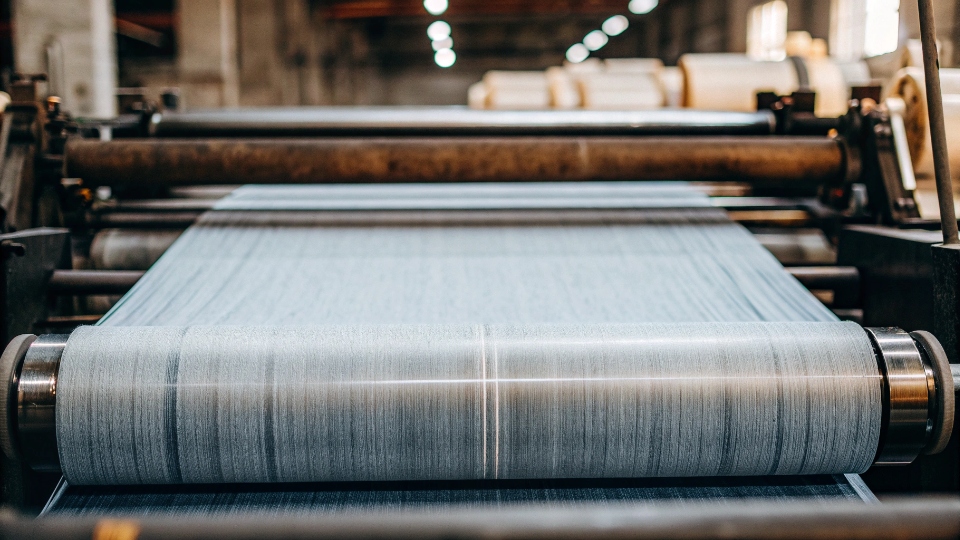
Untreated cotton fabric naturally wants to shrink. Our job is to manage that before it becomes your customer's problem.
Our primary tool is a process called sanforization. During this process, we run the fabric through a machine that uses steam, heat, and pressure to compact the cotton fibers.
It essentially forces the fabric to shrink, leaving very little shrinkage left for later.
This process can reduce a fabric's natural shrinkage from 10% down to under 3%. For stretch denim4, which contains spandex, we use an additional process called heat setting.
We heat the fabric at a high temperature to "lock" the elastic fibers in place, preventing them from shrinking over time. Even the washing processes we use to create different looks, like stone washing or enzyme washing, play a role.
These washes relax the tension in the denim yarns, which further improves the fabric's dimensional stability5. We apply these treatments to every batch of fabric to ensure consistent performance.
Can I request shrinkage test reports for every fabric lot?
Your factory tells you that they test the fabric for shrinkage. But you never see any proof, so you have to trust them blindly and just hope that the quality is consistent.
Yes, you can and you should. We provide a detailed shrinkage test report for every new batch of fabric before we start cutting. This gives you full visibility and quality control.

Transparency is key to a good partnership. We believe you have the right to see the data for yourself. When a new lot of fabric arrives at our factory, we immediately test it.
The results are compiled into a formal report that we send to you for approval before we begin bulk production. This report is your proof of quality.
It will clearly state the length and width shrinkage percentages, the standard we tested against (e.g., AATCC 135), the specific washing conditions used, and a clear "Pass" or "Fail" based on whether it met the under 3% shrinkage target.
For designers who need the highest level of assurance, we can also manage third-party testing.
We will send a sample of your fabric to an independent lab like SGS or Intertek, and they will run the tests and issue the report directly to you. This gives you an unbiased confirmation of the fabric's quality.
How do you adjust cut sizes for expected shrinkage?
You know your fabric will shrink by 3% in length. If the factory just cuts the pattern to the final spec size, every single pair of jeans will be too short after the first wash.
We use the shrinkage test data to scientifically adjust your patterns. We cut the fabric pieces larger than the final size, so they shrink down to your exact measurements after washing.
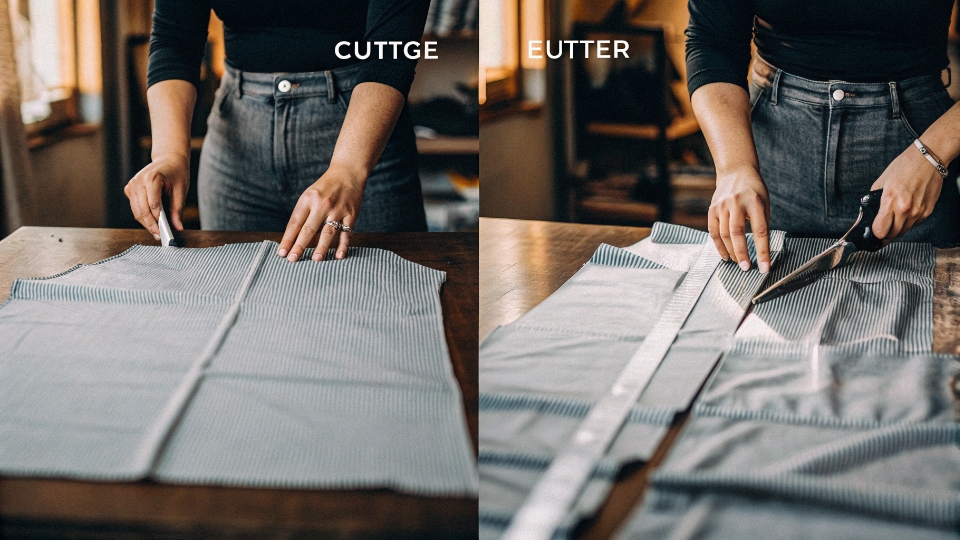
This is where the science of testing becomes the art of garment making. Once we know the exact shrinkage percentage, our pattern makers add a "shrinkage allowance6" to your patterns.
For example, if your design calls for a 33-inch inseam and the fabric has a 3% length shrinkage, we don't cut it at 33 inches.
We do the math and cut the leg panels to be about one inch longer. This same logic is applied to the width.
This allowance is a percentage, so it scales up or down proportionally across your entire size range, from XS to XXL, ensuring a consistent fit for all your customers. The most critical step is validation.
We take this adjusted pattern, make a single pre-production sample7, wash it, and then measure it. This confirms our calculations are correct before we cut thousands of units.
This allowance is then documented in your tech pack, so your 10th reorder is made exactly the same way as your first.
Conclusion
Controlling shrinkage is not magic. It's a precise process of testing, treating, and adjusting. This science ensures your jeans fit perfectly, wash after wash, protecting your brand's promise of quality.
-
Explore the benefits of industrial pre-shrinking treatments to enhance fabric durability. ↩
-
Learn about the AATCC 135 standard to ensure your fabrics meet international quality benchmarks. ↩
-
Learn how different wash and dry cycles can impact the shrinkage of denim fabrics. ↩
-
Understand the properties of stretch denim to better manage its fit and performance. ↩
-
Understanding dimensional stability helps in selecting fabrics that maintain their shape over time. ↩
-
Find out how shrinkage allowance is calculated to ensure perfect fit after washing. ↩
-
Understand the significance of pre-production samples in validating fit and quality before mass production. ↩