Skip to content

You want to upcycle old jeans1 into stylish frayed shorts. But you're afraid one wrong cut will ruin them, leaving you with a messy, uneven disaster.
To cut jeans into shorts2 with fringe, first mark your desired length, then cut 1/2 to 1 inch longer to allow for the fray. Wash and dry the shorts to start the natural fraying process, then manually perfect the fringe with tweezers or a seam ripper.
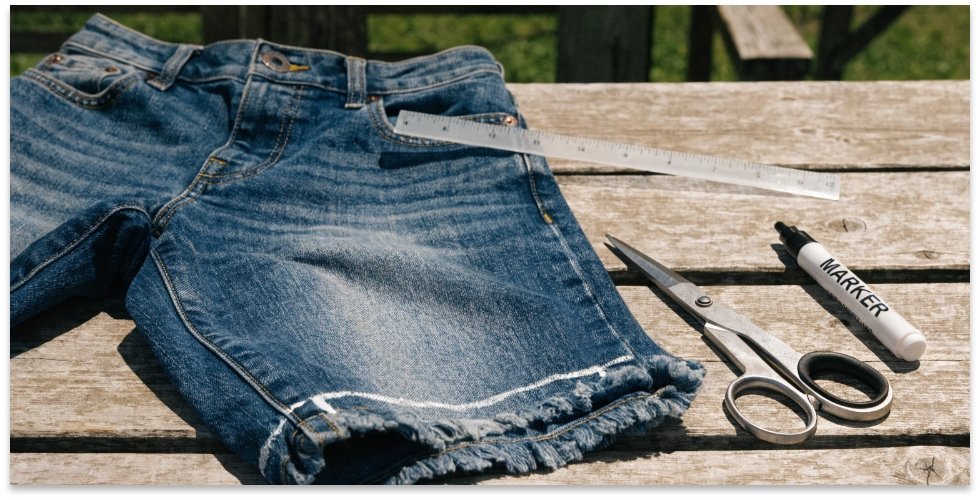
Turning old denim into something new is one of my favorite things about this fabric. I've seen designers transform simple jeans into runway pieces with just a few clever cuts. But creating that perfect, effortless-looking fringe requires more technique than just hacking away with scissors.
The secret is in the prep work and the patience you have for the finishing touches. Let’s break down the process step-by-step so you can get it right the first time.
How can you make your cut jean shorts fray perfectly?
You've cut your shorts, but the edge is just a clean line. Throwing them in the wash gives you some fray, but it's messy and inconsistent, not the look you wanted.
The best way to make shorts fray is a two-step process. First, wash and dry them on a hot cycle to kickstart the natural fraying. Then, use tweezers or a seam ripper to pull out the horizontal (weft) threads to create a controlled, even fringe.
The washing machine is your best friend for the initial fray. The heat and agitation break down the raw edge and start separating the vertical (warp) and horizontal (weft) threads. For a more intense fray, use a high heat setting3. After that, the real craft begins. This is where you do the detail work.
Denim is a twill weave, made of vertical indigo threads (the warp) and horizontal white threads (the weft). To create that classic white fringe, you need to remove the weft threads. Take a sharp needle or a good pair of tweezers. Start at the cut edge and begin gently pulling out the white, horizontal threads one by one.
You will see the vertical indigo threads remain, creating the fringe. It is a slow process. I remember a client who wanted this effect on hundreds of pairs for a collection. We had a team dedicated just to this hand-finishing. It is not difficult, but it is very time-consuming. You have to be patient to get that high-quality, professional look.
What is the best way to cut jeans into shorts?
You're ready to cut your jeans, scissors in hand. But you hesitate, worried you'll cut them too short or create a crooked line that you can't fix.
The best way is to measure carefully. Put the jeans on and mark your desired length with chalk, slightly longer than you think you need. Take them off, lay them flat, and use a ruler to draw a straight cutting line4 before you even pick up the scissors.
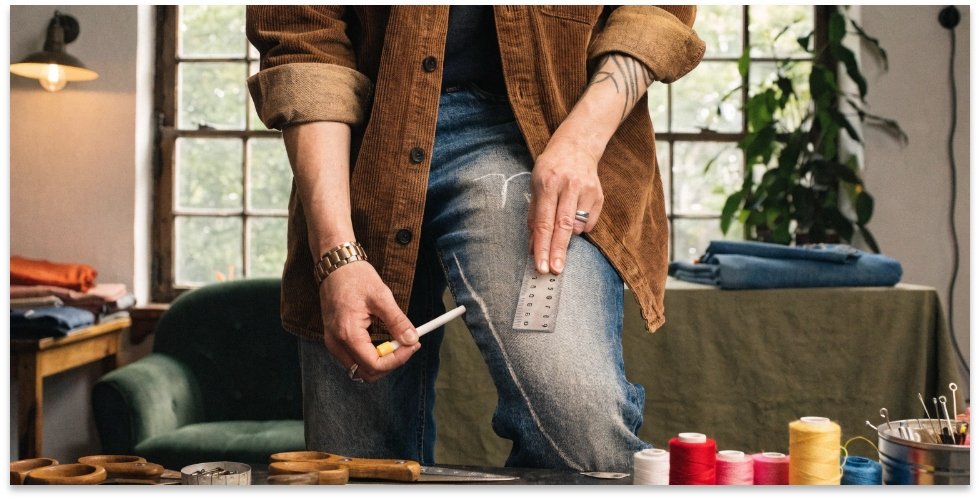
Precision is everything in denim work. Don't just eyeball it. The biggest mistake people make is cutting too short right away. Remember the old rule: you can always cut more off, but you can't add it back. I recommend putting the jeans on and standing in front of a mirror.
Use a fabric marker or chalk to make a small dot where you want the solid part of the shorts to end. Then, take them off and lay them on a flat surface. Here is the key insight from my factory experience: cut them at least a half-inch to a full inch longer than that mark. This extra length is your "fringe allowance5."
It will become the frayed part later. Use a ruler to draw a clean line across the leg. Some people like to make the front slightly shorter than the back for more coverage, creating a subtle upward angle on the outer seam. Once you have your line, use very sharp fabric scissors or a rotary cutter for the cleanest cut. Dull scissors will just chew up the fabric and make the fraying process much harder.
How do you fringe the bottom of jean shorts manually?
The washer didn't create the long, stylish fringe you envisioned. You need a way to control the fray and make it look intentional, not just accidentally worn out.
To manually fringe the bottom, use a sharp needle or seam ripper to pick and pull out the horizontal white threads (weft threads) from the cut edge. Continue pulling them out one by one until your fringe reaches the desired length.
This part of the process separates a quick DIY job from professional-looking shorts. It's a tedious process, but the results are worth it. I once had a college client ask a seamstress I know to do this for her bell-bottom jeans. The seamstress told her it was easy to do herself, but very time-consuming.
The client was afraid she’d mess them up. After a few inches, the seamstress realized it would take hours. Her hands cramped and she poked herself a few times. This is not easy work. You start by taking your tool of choice—tweezers, a seam ripper, or a sturdy needle.
Hook one of the white horizontal threads at the edge and gently pull it all the way out. Repeat this over and over. As you remove more white threads, the vertical blue threads will be left hanging. This creates the fringe. Be careful not to pull threads up past your desired fringe length. If a thread comes loose too high, it is better to snip it than to keep pulling. This manual control is how you get a beautiful, even fringe.
How do you cut jeans for a frayed look?
You want that perfect frayed edge, but you're unsure of the whole process. How do you go from a full-length jean to a perfectly frayed short in one go?
To cut jeans for a fray, first mark your ideal shorts length. Then, add a "fringe allowance" by drawing your cut line 1/2 to 1 inch below your mark. Make a clean cut, then wash, dry, and manually pull threads to create the fringe.

Let’s combine all the steps into a complete process. It is not just a single cut. First, preparation is key. Wash your jeans before you start so any shrinking happens before you cut. Second, you must measure correctly.
Put them on and mark your final desired length, which is where you want the solid fabric to end. Then take them off and lay them flat. Third, it is time for the cut. Use a ruler to draw your cutting line below your first mark. How far below depends on how long you want your fringe.
Fringe Length Guide
| Desired Fringe Style | Cut Below Your Mark |
|---|---|
| Short, Subtle Fray | 1/2 inch longer |
| Medium Fringe | 3/4 inch longer |
| Long, Dramatic Fringe | 1 inch longer |
Use sharp scissors for a clean line. Fourth, start the initial fray. Toss the newly cut shorts into the washer and dryer. Finally, it is time for refinement. Sit down with your shorts and a pair of tweezers. Manually pull out the horizontal white threads until the fringe looks exactly how you want it. This final step gives you complete control.
Conclusion
Creating perfect frayed shorts is not about one quick snip. It is a measured process of cutting, washing, and detailed hand-finishing to get the professional, effortless look you really want.
-
Discover creative ways to transform your old jeans into trendy shorts, saving money and reducing waste. ↩
-
Learn the most effective techniques for cutting jeans into stylish shorts without ruining them. ↩
-
Understand how high heat can enhance the fraying process for your denim shorts. ↩
-
Discover techniques for drawing a precise cutting line to ensure a clean cut. ↩
-
Learn why adding a fringe allowance is crucial for achieving the desired frayed look. ↩