Skip to content

Your core jean style is a bestseller, but the fabric mill just discontinued the denim. Now you're facing stockouts and angry customers. A strategic factory partner1 plans the entire product lifecycle2 with you.
A good factory partner helps you manage the entire product lifecycle. They define phase-out triggers like declining sales, secure long-term material supply for core styles, and create a clear plan for winding down SKUs3. This prevents costly overstock and protects your brand.
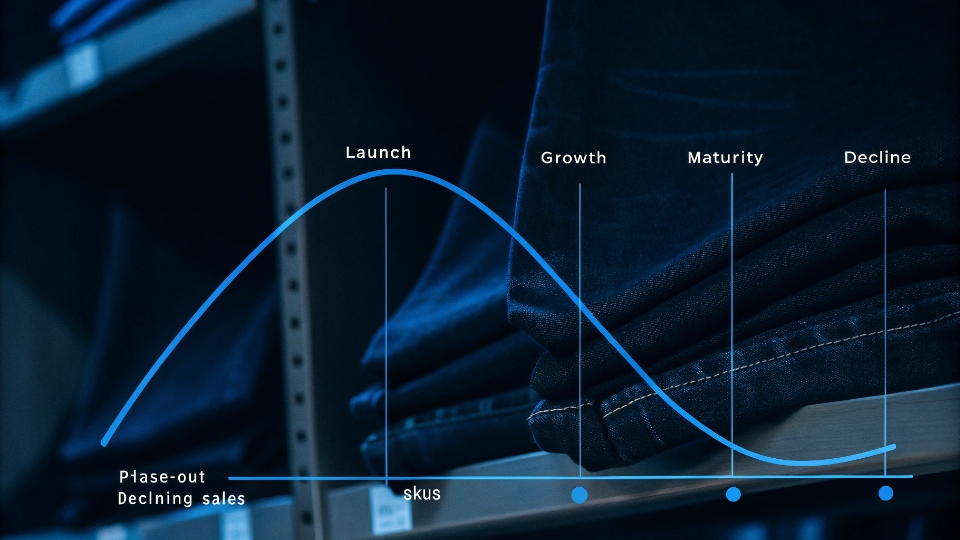
I remember a client who once had a huge success with a specific dark-wash skinny jean. It was their hero product for three straight years. But they were working with a factory that only thought about the next order.
They never discussed the future. One day, the mill that made that unique slub denim suddenly changed its formula. The new fabric didn't wash the same way.
Overnight, their hero product was gone. They had to scramble and explain to their retail partners why their bestseller was suddenly "out of stock" indefinitely.
This is why I believe a factory’s job isn't just to make things. Our job is to look ahead and help you manage a product's entire journey, from its exciting launch to its dignified retirement.
How do they manage end-of-life wash recipes?
Your signature vintage wash is impossible to replicate. The technician who created it left the factory, and now your replenishments look different, damaging customer trust and your brand's consistency.
We manage end-of-life wash recipes4 by documenting every single variable in our "Wash Bible5." When a style is phased out, we archive the recipe securely to protect your intellectual property.

A denim wash is both an art and a science. It's often the most challenging part of a jean to keep consistent. From my 20 years of specializing in washing, I know that a recipe is more than just a few instructions.
It is a precise formula. When we develop a wash for you, we don't just write "stone wash for 30 minutes." We document Everything.
We record the exact water temperature, the pH level, the brand and concentration of the enzymes, the specific type and weight of the pumice stones, and the exact machine load size.
This detailed recipe is linked to your product's SKU. When you decide to phase out that style, we don't delete the recipe. We archive it. This serves two critical purposes.
First, it protects your brand; that exact wash will never be used for another client. Second, it serves as a historical record for quality control, so if any issues arise later, we have the original standard to refer back to.
| Poor Documentation | Our "Wash Bible" Method |
|---|---|
| "Stone wash, light blue" | Wash Code: VW-083b |
| - | Water Temp: 42°C |
| - | Enzyme: Novozymes Neutra-10L (2.1g/L) |
| - | Stones: Turkish Pumice, 3-5cm (0.8:1 ratio) |
| - | Time: 38 Minutes |
Can they plan the discontinuation of legacy styles?
Your "classic fit" has been a cash cow for years, but sales are slowly declining. You keep reordering large batches out of habit, and now you're stuck with growing dead stock.
Yes, we help you plan the discontinuation of legacy styles by monitoring your reorder patterns. We provide early warnings and help you calculate a final "last time buy" to clear demand without creating waste.

A legacy product—that core style that has been reliable for years—needs a special kind of management. You can't just stop it abruptly, but you also can't keep producing it forever as sales fade.
A good partner helps you create a "soft landing." We see ourselves as your eyes on the production floor.
When we notice that your reorders for a legacy style are becoming less frequent or smaller in volume, we see it as our duty to alert you. We’ll call and say, "Dean, we've noticed orders for style #J-501 are tapering off.
Should we start thinking about a phase-out strategy for the next 6-12 months?" This opens a strategic conversation. We can then work together to analyze the remaining demand and plan one final, well-calculated production run.
This move satisfies your loyal customers and clears the channel without leaving you with a mountain of jeans you have to liquidate at a loss.
What is the process for winding down a SKU?
You decide to discontinue a style. But the factory, operating on old forecasts, keeps buying fabric and trims for it. The communication is a mess, and now you own materials you can't use.
Our process for winding down a SKU is a formal checklist. We get your final order confirmation, halt all material purchasing for that SKU, and execute a final production run to consume existing stock.
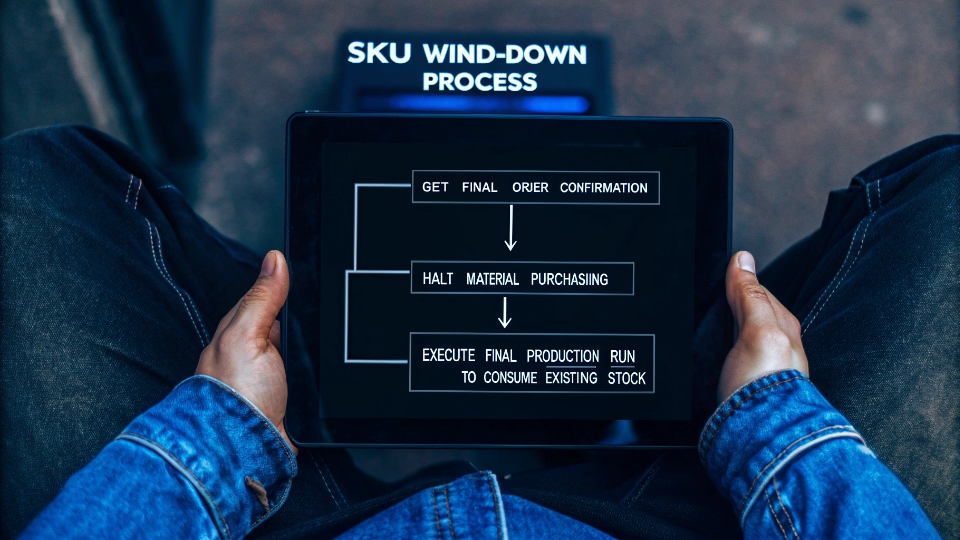
Winding down a product should be a clean, predictable process, not a chaotic fire drill.
I learned this lesson the hard way early in my career, when we were left holding thousands of dollars in custom-branded buttons for a client who casually mentioned in an email they were stopping the style.
Now, we have a non-negotiable process that protects both of us. It’s a formal plan that turns verbal decisions into concrete actions.
- Final Order Lock-In: We create a formal document for the "Final Production Order" and require your signature. This confirms the exact quantity and becomes the official stop point.
- Material Purchase Halt: The moment that order is signed, our procurement system flags the SKU as "Discontinued." All future purchasing of fabric, thread, zippers, and trims for that style is frozen.
- Consumption Run: We execute the final production run, carefully planned to use up as much of the on-hand materials as possible.
- Final Audit: After the run, we conduct a final inventory of any leftover materials and present you with a detailed report.
This disciplined approach eliminates any "he said, she said" confusion and ensures you don't pay for materials you no longer need.
How do they handle leftover materials after phase-out?
You've phased out a jean style, but the factory still has bags of your custom-branded rivets and labels. You have nightmares that they'll end up on a cheap knockoff, damaging your brand's exclusivity.
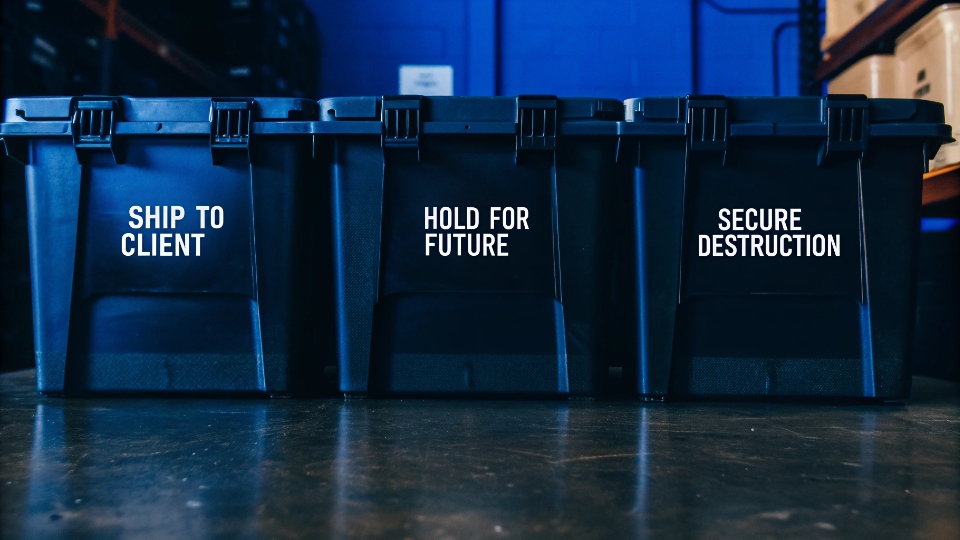
We provide a full audit of all leftover materials and give you complete control. You can have us ship them to you, hold them for a future design, or document their secure destruction.
This is one of the most important questions a designer can ask. For a brand like Dean’s, protecting intellectual property is everything.
Leftover branded components are a huge liability in the wrong hands. Our policy is simple: your materials are your property, and you have the final say.
After the final production run, we conduct a meticulous audit and count every last button, rivet, and label. We then present you with the audit and three clear options. There is no fourth option where we use them for someone else.
Your brand's integrity is our priority, and this process guarantees that the unique elements you designed remain exclusively yours, even after a product's lifecycle has ended. We put you in complete control.
| Option | What It Means | Best For Brands That... |
|---|---|---|
| 1. Ship to You | We securely pack and ship all leftover branded components directly to your office or warehouse. | Want physical control for repairs or archives. |
| 2. Hold for Future | We store your materials in a sealed, labeled container in our secure warehouse for an agreed-upon time. | Think they might reuse a unique trim in a future collection. |
| 3. Secure Destruction | We shred, melt, or otherwise destroy the materials and provide you with photo or video evidence. | Prioritize 100% brand protection and want zero risk. |
Conclusion
A great factory partnership extends beyond production. It involves strategic lifecycle management that protects your brand, controls your costs, and ensures a profitable journey from a product's launch to its retirement.
-
A strategic factory partner can significantly enhance your product lifecycle management. ↩
-
Understanding the product lifecycle is crucial for managing inventory and ensuring brand success. ↩
-
Explore effective strategies for winding down SKUs to avoid excess inventory and financial loss. ↩
-
Managing wash recipes is vital for maintaining product quality and brand integrity. ↩
-
Discover how a Wash Bible can protect your brand's unique wash recipes and ensure consistency. ↩