Skip to content

You see fast fashion brands selling jeans for $20, while designer pairs cost $300. It's confusing to decide where your brand should position itself. Is the higher price just marketing?
The difference is enormous. Expensive jeans use superior fabric, hardware, and craftsmanship, resulting in a better fit and durability. Cheap jeans cut corners on everything to hit a low price point.
As a designer, this is one of the most important decisions you'll make. It defines your brand's identity and promise to the customer.
For over two decades, I've manufactured jeans at every price point imaginable. I've seen brands build empires on $200 jeans and others struggle with the quality issues of $30 pairs. The price on the tag isn't arbitrary.
It's a direct reflection of hundreds of small decisions made long before the first stitch is sewn. Let's break down exactly where that money goes, so you can make the right choice for your business.
Is There a Difference Between Expensive and Cheap Jeans?
You hold a $30 jean and a $300 jean, and they can look similar from a few feet away. You worry your customer won't see the value you're paying for.
Yes, the difference is night and day. It’s in the quality of the cotton, the density of the weave, the precision of the cut, the durability of the hardware, and the skill of the person sewing it.
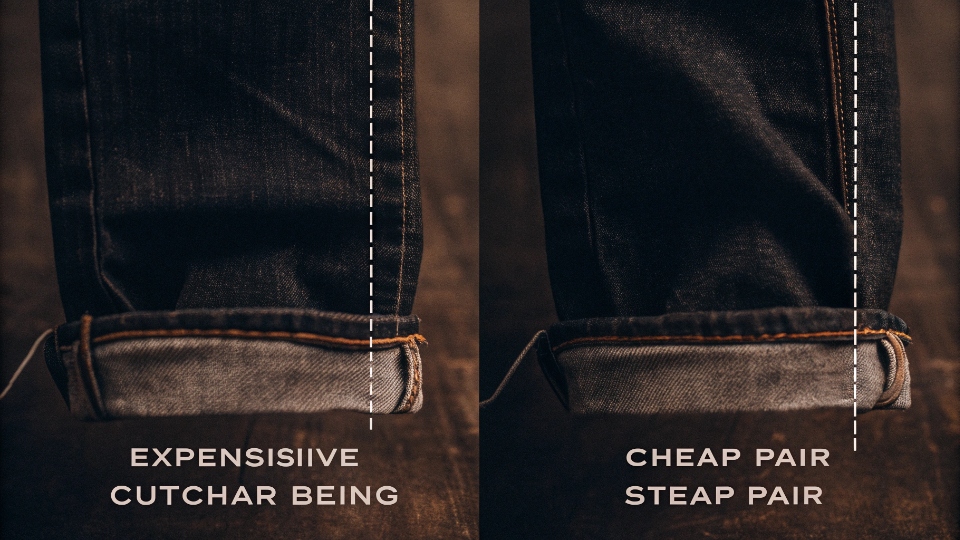
From my factory floor, the difference is tangible. It starts with the fabric. For an expensive jean, I receive a roll of premium denim, maybe a heavy selvedge from Japan.
It's dense, rich with indigo, and has a substantial feel. It tells me it will last. For a cheap jean, the fabric is light, often a blend with a high percentage of polyester.
It feels thin and I know it won't hold its shape. Then comes the cutting and sewing. High-end jeans are often cut in small batches by skilled workers who ensure every panel is perfect.
Cheap jeans are cut in massive stacks on an automated line, leading to inconsistencies. The same goes for the hardware; one uses solid copper rivets that will never fail, the other uses plated iron that can rust after a few washes. Every single step is a choice between quality and cost.
Is It Worth Paying More for Jeans?
You need to justify a higher price to your customer and your investors. If the benefits aren't clear, you risk being seen as overpriced and losing sales to cheaper competitors.
For the end customer, it is absolutely worth paying more for jeans if they value durability, fit, and long-term style. A quality pair has a much lower cost-per-wear over its lifetime.
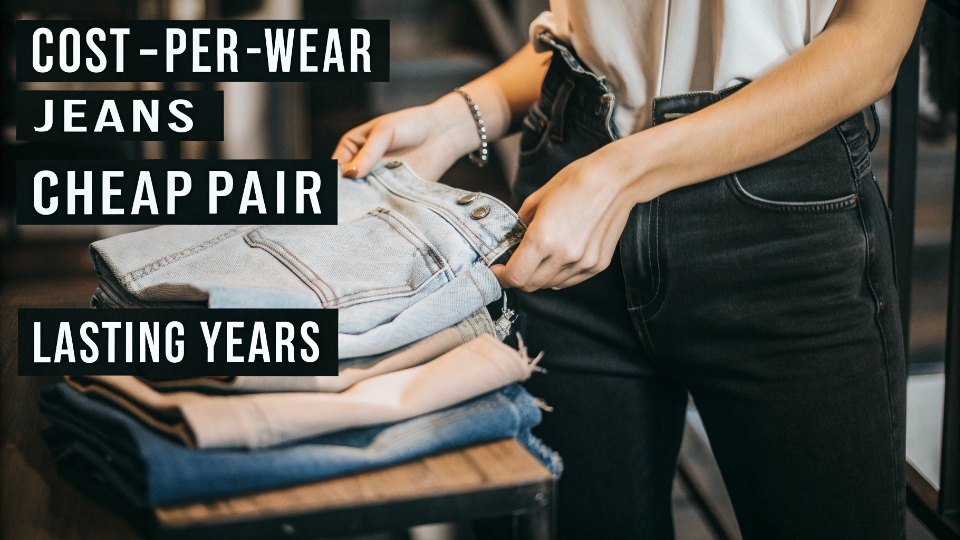
This is a conversation about value, not just price. I've seen it countless times. A customer buys a $40 pair of fast-fashion jeans.
The fit is okay at first, thanks to a lot of cheap elastane. But after a few months, the knees bag, the fabric pills, and the color fades unevenly.
A year later, they're in the trash and the customer is buying another pair. Now, consider a $200 jean made in my factory. It's cut from sturdy denim that holds its shape. The fit is designed to flatter the body, not just stretch to cover it.
Five years later, that jean is still a favorite. It has faded beautifully and molded to the owner's body. The customer paid five times more upfront, but they got ten times the lifespan.
For your brand, selling a product that lasts builds trust and loyalty that cheap, disposable fashion can never achieve. It's an investment in your reputation.
How Can I Tell if Jeans Are High Quality?
As a designer, you need to be an expert. You need to be able to walk into a store, pick up a pair of jeans, and know their worth in 30 seconds.
You can identify high-quality jeans by examining four key areas: the fabric's weight and feel, the hardware's material, the stitching's density and consistency, and the details of the patch and labels.
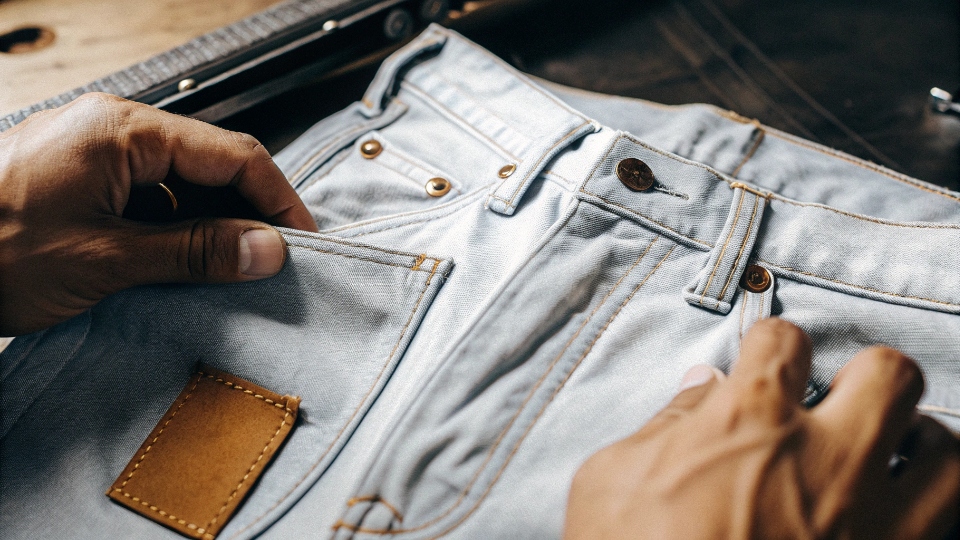
Here is my personal checklist, what I do when I'm assessing a competitor's product. First, I ignore the wash and focus on the fabric. I grab a handful.
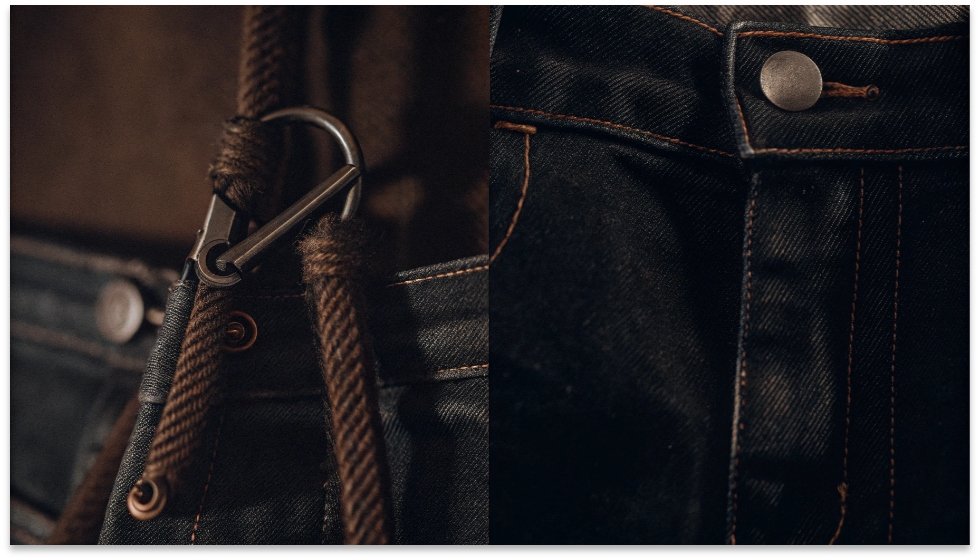
Does it feel substantial and densely woven, or does it feel thin and papery? High-quality denim has weight. Second, I look at the hardware. I flick the main button with my fingernail. Does it make a solid "clink" or a cheap, hollow "tick"? I check the zipper; a YKK zipper is a good sign of quality.
Third, I inspect the stitching, especially at the inseam and back pockets. Are the stitches small, tight, and consistent (around 8-10 stitches per inch)? Or are they long, loose, and uneven?
Finally, I check the back patch. Is it genuine leather that will age well, or is it a cheap cardboard-like "jacron" or plastic patch that will crack? These small details tell you everything about the manufacturer's commitment to quality.
Quality Inspection Checklist
| Component | High-Quality Indicator | Low-Quality Indicator |
|---|---|---|
| Fabric | Dense, heavy, substantial hand-feel | Thin, light, overly stretchy or papery |
| Hardware | Solid metal (copper/brass), YKK zipper | Plated iron, generic zipper, feels flimsy |
| Stitching | High stitch density (8-10 SPI), clean, consistent | Low stitch density (5-6 SPI), messy, loose threads |
| Patch | Genuine leather or high-grade Jacron | Thin cardboard, plastic, poorly attached |
Who Makes the Best Jeans for the Money?
You want to offer your customers the best possible value. This means finding the sweet spot between cutting-edge quality and a price that feels fair and accessible.
The "best jeans for the money" come from brands that focus on classic fits and quality materials without chasing excessive branding or fast-fashion trends. They invest in the product, not just the marketing.

This is the ultimate question. The answer isn't a single brand name. It's a type of brand. In my experience, the brands that offer the best value operate in the $150-$250 price range.
They are expensive enough to afford quality materials and ethical production, but not so expensive that you're just paying for a famous name or a runway show.
These companies are often run by people who are passionate about denim itself. They prioritize using good selvedge or raw denim from reputable mills.
They focus on perfecting a few core fits—a great slim, a classic straight—rather than releasing dozens of trendy new styles each season. They invest in sturdy hardware and clean construction because they know their customer is discerning.
They are the opposite of fast fashion. You're paying for the product, not the hype. As a designer, this is the most sustainable and rewarding segment of the market to be in.
Conclusion
Expensive jeans are an investment in superior fabric, fit, and durability, offering better long-term value. Cheap jeans are a short-term solution that often costs more over time due to frequent replacement.