Skip to content

As a designer, you know fit names can be vague and confusing. "Relaxed fit" often brings up images of sloppy, outdated jeans, which can hurt your brand's modern image.
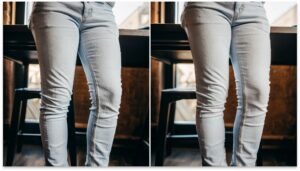
Relaxed fit jeans are specifically designed with extra room through the seat and thigh area while maintaining a standard waist. They offer superior comfort and freedom of movement without being overly baggy.

Dean, your insight is spot on – it's all about that extra room in the seat and thigh. But in my 20 years of making jeans, I've seen brands struggle with this "simple" fit more than any other.
It’s a fine line. Add too little room, and it's just a poorly fitting regular jean. Add too much, and you've time-traveled back to 1995.
The key isn't just adding fabric; it's about strategically engineering the pattern to provide comfort where it's needed most, creating a silhouette that feels liberating but still looks intentional. Getting this balance right is what separates a best-seller from a clearance rack disaster.
What Is the Difference Between Relaxed and Regular Fit Jeans?
Your tech packs need to be precise. The terms "relaxed" and "regular" are not interchangeable, and confusing them can lead to costly sampling errors and a product that misses the mark entirely.
The primary difference is where the extra space is added. A regular fit is a straight, uniform cut, while a relaxed fit specifically adds more room in the seat and thigh.

This is one of the most fundamental distinctions in pattern making, and it's where many designs go wrong. A "regular fit" or "classic fit" is the historical baseline.
Think of it as the original blueprint for jeans: it follows the body's lines without being tight, with a relatively straight cut from the hip down to the ankle. When we create a "relaxed fit," we are not just making the entire jean bigger. We are using the regular fit as a starting point and then specifically altering the pattern to add a few crucial centimeters or inches of fabric to the thigh and seat measurements.
The waist measurement often stays the same. This targeted approach ensures the jeans don't slip down but provide that essential comfort and ease for movement in the areas where men need it most.
Key Measurement Differences: Regular vs. Relaxed
| Measurement Point | Regular Fit (Classic Straight) | Relaxed Fit | The Designer's Consideration |
|---|---|---|---|
| Waist | Standard fit | Standard fit | The waist should fit correctly in both styles to prevent sagging. |
| Seat / Hip | Follows natural curve | +1-2 inches of room | This is the primary comfort zone. Extra space prevents pulling when sitting. |
| Thigh | Standard measurement | +1-2 inches of room | Crucial for athletic builds or customers who prefer a non-restrictive feel. |
| Knee & Leg Opening | Generally straight | Can be straight or slightly tapered | A straight leg offers a classic look; a slight taper can modernize the silhouette. |
Who Should Wear Relaxed Fit Jeans?
You need to design for a specific person. If you don't know who your relaxed fit is for, you can't style it, market it, or even choose the right fabric for it.
Relaxed fit jeans are ideal for two main customers: men with athletic or larger builds who need extra room in the thighs and seat, and anyone who prioritizes comfort above all else.

On the factory floor, when an order for relaxed fit jeans comes in, I immediately picture two different end-users. The first is the man with an athletic build.
These are guys who work out—they have bigger glutes and thighs from squatting, cycling, or sports. For them, a slim or even a regular fit is physically restrictive and uncomfortable.
The relaxed fit isn't a stylistic choice; it's a functional necessity. They need that extra space just to move. The second customer is the man who simply values comfort.
He isn't concerned with showing off a slim silhouette. He wants a pair of jeans he can wear all day, whether he's working at a desk, doing chores around the house, or going for a long drive. He wants to feel unrestricted. For your brand, this means you can market the same fit in two ways: as a performance-oriented "athletic fit" or as a comfort-focused "weekend fit."
Is Relaxed Fit Tighter Than Loose Fit?
Fit terminology is a minefield for customers. Clarifying the hierarchy of fits is crucial for building an intuitive and easy-to-shop collection that customers can trust.
Yes, a relaxed fit is significantly tighter and more structured than a loose fit. A loose fit has generous room throughout the entire leg, creating a much baggier, less-defined silhouette.

Absolutely. Think of fits on a spectrum of roominess, starting from skinny and moving outwards. Relaxed fit is the next step up from a regular fit. It adds comfort in targeted zones.
A "loose fit," however, is a whole different category. When I get a tech pack for a loose fit, I know the designer wants volume everywhere. The thigh is wide, the knee is wide, and the leg opening is wide. It's a much more fashion-forward and statement-making silhouette, often inspired by 90s skate culture or contemporary streetwear.
A relaxed fit is designed to provide comfort without sacrificing a traditional jean shape. A loose fit uses its oversized shape as its primary style feature. So, to be clear: relaxed is about targeted comfort, while loose is about overall volume. The difference in the pattern is enormous.
Are Relaxed Fit and Slim Fit the Same?
This question might seem obvious to an expert like you, but it's a common point of confusion for customers. Your marketing and product descriptions must be crystal clear about the difference.
No, they are polar opposites. A slim fit removes fabric to create a narrow, body-hugging silhouette, while a relaxed fit adds fabric to create extra room and a comfortable, non-restrictive feel.

From a production standpoint, these two fits represent completely different design philosophies. When a brand asks me for a slim fit, the entire process is about reduction. We start with a block and we trim it down, pulling in the thigh, tapering the knee, and shrinking the leg opening.
The goal is to create a jean that sits close to the body, outlining the wearer's shape. All the pattern adjustments are negative. A relaxed fit, as we've discussed, is the opposite. It's a process of addition. We take a standard block and strategically add space to the seat and thigh to enhance comfort and movement.
One is about shaping the body, the other is about freeing it. They are designed for different customers, with different priorities, and they create entirely different visual statements.Calling them the same would be like saying a sports car and a pickup truck are the same because they both have four wheels.
Conclusion
Relaxed fit jeans are engineered for comfort by adding space in the seat and thigh. They offer a comfortable, practical alternative to restrictive slim fits and overly baggy loose fits for today's market.