Skip to content

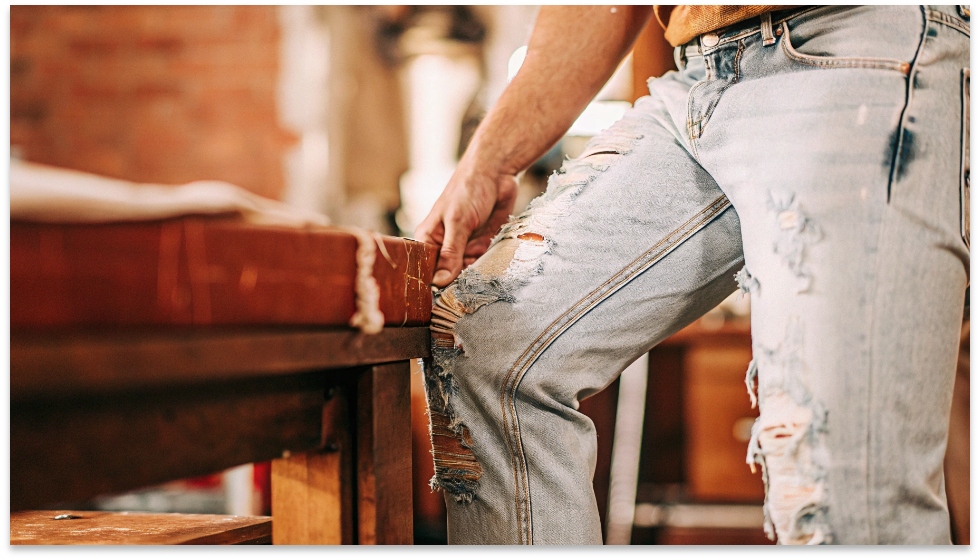
You see a pair of Amiri jeans1, meticulously ripped and splattered with paint, carrying a price tag over $1,000. You're a professional; you know what things cost. Is this pure insanity or is there something more to it?
Amiri jeans are expensive due to a combination of high-cost Italian materials, complex, labor-intensive distressing done by hand in Los Angeles, and a massive brand premium. You're paying for the rock 'n' roll aesthetic and the status symbol as much as the garment itself.
As someone who has spent two decades making jeans, I have seen it all. I have produced basic jeans that retail for $30, and I have worked on projects where the finishing alone costs hundreds of dollars. When I look at a pair of Amiri jeans, I do not just see a price tag. I see a specific manufacturing recipe and a powerful marketing strategy. Let's break down exactly what goes into that thousand-dollar cost.
Why are Amiri jeans so expensive?
You know good denim is not cheap, but the price of Amiri still feels extreme. Is it just clever marketing, or is there a genuine production cost that justifies the sticker shock?
The high price stems from three main factors: expensive Italian or Japanese stretch denim, hours of manual labor for distressing in Los Angeles, and the exclusivity factor2. Each pair is treated like a unique art piece, adding significant labor costs compared to mass-produced jeans.
Let's walk through the factory floor. First, Amiri sources top-tier materials. They often use high-quality stretch denim from renowned mills in Italy or Japan. This fabric alone can cost $15 to $20 per yard, far more than standard denim. But the fabric is the cheap part.
The real cost is in the deconstruction. I have quoted jobs like this for clients. They want a "shotgun blast" effect or specific paint splatters. This is not done by a simple machine. It means a skilled artisan in Los Angeles has to map out the design, perhaps use a Dremel tool or hand-sand the edges, and then carefully control the wash so it frays perfectly.
This process can take hours for a single pair. Add in the cost of high-end hardware like Riri zippers3, and the base cost to produce one pair in the USA is already high.
Estimated Cost Breakdown of a $1,200 Amiri Jean
| Component | Estimated Cost to Brand | Why It's High |
|---|---|---|
| Fabric & Hardware | $40 - $60 | Premium Italian/Japanese denim, Riri zippers. |
| Labor (Cut, Sew, Distressing) | $100 - $150 | Hours of manual hand-finishing in Los Angeles. |
| Brand Markup (Design, Marketing, Profit) | $400+ | Building the brand's "cool" factor is expensive. |
| Retailer Markup (Wholesale to Retail) | $600+ | Retail stores typically double the wholesale price. |
What is so special about Amiri?
You see countless brands doing distressed denim. What makes Amiri stand out from the crowd? Why do celebrities and musicians flock to this specific brand over all the others?
Amiri's special appeal is its authentic connection to LA's rock 'n' roll and luxury streetwear culture. Mike Amiri himself has a background in the music scene. The brand does not just sell clothes; it sells a lifestyle—a specific, rebellious, high-fashion identity.
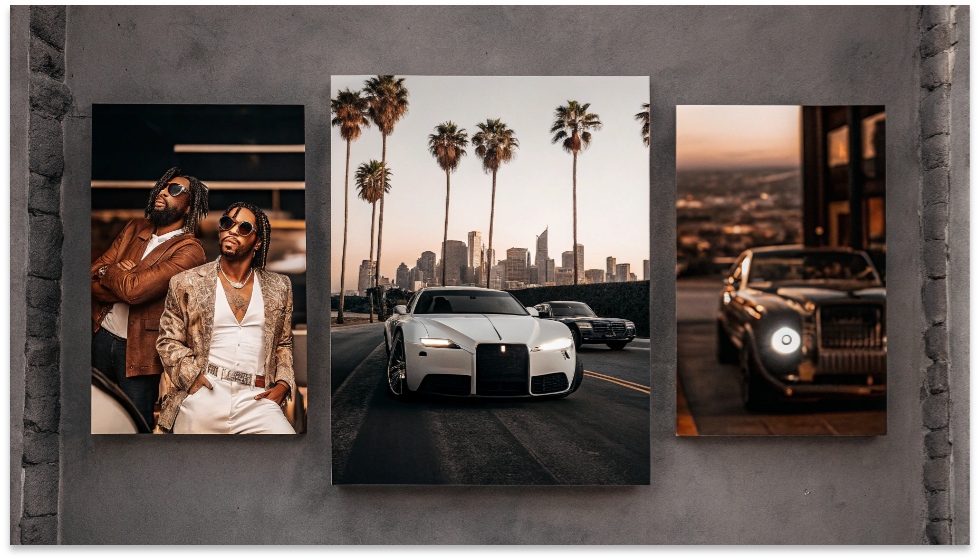
As a designer, you know that a brand is more than just product. Amiri is selling a cultural symbol4. Mike Amiri was not a random business person who decided to sell ripped jeans. He was part of the LA scene, creating stage pieces for rock stars. His brand was born from that world. It has a real story, an authentic core.
Think about it. The aesthetic is a mix of rock, grunge, and a bit of Western flair, all filtered through a Los Angeles lens. It is for the person who wants to look effortlessly cool, like they just got off a tour bus, but also rich. This is the key.
The target customer is someone with a lot of money who does not care about the actual price; they care about the "prestige" and the sense of belonging. Wearing Amiri is an unspoken signal that you are part of a specific tribe. You are telling the world you understand this subculture of luxury and rebellion. That is the feeling they are buying, and that feeling has no material cost.
What jeans cost $10,000?
You hear rumors of five-figure jeans and it sounds like an urban legend. Do such things actually exist, and what on earth could make them worth that much?
Jeans can reach the $10,000 mark or higher when they are treated as fine art or bespoke haute couture5. This involves embellishments with real diamonds or precious metals, one-of-a-kind hand-painted artwork by a famous artist, or historical significance as a collector's item.
Yes, these jeans exist, but they are not something you find on a retail rack. They operate in a completely different world. The most famous example was from a brand called Secret Circus, which featured large, high-quality diamonds sewn onto the back pockets. In that case, you are not buying jeans; you are buying jewelry that happens to be attached to denim.
From a manufacturing perspective, a $10,000 jean is a bespoke project. Imagine a client wants a pair of jeans hand-painted by a famous graffiti artist. The artist's fee alone could be thousands of dollars. Or, consider historical pieces.
An original pair of Levi's from the 1880s, discovered in an old mine, can sell for over $100,000 at auction. Here, the value is not in the fabric or the fit, but in its rarity and historical importance. These are not really clothes anymore.
They are collector's items, like a rare baseball card or a vintage watch. For the everyday luxury market, prices top out around the $1,500-$2,500 mark for heavily distressed or embellished pairs from brands like Amiri.
What is the real difference between $30 jeans and $300 jeans?
As a professional, you need to justify costs to your clients. You need to explain precisely where the extra money goes when you upgrade from basic to premium denim.
The primary differences are fabric quality, construction complexity, and country of origin. A $30 jean uses cheap, mass-produced fabric and is made quickly in a low-wage country. A $300 jean uses premium fabric6 from Italy or Japan, features more complex construction7, and is often made in countries with higher labor costs and quality control.
Let's put this into a simple table. I have made both, and the process is night and day. A $30 jean is all about volume and speed. We use open-end denim, which is cheap but not very durable. We use basic zippers and stitching techniques that are fast but weak. The goal is to get the cost of production under $10.
A $300 jean is about details and longevity. We start with selvedge or high-end stretch denim. This fabric alone can cost more than the entire production cost of the cheap jean. We use stronger stitching methods, like a chain stitch on the hem.
The pattern is more complex, with more panels to create a better fit. Every detail, from the pocket bags to the copper rivets, is a higher quality. When you pay ten times more, you are paying for better ingredients and a more skilled chef. You are not just paying for a brand name; you are paying for a garment that will fit better, feel better, and last much, much longer.
The $30 vs. $300 Breakdown
| Feature | $30 Jeans (e.g., Fast Fashion) | $300 Jeans (e.g., Premium Denim) |
|---|---|---|
| Fabric | Cheap open-end denim, low-quality stretch | Premium Japanese/Italian selvedge or stretch |
| Hardware | Aluminum zipper, cheap alloy buttons | Heavy-duty YKK/Riri zippers, copper/brass rivets |
| Construction | Simple patterns, weak stitching, made overseas | Complex fit, durable stitching, made in USA/Japan/Italy |
| Lifespan | 6-12 months | 5-10+ years with proper care |
Conclusion
Amiri jeans are expensive because they combine costly LA-based hand-finishing with a powerful brand story. You are buying an identity, a piece of rock 'n' roll culture, as much as you are buying a pair of jeans.
-
Discover the unique craftsmanship and brand story behind Amiri jeans that justify their high price. ↩
-
Understand the role of exclusivity in luxury fashion pricing and consumer appeal. ↩
-
Learn about Riri zippers and their significance in enhancing the quality of luxury denim. ↩
-
Explore how brands become cultural symbols and their influence on consumer behavior. ↩
-
Discover the world of bespoke haute couture and its impact on luxury fashion pricing. ↩
-
Understand the characteristics of premium fabric and its importance in high-quality garments. ↩
-
Explore the benefits of complex construction techniques in creating superior denim fits. ↩