Skip to content

You see those signature wings on the back of a pair of jeans and then check the price, which is often over $250. You wonder if the flashy design is really worth that much money.
Robin's Jeans[^1] are expensive primarily because of their powerful brand identity and historical status. Their price is built on the iconic wings logo, intricate embellishments like crystals, and their deep-rooted popularity within 2000s hip-hop culture, which made them a significant status symbol.
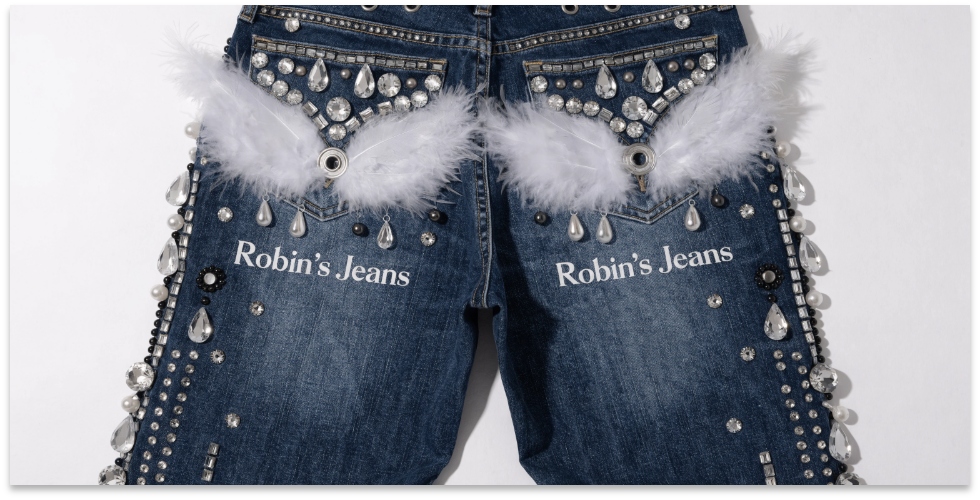
Over the past two decades, I've watched many denim brands rise and fall. Some, like True Religion and Rock Revival, created a specific niche in the early 2000s with bold stitching and embellished pockets. Robin's Jeans took that idea and perfected it for the streetwear scene. They didn't just sell jeans; they sold an identity. The wings became an instantly recognizable symbol of a certain "if you know, you know" status. The high price wasn't just for the denim; it was the entry fee to be part of that specific cultural moment[^2].
Are Robin jeans good quality?
You're about to spend a lot of money on a single pair of jeans. You want to know if the quality holds up or if you're just paying for the flashy logo.
The quality of Robin's Jeans is a topic of debate. Historically, they were known for being well-made in the USA with heavy denim[^3]. However, since the brand closed its US factory and moved to contractors, many original fans feel the quality is no longer consistent with the high price.
This is where the story gets complicated. At their peak, Robin's Jeans operated a large factory in the United States with 200 employees. They were known for using "innovative washes[^4]" and sturdy materials. That American production was a major part of their price justification. However, an article recently surfaced stating that the US factory closed several years ago and the founder has been using sewing contractors. The article even mentions a plan to produce outside the US to lower retail prices to the $150-$200 range. This shift in manufacturing is a big deal. For many longtime customers, there's a feeling that the brand, much like True Religion, has seen a decline. The quality that once justified the premium price is now seen as inconsistent, making the high cost a much harder pill to swallow.
Why are Robin jeans popular?
You see this brand with its flashy wings and crystals. It feels very specific to a certain era. You wonder what made this bold look so incredibly popular.
Robin's Jeans became popular by becoming the unofficial uniform of the 2010s hip-hop and streetwear scene. The distinctive wings logo became a major status symbol, worn by influential artists to signal wealth and style, making the jeans highly aspirational for their fans.

Robin's Jeans didn't get popular through magazine ads or department stores. Their fame was built on culture. When influential artists in the hip-hop community started wearing them, they instantly became a must-have item. The look was loud, unapologetic, and expensive—and that was the whole point. It was a form of conspicuous consumption. The wings on the back pocket were like a badge of honor that signaled you were in the know and had the money to afford them. Today, their popularity is fueled by two groups: those who are nostalgic for that era and a new generation discovering the "Y2K" and "McBling" aesthetic through platforms like TikTok. The jeans are a perfect artifact from that time, making them popular all over again as a vintage or throwback statement piece.
Is Robin Jeans a designer?
You hear the name and see the high price. You wonder if "Robin" is a high-fashion designer like those in Paris, or if it's something different.
Yes, Robin's Jean is a designer brand founded by Robin Chretien. He is best described as a premium streetwear designer[^5], not a high-fashion couturier. His design focus has always been on creating a strong, recognizable brand identity rooted in a bold, American rock-and-roll aesthetic.
Robin Chretien created a lane for himself that is very different from a designer like Hedi Slimane at Celine. The goal of Celine is understated, minimalist luxury. The goal of Robin's Jean is the exact opposite. It is about creating a loud, memorable, and highly branded product. The design genius was not in creating a subtle, perfect fit, but in creating an unforgettable logo—the wings. This logo is the hero of every piece. His background is rooted in a mix of biker culture, rock music, and a distinctly American sense of flash. So while he is absolutely a designer, his work fits more in the category of luxury streetwear, where the power of the logo and its cultural associations are just as important as the garment's construction.
Who wears Robin's jeans?
You're trying to picture the exact person who buys and wears these jeans today. Is it still rappers and celebrities, or has the audience changed?
Originally, Robin's Jeans were famously worn by a wave of hip-hop stars in the late 2000s and 2010s. Today, the audience is a mix of people nostalgic for that era, Gen Z discovering the trend, and anyone who loves bold, statement-making streetwear.

The core identity of Robin's Jeans was forged by its adoption by the music industry. Artists used them to project an image of success. The high price tag was part of the appeal, as it made them exclusive. As one person commented online, "$300 for jeans is crazy even if u rich bru," which perfectly captures the tension between the price and its status-symbol function. Today, the customer base has broadened. You have the original fans who might be buying them for nostalgic reasons. Then you have a whole new generation discovering them on resale sites like Depop, seeking them out as key pieces for a Y2K-inspired wardrobe[^6]. And finally, you have a consistent niche of people who simply love loud, embellished clothing. The brand is so distinct that it continues to attract anyone who wants their clothes to do the talking.
Conclusion
Robin's Jeans are expensive due to their past as a US-made status symbol with an iconic design. Their price reflects a powerful cultural legacy, even as questions about current quality persist.
---

[^1]: Explore the history and brand identity behind Robin's Jeans to understand their high price.
[^2]: Learn about the concept of cultural moments and their significance in shaping fashion trends.
[^3]: Find out why heavy denim is valued in jean production and its impact on quality.
[^4]: Understand the techniques behind innovative washes and how they enhance denim.
[^5]: Explore the characteristics that set premium streetwear designers apart in the fashion industry.
[^6]: Find out what elements make up a Y2K-inspired wardrobe and its resurgence in fashion.