Skip to content

You’ve finished a long day, fallen into bed, and woken up hours later still in your jeans. It happens to everyone, but you wonder: is this harmless habit actually bad for you?
Sleeping in jeans1 is bad because the heavy, non-breathable denim fabric traps heat and moisture against your skin. The rigid seams, zippers, and metal rivets also create uncomfortable pressure points, disrupting sleep.
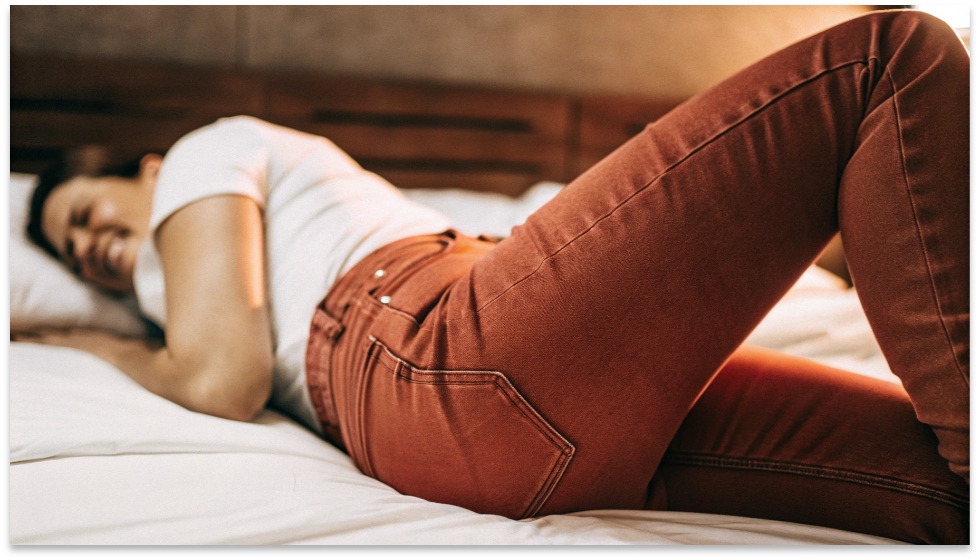
Dean, your instincts are exactly right. You noted that jeans are tight, stressful, and made from a heavy cloth that doesn't let the skin breathe. From a manufacturing perspective, I can confirm this is by design. We construct jeans to be durable workhorses for the day. They are built to protect, to endure, and to look good under stress. The properties that make them perfect for daytime—their weight, their rigid structure, their tough hardware—are the very same properties that make them terrible for the rest and recovery your body needs at night.
What Is the Healthiest Thing to Wear to Bed?
You design clothes to make people look and feel good. This makes you consider the opposite end of the spectrum: what is the ideal garment for rest and health?
The healthiest thing to wear to bed2 is whatever is most breathable, loose, and non-restrictive. This often means loose-fitting cotton pajamas, moisture-wicking fabrics3, or simply sleeping naked4.
Your insight about sleeping naked4 being the best for health is a great point, Dean. It offers maximum freedom and breathability. For those who prefer to wear something, the choice of fabric is everything. As a manufacturer, I work with fabrics designed for specific jobs. Sleepwear fabrics like cotton poplin5 or modal are lightweight and have a simple, open weave.
Their entire purpose is to manage temperature and moisture while being so light you forget they are there. Denim is the opposite. It's a heavy, dense twill weave designed to be a shield against the world.
Putting your body in "shield mode" when it's supposed to be in "recovery mode" works against its natural processes. The key to healthy sleepwear is simple: let your skin breathe.
Fabric Purpose: Sleepwear vs. Denim
| Feature | Sleepwear Fabric (e.g., Cotton Poplin) | Denim Fabric (Twill) |
|---|---|---|
| Weight | Very light (3-4 oz) | Heavy (10-15 oz) |
| Weave | Loose, open, breathable | Dense, tight, protective |
| Texture | Soft, smooth, non-abrasive | Coarse, structured, can be rough |
| Purpose | Promote rest and air circulation | Provide durability and protection |
What Is Tight Jean Syndrome?
You've designed skinny jeans for years because of their sharp silhouette. But you hear the term "tight jean syndrome6" and worry about the potential downsides for your customers.
Tight Jean Syndrome is a non-medical term for Meralgia Paresthetica7. It's a condition where the tight, rigid fabric of jeans compresses a major nerve in the outer thigh, causing numbness and pain.
This is a perfect example of how garment construction directly impacts the body. From the factory floor, I can see exactly where the problem originates.
It’s not just about the jeans being "tight" in general; it’s about specific points of high pressure. The main culprits are a constricting waistband and an overly tight fit across the hips and thigh.
When we make a very tight jean, especially from rigid, non-stretch denim, the fabric has no give. This constant, unyielding pressure, especially when you sit or bend, can squeeze the Lateral Femoral Cutaneous nerve against your hip bone. The result is that burning or numb sensation.
While stretch denim helps, it can also be a problem if the fit is too compressive, constantly squeezing the area. This is why getting the fit right—especially around the hips—is a matter of health, not just aesthetics.
What Is the 2 Finger Test for Jeans?
You need a quick and reliable way to help your customers find the perfect fit. You've heard of a simple test and want to understand why it works from a technical standpoint.
The 2-finger test8 is a method to check if a jean's waistband is the right size. If you can comfortably slide two fingers between your waist and the waistband, you have a good fit.
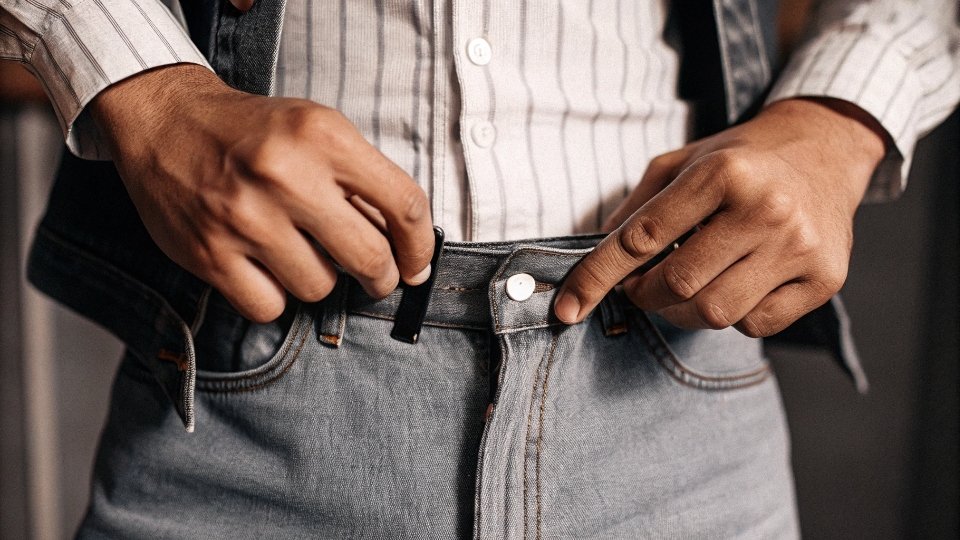
This simple test is brilliant because it accounts for the dynamic nature of the human body and the properties of denim. From a manufacturing side, I know that a waistband that is perfectly snug when you're standing still will become painfully tight when you sit down.
Your waist expands when you sit. The 2-finger test8 ensures there's just enough extra room—about half an inch to an inch—to accommodate that natural expansion without cutting into your midsection. It also accounts for the fabric.
A rigid, 100% cotton jean won't stretch, so this gap is essential. For stretch jeans, it ensures the fit is comfortably close without being overly compressive. It's a quick, practical way to confirm that the garment will be comfortable for living, not just for standing in front of a mirror.
Why Is It Good to Sleep Without Undies?
You're focused on outerwear, but understanding the principles of health and comfort at every layer helps you become a better designer. The topic of sleeping without underwear often comes up in health discussions.
Sleeping without underwear is good because it increases airflow to the groin area. This helps keep the area dry, reduces the risk of bacterial or yeast infections, and aids in natural temperature regulation.
This really comes back to the same core principle we've been discussing: breathability. Just like sleeping in jeans is bad because the heavy denim traps moisture, wearing tight underwear to bed can do the same thing on a smaller scale.
Your body's temperature naturally fluctuates at night, and it sweats to cool itself down. Any layer of fabric, especially if it's synthetic and non-breathable, can trap that moisture.
This creates a warm, damp environment that is ideal for bacteria to grow. By sleeping without that extra layer, you are simply maximizing the body's ability to self-regulate.
It's the ultimate application of the "less is more" philosophy when it comes to healthy sleep. It's all about removing barriers and letting your skin function as it was designed to.
Conclusion
Sleeping in jeans is bad for both your sleep quality and skin health. Prioritize breathable, loose-fitting options for rest, as your body needs to be unrestricted to recover effectively overnight.
-
Explore the health implications of sleeping in jeans and why it may disrupt your sleep quality. ↩
-
Discover the best sleepwear options that promote comfort and health. ↩
-
Explore how moisture-wicking fabrics can improve your sleep by managing temperature. ↩
-
Find out why sleeping naked can be beneficial for your health and sleep quality. ↩ ↩
-
Learn about cotton poplin's properties that make it ideal for comfortable sleep. ↩
-
Discover the effects of tight jeans on your body and how to avoid discomfort. ↩
-
Understand this condition and its connection to tight clothing like jeans. ↩
-
Understand the importance of the 2-finger test for ensuring comfort and fit in jeans. ↩ ↩