Skip to content

You chose a factory for their quality and trust. But you worry they might secretly outsource your order to a cheaper, unknown facility, putting your brand's reputation at risk.
No, not without your explicit, written permission. A transparent factory1 has a strict policy: critical processes like washing and final assembly are always done in-house. Any potential subcontracting requires your full approval.
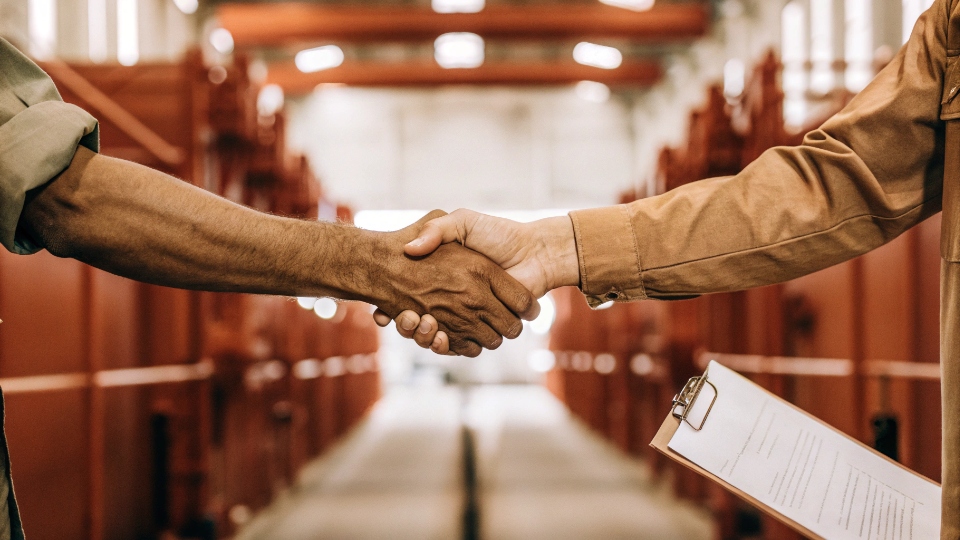
A few years ago, a new client came to me after a disastrous experience with another supplier. He had placed a large order for a specific vintage-wash jean. Unbeknownst to him, the factory he hired outsourced the entire washing process to a cheap, low-tech facility to save money.
The result was a complete failure. The wash was inconsistent, the color was wrong, and the entire production run was unsellable.
He lost his investment and damaged his relationship with a major retailer. This story is exactly why at DiZNEW, our subcontracting policy is crystal clear and built on absolute transparency.
My name and my factory's reputation are on every pair of jeans we ship. I will never risk that, or your brand, by making a decision about your product behind your back.
Do They Keep All Production In-House or Use Partners?
You want the consistency of a single factory. But you know that unexpected large orders or specialized techniques might require outside help. You need to know exactly where your product is being made.
We perform over 95% of all production, including all critical stages like cutting, sewing, and denim washing2, in our own facility. We only consider partners for highly specialized processes, and only with your prior consent.
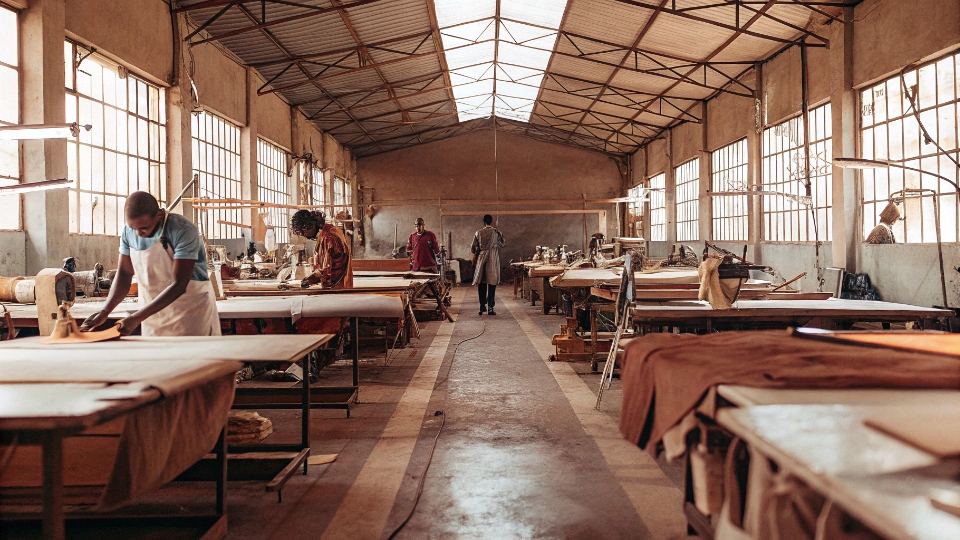
Our promise to you is control and consistency. The core of your jeans—the cutting of the denim, the construction and stitching, the complex art of washing, and the final finishing—is always done right here, in-house, by my team. This is non-negotiable because these are the processes that define the quality and identity of your product.
The only time we would even consider an outside partner is for a very specific, non-core technique that requires unique machinery or artisanal skill3 we do not possess. For example, if you wanted a complex, hand-beaded applique that is a craft in itself. In such a rare case, we would not call this "subcontracting."
We would call it a "specialized partnership4," and we would discuss it with you transparently before ever finalizing your order. Your core product will always be created under my direct supervision.
Production Process Location
| Process | Location | Reason |
|---|---|---|
| Pattern & Cutting | In-House | Guarantees precision and fabric efficiency. |
| Sewing & Assembly | In-House | Ensures construction quality and consistency. |
| Washing & Finishing | In-House | This is our core expertise and defines the final look. |
| Quality Control | In-House | Final check on every garment before it packs. |
| Specialized Embroidery | Potential Partner | Requires unique machinery we may not have. (Client approval required). |
How Do They Vet and Monitor Any Subcontractors?
The factory says they have a "trusted partner." But to you, that is just a name. You need proof that this partner meets your quality standards, not just promises.
Any potential partner undergoes a rigorous, multi-stage vetting process that we fully document for you. If approved, our own full-time quality control inspectors5 are stationed at their facility to monitor your production in real-time.
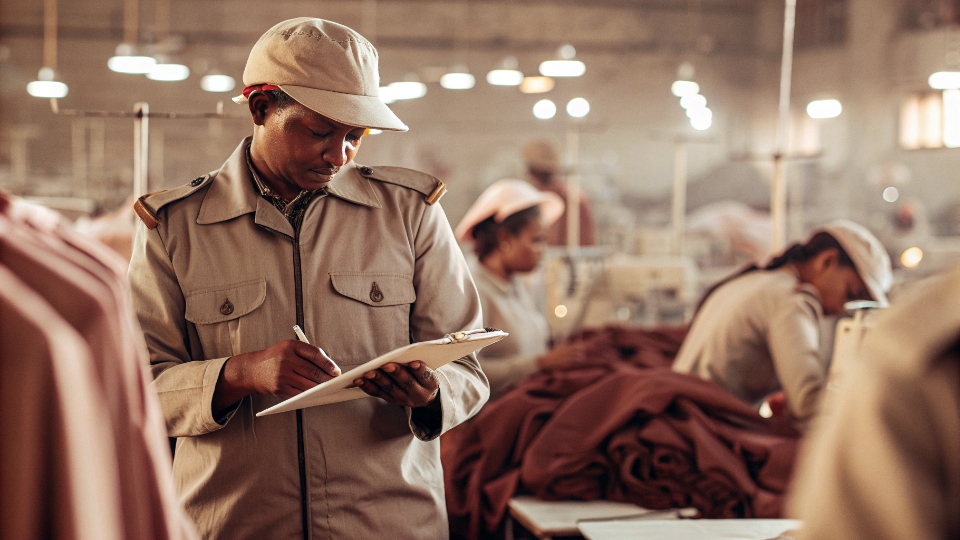
Trust must be earned through a clear process, not just words. Before we would ever recommend a specialized partner, they must pass our strict audit. This is not a quick visit; it is a deep evaluation. First, we conduct a Technical Audit, where my engineers inspect their machinery, workflow, and technical skills to ensure they can execute to our standards. Second, we perform a Quality System Review, analyzing their internal inspection processes. Third, and very importantly, we run a Compliance Check. We require them to provide their social responsibility audit reports to prove they meet all labor and environmental regulations. We have a zero-tolerance policy for poor working conditions. Finally, if they pass these stages, we will place a small, non-client trial order with them to test their real-world performance. Only after passing all these steps would we even consider presenting them to you as an option.
Will They Notify Me if Work Is Outsourced?
Your biggest fear is silence. You approve an order and hear nothing, only to find out months later that a crucial part of it was made somewhere else without your knowledge, leaving you with no control.
We operate on a "no surprises" policy. Subcontracting is never a secret. If a specialized partner is needed, we will present you with a formal proposal for your explicit written approval before any work begins.
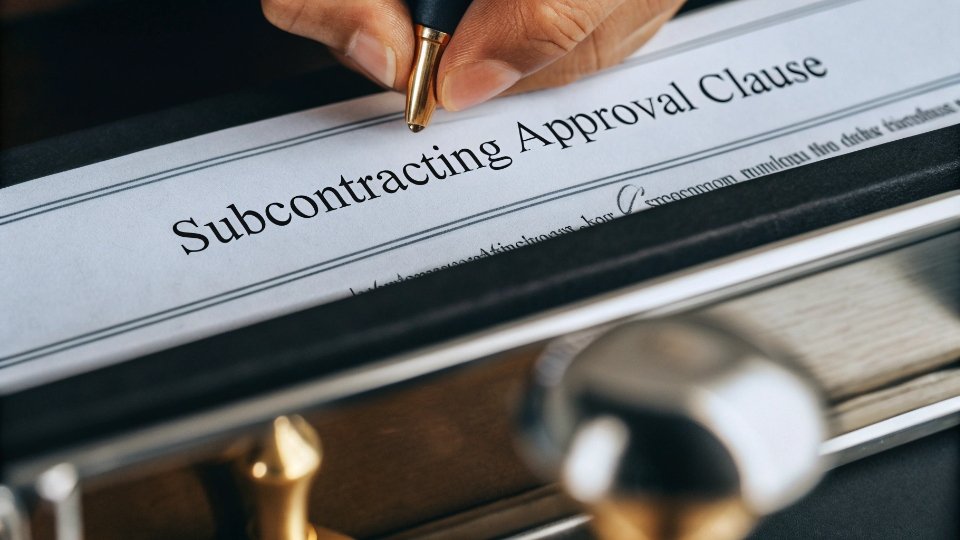
Let me be perfectly clear: your silence is never consent at our factory. We will never move forward with a partner without your formal, written authorization. The process is straightforward and designed to give you complete control.
It begins with a transparent conversation. We would explain why a partner might be needed for a specific process and who we recommend. If you agree to consider it, we will send you a formal Subcontracting Proposal.
This document is comprehensive and includes the partner's full company profile, the results of our audits, the specific process they would handle, and a copy of the Non-Disclosure Agreement they will sign to protect your designs.
Production on that specific part of your order will not start until we receive your signed approval of this document. This creates a clear paper trail and ensures you are the ultimate decision-maker.
How Is Quality Maintained Across All Sites?
Even with vetting and approval, you worry about consistency. How can a separate facility possibly match the quality and standards of the main factory you so carefully chose to work with?
Quality is maintained because our quality system travels with your order. Our own QC team manages the process at the partner facility, using the exact same standards and checklists that we use in-house.
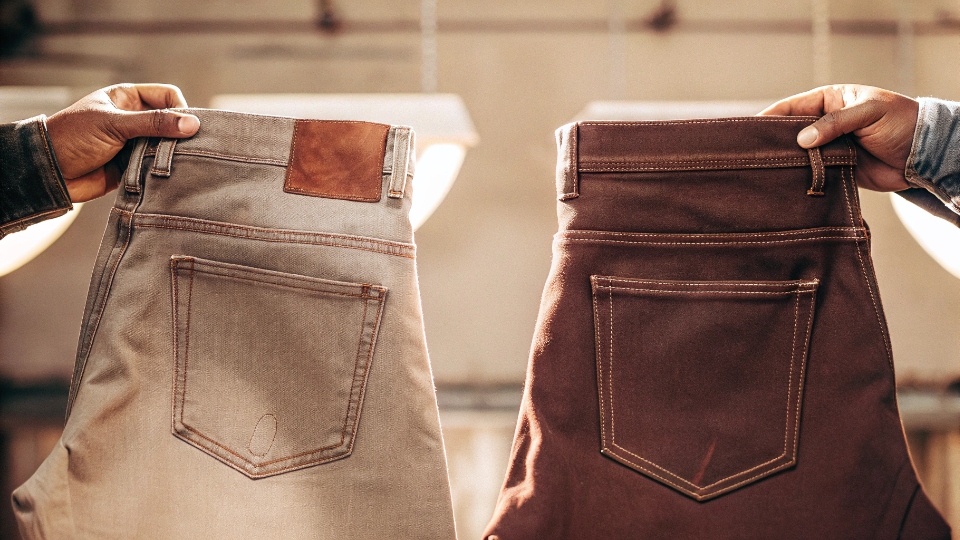
The key to consistency is that we do not rely on a partner's quality system; we impose our own. When a part of your order is at a partner facility, my quality inspectors are there with it.
They are not just visiting; they are stationed on-site for the duration of the process. They bring your approved golden sample, your final tech pack, and our detailed inspection checklists.
They oversee the production line, conduct in-process checks, and perform a 100% final inspection6 of the partner's work before it is allowed to leave their facility.
Then, all those components are shipped back to our main DiZNEW factory. Here, they undergo another full quality inspection before being integrated into the final garment.
Nothing ever ships to you directly from a subcontractor. We take full and final responsibility for every single piece. If there is a defect, it is our problem to solve and our cost to bear.
Conclusion
A transparent subcontracting policy7 is the foundation of trust. It ensures your jeans are made with our high standards, under our direct supervision, and always with your full knowledge and consent.
-
Understand the characteristics of a transparent factory and how it builds trust with clients. ↩
-
Learn about the denim washing process and its impact on the final product's quality. ↩
-
Explore the value of artisanal skills in creating unique and high-quality products. ↩
-
Explore how specialized partnerships can enhance production capabilities while maintaining quality. ↩
-
Learn how quality control inspectors maintain product standards and ensure consistency in manufacturing. ↩
-
Explore why final inspections are crucial for maintaining quality before products reach customers. ↩
-
Understanding subcontracting policies can help you ensure transparency and quality in your production processes. ↩