Skip to content

You see logos for certifications, but doubt their legitimacy. A scandal could ruin your brand.
A trustworthy factory proves its compliance with recent, verifiable third-party reports and clear safety protocols.
A reputable factory holds key certifications like WRAP (for the US) and BSCI1 (for the EU). They will provide recent third-party audit reports2, show you their chemical safety and waste management systems, and have contract clauses that protect you if they fail an audit.

For me, these certifications aren't trophies we hang on the wall. They are the daily rulebook for how we run our business.
After 20 years in denim, I know that a great pair of jeans must be made the right way.
That means respecting our workers, protecting our environment, and being transparent with you, our partner.
This is a non-negotiable part of our promise. A logo is easy to display, but real compliance is proven through action and openness.
Let’s break down what you should look for to ensure your partner is truly committed.
Do they hold WRAP, BSCI, or SA80003 certifications?
You need a factory that meets US or EU standards. You're confused by all the different acronyms and are not sure which ones actually matter for your specific market.
Yes, a top-tier factory will hold multiple key certifications. WRAP is critical for the US market and focuses specifically on apparel. BSCI is the standard for most European brands.
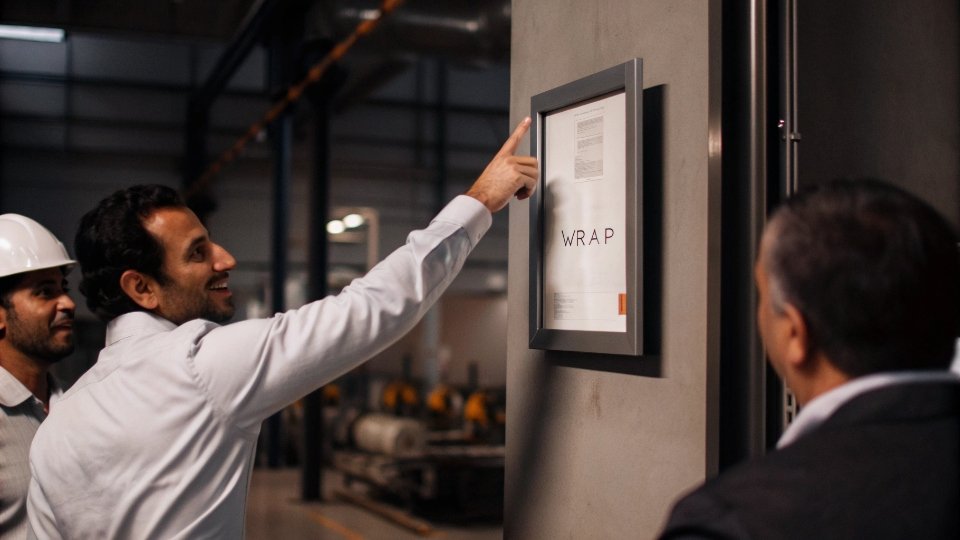
Think of these certifications as your passport to different markets. They are not interchangeable. WRAP4 (Worldwide Responsible Accredited Production) is the gold standard for any brand selling into the United States.
It is built by the apparel industry, for the apparel industry, and covers 12 core principles, from worker safety to environmental practices. BSCI (Business Social Compliance Initiative) is what our European clients look for.
It provides a unified social auditing process to ensure we meet their high standards for human rights and labor conditions.
Some factories may also have SA8000, which is another great social responsibility standard. In our factory, we maintain both WRAP and BSCI certifications.
This allows us to be a flexible partner, ready to meet the compliance requirements of major retailers in both North America and Europe.
Key Certifications at a Glance
| Certification | Primary Market | Key Focus |
|---|---|---|
| WRAP | USA | Apparel industry labor rights, safety, and environment. |
| BSCI | Europe | Unified social compliance monitoring and improvement. |
| SA8000 | Global | General social accountability across all industries. |
A certificate is a good start, but it could be old or even fake. You need real, current proof that the factory is walking the talk, not just showing a piece of paper.
Absolutely. A transparent factory will gladly share their latest audit report. This report will be from a trusted third-party auditor like SGS or Intertek and should be less than a year old.

Trust must be earned through transparency. A certificate on the wall means nothing without the detailed report behind it. We don't audit ourselves; that would be a conflict of interest.
We hire globally recognized, independent companies like SGS, Intertek, or BV to come into our factory.
They spend days checking everything from our payroll records and safety equipment to our environmental practices.
They then issue a detailed report. This report shows their findings, including any areas where we need to improve.
A good factory is not one that is "perfect," but one that is honest about its results and has a clear plan to fix any issues.
We will always provide you with our most recent report, which is typically from within the last 6 to 12 months.
Some of our certificates even have a QR code you can scan to verify their authenticity online.
How do they manage chemical safety and waste treatment?
Denim washing uses lots of water and chemicals. You are worried about environmental harm and dangerous substances in your products, which could lead to recalls or damage your brand's green reputation.
We manage this with a strict three-part system. We control all chemicals coming in, monitor their use during production, and treat all waste and water before they leave our factory.

This is a topic I am extremely passionate about. Making beautiful jeans cannot come at the cost of our planet.
Our system is simple and strict. First, we control what enters the factory. We follow the AFIRM RSL5 (Restricted Substances List), which is a "do not use" list of harmful chemicals.
Any dye or chemical from our suppliers must be proven safe before it comes through our doors. Second, we are part of the ZDHC6 (Zero Discharge of Hazardous Chemicals) program.
This is our roadmap to continuously reduce and eliminate hazardous chemicals from our entire process.
Third, we manage everything that leaves the factory. Our industrial wastewater goes through an on-site treatment plant to ensure it is clean and safe before it is discharged.
All solid waste, like fabric scraps or old chemical drums, is sorted and handled by certified disposal companies.
What happens if they lose certification mid-contract?
You have signed a contract and production is moving forward. Then you learn your factory failed an audit. You feel trapped, with your product and reputation on the line.
A professional partnership is built on accountability, which is written into our contract. If we fail an audit, we have a set period to fix the issues. If we cannot, you have the right to exit the contract.

This is a very serious situation, and a good contract must protect you from this risk. Our agreements are very clear on this point.
If we were to fail a surprise audit and lose a certification, we are contractually obligated to inform you immediately.
The contract gives us a specific grace period, usually 1 to 3 months, to implement a corrective action plan and pass a re-audit.
We are responsible for all costs associated with this. During this time, we can often provide temporary proof of compliance to keep production moving.
However, if we fail to regain our certification within that window, the contract gives you the power. You have the right to pause all outstanding orders or even terminate the contract completely.
We would then be responsible for any losses incurred due to our failure to remain compliant. This ensures we are always motivated to meet the standards we promise.
Conclusion
True compliance is not about logos; it is about verifiable reports, strict chemical management, and contractual safeguards. This is how we build a partnership of trust with our clients.
-
Explore BSCI certification to learn how it ensures social compliance and labor rights in European manufacturing. ↩
-
Third-party audit reports provide transparency and credibility, ensuring factories adhere to safety and labor standards. ↩
-
SA8000 certification is crucial for understanding global social accountability standards across industries. ↩
-
Understanding WRAP certification can help you ensure your factory meets US standards for labor rights and safety. ↩
-
The AFIRM RSL is crucial for understanding restricted substances in manufacturing and ensuring safety. ↩
-
The ZDHC program is vital for factories aiming to eliminate hazardous chemicals and improve sustainability. ↩