
You want to lift heavy weights today. You wear regular thick clothes to save time. I will show you how stiff clothes ruin your safe daily workout routine.
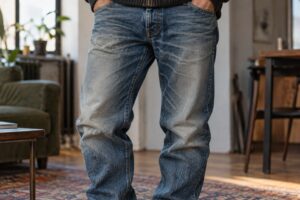
Gyms do not allow jeans. Stiff thick denim limits your physical flexibility.[^1] Hard pants block your safe body movement. Thick cotton traps hot sweat against your skin. Metal buttons and rough fabric also catch on exercise machines.[^2] These hard parts increase your physical injury risk greatly.
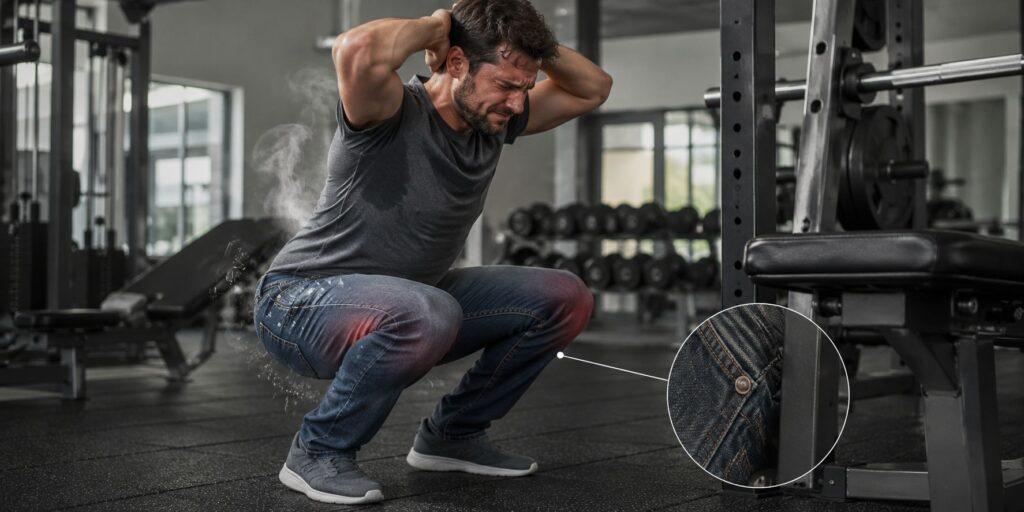
You ignore gym rules often. Club managers block your entry quickly. You must understand these hidden safety dangers. You will change your clothes before your next fitness session.
Why are jeans banned from gyms?
You pay expensive club fees. Staff members still force you to leave. I will reveal the true physical safety reasons behind this strict clothing ban today.
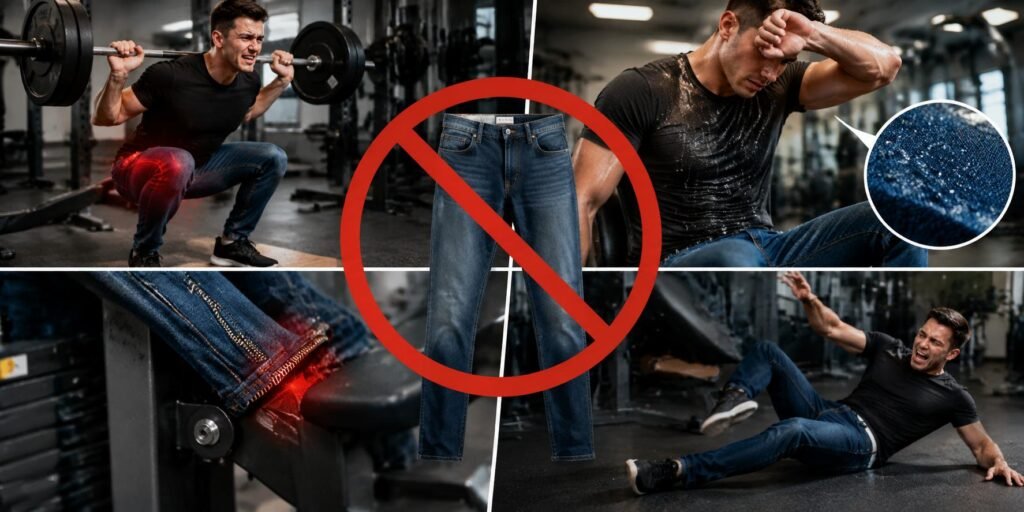
Gyms ban jeans to protect your personal safety. Hard denim restricts deep squats.[^3] Stiff cloth causes bad muscle strains. Thick fabric absorbs sweat and feels heavily uncomfortable. Hard metal parts also catch on fast fitness equipment. These actions cause dangerous physical falls.
Safety And Fabric Danger
I run the DiZNEW denim factory. I know thick fabric properties very well. Denim lacks basic stretch. You try to perform a deep squat in jeans.
The hard fabric stops your natural body movement. You force the strict physical movement. You pull your leg muscle badly. Thick cotton also lacks basic air breathability.
You sweat heavy drops during hard daily workouts. Thick denim absorbs your wet sweat. The wet pants become very heavy.[^4]
The wet cloth sticks tightly to your warm skin. You feel terrible and hot. Even modern stretch denim feels awful after heavy physical sweating.
My friend Dean designs great high-end jeans in New York. We put strong copper buttons and hard zippers on heavy denim pants. These strict structures block your smooth gym movements.
These sharp metal parts catch on fast spinning gym machines easily. The heavy machine breaks your pant legs. You trip and fall onto the hard floor. Gym managers avoid these bad accidents.
They ban thick daily pants strictly. They protect everybody inside the club. Safety remains their top priority always.
| Denim Feature | Physical Effect | Injury Risk |
|---|---|---|
| Hard stiff fabric | Stops deep body squats | Bad muscle strain |
| Thick heavy cotton | Traps wet body sweat | Deep skin discomfort |
| Metal hard buttons | Catches on spinning machines | Dangerous fast falls |
You know the machine dangers now. You plan to skip the heavy machines totally. You face other pure bodily risks.
Is it okay to wear jeans to a gym?
You bring no simple gym clothes today. You want to stretch in your daily pants. You will face very dangerous physical pain soon.
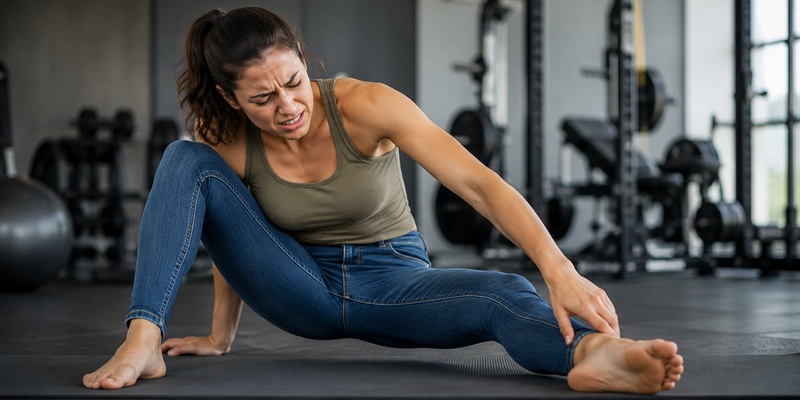
It is never okay to wear jeans to a gym. Tight jeans squeeze your legs. They cause numb feet during simple yoga moves. The heavy rough fabric ruins your physical balance. The tight clothes create deep skin pain during all normal stretching exercises.
The Body Movement Limits
I test new denim fabrics often. I see the pure physical limits of regular cotton clothes. You step into the fitness club. You try to do a simple forward lunge.
Tight jeans squeeze your knee joints hard.[^5] The hard fabric blocks your full physical range. You fail to finish the proper exercise step. You try to do basic floor yoga next.
The narrow pant legs squeeze your lower leg blood veins tightly. You feel strange leg numbness fast. Your feet fall entirely asleep.
Beginners feel this sharp danger quickly. You lose your simple human balance. You fall over onto the mat. You sprain your weak ankle.
The stiff material adds a heavy burden to your simple exercises. I produce thousands of heavy blue pants. I never wear them to run or jump.
Dean shares this basic rule in his New York design studio. We keep our heavy street clothes far away from the clean gym floor.
You must respect your pure physical limits. You need soft elastic pants for a safe daily workout routine. Soft clothes save your small leg joints.
| Exercise Type | Clothing Problem | Body Result |
|---|---|---|
| Deep forward lunges | Jeans squeeze tight knees | Fails proper exercise steps |
| Basic floor yoga | Fabric stops blood flow | Causes deep leg numbness |
| Fast jumping moves | Material adds heavy weight | Creates dangerous physical falls |
You reject heavy gym clothing now. You see young street buyers doing the same thing.
Why does Gen Z hate skinny jeans?
You wear narrow tight pants often. You see young kids rejecting this old style everywhere. I will explain this massive young fashion change clearly.
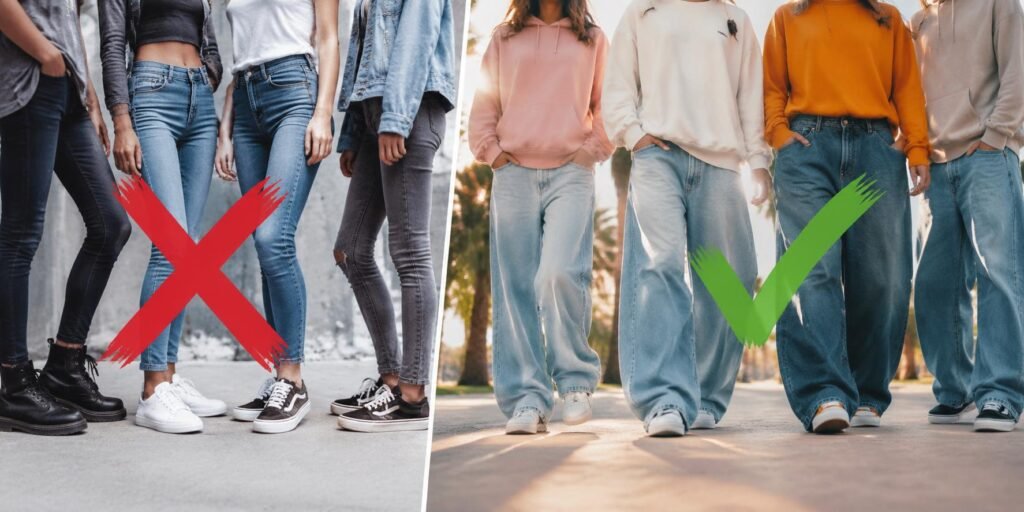
Gen Z hates skinny jeans. Tight pants feel exactly like bad gym restrictions. Young people want daily physical freedom. Narrow denim stops natural blood flow. Tight pants cause deep leg discomfort. New young buyers demand huge soft styles for basic daily movement.
 "Gen Z Skinny Jeans")
The New Comfort Demand
Dean studies global fashion trends deeply. He designs new clothes for big global brands. He sees young people running away from tight skin clothes. Young buyers learn about good physical health.
They know narrow pants squeeze leg muscles too tightly. They hate this strict trapped feeling.
They remember the bad numbness from tight clothes. They want pure daily comfort. Gen Z youths walk around huge cities daily.
They sit on dirty city floors. Tight clothes break easily during these active moments. I change my heavy factory machines at DiZNEW right now.
We make huge wide pants for these young buyers. They want big loose legs. They want soft washed fabrics. They refuse to feel restricted after school.
Skinny pants look good but feel terrible. Young people choose the better pure body feeling today. They reject old painful beauty standards entirely.
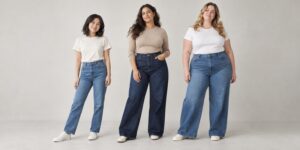
We wash these big wide jeans many times. The soft fabric bends easily. Young people wear these loose pants like simple gym clothes. They feel relaxed all day.
| Pants Pattern | Young Buyer Opinion | Daily Movement Action |
|---|---|---|
| Skinny tight cuts | Hates the trapped feeling | Restricts simple daily walking |
| Soft washed fabrics | Loves the clean comfort | Allows fast city movement |
| Huge wide legs | Buys these styles quickly | Gives perfect joint freedom |
Young people value soft physical freedom. You want real muscle growth in the gym.
What is the 70/30 rule in gym?
You stretch in soft clothes now. You lift heavy weights safely. You still lack good body results. I will show you the exact pure fitness math.
The 70/30 rule states a simple truth. Your physical fitness relies seventy percent on your daily diet. It relies thirty percent on your gym exercise.[^6] Good clean daily food matters much more than your weekly training hours. You build health in the kitchen.
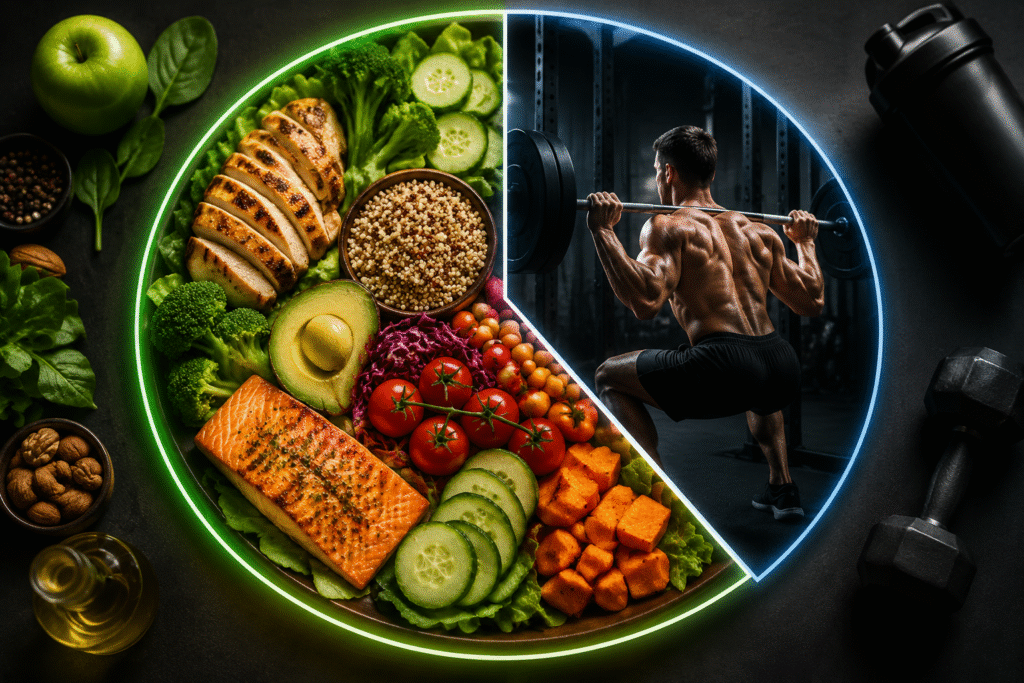
The Safe Food Balance
I talk to many young fitness fans. I manage my big denim factory business daily. I need high physical energy. Perfect health demands clean food choices.
The big seventy percent represents your home kitchen diet. You must eat fresh green foods. You must stop eating bad heavy sugars.
You control your natural body shape with a simple eating plan. The small thirty percent represents your short gym visits.
You wear soft gym clothes right now. You push your muscles hard. You create small soft muscle tears. You return home quickly.
Your healthy clean food fixes these broken muscle parts. Dean works long busy days in New York. He eats basic clean chicken breast.
He avoids heavy sweet drinks entirely. He stays extremely strong at age forty. He follows this simple math rule completely.
The modern gym acts like a small pure chemical trigger. The real physical magic happens back at your home. You need proper soft clothes for the fast gym time. You need perfect healthy food for the remaining hours.
| Rule Part | Total Value | Required Daily Action |
|---|---|---|
| Home daily diet | Seventy big percent | Eat fresh green clean foods |
| Fast gym workout | Thirty small percent | Lift heavy objects very safely |
| Soft gym clothing | Basic safe requirement | Prevent bad physical joint limits |
Conclusion
Gyms ban jeans. Hard thick fabrics limit human movement and cause bad physical injuries. You must wear soft casual clothes. You must follow smart food rules for safe health results.
---

[^1]: "(PDF) Ankle-Dorsiflexion Range of Motion and Landing Biomechanics", https://cdr.lib.unc.edu/downloads/sq87c209t. Biomechanics research on apparel restriction shows that garments with low stretch can reduce joint range of motion during lower-body movements, supporting the claim that stiff denim may limit flexibility. Evidence role: mechanism; source type: paper. Supports: Stiff thick denim limits physical flexibility during exercise.. Scope note: The evidence would support the general mechanism of restricted range of motion, not every denim garment or wearer equally.
[^2]: "Machine guarding and amputation prevention", https://www.tdi.texas.gov/tips/safety/machineguard.html. Exercise-equipment safety guidance commonly advises users to avoid loose, dangling, or snag-prone clothing and accessories around moving parts, providing contextual support for the concern that hard or protruding garment parts may catch on machines. Evidence role: general_support; source type: government. Supports: Metal buttons and rough fabric can create snag hazards around exercise machines.. Scope note: Such guidance usually addresses snag hazards broadly and may not specifically test jeans buttons or denim fabric.
[^3]: "A Biomechanical Review of the Squat Exercise - PMC - NIH", https://pmc.ncbi.nlm.nih.gov/articles/PMC10987311/. Biomechanical studies of the squat identify hip, knee, and ankle range of motion as necessary for proper squat depth, giving contextual support to the claim that restrictive clothing can interfere with deep squats. Evidence role: mechanism; source type: paper. Supports: Deep squats require joint range of motion that stiff denim may restrict.. Scope note: The source would show the movement requirements of squatting; a separate apparel source may be needed to prove that a specific denim garment restricts those joints.
[^4]: "Liquid Moisture Transport in Cotton Woven Fabrics with Different ...", https://pmc.ncbi.nlm.nih.gov/articles/PMC9504572/. Textile references report that cotton fibers absorb substantial moisture, and garment mass increases when water is retained, supporting the claim that wet denim can become heavier during sweating or soaking. Evidence role: mechanism; source type: research. Supports: Denim or cotton garments can become heavier when they absorb moisture.. Scope note: Sweat volume during a workout may be much less than full fabric saturation, so the magnitude of weight gain depends on conditions.
[^5]: "Effects of compression legwear on knee biomechanics and inter ...", https://pmc.ncbi.nlm.nih.gov/articles/PMC12979685/. Ergonomics and apparel-fit research examines how tight garments create pressure at flexing joints such as the knee, supporting the claim that close-fitting jeans can exert pressure during lunges or squats. Evidence role: mechanism; source type: paper. Supports: Tight jeans can create pressure around the knees during flexion-heavy movements.. Scope note: Pressure levels depend on garment size, fabric elasticity, and body shape; the evidence may not apply to all jeans.
[^6]: "Steps for Losing Weight | Healthy Weight and Growth - CDC", https://www.cdc.gov/healthy-weight-growth/losing-weight/index.html. Public-health and nutrition sources emphasize that diet and physical activity both contribute to weight management and health outcomes, supporting the broader principle that diet is central to fitness results. Evidence role: expert_consensus; source type: government. Supports: Diet and exercise both influence fitness and body-composition outcomes, though the exact 70/30 split is not scientifically established.. Scope note: Neutral health sources generally do not validate a precise 70/30 ratio; the citation should frame the ratio as a heuristic rather than an established scientific rule.