Skip to content

You've washed your favorite raw denim, but now they're sopping wet. You need them for tomorrow, but you know the dryer is the enemy. How long will you be waiting?
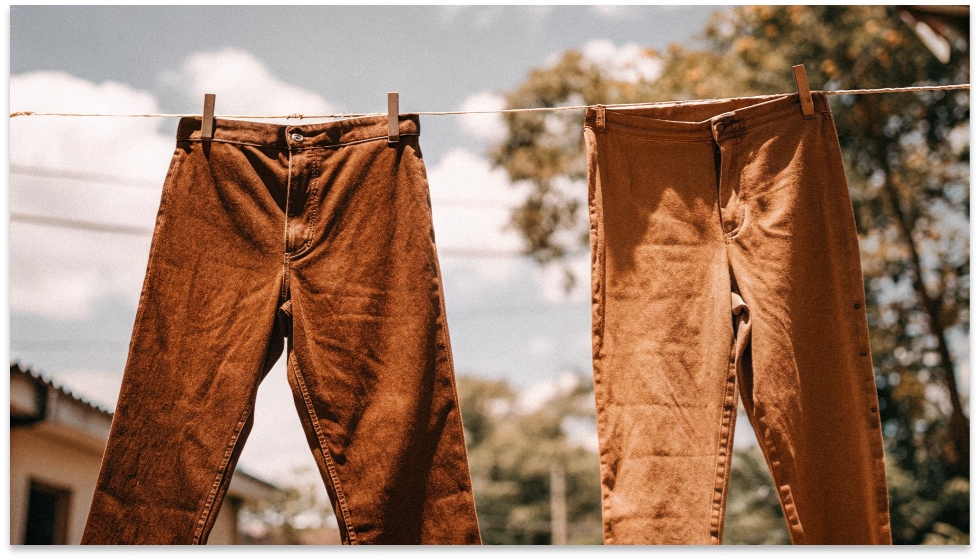
On average, a pair of jeans will take 24 to 48 hours to air dry completely. This time is heavily influenced by the denim's weight, the humidity in the air, and the amount of airflow in the room.
Dean, this is a question that gets to the very heart of proper denim care.
As a designer, you labor over the perfect fit and wash, and the last thing you want is for a customer to ruin it with a high-heat dryer. From my factory perspective, how we dry denim is just as critical as how we wash it.
While we have industrial methods, the principles are the same. Preserving the integrity of the cotton fiber and the indigo dye is paramount. Let's get into the specifics of how to do it right at home.
Can Jeans Dry in 30 Minutes?
You're in a massive rush and need your jeans dry now. The thought of a quick 30-minute high-heat tumble in the dryer is incredibly tempting, but your gut tells you it's a bad idea.
No, it's impossible for jeans to air dry in 30 minutes. Even a machine dryer would struggle to do this safely. Attempting to force-dry denim this quickly with high heat is the fastest way to ruin them.
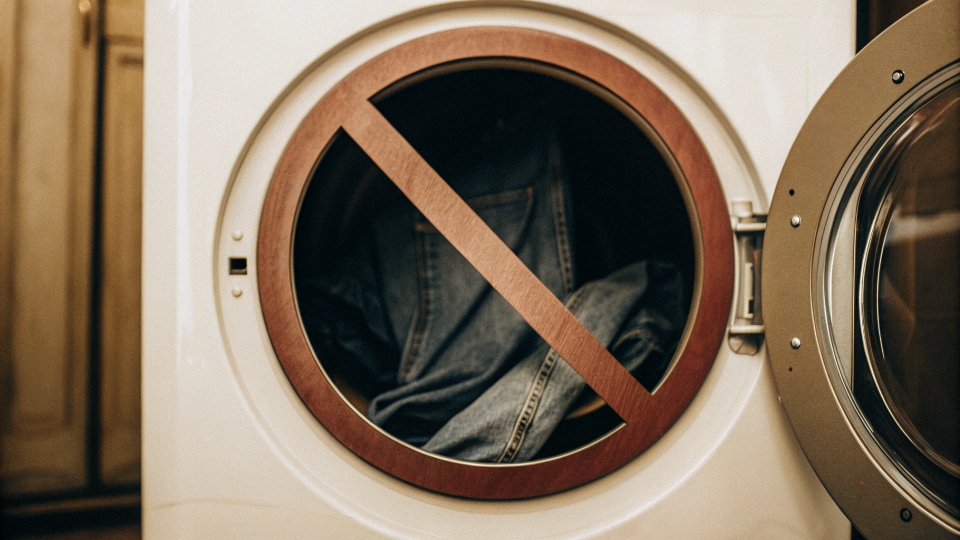
Let me be direct, Dean: heat is the enemy of good denim. Your instincts are correct. Putting a pair of wet, high-quality jeans into a hot dryer is a crime against craftsmanship. First, you get unpredictable shrinkage.
The heat will cause the cotton fibers to constrict rapidly and unevenly, potentially ruining the precise fit you designed. Second, you get color damage.
High heat can shock the indigo, causing it to fade in a dull, uniform way, rather than developing the natural, high-contrast fades that tell a story. Finally, if there's any stretch material like elastane in the denim, high heat will permanently damage it, making the fabric brittle and saggy.
Thirty minutes in a hot dryer can undo months of careful wear and your careful design work. It’s never worth the risk.
How to Air Dry Jeans Fast?
You accept that 30 minutes is impossible, but 48 hours is too long. There has to be a way to speed up the air-drying process without resorting to destructive heat.
To air dry jeans fast, maximize airflow. After washing, roll them in a towel to press out excess water. Then, hang them by the belt loops in a well-ventilated area and point a fan directly at them.
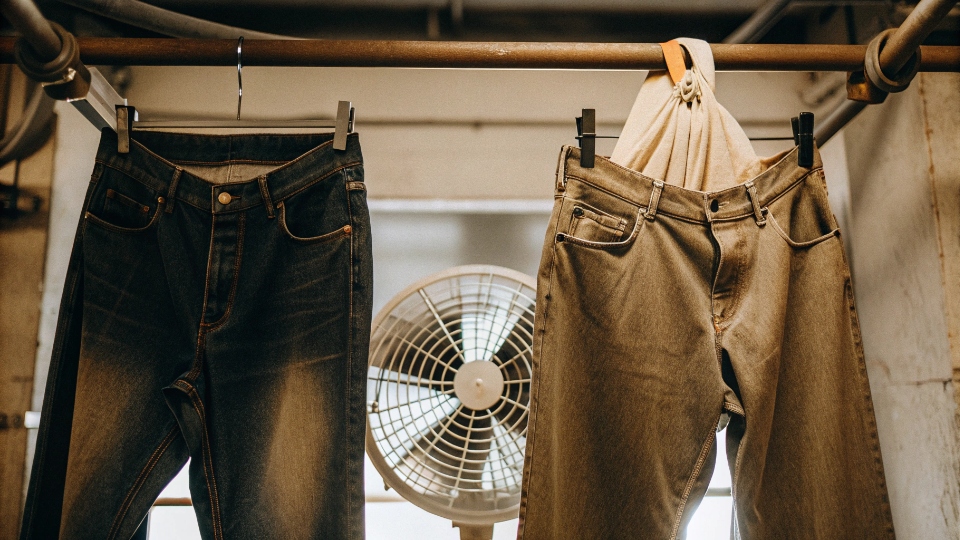
This is the best trick in the book, and it's all about physics. Water evaporates faster when air is moving over the surface of the fabric. Your goal is to create an environment that encourages this. Here's a simple, professional-grade process:
- Remove Excess Water: If your washing machine has a fast spin cycle, use it. Afterward, lay the jeans flat on a thick, clean towel. Roll the towel and jeans up together tightly, like a sleeping bag. Stand on the roll to press out even more water.
- Hang for Max Airflow: Don't fold the jeans over a bar. This traps moisture. Instead, use a hanger with clips or, even better, S-hooks through the belt loops on either side. This holds the waistband open, letting air circulate inside and out.
- Create a Breeze: This is the most critical step. Place a simple house fan a few feet away and aim it at the jeans. Keeping the air moving can easily cut your drying time in half, often down to 12-24 hours.
Is It Okay to Let My Jeans Air Dry?
You've heard some people complain that air-drying makes jeans feel stiff and crunchy. This makes you wonder if it's really the best method, or if there's a downside you're not considering.
Yes, it is absolutely okay—in fact, it is the best and most recommended method for drying high-quality jeans. Air drying is the only way to preserve the original fit, color, and lifespan of the denim.
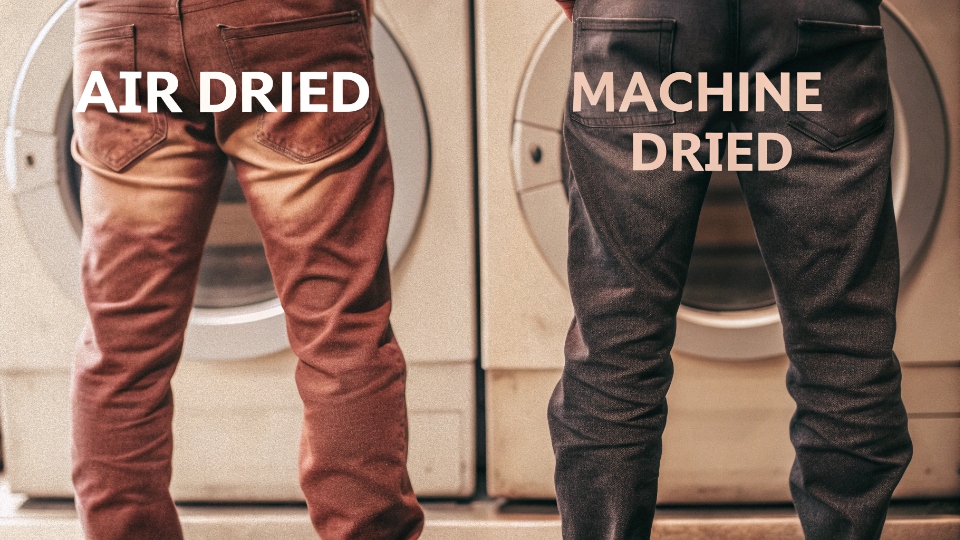
That initial stiffness you hear about is real, but it's temporary and harmless. It happens because the water washes away the natural oils and softeners from the fibers, and as they dry without tumbling, they can feel a bit rigid. But this is a small price to pay for the benefits.
Dive Deeper: The Impact of Drying Method
| Aspect | Air Drying | High-Heat Machine Drying |
|---|---|---|
| Fit & Size | Preserves the original size and shape. Molds back to your body after a few minutes of wear. | Causes significant, often uneven shrinkage. Can permanently alter the designed fit. |
| Color | Protects the deep indigo dye, allowing for natural, high-contrast fades to develop over time. | Can "shock" the dye, leading to a flatter, less interesting all-over fade. |
| Fabric Life | Gentle on cotton fibers and any stretch material, leading to a much longer lifespan for the garment. | High heat breaks down cotton fibers and destroys elastane, making the fabric weaker and prone to tearing. |
The "crunchy" feeling from air drying disappears within 10-15 minutes of putting the jeans on. Your body heat and movement will quickly soften them right back up.
Will Jeans Dry if Hung Overnight?
You've followed all the steps: you washed your jeans, hung them up with a fan before bed. You're hoping to wake up to a dry, wearable pair. Is an 8-10 hour overnight hang enough?
No, it's very unlikely they will be completely dry. While the legs might feel dry to the touch, moisture will still be trapped in the thickest parts: the waistband, the seams, and the pocket areas.
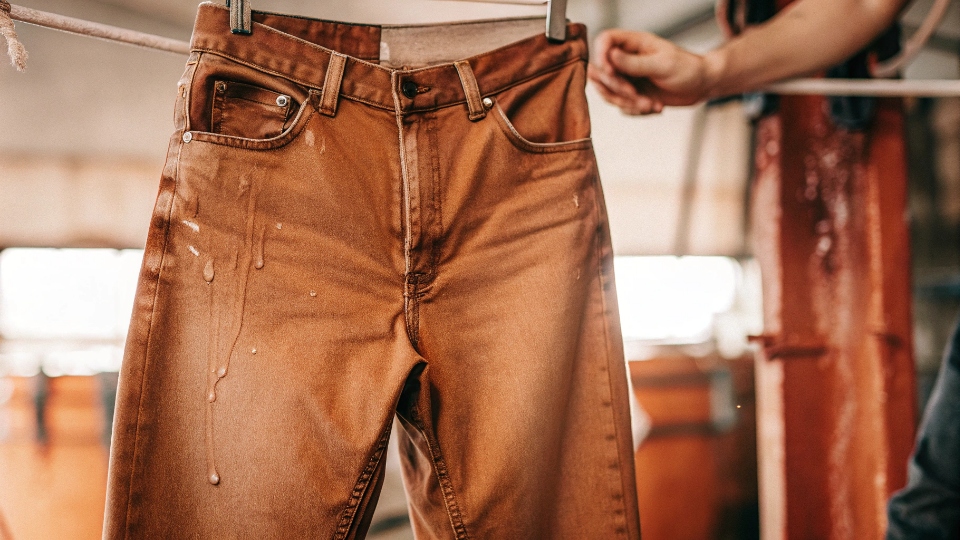
From a production standpoint, we know that water doesn't leave fabric evenly. The single-layer denim on the thigh will always dry first. The real challenge is the areas where multiple layers of fabric are sewn together.
Think about the construction of a typical five-pocket jean. The waistband is a thick, multi-layered tube of denim. The flat-felled seams on the inseam and yoke are incredibly dense. The corners of the back pockets have four or five layers of fabric stacked on top of each other.
These areas hold a tremendous amount of water and have very little surface area exposed to the air. Even with a fan, it takes a long time for the moisture to wick out of these dense spots. So, after a night, they'll be wearable in a pinch, but you will likely feel a distinct dampness around your waist and along the seams.
Conclusion
Air drying is the best way to care for your jeans, but it takes time. Expect a 24-hour process, but you can accelerate it significantly by maximizing airflow with a simple fan.