Skip to content

As a designer, you're constantly trying to create the "perfect" jean. But "attractive" is subjective, leaving you wondering which styles and brands truly connect with men on a deeper level.
The most attractive jeans are not about a specific brand, but about the perfect fit for the man's body type combined with a style that authentically reflects his personality, from timeless classics to modern artistry.

Dean, this question is something we tackle from a different angle in the factory. We don't think about "attractiveness," we think about "intention." What is the intention of the design? I saw your notes mentioning Levi's and whodescidewar.
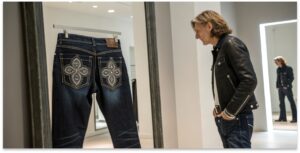
This is brilliant because it shows the entire spectrum. On one end, you have the pure, timeless function of a Levi's 501. It's an icon, a piece of history. On the other end, you have the wearable art of whodescidewar, where the jean is a canvas for intricate embroidery and storytelling.
Both are "attractive" because they are executed with a clear, confident vision. The attraction comes from the authenticity of the product, whether it’s rooted in history or in art.
What Jeans Look Best on Men?
You want to design jeans that make men look their best. But with so many body types and fit preferences, it's hard to know which silhouette offers the most flattering results.
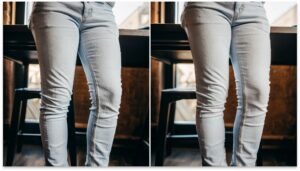
The best-looking jeans are those that create a balanced, proportionate silhouette. This means choosing a fit that complements the man's build, rather than fighting against it or hiding it under excess fabric.

From a pattern-making perspective, "looking good" is about achieving balance. It's not about forcing everyone into a skinny jean or a baggy jean. It’s about creating harmony between the garment and the person wearing it.
I’ve seen thousands of fit samples, and the ones that succeed always follow this principle. We can break it down into a simple guide that we often use when advising new brands. It’s about matching the fit to the frame.
A Manufacturer's Guide to Flattering Fits
| Body Type | Recommended Fit | Why It Works |
|---|---|---|
| Slim/Slender | Slim or Straight | Follows the body's natural lines without adding bulk. A skinny fit can also work, but a slim fit offers more versatility. |
| Athletic | Athletic Taper or Relaxed Straight | Provides crucial extra room in the seat and thighs for muscle, then tapers to avoid a sloppy look at the ankle. It celebrates the build. |
| Larger/Sturdy | Straight or Relaxed Straight | Creates a clean, long line from hip to ankle, which is elongating. Avoids clinging in the thighs or being overly baggy. |
The goal is never to hide the body. It’s to work with it. A well-designed jean should feel like it was made for the person wearing it, and that feeling of a perfect fit is the foundation of looking good.
Which Brand of Jeans is Best for Men?
You see countless brands on the market, from heritage labels to new designers. You need to understand what makes a brand "best" in the eyes of the consumer to position your own designs effectively.
The "best" brand aligns with a man's identity. Some prefer the timeless heritage of Levi's, while others are drawn to the intricate craft of a niche Japanese brand or the bold artistry of a designer label.

This is where your insight about Levi's and whodescidewar is so powerful. They represent two successful, but completely different, philosophies. In the two decades I've been making jeans, I've seen that the "best" brands fall into a few key categories. They aren’t competing with each other; they are serving different needs.
The Three Archetypes of "Best" Brands
-
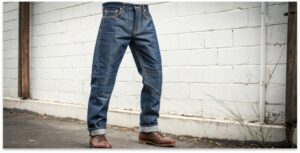
The Icon (e.g., Levi's): This is the foundation. A brand like Levi's is "best" because of its history, consistency, and cultural significance. When you buy a pair of 501s, you are buying into a story that's over a century old. Their strength is their authenticity. You mentioned the 501, 511, and 510. This shows how an icon can adapt its fit blocks for modern times while retaining its core identity.
-
The Craftsman (e.g., Japanese Selvedge Brands): This brand is "best" because of its obsessive focus on materials and construction. They use selvedge denim from shuttle looms, custom hardware, and complex dye processes. Their customers value the process as much as the product. They want to know the story of the cotton, the loom, and the dye.
-
The Artist (e.g., whodescidewar): This brand is "best" because it uses denim as a medium for expression. It's about intricate washes, embroidery, deconstruction, and reconstruction. These aren't just jeans; they are statement pieces. We do this kind of complex work in my factory, and it's incredibly difficult. It requires dozens of steps. The value here is in the visible artistry and unique vision.
What Are the Most Popular Jeans Right Now?
You're planning your next collection and need to tap into the current market demand. You need to know which fits are flying off the shelves so you can focus your design and production efforts effectively.
The most popular jeans right now are relaxed straight and classic straight fits. The market has shifted decisively away from skinny jeans towards more comfortable, '90s-inspired silhouettes that offer more room and a relaxed look.

Dean, we are seeing this shift every single day on the factory floor. For nearly a decade, about 80% of our production was slim and skinny fits. Now, that number has flipped. Over half of the new tech packs we receive are for straight, relaxed, or wide-leg fits.
This is not a small trend; it is a fundamental change in the market. The skinny jean silhouette, which is defined by its use of stretch denim, dominated for so long. Now, consumers are re-embracing the feel of 100% cotton, rigid denim. This requires a looser fit for comfort.
As a manufacturer, this means we are pulling out old patterns and creating new ones. We are focusing more on wash techniques that work well on open silhouettes and fabrics with more character. The pendulum has swung, and it is firmly in the camp of comfort and relaxed volumes.
What Jeans Do College Guys Wear?
You're looking to capture the large and influential youth market. You need to understand the specific priorities of a college student when they choose a pair of jeans.
College guys prioritize a combination of current trends, comfort, durability, and value. This often leads them to accessible brands like Levi's, focusing on relaxed or slim-straight fits that are versatile for their lifestyle.

This demographic is fascinating because they are both trend-aware and highly practical. They see the relaxed fits on social media, so they want that style.
But they also need jeans that can survive being worn three times a week, thrown on the floor, and washed infrequently. They don't have a huge budget, so the value proposition is critical.
This is why a brand like Levi's does so well here. It has the brand recognition and the on-trend fits (like the 511s you mentioned, or now, looser styles like the 550 or 501). From a production standpoint, serving this market is about efficiency.
We focus on creating authentic-looking washes using cost-effective and scalable methods.For example, we use laser technology to create vintage fading patterns that look incredible but are much faster and more consistent than old-school hand-sanding.
This allows us to deliver a fashionable, durable product at a price point that a college student can afford. They get the look they want and the durability they need.
Conclusion
Ultimately, the most attractive jeans are an honest reflection of personal style, built on the foundation of a perfect fit. From heritage icons to modern art, true appeal lies in authenticity.