Skip to content

You stand in front of your closet, faced with a fundamental denim dilemma. Do you go for the sleek, body-hugging skinny jean or the classic, no-fuss straight fit? It feels like a choice between two entirely different identities.
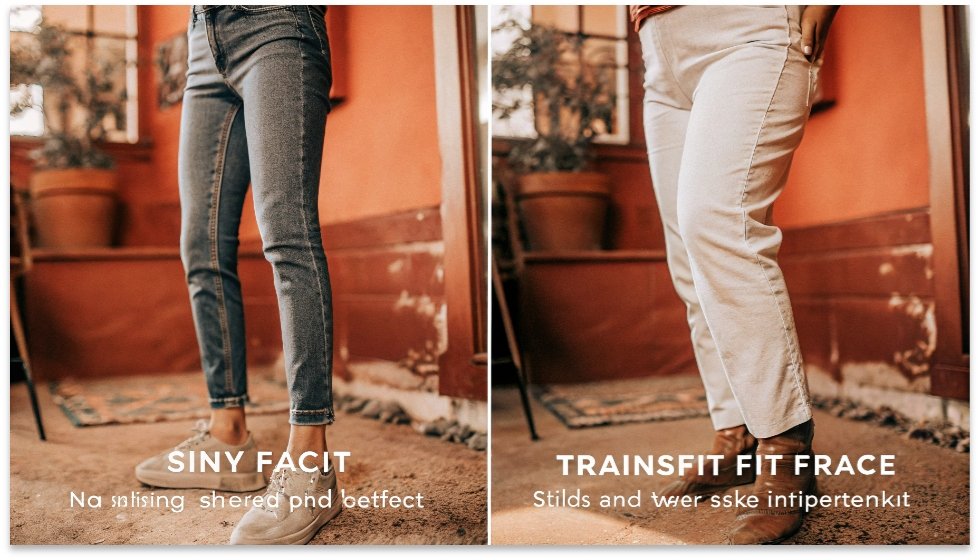
Neither fit is inherently "better"; they are two distinct tools designed to achieve different visual effects. Skinny jeans trace and celebrate the body's natural form, while straight-fit jeans create a clean, architectural silhouette independent of it.
Dean, I was talking with someone recently who had a fascinating take, saying men look better in straight-fit jeans and women look better in skinny jeans.
From my perspective as a manufacturer, this isn't just a style preference; it's a perfect observation of how these two garments are engineered.
A skinny jean is built to be a second skin, relying on fabric technology to stretch and recover. A straight jean is more like a piece of architecture, using its cut to build a shape. They start from two completely different design philosophies.
What is the Difference Between Skinny Jeans and Straight Jeans?
You look at a spec sheet and see two different style names, but the initial measurements look similar. You need to know the critical difference that defines these two powerhouse fits.
The defining difference is the pattern from the knee down to the leg opening. Skinny jeans taper aggressively to a narrow opening that clings to the ankle. Straight jeans maintain a consistent width from the knee down.

When we lay out the patterns on the factory floor, the difference is unmistakable. The pattern piece for a straight jean leg looks like a simple rectangle below the knee. In contrast, the pattern for a skinny jean tapers sharply, forming a funnel shape.
This distinction has huge implications for fabric choice. To make a skinny jean functional, we must use a denim with a high percentage of elastane (like Lycra or spandex) for stretch, and crucially, excellent "recovery" so it snaps back into shape and doesn't bag at the knees.
A straight jean can be made from rigid, 100% cotton denim or denim with just a little "comfort stretch" (1-2% elastane). The fit is in the cut, not just the fabric.
Engineering the Fit
| Feature | Skinny Fit | Straight Fit |
|---|---|---|
| Pattern Shape | Tapers from knee to ankle | Consistent width from knee to ankle |
| Leg Opening | Narrow (e.g., 11-13 inches) | Wider (e.g., 14-16 inches) |
| Fabric Requirement | High Stretch & Recovery (3%+ elastane) | Rigid or Comfort Stretch (0-2% elastane) |
| Design Intent | To trace the body's natural line | To create a clean, straight line |
Who Should Wear Straight Fit Jeans?
You see the straight-fit jean as a classic, but you're not sure who it truly serves. You wonder if it's a dated look or if it has a modern place in a collection.
Everyone can wear straight-fit jeans, but they are particularly effective for those wanting to create a balanced, classic silhouette. They are excellent for athletic builds, as they provide more room, and for anyone wanting a timeless, versatile foundation.
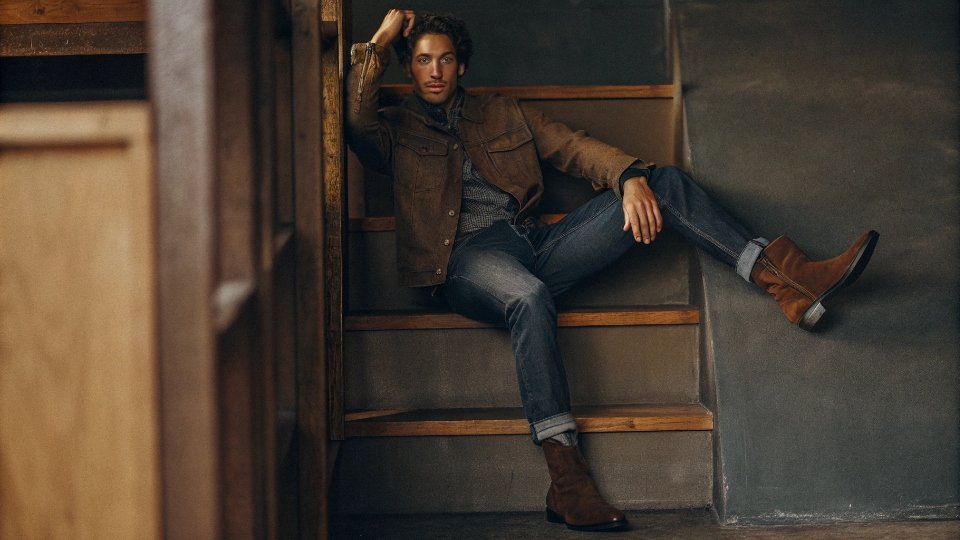
The insight you shared about men looking "hotter" in straight-fit jeans points to a key design principle: structure. A straight-fit jean doesn't cling. It skims the body, creating a strong, uninterrupted vertical line from the hip to the ankle.
For an athletic build with larger thighs or calves, this is a game-changer. It provides comfort without sacrificing a clean silhouette. For a slimmer frame, it adds a sense of substance and structure. From a designer's perspective, think of the straight-fit jean as the perfect canvas.
It doesn't scream for attention. It provides a solid, classic foundation that allows other pieces, like a great jacket or a pair of boots, to be the hero. It’s the ultimate supporting actor.
Which Body Type Looks Best in Skinny Jeans?
You see the skinny jean as a very specific, demanding silhouette. You're hesitant to design with it, worried that it only works for a very narrow range of body types.
Skinny jeans look best on anyone who wants to highlight the natural curve and line of their legs. They work for both slender frames by maintaining a lean look and for curvy frames by celebrating their shape.
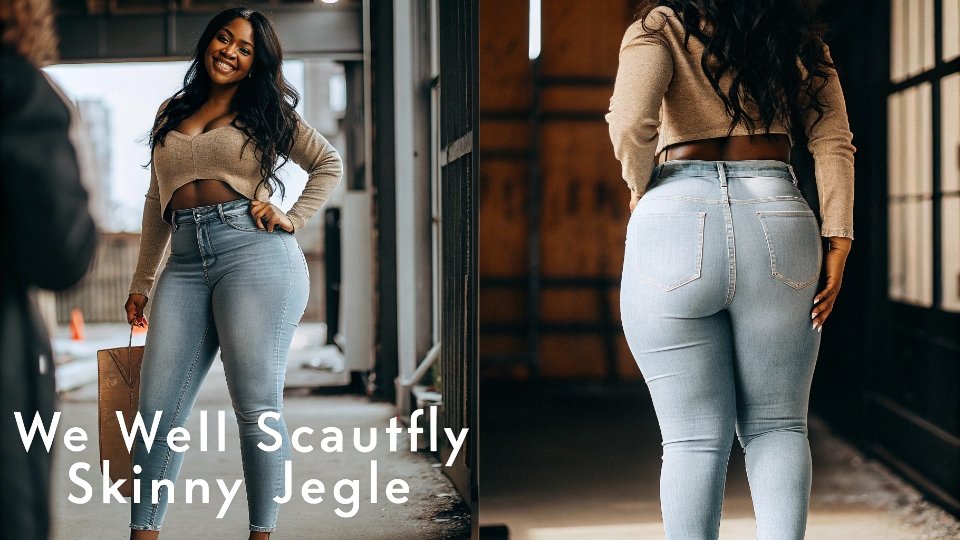
The comment about women's curves being "beautifully highlighted" by skinny jeans is technically precise. This is exactly what the garment is engineered to do.
The high-stretch fabric acts like a contour map of the body. It doesn't create a new shape; it traces the existing one. For a slender person, it maintains that long, lean line without any excess fabric.
For a person with curves, it hugs the hip and thigh, celebrating that shape rather than hiding it under a curtain of denim. The challenge for you as a designer, Dean, is that because it's so form-fitting, the details matter immensely.
The rise must be right to flatter the waist, and the wash and finishing must be expertly applied to enhance, not distort, the leg's shape.
Are Straight Leg Jeans More Flattering?
You hear the word "flattering" thrown around for all sorts of fits. You need to understand what makes a straight leg jean a go-to choice for creating an appealing silhouette.
Straight leg jeans are often considered more universally flattering because they skim the body rather than cling to it. By creating a straight, unbroken line, they can visually balance proportions, add perceived height, and offer a timeless look.
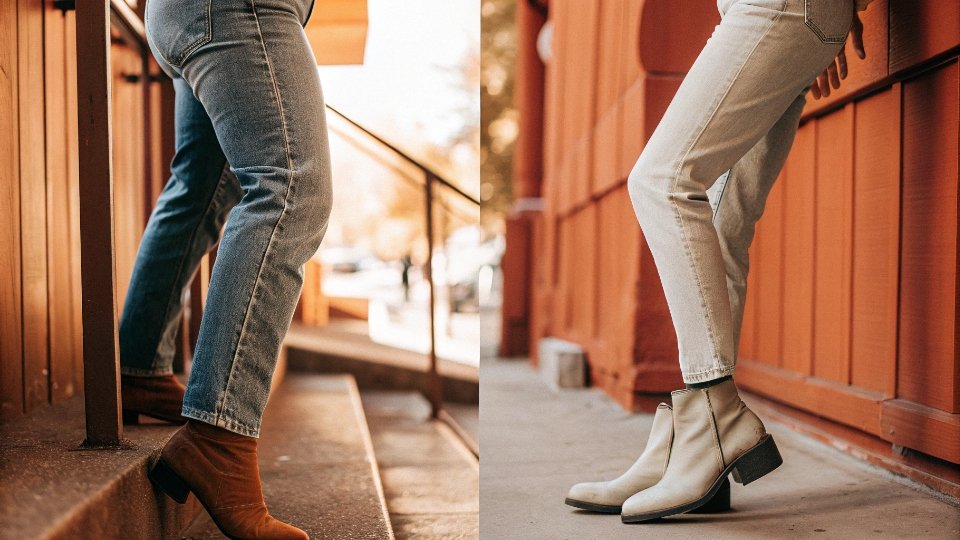
The term "flattering" really means "solves a visual problem." In this context, straight-leg jeans are masters of creating balance.
If a person feels their hips or thighs are wide, the straight cut doesn't cling to that area. Instead, it drops straight down, drawing the eye vertically and making the entire leg look longer and leaner.
If a person has very slim legs, the straight cut adds a little bit of structure and substance. It's a silhouette that grants form rather than just mirroring it. The skinny jean, by contrast, is a silhouette of pure honesty. It displays the form that's already there.
Neither approach is better, but the straight leg's ability to build a new, clean line makes it a very forgiving and powerful tool in a designer's arsenal.
Conclusion
Choosing between straight and skinny is a core design decision. It's not about which is better, but what you want the garment to do: create a new shape or celebrate the existing one.