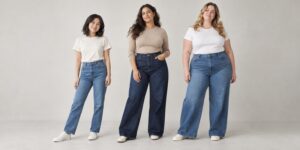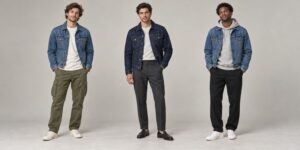

Ever wonder why that one piece of clothing is in almost every closet on the planet? It's a unique success story. I'll explain the powerful forces that made jeans a global icon.
Jeans are universally popular1 due to a perfect mix of practicality, cultural symbolism, and brilliant marketing. Their durable fabric is incredibly versatile, while their history as a symbol of rebellion and equality gives them a deep cultural appeal that transcends borders and continues to evolve.
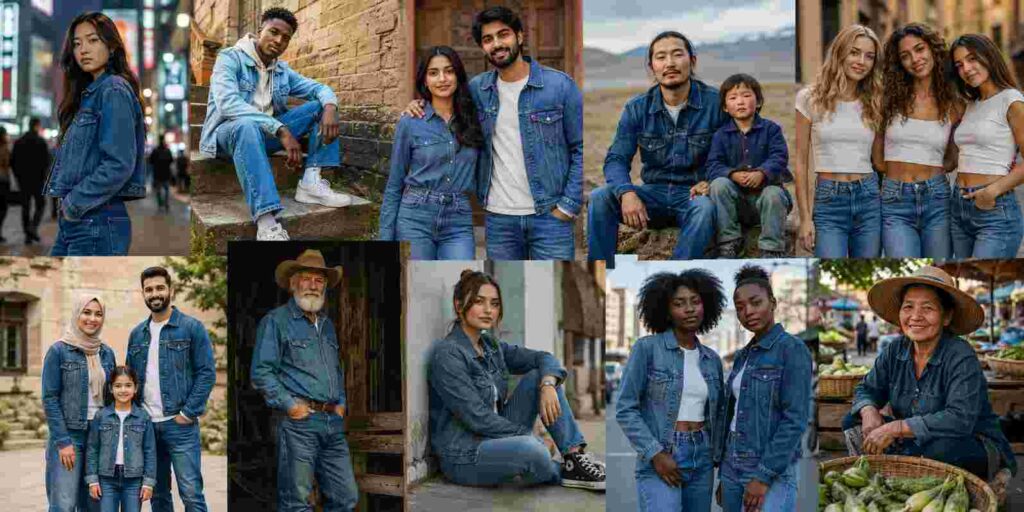
From the gold miners of California to the fashion runways of Paris, no other garment has traveled so far. This journey is about more than just sturdy cotton. It's about a piece of clothing that has managed to be both a blank canvas for self-expression and a uniform for unity. As someone who has spent over two decades making them, I've seen firsthand how these different elements come together. Let's dive into the core reasons for their unstoppable global appeal.
Why are jeans so popular now?
Trends change in a flash, but jeans are always here. In a world of fast fashion, how does this single item stay so relevant? I'll show you why they fit our modern lives perfectly.
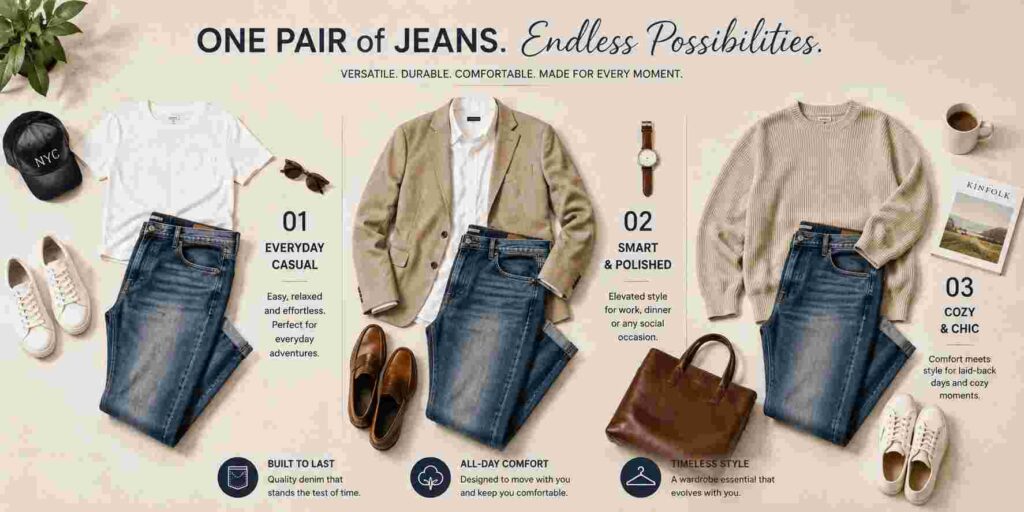
Jeans are popular now because their versatility and durability are a pragmatic choice for our fast-paced lifestyles. They can be dressed up or down, simplifying our clothing decisions while providing comfort that gets better with every wear. Their style is always evolving to stay current.
Dive Deeper: The Pillars of Modern Popularity
From my factory floor, I see the constant demand for jeans, and it boils down to three core strengths that resonate today more than ever. First is their unmatched practicality. The tough denim fabric can handle daily life and repeated washing. Plus, it molds to your body over time2, becoming uniquely yours. You can wear the same pair of jeans to a casual meeting, for weekend errands, and then out at night. This simplifies life.
Second is their cultural power. Jeans broke down barriers3. In the 1950s, they were a symbol of youth rebellion. Later, they became a great equalizer, worn by everyone from factory workers to company presidents. This democratic spirit is still a huge part of their appeal. They represent a kind of cool, effortless authenticity. Finally, strategic global marketing has made jeans a timeless staple. Brands like Levi's have tied jeans to the American spirit of adventure4, making them more than just pants. They are a story you can wear, and that story is understood worldwide.
| Reason for Popularity | Description | Modern Relevance |
|---|---|---|
| Practicality | Durable, versatile, and comfortable. | Fits a busy, multi-faceted lifestyle perfectly. |
| Cultural Symbolism | Represents rebellion, equality, and authenticity. | Appeals to our desire for individual expression. |
| Global Marketing | Positioned as a timeless, evolving classic. | Constant innovation keeps jeans on trend. |
What is the 2 finger test for jeans?
You hear customers talk about a quick fit trick, but you're not sure what it is. This simple test is a window into what people really want from their jeans: comfort.
The two-finger test5 is a customer's way to check a waistband's fit. You should be able to slide two fingers comfortably between your waist and the waistband. It's a quick, real-world check that the jeans aren't too tight and allow for easy movement.

Dive Deeper: What This Test Means for Design
The two-finger test is a great example of where the technical side of making jeans meets the reality of wearing them. For a designer like you, it's a reminder that a perfect fit isn't just about a number on a spec sheet; it's about building in comfort and ease. No one wants jeans that are so tight they can't sit down comfortably after lunch. That little bit of extra room that allows for the two-finger test is a deliberate design choice.
In my factory, our job is to execute that choice with precision. If your technical pack calls for a size 32 jean to have an actual waistband measurement of 33.5 inches, that 1.5 inches of ease is what we aim for. Hitting that target tolerance is critical. For the customer, the two-finger test is their final quality control check. It's their simple way of confirming that you, the designer, understood their need for comfort, and that we, the manufacturer, did our job correctly to bring your vision to life. The global popularity of jeans depends on getting this personal, comfortable fit right.
| Perspective | Role of the Two-Finger Test |
|---|---|
| Customer | A quick, intuitive check for a comfortable fit. |
| Designer | A guide for building the right amount of 'ease' into the design. |
| Manufacturer | The result we must achieve through precise pattern-making and cutting. |
Are skinny jeans still in 2026?
You're designing a new collection and wonder if you should include skinny jeans. The denim trend cycle is fast, and it's hard to predict the future. Let's look at the patterns.
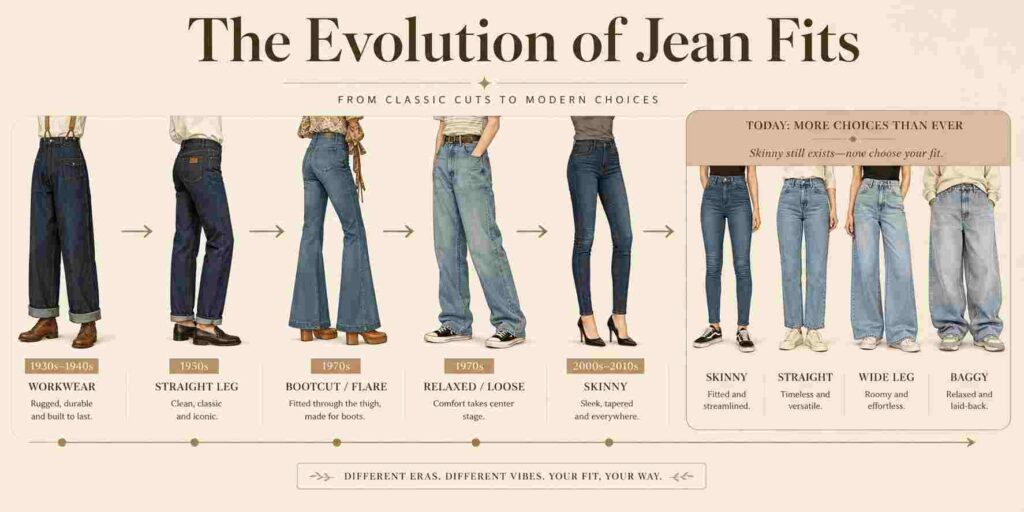
Yes, skinny jeans will almost certainly still be available in 2026, but they won't be the only trend. They have become a classic, modern staple. The market now embraces a wide variety of fits, so you'll see skinny jeans alongside straight, wide-leg, and baggy styles.
Dive Deeper: The Jean Trend Cycle
One of the key reasons for the lasting popularity of jeans is their ability to reinvent themselves. I've been watching these trend cycles for over 20 years. A new fit, like the skinny jean in the 2000s6, starts as an edgy, fashion-forward statement. Then, it hits the mainstream and becomes the dominant style for years. We saw this with bootcut in the 90s and baggy fits before that.
What happens next is interesting. Instead of disappearing, the most successful silhouettes just become part of the permanent collection. They transition from a "trend" to a "classic." This is exactly what happened with skinny jeans. At DiZNEW, our orders reflect this. A few years ago, maybe 80% of our production was skinny jeans. Today, it might be 30%, with the rest being a mix of straight-leg, wide-leg, and relaxed fits. The market is much more diverse now. So, for a designer, the challenge isn't about guessing the one hot trend. It's about building a collection that offers the key classic fits that different customers love.
| Denim Fit | Trend Phase (Example) | Current Status |
|---|---|---|
| Bootcut | Dominant in the late 1990s/early 2000s | Classic, periodically returns to trend. |
| Skinny | Dominant from the mid-2000s to late 2010s | A modern classic, a core wardrobe staple. |
| Wide-Leg | Trend in the 1970s and again now | Currently trending, but a timeless silhouette. |
How much did a pair of jeans cost in 2000?
Thinking back to the turn of the century, what did jeans cost? The answer tells us a lot about inflation, fashion, and how the entire clothing industry has shifted in just two decades.
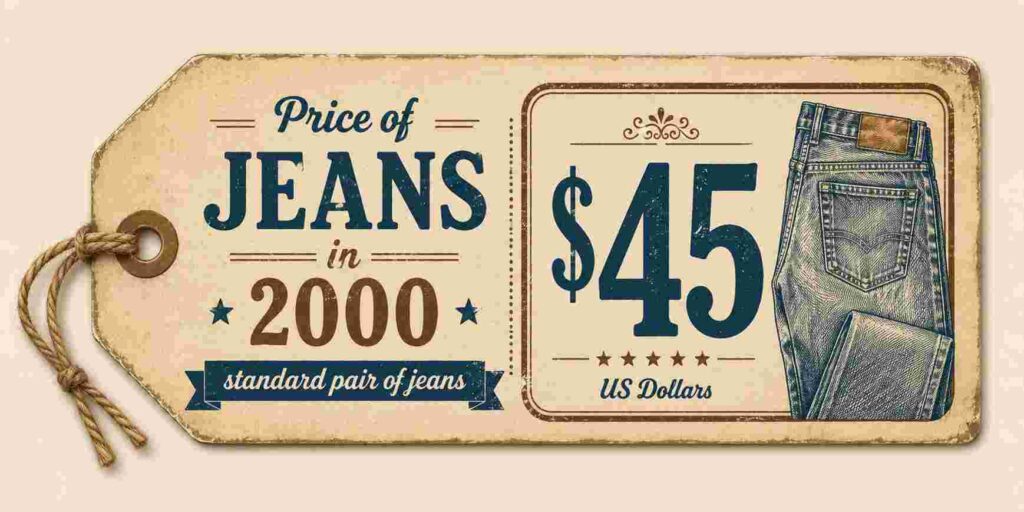
In the year 2000, a standard pair of jeans from a major brand like Levi's or Gap would typically cost between $30 and $50. Premium "designer" jeans started to become popular then, and those could easily cost $100 to $150 or more.
Dive Deeper: The Changing Value of Denim
Looking back at those prices is fascinating. When you adjust for inflation, that $45 pair of jeans from 2000 would cost around $80 today. This tells us two things. First, the rise of global fast fashion has pushed the price of basic jeans down dramatically. You can now buy jeans for less than the inflation-adjusted price from over 20 years ago. This was achieved through massive shifts in global manufacturing and supply chains.
However, a second, opposite trend happened at the same time. The high-end, premium denim market exploded. This is where my factory, DiZNEW, focuses. Customers are willing to pay more for better quality, unique washes, and more durable construction. So, while the bottom of the market got cheaper, the top end got much bigger. In 2000, a $200 pair of jeans was rare. Today, it's common. This split shows the dual nature of jeans. They can be a cheap, disposable fashion item or a carefully crafted investment piece. As a designer, understanding where your brand fits in this landscape is crucial for success.
| Market Segment | Price in 2000 | Price Today (Approx.) | Key Driver of Change |
|---|---|---|---|
| Mass Market | $30 - $50 | $40 - $70 | Rise of Fast Fashion / Global Sourcing |
| Premium/Designer | $100 - $150 | $180 - $300+ | Demand for Quality and Brand Story |
Conclusion
Jeans are a global language. They speak to our need for practical clothing and our desire for a cultural identity. This blend of function and spirit is why they'll always be essential.
-
"Jeans - Wikipedia", https://en.wikipedia.org/wiki/Jeans. A neutral historical overview documents denim jeans’ diffusion from workwear into a globally worn casual garment, supporting the contextual claim that jeans have broad international popularity. Evidence role: general_support; source type: encyclopedia. Supports: Jeans are broadly popular around the world.. Scope note: The source may describe global diffusion qualitatively rather than measure current ownership in every country. ↩
-
"Denim - Wikipedia", https://en.wikipedia.org/wiki/Denim. Textile and denim-care sources explain that cotton denim softens and changes with wear and washing, supporting the mechanism behind the claim that jeans can conform more closely to the wearer over time. Evidence role: mechanism; source type: education. Supports: Denim jeans can soften and change fit characteristics with wear.. Scope note: The extent of molding varies by fiber blend, weave, finishing, and elastane content. ↩
-
"Denim: Fashion's Frontier - Fashion Institute of Technology", https://www.fitnyc.edu/museum/exhibitions/denim.php. Cultural histories of denim describe jeans as crossing class, gender, and occupational boundaries, providing contextual support for the claim that jeans acquired a democratic or barrier-crossing symbolism. Evidence role: historical_context; source type: research. Supports: Jeans came to be worn across social groups and were interpreted as a democratic garment.. Scope note: The source would support the cultural interpretation broadly, not prove that jeans eliminated social barriers in practice. ↩
-
"Blue jeans are all-American again | ShareAmerica", https://share.america.gov/blue-jeans-are-all-american-again/. Histories of Levi Strauss & Co. and blue jeans note the brand’s association with American frontier, workwear, and Western imagery, supporting the contextual claim that jeans were marketed through American cultural narratives. Evidence role: historical_context; source type: institution. Supports: Levi’s and similar brands linked jeans to American cultural imagery such as frontier, workwear, and Western identity.. Scope note: This supports the broader branding context; a separate advertising archive would be needed to document specific campaign language about “adventure.” ↩
-
"What Is The 2 Finger Rule For Jeans - YouTube", https://www.youtube.com/watch?v=Zjk0lbUsRVA. Clothing-fit guidance commonly uses finger-width clearance at the waistband as a practical indicator of ease, supporting the claim that a two-finger check is an informal method for assessing waistband comfort. Evidence role: general_support; source type: education. Supports: The two-finger test is an informal way to check whether a jeans waistband has enough ease for comfort.. Scope note: This is a rule-of-thumb fit practice rather than a standardized anthropometric measurement. ↩
-
"2000-2009 - Fashion History Timeline", https://fashionhistory.fitnyc.edu/2000-2009/. Fashion-history sources identify skinny jeans as a major denim silhouette of the 2000s, supporting the claim that the fit rose as a fashion-forward style during that decade. Evidence role: historical_context; source type: encyclopedia. Supports: Skinny jeans became a prominent fashion trend in the 2000s.. Scope note: Exact timing varies by market and subculture, so the evidence is best used for general trend chronology. ↩