Skip to content

You hear the term "boyfriend jeans" and it seems a little strange. Are they men's jeans? Are they just for women? The name itself creates confusion about who the style is actually for.
They are called boyfriend jeans because the style is designed to look like a pair of jeans you borrowed from your boyfriend—relaxed, a bit slouchy, and comfortable. It's about capturing a look, not wearing men's clothing.

As a factory owner, the rise of the boyfriend jean was a fascinating shift. For years, the push in women's denim was for tighter, stretchier fits.
Then, suddenly, the market wanted the opposite: a look that was intentionally relaxed and casual. It wasn't about creating a sloppy fit; it was about engineering a perfectly imperfect slouch.
For a designer like Dean, it was a new challenge: how to make a women's jean that looks like a men's jean but still fits a woman's body correctly. It’s a style built entirely on a story.
How did boyfriend jeans get their name?
You know the basic idea, but you wonder where the term actually came from. Was it a marketing campaign, or did it happen more organically? The origin story of a trend is always revealing.
The name "boyfriend jeans" was coined by the media in the mid-to-late 2000s after celebrities like Katie Holmes were frequently photographed wearing loose, cuffed jeans that appeared to be borrowed from their famous partners.
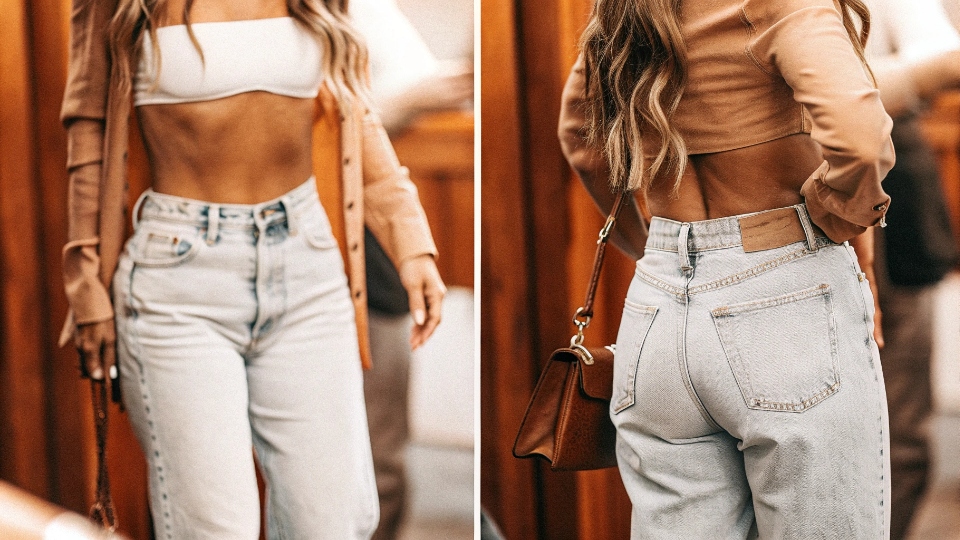
I remember this trend hitting the industry like a tidal wave. It started with celebrity culture and trickled down almost instantly. The story was compelling: a beautiful actress wearing her movie-star boyfriend's comfy jeans.
It sold an idea of effortless, off-duty coolness. For us manufacturers, it meant a quick pivot. We had to develop patterns that captured this specific look.
The key was that they weren't actually men's jeans. They were cut for a woman's hips but with extra room in the leg and a lower rise. The name was pure marketing genius because it perfectly described the aesthetic everyone wanted to copy.
Dive Deeper: From Celebrity Style to Wardrobe Staple
The trend's journey from a celebrity fad to a denim classic was remarkably fast.
- The Spark (Mid-2000s): Celebrities are photographed in loose-fitting, worn-in denim. The media dubs it the "boyfriend" look. It's seen as a refreshing rebellion against the super-low-rise, ultra-tight jeans of the era.
- The Mainstream Explosion (Late 2000s/Early 2010s): High-street and designer brands rush to create their own versions. The "boyfriend jean" becomes an official category in every denim collection. We were getting orders for them from every type of client.
- The Evolution (Mid-2010s to Today): The style matures. Variations like the "slim boyfriend" (a more tailored version) and the "girlfriend jean" (a higher-rise, more feminine cut) emerge. It proves its staying power by adapting.
What does it mean by boyfriend jeans?
Beyond the name, what are the actual design characteristics of a boyfriend jean? If you were to create a technical specification for one, what would be the defining features of this particular cut?
"Boyfriend jeans" means a specific silhouette: a relaxed fit through the hips and thighs, a straight or slightly tapered leg, and a casual, slouchy appearance. They prioritize comfort and a laid-back style over a form-fitting look.
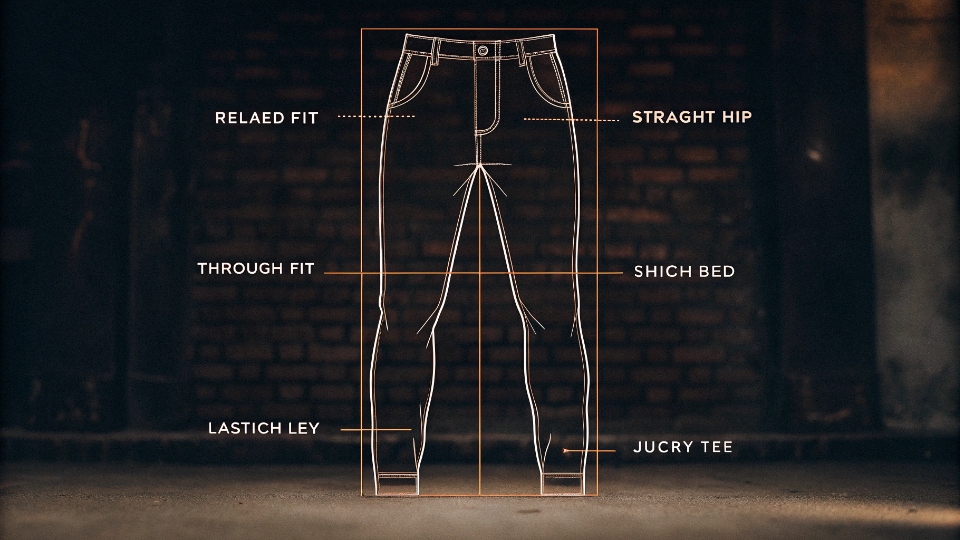
When a designer like Dean sends me a tech pack for a boyfriend jean, I know exactly what to look for. It’s a very intentional pattern. The top block—the area from the waist to the crotch—is cut straighter and looser than a typical women's jean.
The goal is to make it sit comfortably on the hips without hugging them. The thigh is also relaxed, but the crucial detail is often a slight taper towards the ankle. This prevents the jean from looking too baggy or sloppy.
It’s a controlled volume. Often, the denim we use for these is more rigid, with less stretch, to enhance that authentic, "borrowed from the boys" feel.
Dive Deeper: The Core DNA of the Boyfriend Fit
This table breaks down the essential elements that define the style.
| Feature | Description | Purpose in the Design |
|---|---|---|
| Rise | Typically mid-rise, designed to sit on the hips rather than the natural waist. | Creates the signature slouchy look and enhances the casual, relaxed feel. |
| Fit in Hip/Thigh | Relaxed and straight, not contoured to the body's curves. | This is the most crucial element, providing the "borrowed" and comfortable fit. |
| Leg Shape | Straight down from the thigh, often with a slight taper toward the ankle. | The taper provides structure and prevents the silhouette from overwhelming the wearer. |
| Styling | Almost always shown with a rolled or cuffed hem. | Exposes the ankle, adding a touch of feminine style and balancing the looser fit. |
What's the difference between boyfriend jeans and regular jeans?
With so many denim fits available, the lines can get blurry. How does a boyfriend jean specifically compare to other common styles like a "mom jean" or a classic straight-leg?
The key difference is the fit in the seat and thighs. Boyfriend jeans are relaxed and sit lower on the hips for a slouchy effect, while most "regular" women's jeans (like straight or skinny) are designed to be more fitted.
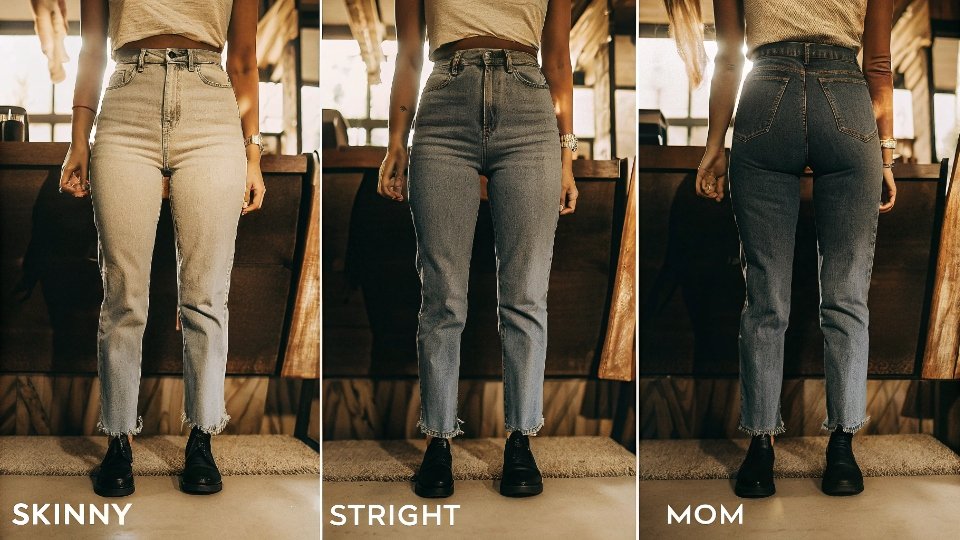
In the factory, precision is everything. A half-inch difference in the pattern can change a boyfriend jean into a mom jean. The mom jean, for example, shares a relaxed thigh but has a very high rise that sits at the natural waist, creating a totally different shape.
A straight-leg jean is fitted through the hip and thigh and then falls straight from the knee. A skinny jean is fitted all the way down.
The boyfriend jean is unique because its primary design feature is that intentional looseness around the hips. It’s the only one of the major styles that isn't designed to be snug in the top block.
Dive Deeper: A Quick Guide to Women's Denim Fits
| Fit Name | Defining Characteristic | Overall Vibe |
|---|---|---|
| Boyfriend Jean | Relaxed through the hip and thigh, mid-rise, often tapered. | Effortless, cool, and comfortable. |
| Mom Jean | Very high rise (at the natural waist), relaxed thigh, tapered leg. | Vintage, '90s-inspired, and flattering on the waist. |
| Straight-Leg Jean | Fitted through the hip and thigh, straight from the knee down. | Classic, timeless, and versatile. |
| Skinny Jean | Tight fit from the waist all the way to the ankle. | Sharp, streamlined, and body-conscious. |
What do Gen Z wear instead of skinny jeans?
The boyfriend jean was the first major step away from the skinny jean's dominance. Where has the trend gone from there? What are the younger generations choosing now?
Gen Z has fully embraced a post-skinny world, favoring a wide array of even looser styles. The most popular are '90s-inspired baggy and straight-leg jeans, wide-leg cuts, and utility-focused cargo and carpenter pants.
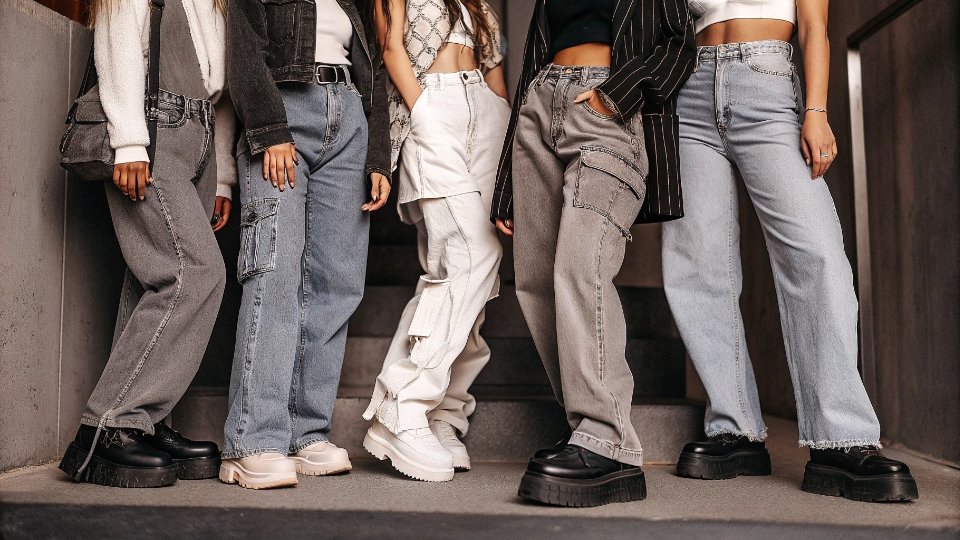
The boyfriend jean was the gateway to looser fits. It got people comfortable with the idea of not wearing skin-tight denim. Now, Gen Z has taken that concept and run with it. The orders I see for this market are almost exclusively for relaxed silhouettes.
But it's different from the boyfriend jean. The "borrowed from a boy" narrative has been replaced by a focus on authentic vintage fits and gender-neutrality. The '90s straight leg, made from rigid 100% cotton, is the new everyday basic.
Beyond that, truly baggy and oversized jeans inspired by skate culture are huge. It's a total rejection of the restrictive fits of the past, with comfort and self-expression as the guiding principles.
Conclusion
Boyfriend jeans are named for their relaxed, "borrowed" fit. They marked a major shift towards comfort in denim, paving the way for the even looser, vintage-inspired styles favored by Gen Z today.