
Frustrated with your favorite black jeans always looking fuzzy? This annoying problem can make even the most premium denim look cheap. I'm here to explain the science behind it.
Black jeans attract lint due to static electricity, which acts like a magnet for stray fibers1. The high contrast of light-colored lint against the dark fabric makes the problem much more noticeable than on lighter-colored pants.
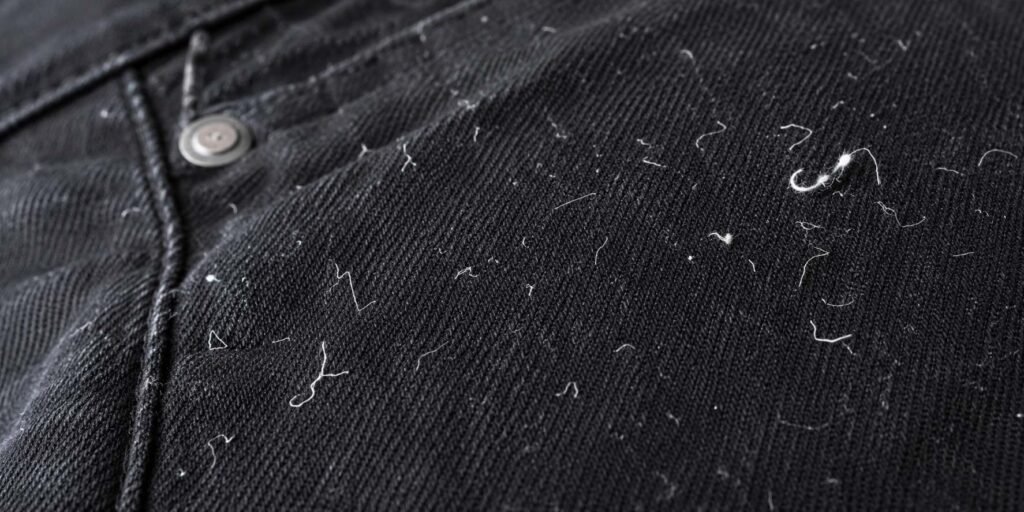
This isn't just about what's floating in the air. Often, what we call 'lint' is actually the fabric itself breaking down. For a designer like you, understanding the difference between external lint and internal fabric pilling is critical. It's the key to selecting materials that perform beautifully and keep your customers happy. Let's break down why this happens and what we can do about it.
Why do black clothes have so much lint?
It feels like a constant battle keeping black garments clean. Is there something special about black dye that makes them lint magnets? Let's clear up this common frustration.
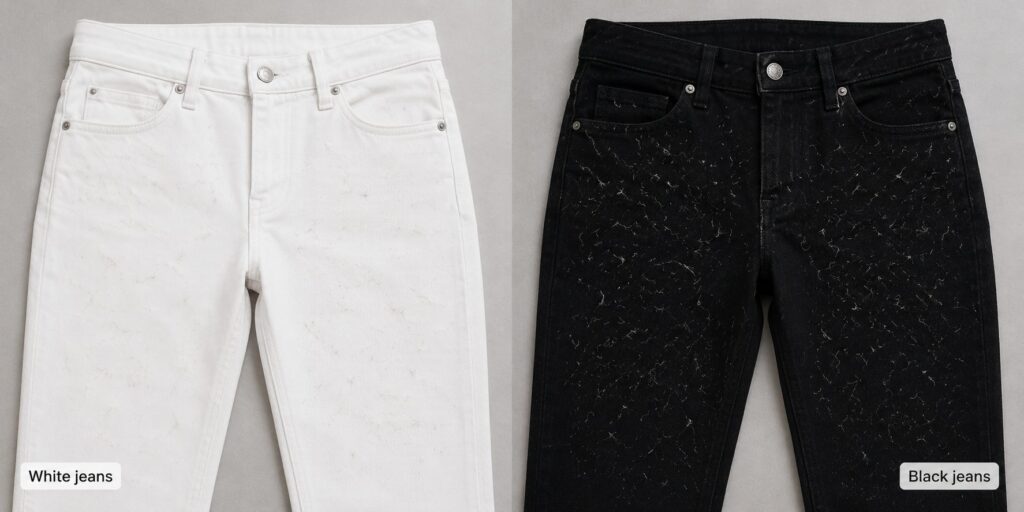
Black clothes don't inherently create more lint. The issue is visibility; light-colored dust and fibers stand out dramatically against the dark background. Additionally, static electricity, which all clothes can generate, simply shows its effects more clearly on a black canvas.
Dive Deeper: The Science of Visibility and Static
From a manufacturing perspective, the issue of "lint" on black clothes is twofold.
The Contrast Problem
The first part is simple physics of light. Our eyes are drawn to contrast. A single white pet hair or a piece of light-colored fluff is practically invisible on khaki pants, but on a deep black denim, it shines like a beacon. So, while your black jeans aren't attracting more lint than other clothes, they are much better at showing you what they've collected.
The Static Problem
The second, more important part is static electricity. When fabrics rub against each other, especially in dry air, they build up a static charge.2 This charge attracts anything with an opposite or neutral charge—like airborne dust, pet hair, and fibers from other garments. While the dyes used for black denim are highly advanced, some processes can slightly alter the texture of cotton fibers, but the primary culprit remains static. What's often overlooked, however, is that some "lint" isn't from the outside world at all; it's the fabric itself.
How to stop black clothes attracting fluff?
Tired of your designs being ruined by fuzz and fluff? Preventing the problem is better than constantly trying to fix it. Here is the professional approach to stopping fluff at the source.
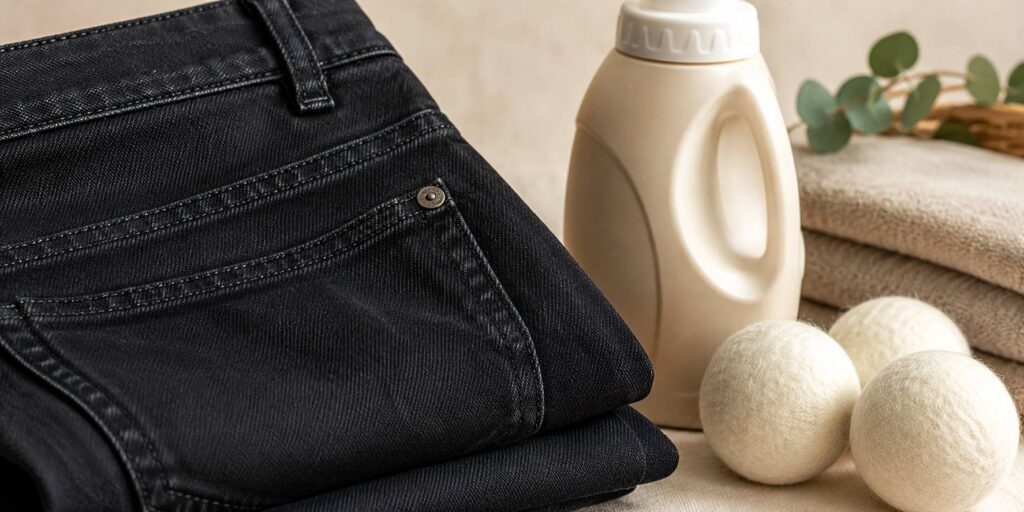
To stop black clothes from attracting fluff, focus on fabric quality and proper care. Choose tightly woven, high-quality natural fibers. During washing, use fabric softener or a vinegar rinse to reduce static, and avoid over-drying, which builds up a static charge.
Dive Deeper: The Designer's and Consumer's Role in Prevention
As a designer, your first line of defense is material selection. As a manufacturer, this is where my collaboration with you is most valuable.
For the Designer: Fabric Choice is Everything
The root cause of "fluff" is often the fabric pilling—where short, weak fibers break and tangle on the surface3. To prevent this, you must choose superior materials.
- Fiber Length: Long-staple cotton fibers are stronger and more securely anchored in the yarn4, making them less likely to break and form fluff.
- Yarn Twist: A higher twist number means the fibers are bound more tightly together, creating a smoother, more resilient yarn.
- Weave Density: A tight, dense weave leaves less room for fibers to work their way loose.
For the Consumer: Proper Care is Crucial
Once the garment is made, care instructions are key.
- Washing: Turning jeans inside out, washing with similar fabrics, and using a liquid fabric softener can reduce friction and static.
- Drying: Over-drying is a major cause of static. Tumble drying on low heat with dryer balls or a dryer sheet can help. Better yet, hang drying is the best option to prevent static buildup.
How to stop black jeans from collecting lint?
You’ve chosen great fabric, but static is still a problem. How do you specifically tackle the 'lint magnet' effect on black denim? Let's focus on the fibers themselves.
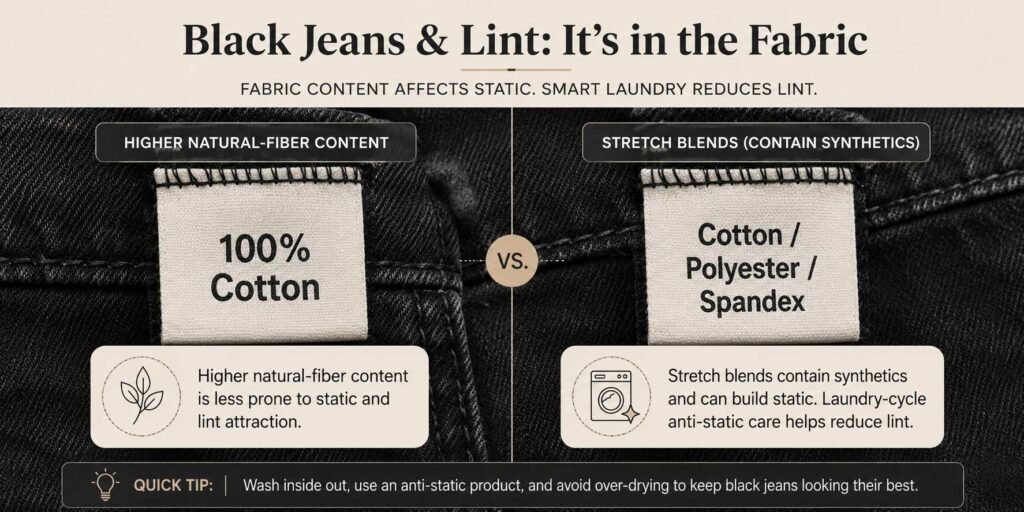
To specifically stop black jeans from collecting lint, focus on the fiber blend. Jeans with a high percentage of natural fibers like cotton are less prone to static.5 For stretch jeans, which contain synthetics, combating static during the laundry cycle is essential.
Dive Deeper: The Truth About Pilling vs. Lint
Many people complain about lint when the real problem is pilling. Lint comes from external sources. Pilling is the fabric itself breaking down. Understanding this is vital for creating high-quality jeans.
Cotton, a natural fiber, has low strength. When its short fibers (fuzz) are rubbed, they tend to break off and fall away before they can tangle into a pill. You see this as dust in the dryer filter. Synthetic fibers, which are added for stretch (like polyester or nylon), are much stronger. When they get fuzzy, they don't break off. Instead, they tangle together, anchored by their own strength, forming those ugly little balls we call pills.6 These pills then trap external lint, making the problem even worse.
This is why 100% cotton jeans often seem to have fewer "lint" issues than stretch jeans. It's not magic; it's the science of fiber mechanics.
| Fiber | Tendency to Pill | Why? |
|---|---|---|
| Nylon | Very High | Extremely strong fibers that don't break away, allowing them to tangle easily. |
| Polyester | High | Strong synthetic fibers that resist breaking off, leading to pill formation. |
| Cotton | Low | Weaker fibers break off and shed as lint before they can form pills. |
How to get rid of lint off black pants?
The lint is already there and you need to leave the house. What's the fastest and most effective way to get clean? Let's review the tools of the trade.
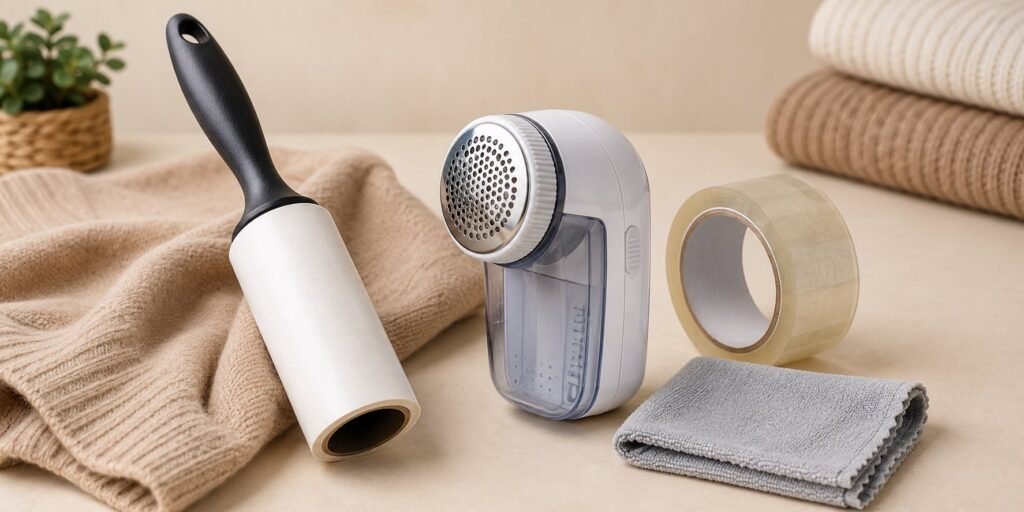
The best way to get rid of lint is with a high-quality adhesive lint roller. For pilling (fabric balls), a fabric shaver is the correct tool. In a pinch, you can use packing tape wrapped around your hand or simply a damp cloth.
Dive Deeper: Choosing the Right Tool for the Job
Removing lint and pills requires different approaches. Using the wrong tool can be ineffective or even damage the fabric. As a professional, knowing the difference is key.
-
Adhesive Lint Rollers: These are your first line of defense for surface-level, external lint—dust, pet hair, and fibers from your scarf. They are fast, easy, and generally safe for all fabrics. Their weakness is that they do nothing for pills.
-
Fabric Shavers: This is the only correct tool for removing pills. It has a small motor that drives rotating blades under a protective metal guard. The guard allows the fuzzy pills to poke through while protecting the flat, undamaged fabric. The blades then shear off the pills, restoring a smooth surface. Using this on simple lint is overkill, but for pilled stretch jeans, it’s a lifesaver.
-
DIY Methods: A damp hand or cloth works by using moisture to break the static bond and gather the lint. Packing tape is just a less convenient version of a lint roller. These are good for emergencies but not for deep cleaning.
| Tool | Best For | Pros | Cons |
|---|---|---|---|
| Lint Roller | External Lint, Dust, Hair | Fast, easy, safe | Ineffective on pills, disposable sheets are wasteful. |
| Fabric Shaver | Pilling (Fabric Balls) | Restores fabric surface, highly effective | Slower, requires electricity/batteries, can damage fabric if used improperly. |
| Damp Cloth/Hand | Light External Lint | Free, always available | Can leave fabric slightly damp, less effective on heavy lint. |
Conclusion
In the end, lint on black jeans is a fight against physics and visibility. True quality, however, comes from choosing fabrics that resist pilling, the real enemy of a lasting, clean look.
-
"[PDF] Assessment of Electrostatic Potential Resulting from Friction ...", https://scholarworks.boisestate.edu/cgi/viewcontent.cgi?article=1130&context=commhealth_facpubs. A textile-science or physics source explaining electrostatic attraction in fabrics supports that charged garments can attract small fibers, dust, and hair; this establishes the mechanism rather than measuring lint accumulation on black denim specifically. Evidence role: mechanism; source type: education. Supports: Static electricity can attract stray fibers to black jeans.. Scope note: Contextual support for the physical mechanism, not direct evidence specific to black jeans. ↩
-
"10 Tips to Get Rid of Static Electricity This Winter", https://news.northeastern.edu/2025/01/24/get-rid-of-static-tips/. A physics or textile source on triboelectric charging supports that friction between materials can generate static charge and that low humidity favors charge buildup; the source would address the general mechanism rather than denim alone. Evidence role: mechanism; source type: education. Supports: Fabric friction in dry air can generate static charge.. Scope note: General physics evidence, not denim-specific testing. ↩
-
"Predicting the Pilling Propensity of Fabrics through Artificial Neural ...", https://www.academia.edu/6192481/Predicting_the_Pilling_Propensity_of_Fabrics_through_Artificial_Neural_Network_Modeling. A textile-science source defining pilling supports that pills form when surface fibers loosen, entangle, and remain attached to the fabric; this supports the process description in general textile terms. Evidence role: definition; source type: education. Supports: Fabric pilling occurs when surface fibers break or loosen and tangle on the fabric surface.. ↩
-
"Influence of Cotton Fibre Fineness and Staple Length Upon Yarn ...", https://www.academia.edu/124130960/Influence_of_Cotton_Fibre_Fineness_and_Staple_Length_Upon_Yarn_Lea_Strength. A cotton or textile-engineering source supports that longer staple length is associated with stronger yarn and fewer protruding fiber ends; this supports the material-quality rationale but not every denim construction. Evidence role: mechanism; source type: research. Supports: Long-staple cotton fibers tend to improve yarn strength and reduce loose fiber ends.. Scope note: Applies generally to cotton yarn quality; final pilling also depends on yarn twist, weave, and finishing. ↩
-
"[PDF] Assessment of Electrostatic Potential Resulting from Friction ...", https://scholarworks.boisestate.edu/cgi/viewcontent.cgi?article=1130&context=commhealth_facpubs. A textile or electrostatics source supports that many synthetic fibers tend to accumulate static charge more readily than hydrophilic natural fibers such as cotton; this supports the comparison in general, not all blends or finishes. Evidence role: expert_consensus; source type: education. Supports: Cotton-rich fabrics are generally less prone to static buildup than synthetic-rich fabrics.. Scope note: Fiber finishes, humidity, and fabric construction can change static behavior in specific jeans. ↩
-
"The Effect of the Physical and Chemical Properties of Synthetic ...", https://pmc.ncbi.nlm.nih.gov/articles/PMC9412705/. A textile pilling source supports that stronger synthetic fibers such as polyester and nylon can retain entangled surface fibers, making pills more persistent than in weaker fibers; this supports the pilling mechanism but does not address every stretch-denim blend. Evidence role: mechanism; source type: paper. Supports: Strong synthetic fibers can form persistent pills because loosened fibers remain attached and entangle rather than breaking away.. Scope note: Applies broadly to synthetic fiber behavior; actual pilling depends on blend ratio, yarn structure, finishing, and abrasion conditions. ↩