Skip to content

You slip on the trendy straight-leg jeans everyone is raving about. But instead of looking chic and effortless, you just look frumpy and shapeless. It's a frustrating feeling when a "universally flattering" style just doesn't work.
Straight jeans can look bad if their rigid vertical lines conflict with your body's natural curves. If the rise, thigh width, and inseam aren't perfectly aligned with your proportions, they can hide your shape and create a boxy, unflattering silhouette.
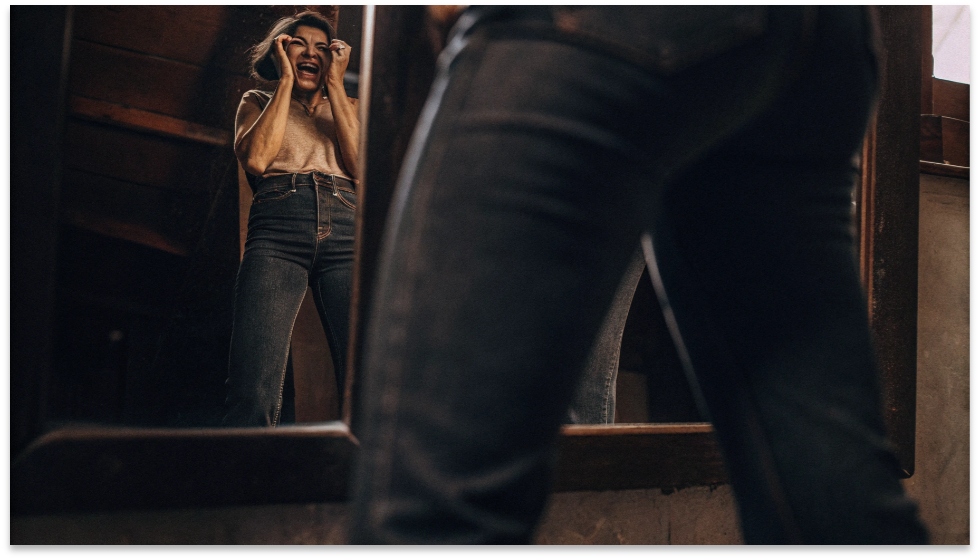
This is one of the biggest challenges in denim, and I hear it constantly from clients and consumers. A petite, curvy woman once perfectly described the problem to me.
She explained that high-waisted styles gave her no torso, and anything too baggy on the leg just made her look wider and "unkempt."
She hit on the core issue: the success of a straight-leg jean is all in the specific proportions. It’s not a one-style-fits-all garment. As a manufacturer, our job is to work with designers like Dean to create different versions of "straight" that work for different bodies, not just a single "ideal" one.
What body type do straight leg jeans look good on?
You see models and influencers looking amazing in straight-leg jeans. It makes you wonder if the style is exclusively designed for one specific body type, leaving everyone else out.
Straight-leg jeans are most effortlessly flattering on body types that are naturally straighter, often called "rectangle" or "column" shapes. This is because the straight cut of the jean mirrors the wearer's straighter body line.
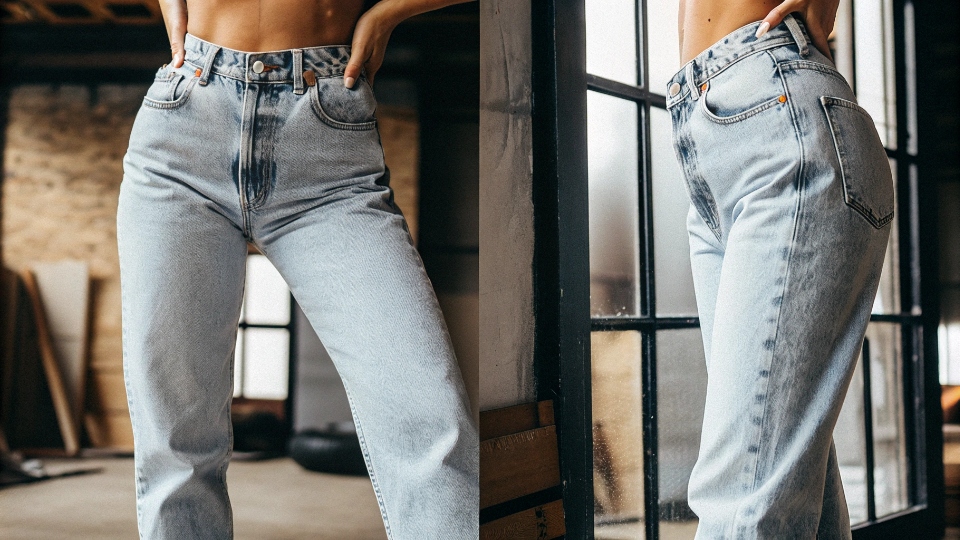
From a pattern-making perspective, this is easy to understand. When we draft a pattern for a classic straight-leg jean, we are drawing a straight line from the hip down to the ankle.
On a body that also has a relatively straight line from hip to ankle, there is no conflict. The fabric drapes exactly as intended. However, this doesn't mean other body types can't wear them.
It just means we have to make smart adjustments to the pattern. It's not about exclusion; it's about modification. The goal is to make the straight-leg silhouette work with other body shapes by tweaking key measurements.
Dive Deeper: Adapting Straight-Legs for Different Shapes
| Body Type | Challenge with Straight-Legs | The Solution (Pattern & Style) |
|---|---|---|
| Rectangle | Can sometimes lack definition. | Works well with almost any straight-leg cut. A higher rise can help create the illusion of a more defined waist. |
| Hourglass | Can hide the defined waist and fit too tightly on the hips/thighs. | Look for a high-waisted style to emphasize the waist and a cut that is wide enough to fall straight from the hips. |
| Pear | Often too tight in the hips and thighs while gaping at the waist. | A "curvy fit" straight-leg is essential. It needs more room in the hip/thigh area with a proportionally smaller waist. |
| Apple | Can create a boxy look if the waist is not defined. | Mid-rise styles are often best. A slim-straight cut can prevent adding extra bulk to the lower half, creating balance. |
Do straight jeans look good on curvy girls?
You have a curvy figure with a defined waist and hips. You try on straight-leg jeans, and they either flatten your curves or make your lower half look like a solid block of denim.
Yes, straight jeans can look fantastic on curvy girls, but the cut is critical. The key is to find a pair that accentuates the waist and skims over the hips, falling straight down from the widest point.
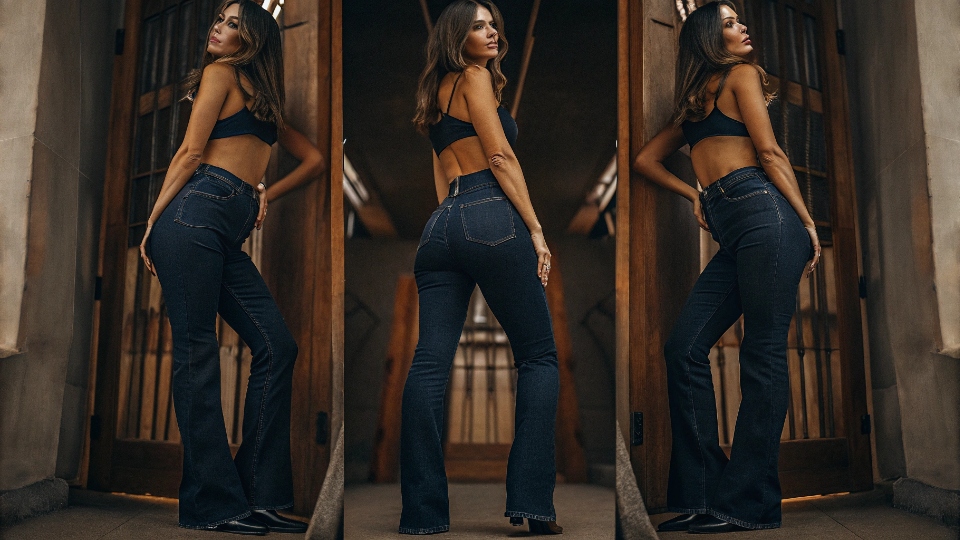
This is where the art of denim manufacturing really shines. The goal for a curvy figure is to avoid what I call the "tent effect"—where the fabric hangs off the widest part of the hips, hiding the waist and creating a shapeless look.
To solve this, a designer like Dean needs to specify a few things. First, the rise has to be right. A mid or high rise helps define the narrowest part of the torso. Second, the pattern needs enough room in the seat and thighs so it doesn't pull, but it can't be too wide.
The leg should skim the thigh, not cling to it or billow away from it. This requires a very precise pattern, often found in jeans specifically labeled as "curvy fit."
Dive Deeper: The Curvy Girl's Guide to Straight-Legs
- Embrace the High Rise: A higher waistband is your best friend. It cinches you in at your natural waist, highlighting your curves instead of hiding them. This immediately breaks up the "blocky" effect a straight-leg can sometimes create.
- Fabric with a Little Give: While purists love 100% cotton rigid denim, a jean with 1-2% elastane (stretch) can be much more forgiving on a curvy body. It allows the denim to hug your curves slightly through the hip and thigh before falling straight, preventing pulling and discomfort.
- Mind the Pockets: Pocket placement is crucial. Pockets that are placed higher and closer together on the seat can give a lifted, flattering look. Pockets that are too large or too far apart can have a widening effect.
Why do jeans not look good on me?
You've tried countless styles and brands, but nothing works. It's incredibly disheartening, and you start to think the problem is with your body, not the clothes.
Jeans likely don't look good because there's a mismatch between the jean's core proportions and your body's. The three key areas are the rise (your torso length), the inseam (your leg length), and the hip-to-waist ratio.
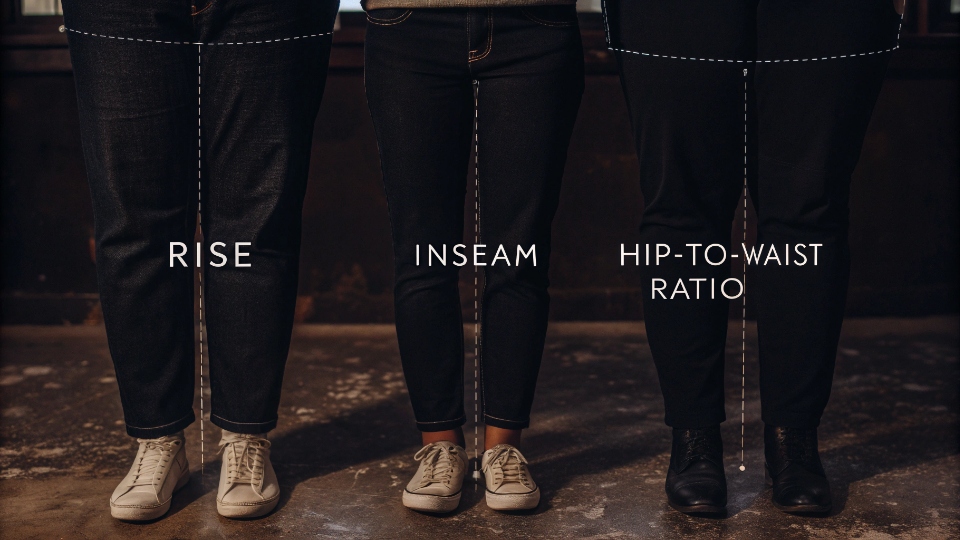
Please believe me when I say this: it is not your body. It is a technical problem of mass production. Every jean pattern is based on a "fit model" with specific proportions. If your proportions differ, the fit will be off.
The insight I mentioned earlier, from the petite woman with a short torso, is a perfect example. A high rise doesn't work for her because her torso is shorter than the one the jean was designed for. We see this constantly.
A customer might have a 10-inch difference between their waist and hips, but the standard jean is designed for a 7-inch difference. That's why it gaps at the back. It's a simple math problem, and the solution is finding a brand or fit that's built for your numbers.
Dive Deeper: Diagnosing the Fit Problem
- The Rise: This is the measurement from the crotch seam to the top of the waistband. If you have a short torso, a high rise will sit uncomfortably high, while a long torso might find a low rise too revealing. The rise of the jean must match the length of your own torso for a balanced look.
- The Inseam: This is the leg length. A too-long inseam will cause messy bunching at the ankle. A too-short inseam can throw off your proportions. Petites often need a shorter inseam to ensure the jean's intended shape (knee break, hem) hits the right spot on their leg.
- The Cut (Hip-to-Waist Ratio): This is the most common issue. Standard jeans are cut for a relatively straight figure. If you have fuller hips and a smaller waist, you'll get that dreaded waistband gap. You need to look for "curvy fits," which are specifically designed with more room in the hips and a nipped-in waist.
Are straight jeans flattering?
You hear fashion experts call them a "flattering classic," but your own experience has been the opposite. You're left wondering if they can ever truly look good or if it's all just fashion hype.
Yes, straight jeans can be exceptionally flattering when the details are right. A properly chosen pair can balance your proportions, create a long, lean leg line, and offer a look of timeless, understated style.
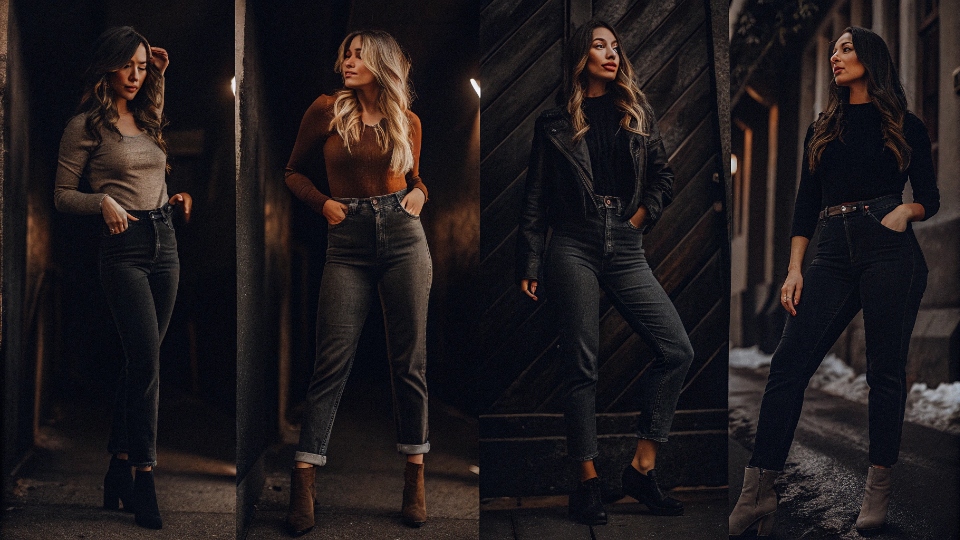
The flattering potential of a straight-leg jean is unlocked in the finishing details. This is where the partnership between a designer and a wash house becomes so important.
A client once told me she could only wear straight-leg jeans if they were a dark wash with no whiskering on the hips. She was 100% correct. She understood that visual details direct the eye. A dark wash creates an unbroken vertical line, which is visually lengthening and slimming. Any fading or distressing acts like a spotlight.
If you put that spotlight on the widest part of your thighs, you are visually emphasizing that area. A truly flattering jean uses these details strategically to enhance your shape, not fight it.
Dive Deeper: Unlocking a Flattering Fit
| Feature | Unflattering Effect | Flattering Alternative |
|---|---|---|
| Wash | Heavy fading or whiskering on the thighs and hips. | A solid dark wash (indigo, black) or a consistent medium wash with no harsh contrast. |
| Fabric | Extremely rigid, 100% cotton denim on a very curvy frame. | A denim with 1-2% stretch for comfort and shaping, or a rigid denim with a perfectly engineered curvy cut. |
| Leg Width | Too wide and baggy, creating a "sack" effect. | A "slim-straight" cut that follows the leg line without being as tight as a skinny jean. |
| Length | An awkward length that hits the widest part of your calf. | A full-length style that creates a clean line to the floor, or a cropped style that shows off the ankle. |
Conclusion
Straight-leg jeans look bad when their proportions don't match yours. To find a flattering pair, focus on the right rise, a suitable wash, and a cut that skims your body.