Skip to content

You've heard of cowboys starching their jeans to get a razor-sharp crease, and now you see denim purists doing it at home. It seems like a lot of extra work, so what is the real point?
People starch jeans1 for two main reasons: to achieve a stiff, sharp crease for aesthetic purposes, and because they believe it helps create high-contrast fade patterns (like "whiskers" and "honeycombs") by making the denim more rigid and abrasive during wear.
In my two decades of manufacturing jeans2, I have seen every kind of denim treatment imaginable. The process of "starching" is one that often gets misunderstood.
There is the original industrial process, which is essential for making the fabric, and then there is the at-home, post-purchase starching that a small subset of denim fans practice. These are two completely different things done for completely different reasons. Let's break down what starch really does to a pair of jeans.
Why use starched jeans?
You see denim enthusiasts3 talking about "adding starch" to their new raw jeans. Why would anyone intentionally make their pants stiff and uncomfortable?
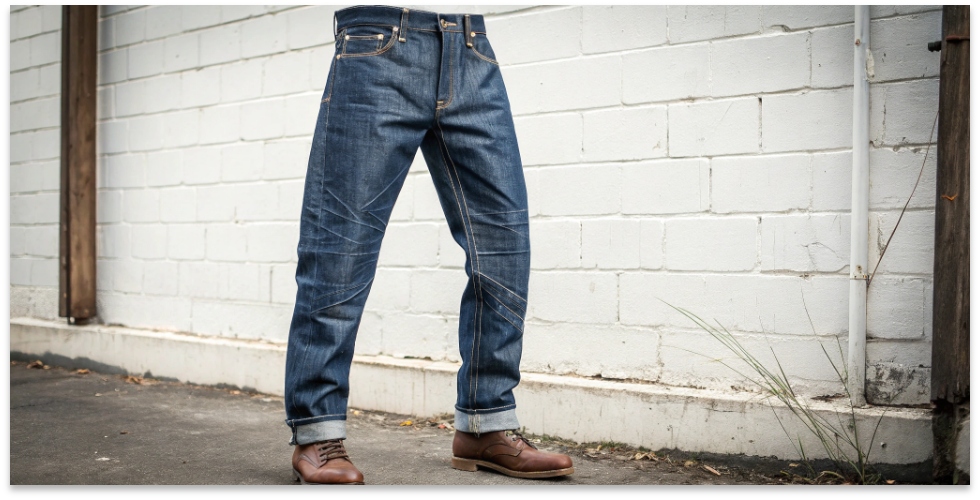
Denim fans use starch to accelerate the "breaking-in" process of raw denim. The stiffness creates sharper folds that set in faster. As you move, the rigid, starchy fabric grinds against itself, wearing away the indigo dye along those creases more dramatically, leading to defined fades.
This is a niche practice within the "raw denim" subculture. The goal for these wearers is to create a unique and personal fade pattern. Think of the raw indigo jean as a blank blue canvas. By adding starch, you are essentially turning your jeans into a piece of sandpaper.
Every time you bend your knee or sit down, the stiff creases rub together, scraping off the indigo dye. This creates very sharp, high-contrast "whiskers" on your lap and "honeycombs" behind your knees.
However, it's a double-edged sword. While it speeds up fading, the stiff, dry cotton fibers can become brittle. I've seen this lead to "crotch blowouts" much faster. It's a high-risk, high-reward strategy for achieving a specific aesthetic.
What is the 2 finger rule for jeans?
You are trying on a pair of jeans, and you are not sure if the waist fits correctly. Is there a simple trick to know if you have the right size?
The "two-finger rule4" is a quick way to check your waistband fit. After buttoning the jeans, you should be able to comfortably slide two fingers (index and middle) between the waistband and your stomach. If you can't fit them, they are too tight; if you can fit a whole fist, they are too loose.
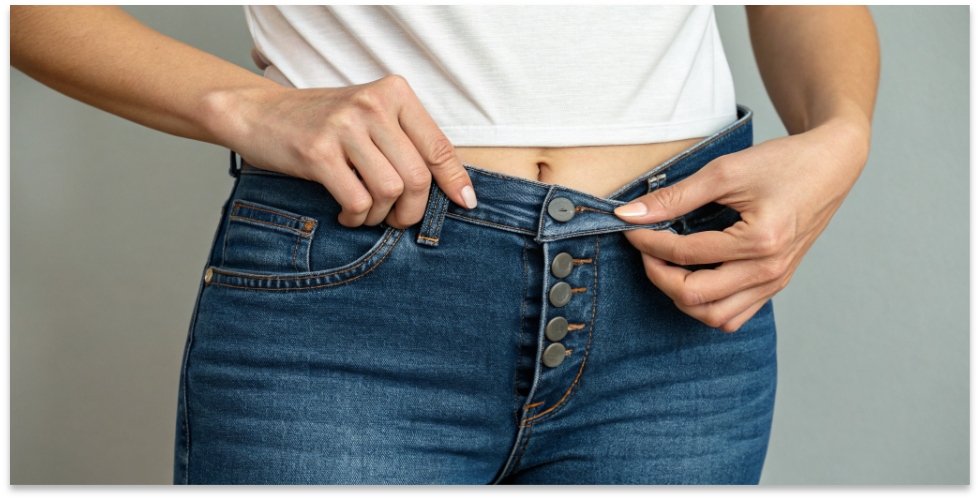
This is a classic fitting room trick that I've shared with countless clients. It works for both men's and women's jeans and is especially important for non-stretch or raw denim. Why two fingers? It accounts for a few things. First, it ensures you have enough room to breathe and sit down comfortably without the waistband digging into you.
Second, it accounts for the natural expansion5 of your waist after a meal. Third, for 100% cotton jeans, it gives the fabric a little room to shrink slightly after a wash without becoming unwearable. It is a simple, effective guideline for finding a fit that is secure but not restrictive.
What is the point of starching?
If it makes jeans uncomfortable and can damage them, what was the original purpose of starch in the first place? It had to be for more than just looks.
The original point of starching in denim manufacturing is to strengthen the cotton yarns before they are woven into fabric. The starch (or "sizing") coats the yarn, making it smooth and strong enough to withstand the intense friction and tension of a high-speed industrial loom without breaking.
This is a critical point that most people don't know. The starch you find on brand-new raw jeans is not there for you; it is a leftover from the factory floor.
When we make denim, we start with individual cotton yarns. These yarns are relatively soft and fuzzy. If you tried to weave them on a modern loom, they would snap constantly.
So, before weaving, the dyed yarns are run through a hot bath of sizing, which is basically a starchy glue. This coats the yarn, makes the fuzzy fibers lie flat, and gives it the tensile strength needed for weaving. After the denim fabric is woven, it's stiff as a board.
Most denim then goes through a "desizing" process to wash the starch out and make it soft. "Raw" or "unwashed" denim skips this final step, which is why it arrives stiff. The starch is purely a manufacturing aid.
Factory Starching vs. Home Starching
| Aspect | Factory Starching (Sizing) | Home Starching |
|---|---|---|
| Purpose | Strengthen yarn for weaving. | Create stiff creases for aesthetics. |
| When It's Done | Before the fabric is woven. | After the jeans are purchased. |
| Target | The individual cotton yarns. | The finished pair of jeans. |
| Necessity | Essential for manufacturing. | Optional, for hobbyists. |
Why did cowboys starch their jeans?
The image of a cowboy with perfectly creased jeans6 is iconic. Was this just for looking sharp on a Saturday night, or was there a practical reason for it in their daily work?
Cowboys starched their jeans for both practical and aesthetic reasons. The heavy starch created a protective layer that repelled dirt and made cleaning easier. More importantly, it created a sharp, crisp crease that became a sign of neatness and pride, a way to look smart after a long week on the trail.
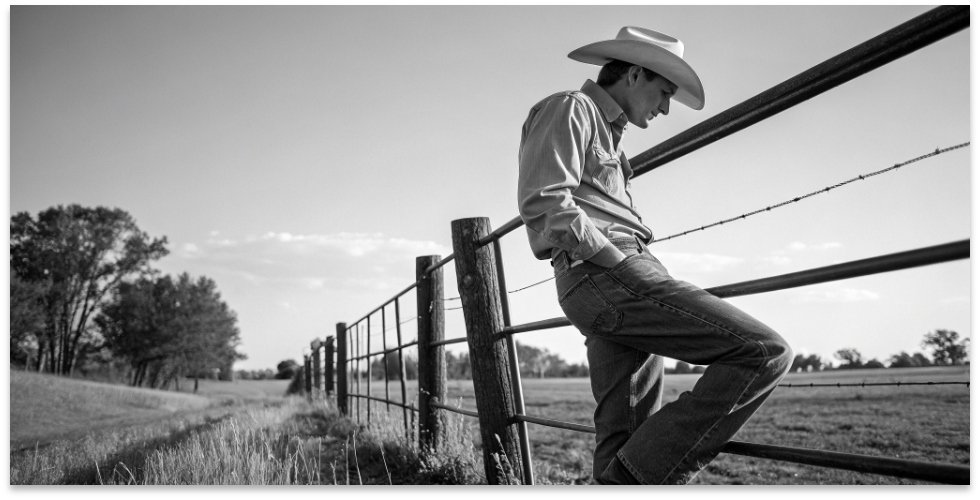
While the modern denimhead starches for fades, the cowboy had different motivations. Out on a cattle drive, your clothes get incredibly dirty. A thick layer of starch creates a smooth, slick surface. Instead of grinding into the cotton fibers, dirt, dust, and grime would sit on top of the starch layer. At the end of the day, you could brush much of it right off.
But it was also about presentation. After spending weeks or months in rough conditions, going into town was an event. Having a clean shirt and a pair of jeans with a razor-sharp crease was a way to show self-respect. It was the cowboy equivalent of putting on a suit. They would send their jeans to the laundry, who would wash them and press them with industrial machines and heavy starch, creating a crease so sharp you could practically cut a steak with it. It was a symbol of being off-duty and ready for a good time.
Conclusion
Starching jeans began as a vital step in manufacturing, was adopted by cowboys for cleanliness and style, and is now used by denim hobbyists to create unique, high-contrast fades on their raw denim.
-
Discover the reasons behind starching jeans and how it affects their appearance and durability. ↩
-
Explore this resource to understand the intricate processes behind jean manufacturing, enhancing your knowledge of denim production. ↩
-
Discover the world of denim enthusiasts and their passion for unique denim styles. ↩
-
Find out how the two-finger rule can help you choose the right fit for your jeans. ↩
-
Understanding natural expansion helps you choose the right size for comfort and longevity in your jeans. ↩
-
Explore this resource to understand how creased jeans enhance style and durability, making them a timeless fashion choice. ↩