Skip to content

You landed a dream collaboration, a chance to merge your brand with another. But you're worried about the execution. A cheap label or a misprinted logo can devalue the entire project and damage both brands.
No. We manage co-branding by treating your brand guidelines as law. We provide separate physical sample approvals1 for every single branded component, from neck labels to custom rivets, ensuring flawless execution.
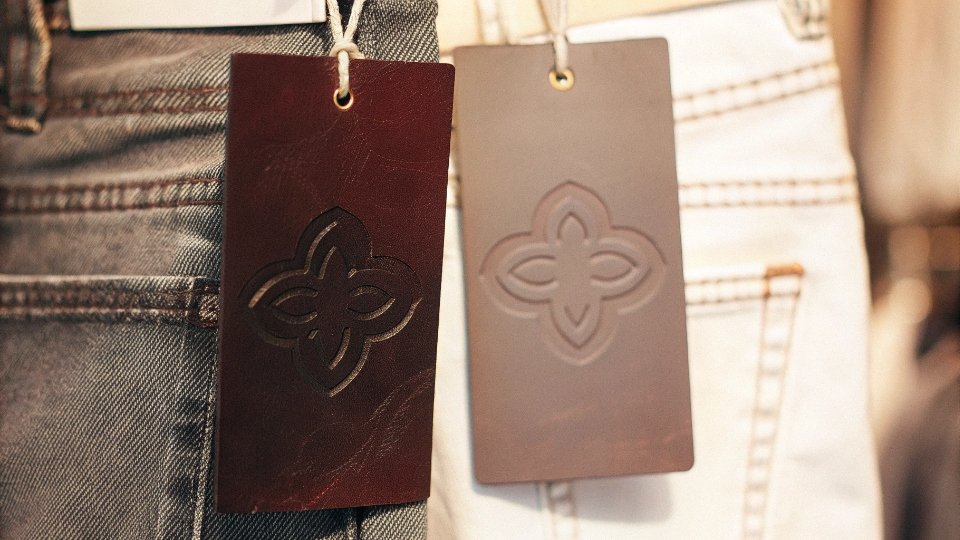
I remember one project that involved a collaboration between a rugged American heritage brand and a sleek, minimalist Japanese designer. Their aesthetics were polar opposites.
The challenge was to create a single product that felt authentic to both. The American brand wanted a thick, embossed leather patch. The Japanese brand wanted a clean, printed satin label. My role became that of a mediator and a technical problem-solver.
We ended up creating a unique dual-label system2 on the waistband: a smaller leather patch stitched beside a sleek woven label.
It took extra sampling, but getting that detail right made the whole collaboration work. For a designer like Dean, navigating these partnerships is tough enough; your factory shouldn't make it harder.
Can They Produce Dual-Brand Neck Labels or Woven Tags?
You need a single label that honors both brands. You're afraid a factory will just mash two logos together, creating a cluttered, unprofessional tag that looks cheap and undermines the premium feel of the collaboration.
Yes, we create high-definition woven and printed labels that can elegantly integrate two distinct brand identities. We provide digital mockups3 and physical samples to perfect the balance and quality before production.
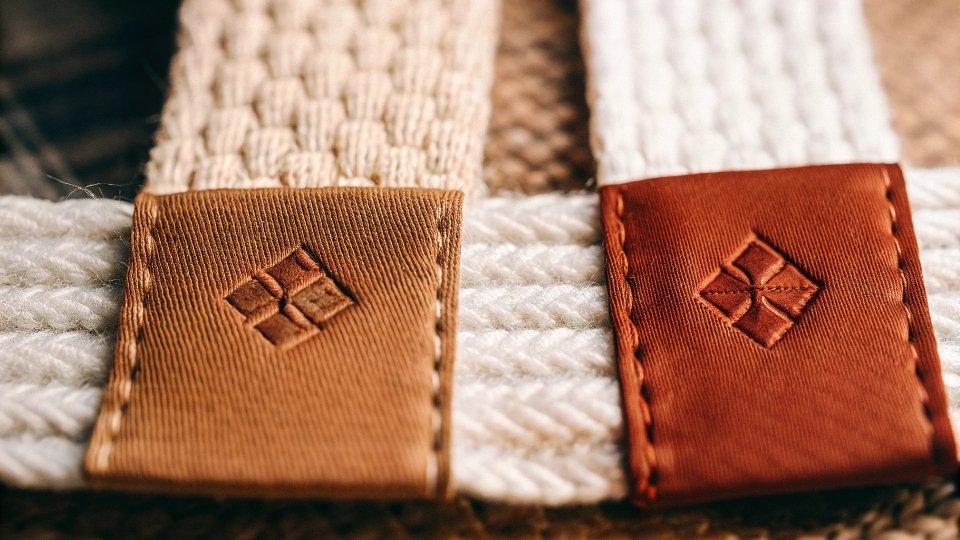
Creating a successful dual-brand label is an art form. It is about balance, respect, and technical precision. We start by requesting the official brand guideline documents from both partners.
Our team then creates several digital layout options showing how the logos, fonts, and colors can work together.
We pay close attention to the required "clear space" around each logo to ensure neither feels crowded. Once you select a digital design, we move to physical sampling.
We will produce a small batch of the actual labels for you to hold and inspect. You can feel the texture of the weave, verify the Pantone colors4 are exact, and see how the threads catch the light.
Only after both brand partners sign off on this physical label sample do we proceed with the full order. This ensures the final piece is a beautiful representation of the partnership, not a compromise.
Co-Branded Label Options
| Label Type | Best For | Material Options | Key Benefit |
|---|---|---|---|
| Woven Damask | Intricate logos, premium feel | High-density recycled polyester | Sharp detail and high-end texture. |
| Printed Satin | Photographic or gradient designs | Silky satin, organic cotton | Smooth surface for perfect color rendering. |
| Leather/Jacron | Classic waistband patch | Genuine leather, vegan leather | Embosses well for a rugged, timeless look. |
| Heat Transfer | Tag-less interior branding | Eco-friendly inks | No-feel comfort against the skin. |
Using someone else's trademark is a huge responsibility. You're concerned a factory might misuse a logo or violate strict brand guidelines, leading to legal trouble and damaging a critical business relationship.
We treat your brand guidelines as a legally binding contract. We require written authorization from both brand owners to use their logos and will sign a Non-Disclosure Agreement (NDA) to protect your intellectual property.
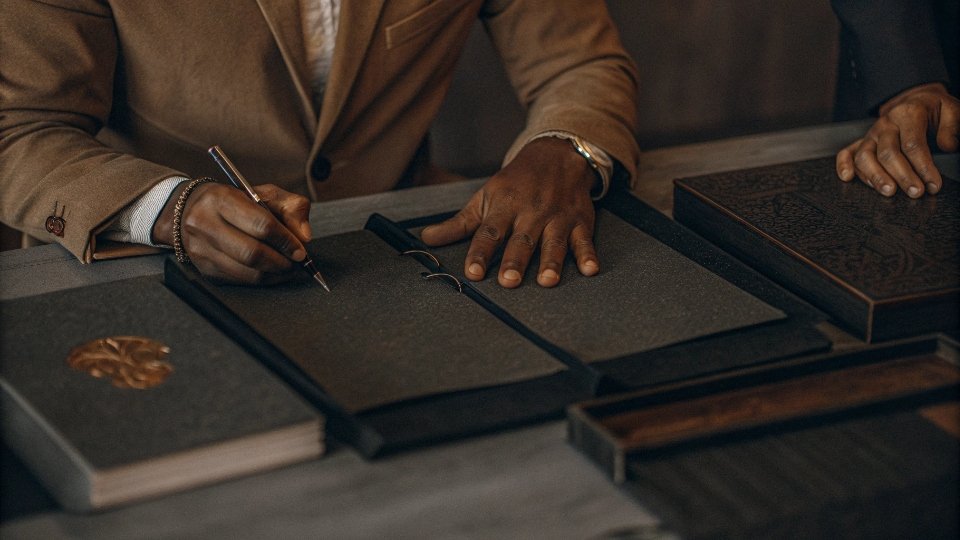
Protecting your brand's intellectual property is our top priority. Our process is built on a foundation of legal clarity and respect.
The very first step, before any design work begins, is signing an NDA with both collaborating parties. This legally obligates us to protect the confidentiality of your project.
Next, we require a formal Letter of Authorization from each brand, granting us permission to reproduce their trademarked logo on the specified products for this specific project. This protects you, your partner, and us.
When it comes to production, we follow your brand guides to the letter. We use the correct Pantone colors, specified fonts, and respect all "clear space" and placement rules.
Any overruns or rejected items bearing your logos are meticulously cataloged, stored securely, and then physically destroyed to ensure they never leak into unauthorized sales channels. This disciplined approach eliminates risk and gives you peace of mind.
What is the MOQ for Co-Branded Packaging?
A great collaboration deserves memorable packaging. But you know that custom printed hangtags5, bags, or boxes often have massive Minimum Order Quantities (MOQs)6, which may not be feasible for a limited-edition capsule collection.
For simple items like hangtags, our MOQ typically matches the garment order (as low as 500 units). For more complex items, we leverage our supplier network to find flexible, low-MOQ solutions that fit your budget.
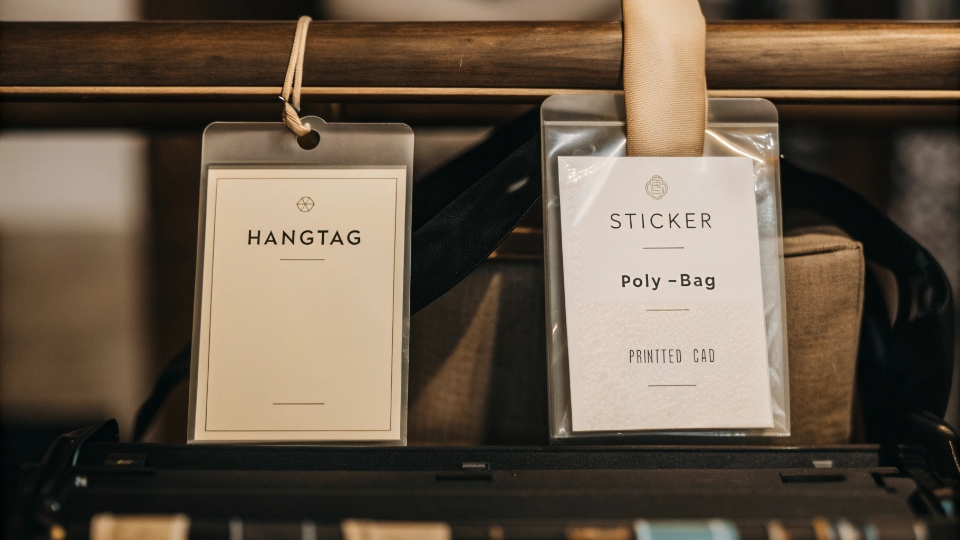
We understand that a 500-piece jean order doesn't need 10,000 custom poly-bags. We approach packaging MOQs with creative solutions. Hangtags are the easiest. Because they are often digitally printed, we can produce them in small batches, so the MOQ for your custom co-branded hangtag will be the same as your garment MOQ.
For poly-bags, which are printed on massive rolls and have high MOQs, we suggest a smart workaround: use a standard, high-quality recycled poly-bag and apply a custom co-branded sticker.
We can get stickers printed with a very low MOQ, giving you a branded look without the waste or high cost. For custom boxes or tote bags, we tap into our network of trusted packaging suppliers.
We can often negotiate smaller run sizes on your behalf or find stock options that can be customized in a cost-effective way. Our goal is to provide a complete branding solution that respects the scale of your collaboration.
Your design features a custom button with both brands' logos. The mold for this hardware is a one-time "tooling" cost, and you are unsure how to manage this shared expense with your partner transparently.
We provide one single, transparent invoice for the tooling cost from our hardware supplier. We recommend the brands split this 50/50, and we will not proceed until we have confirmation that you have settled it together.
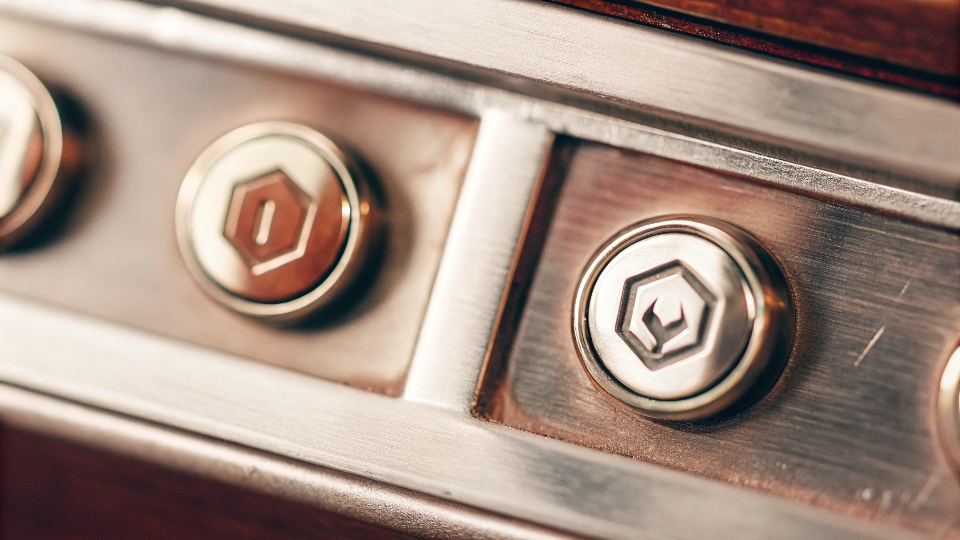
We act as a neutral facilitator when it comes to shared costs. The process for creating custom hardware is straightforward and transparent. First, you provide the design for the button, rivet, or zipper pull.
We then send this design to our specialized hardware supplier, who gives us a one-time quote for creating the steel mold, known as the "tooling." We pass this exact quote on to you and your partner with no markup. This is a non-recurring engineering cost.
Typically, partners agree to a 50/50 split and arrange payment between themselves. Once you inform us that the tooling cost is settled, we greenlight the creation of the mold. After the mold is made, we produce a small run of physical hardware samples for both partners to approve.
Importantly, that mold belongs to you and your partner. We will store it securely for any future re-orders of the same collaboration, but we will never, under any circumstances, use it for another client.
Conclusion
A successful collaboration lives in the details. We provide the transparent processes, IP protection, and rigorous quality control needed to protect and elevate both brands, ensuring your partnership shines in the final product.
-
Understand the significance of physical sample approvals in maintaining quality and brand integrity. ↩
-
Discover how a dual-label system can enhance brand identity in collaborative products. ↩
-
Learn the importance of digital mockups in visualizing and perfecting product designs. ↩
-
Understand the significance of Pantone colors in maintaining brand consistency. ↩
-
Discover tips for creating impactful custom printed hangtags for your products. ↩
-
Learn about MOQs and how they impact your production decisions in collaborations. ↩