Skip to content

You finally approved the perfect wash and fit sample months ago. Now, for your reorder, the factory sends a new sample that's completely wrong, and worse, they can't find your original approved version.
A good factory archives your approved Pre-Production and TOP samples1 in a climate-controlled, organized library. This "golden sample2" is your insurance, ensuring consistency for reorders and serving as the ultimate reference in any quality dispute.
I once had a new client, a designer much like Dean, come to me in a total panic. His previous factory had lost the approved "golden sample" for his best-selling jean. It was a unique, enzyme-washed style that was the brand's signature.
Without that physical reference, they couldn't replicate the wash accurately for a crucial holiday reorder. The brand lost thousands in sales because the factory treated their most valuable asset—the approved sample—like a piece of trash.
When we took over his production, the first thing we established was a rock-solid sample archiving protocol3. Your samples are not just pieces of fabric; they are the physical embodiment of your brand's quality standard. They must be protected.
Do they keep my last approved samples on file?
You send an email asking for a reorder, assuming your factory has the approved sample ready for reference. But in reality, it could be lost in a dusty pile, faded, or even thrown away.
Yes, a professional factory must keep your approved samples on file as the master standard. We store every Pre-Production Sample (PPS)4 and Top of Production (TOP) sample as a "golden sample" in a secure, controlled environment.
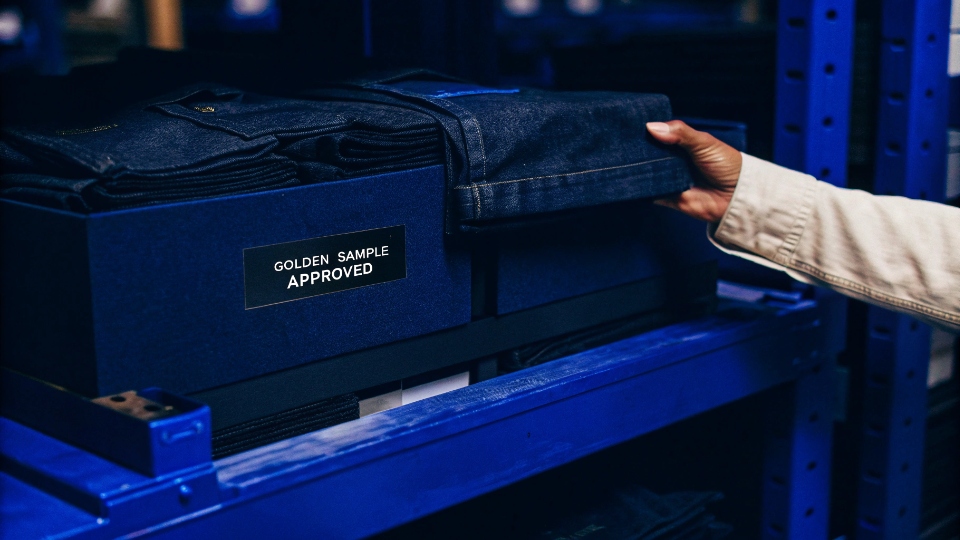
The approved sample is the law. It is the final word in any discussion about quality or consistency. We don't just keep one sample; we archive a set for every client order.
This includes the final approved Pre-Production Sample (PPS), which authorizes bulk production, and at least one Top of Production (TOP) sample5, which represents the actual final product. These aren't just hung on a random rack.
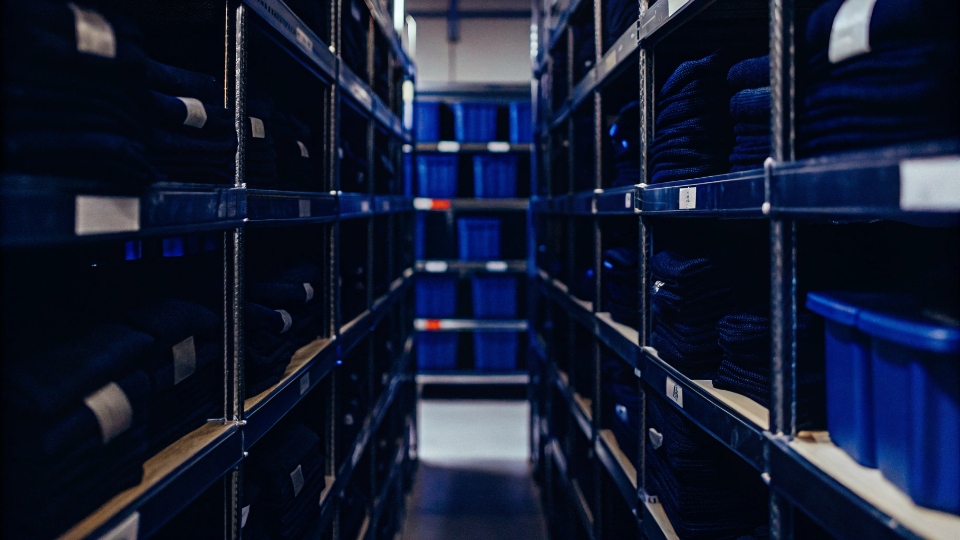
They are stored in a dedicated, climate-controlled room6 with stable humidity to prevent mildew. Denim is sensitive to light, so we keep them in light-proof containers to stop the color from fading.
Each sample is treated like a crucial legal document, because in the world of manufacturing, that’s exactly what it is. It’s the one objective piece of evidence that can resolve any debate about whether the bulk production matches your vision.
| Sample Type | Purpose | Storage Method |
|---|---|---|
| Pre-Production Sample (PPS) | The "Golden Sample" that authorizes production. | Sealed, light-proof container. |
| Top of Production (TOP) | A random sample from the first batch of production. | Labeled and stored with PPS. |
| Shipment Sample | A sample representing the final shipped order. | Kept for post-shipment claims. |
How long can I retrieve archived samples?
You want to reference a style from two seasons ago for a new collection. You ask your factory for the sample, only to be told it was discarded as part of a "clean-up" months ago.
A factory should maintain your sample archive for at least two years, with options for longer-term storage. Our standard policy meets this two-year cycle, ensuring you have access for re-orders and long-term reference.

A sample's usefulness doesn't end when the order ships. It's a critical asset for future business. Our standard retention policy is a minimum of two years. This covers the typical fashion cycle, allowing you to easily resurrect a past style or cross-reference a wash technique7.
In China, regulations require factories to hold samples for a short period to handle immediate claims (often 45-90 days), but this is not nearly long enough for a brand's needs. We separate samples into "Active" (current and recent seasons) and "Deep Archive" (older seasons).
After the two-year mark, we don't just throw them away. We will contact you and ask if you want to extend the storage or have the samples shipped to you.
If a design is updated, we don't discard the old version. We clearly label it "V1 - DO NOT USE" and archive it alongside the new "V2" sample. This provides a clear historical record of the style's evolution.
How do I get my archived samples back when I need them?
You need an old sample urgently for a design meeting, but your request to the factory gets lost in a chain of emails. Nobody seems to know who is responsible or where to find it.
We assign a dedicated Sample Room Manager8 who is responsible for the archive. A simple email request with your style number is all it takes to have the sample located, photographed for confirmation, and shipped within 24 hours.

A system is only as good as the person running it. That’s why we have a full-time Sample Room Manager. This person’s sole responsibility is the integrity of our sample archive. The process for you is simple. You send an email to your dedicated merchandiser with the style number and season you need.
The merchandiser forwards this to the Sample Room Manager, who uses our digital catalog to locate the physical sample immediately. Before shipping, we take a quick photo of the sample and its tag and email it to you for confirmation.
This ensures we are sending the exact one you need. There are no "retrieval fees." We see archiving as a core part of our service. The only cost to you is the express courier fee, which we can bill to your shipping account.
This clear, accountable process ensures that getting your sample back is fast and predictable, not a frustrating treasure hunt.
How do they ensure organized sample cataloguing?
Your factory insists they have the correct sample, but after days of searching, they send you a similar but incorrect one. Their chaotic system has failed, wasting your time and killing your confidence.
We use a dual cataloguing system9: a detailed physical tag on every sample and a corresponding digital record in our database. Every sample is indexed by client, season, and style number for flawless, instant retrieval.
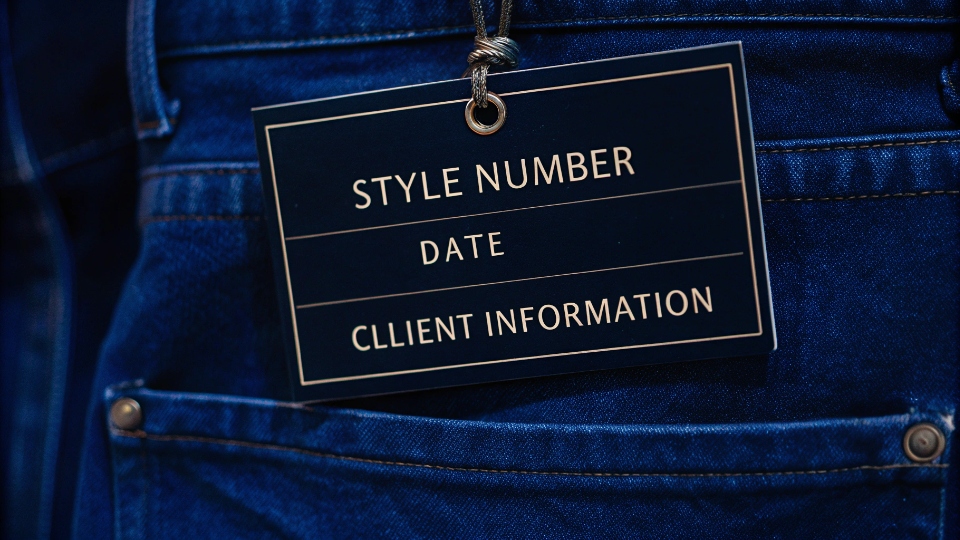
Finding a sample should take seconds, not days. We achieve this with a system that leaves no room for error. Every single sample that enters our archive gets a detailed physical tag, protected by a plastic sleeve.
This tag contains all the critical information needed to identify it. But the physical tag is only half the system. All this information is also entered into our central digital database.
This digital record does more than just identify the sample; it links to all related documents for that style: the final tech pack, the approved QC reports, the wash formula, and the fabric details.
When you ask for the PPS of style "NY-701," we can instantly pull up its exact location in the sample room and its entire production history.
This systematic approach is the only way to manage the hundreds of unique samples we handle and guarantee that the sample you approved is the sample we use.
| Information on Sample Tag | Purpose |
|---|---|
| Client Name | Ensures it's filed under the correct brand. |
| Style Number | The primary unique identifier for the design. |
| Sample Type | PPS, TOP, Fit Sample, Wash Sample, etc. |
| Season/Collection | E.g., "Fall/Winter 2024". |
| Date Approved | Marks the date it became the official standard. |
| Key Specs | E.g., "12.5oz Cone Mills Denim, Light Stone Wash". |
Conclusion
Your approved samples are your brand's DNA. A professional archiving system protects this DNA, ensuring consistency and quality for every order, now and in the future.
-
Understanding these samples is crucial for maintaining quality and consistency in production. ↩
-
Learn how a golden sample serves as a vital reference for quality assurance in production. ↩
-
Discover the importance of a robust sample archiving protocol for protecting your brand's quality. ↩
-
Understand the role of PPS in authorizing bulk production and ensuring quality. ↩
-
Find out how TOP samples represent the final product and their role in quality control. ↩
-
Explore how climate control prevents damage to samples, ensuring their longevity and quality. ↩
-
Learn about different wash techniques and their effects on denim quality and appearance. ↩
-
Discover how a dedicated Sample Room Manager streamlines the retrieval process for archived samples. ↩
-
Learn how a dual cataloguing system enhances accuracy and efficiency in sample retrieval. ↩