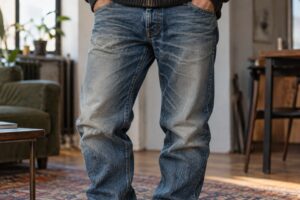

leading paragraph:
You bought a pair of classic cowboy jeans, expecting that rugged look, but they feel like cardboard. They're uncomfortable, restrictive, and you wonder if you'll ever be able to break them in.
snippet paragraph:
Cowboy jeans are stiff because they are made from heavyweight, 100% cotton denim, often without any stretch. Many are sold "raw," meaning they still contain the factory starch an unwashed finish. This intentional stiffness is a sign of durability, designed to be broken in by you.
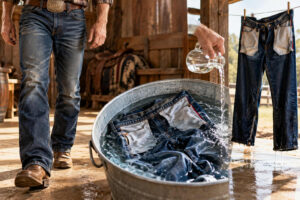
Transition Paragraph:
In my two decades making jeans, I’ve seen people get frustrated by this stiffness. They think it's a flaw. But from a manufacturer's point of view, that rigidity is a feature. It's the mark of authentic, long-lasting denim. It’s the starting point of a journey where the jeans become uniquely yours. Let's break down exactly why they feel this way.
Why are cowboy jeans so stiff?
leading paragraph:
You put on those new cowboy jeans, and they feel like they are made of wood. They're hard to move in, and you question how anyone could possibly ride a horse in them.
snippet paragraph:
Cowboy jeans are so stiff because they are built for durability, not initial comfort. They use heavyweight 100% cotton denim (often 14oz or more) and come unwashed. This "raw" fabric still has the starch from the factory, making it incredibly rigid to withstand tough wear.
Dive deeper Paragraph:
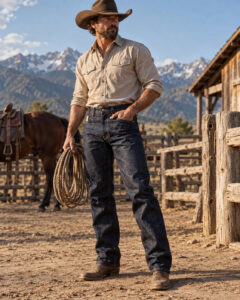
The stiffness of a traditional cowboy jean comes from three main things we work with at the factory. First is the ounce weight. We measure denim thickness in ounces per square yard. A lightweight summer jean might be 8-10oz. Cowboy jeans are often 14oz or heavier. This "heavyweight" denim simply has more cotton yarn packed into every inch, making it dense and rigid. Second is the 100% cotton fabric. There is no spandex or elastic fiber to provide stretch. The stiffness you feel is the natural state of pure, tightly woven cotton. This is essential for workwear because it's far more resistant to tearing and abrasion than a stretchy fabric. Finally, and most importantly, is the starch, or "sizing." When denim is made, the yarns are coated in starch to make them strong and smooth for the weaving looms. On most jeans, we wash this out. But on raw cowboy jeans, we leave it in. This starchy coating makes the new jeans feel like armor.
| Feature | Cause of Stiffness | Purpose |
|---|---|---|
| Heavy Ounce Weight | More cotton per square yard | Durability and long life |
| 100% Cotton | No elastic fibers | Abrasion resistance |
| Factory Starch | Unwashed "raw" finish | Strength during manufacturing |
How can I soften my new Wrangler Cowboy Cut jeans?
leading paragraph:
Your new Wranglers feel more like leg-armor than pants. You love the iconic style but can't stand the stiff, unforgiving feel. You are tempted to just hide them in your closet.
snippet paragraph:
To soften Wrangler jeans, the best method is to wear them as much as possible. You can also kickstart the process with an initial cold soak. Turn them inside-out and soak them in a tub with one cup of white vinegar for an hour before hanging them to dry.
Dive deeper Paragraph:
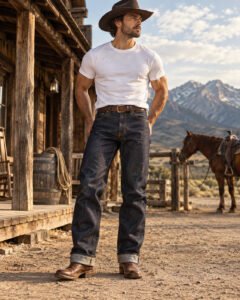
Breaking in a pair of stiff Wranglers is a rite of passage. While simply wearing them is the most authentic method, there are a few tricks I recommend to speed it up. The white vinegar soak is my favorite. The mild acetic acid in the vinegar is brilliant at breaking down the factory starch and softening the stiff cotton fibers without damaging the color. Just fill a tub with cold water, add a cup of vinegar, and submerge the jeans for at least an hour. After, give them a gentle rinse and hang them up to dry. Never use a hot dryer! For the truly committed, there's the wear-them-wet method. After soaking your jeans, put them on while they're still damp. It's not the most comfortable hour of your life, but as they dry on your body, they will mold perfectly to your shape. This creates a custom fit that you just can't get any other way. Remember, the goal is to break down the stiffness, not to attack the fabric. Be patient and avoid harsh detergents or high heat.
Why are my new Levi's jeans so stiff?
leading paragraph:
You bought a pair of legendary Levi's 501s, but they feel nothing like your soft, worn-in pair. The fabric is rigid and uncomfortable. You're starting to wonder if the quality has changed.
snippet paragraph:
Your new Levi's are stiff because you've likely bought a "Shrink-to-Fit" or raw denim pair. These are completely unwashed and unsanforized, just like jeans were made 100 years ago. Their stiffness is a sign of authenticity, meant for you to break them in yourself.
Dive deeper Paragraph:
This is a question I love because it gets to the heart of denim history. When a designer like Dean specs out a heritage line, this is exactly the kind of fabric he looks for. Most jeans you buy today are "sanforized," which is a factory process that pre-shrinks the denim. They are also washed and softened for immediate comfort. A pair of stiff, raw Levi's "Shrink-to-Fit" (STF) jeans is the opposite. They are unsanforized, meaning none of the shrinkage has been removed. They are also raw, meaning they haven't been touched by water since they were dyed. The stiffness is a combination of the heavy cotton and the starchy sizing left over from the mill. You are buying the same product a cowboy or a miner would have bought a century ago. The process is to buy them slightly large, do a controlled soak to shrink them to your body, and then wear them to create your own unique fade patterns. The stiffness isn't a bug; it's the beginning of a long-term project.
Why do my jeans go stiff after washing them?
leading paragraph:
Your favorite soft jeans just came out of the wash feeling like cardboard. They are rough and uncomfortable. You feel like you've done something wrong and ruined them forever.
snippet paragraph:
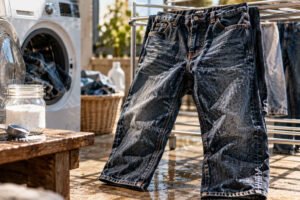
Jeans go stiff after washing because of mineral deposits from hard water and detergent residue building up on the cotton fibers. Air-drying them without any movement also allows the fibers to lock together in a rigid state. This is a common issue and is easily fixed.
Dive deeper Paragraph:
This is a very different problem from the stiffness of new jeans. This happens to even the softest pairs. The main culprit is buildup. If you have hard water, mineral deposits like calcium and magnesium cling to the fabric after every wash, making it feel crunchy. Using too much detergent adds to this problem, as the soap residue doesn't fully rinse out. Another factor is how they dry. When you hang jeans to dry, the water evaporates, and the tiny hydrogen bonds between the cotton fibers lock into place, creating a stiff structure. The solution is twofold. First, fix the buildup. Add a cup of white vinegar to your rinse cycle. It will dissolve the mineral deposits and strip away soap residue. Second, break up the stiffness after they dry. You can give them a few good shakes, or even better, toss them in the dryer on an air-only, no-heat cycle for 10 minutes. The tumbling action will soften them right up without the damaging effects of heat.
Conclusion:
Stiffness in new cowboy jeans signals durability. If your soft jeans get stiff after washing, it's buildup. Wear them often, wash them gently, and they will become perfectly yours.