Skip to content

You bought black and blue jeans in the same size, from the same brand. But the black pair feels a size smaller. It’s frustrating, making you question your size and the brand's consistency.
Black jeans often fit tighter because the dyeing process is different.[^1] Black dye saturates the cotton fibers more intensely and often requires more heat, which can cause the fabric to feel stiffer and shrink slightly. This results in a snugger fit compared to indigo-dyed blue jeans.

Transition Paragraph:
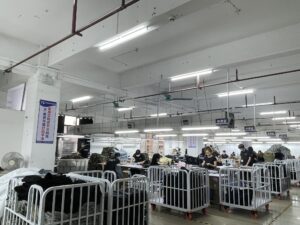
At my factory, DiZNEW, we produce countless pairs of both black and blue jeans, and I can tell you this isn't in your head. The difference is real, and it comes down to the science of dye and fabric finishing. A designer like Dean has to account for these subtle differences when creating a new style. Let's dig into why your black jeans feel like they're giving you a hug you didn't ask for.
Do black jeans have a tighter fit?
leading paragraph:
You love the sleek look of black jeans but dread the "sausage-casing" feeling. They just don't seem to have the same give as blue jeans. It makes you wonder if it's a rule.
snippet paragraph:
Yes, black jeans typically have a tighter fit[^2]. This happens for two reasons: the dyeing process makes the fabric less pliable, and designers often use a slimmer cut for black jeans to enhance their natural slimming visual effect. The combination creates a noticeably snugger feel.
Dive deeper Paragraph:
The tight fit of black jeans is a result of both chemistry and design intent.
1. The Dyeing and Finishing Process
Blue jeans are colored with indigo, a unique dye that mostly coats the surface of the cotton yarn. Black jeans, on the other hand, are typically made with sulfur dyes. To get that deep, saturated black, the dye needs to penetrate the fiber more deeply, a process that often involves more chemicals and heat. This can slightly alter the cotton fibers, making them feel stiffer and less soft than their indigo counterparts. Furthermore, to preserve that dark color, manufacturers often skip the heavy stone-washing or enzyme washes that soften up most blue jeans. The result is a less-forgiving fabric right off the shelf.
2. The Visual and Psychological Effect
Black is visually slimming.[^3] Designers know this and often lean into it by cutting black jeans with a slightly slimmer pattern than the equivalent blue pair. They want to maximize that sleek silhouette. When you combine this slightly smaller cut with a stiffer fabric, the result is a jean that feels noticeably tighter.
| Feature | Blue Jeans (Indigo) | Black Jeans (Sulfur Dye) |
|---|---|---|
| Dye Method | Stays on fabric surface | Penetrates fabric fibers |
| Fabric Feel | Often soft from washing | Often stiffer to preserve color |
| Typical Cut | Varies, often relaxed | Often cut slightly slimmer |
| Result | Comfortable, classic fit | Sleek, snug, slimming fit |
Are black jeans nicer than blue jeans?
leading paragraph:
You're trying to build a versatile wardrobe, but you get stuck on the "black vs. blue" jean debate. It feels like you have to choose sides. Which one is truly the more stylish investment?
snippet paragraph:
One isn't "nicer" than the other; they just speak different languages. Blue jeans are the definition of timeless, casual cool, perfect for daily wear. Black jeans offer a sharper, more modern edge and are far easier to dress up for a smarter, semi-formal look.
Dive deeper Paragraph:
As someone who has made millions of pairs of both, I see them as two essential but different tools in your style arsenal.
The Case for Blue Jeans:
Blue jeans are the original. They have history and character. The way indigo denim fades over time tells a personal story—every crease and worn patch is a record of your life. This is the "patina" that denim purists love. Blue jeans are the undisputed champion of casual. They are friendly, approachable, and work with almost any weekend or relaxed setting. They represent authenticity and a rugged, workwear heritage.
The Case for Black Jeans:
Black jeans are the uniform of the urban and the cool. They have a certain rock-and-roll energy and a minimalist power. Their main advantage is their versatility in dressing up. A good pair of black jeans can easily be paired with a blazer, a nice sweater, or smart shoes and look perfectly appropriate in many offices or at a nice restaurant. They provide a clean, unbroken silhouette that feels more deliberate and "put-together" than most blue jeans. They are less about showing wear and more about providing a sharp, consistent foundation for an outfit.
Do jeans get baggier or tighter over time?
leading paragraph:
Your jeans fit perfectly this morning, but now they're sagging at the knees. Or worse, you pull them from the dryer, and they've magically shrunk. This predictable cycle makes you question your laundry skills.
snippet paragraph:
Jeans do both. Jeans with spandex will get baggier throughout the day as you wear them, then snap back to a tighter fit after washing. 100% cotton jeans will stretch and mold to your body over time, becoming slightly looser until they are washed in hot water.
Dive deeper Paragraph:
This behavior depends entirely on the fabric composition, and it's something we obsess over in the factory.
The Stretch Jean Cycle:
Most modern jeans contain at least 1% spandex (elastane).[^4] When you wear them, your body heat and movement cause these elastic fibers to stretch out, leading to that "baggy" feeling by the end of the day. This is normal. When you wash them, the water and soap clean the fibers, and the heat from a dryer (which I don't recommend!) causes them to contract aggressively, making them feel tight again. This cycle repeats over and over. Good quality stretch jeans have high "recovery," meaning they snap back better and resist getting baggy for longer.
The 100% Cotton Journey:
Rigid, 100% cotton denim plays by a different set of rules. It starts stiff. As you wear it, the pressure from your body slowly breaks down the fibers in high-stress areas like the knees, hips, and waist. The fabric doesn't snap back; it molds. This process makes the jeans more comfortable and uniquely yours, but it does mean they get slightly looser and roomier. They will only get tighter if you wash them in hot water, which causes the cotton fibers to shrink.
Why do black jeans shrink more?
leading paragraph:
You followed the care instructions, but your new black jeans still shrank. It's a frustrating and expensive problem. You're starting to believe black jeans are designed to disappoint you after the first wash.
snippet paragraph:
Black jeans can shrink more because the sulfur dyeing process may involve more heat than indigo dyeing. More importantly, to keep the black color deep and even, manufacturers often do less pre-shrinking (sanforizing) at the factory, leaving more shrinkage potential for your first home wash.
Dive deeper Paragraph:
This is a common and valid frustration, and it comes from the unique manufacturing path of black denim.
Less Pre-Washing:
Think about a pair of distressed, faded blue jeans. To get that look, they go through an aggressive series of washes at the factory—stone washing, enzyme washing, rinsing. This whole process has a major side effect: it pre-shrinks the fabric significantly. By the time you buy them, most of the potential shrinkage is already gone. But with black jeans, the goal is a deep, uniform, unfaded color. To achieve this, we skip all those aggressive washes. The fabric is dyed, finished, and sewn.
More Shrinkage for You:
This means the black jeans you buy are in a more "raw" state in terms of shrinkage, even if they aren't raw denim. They haven't been subjected to the intense water and heat cycles that their blue counterparts have. Therefore, the very first time you wash them, the cotton fibers are experiencing their first major shock, and they react by contracting. So, while the dye itself isn't the only cause, the overall process required to produce a clean, dark black jean is what leaves it vulnerable to shrinking more in your machine.
Conclusion:
The tight fit of black jeans is real, caused by dye, fabric finishing, and sometimes the cut. To get the best fit, always check the fabric tag for spandex.
---

[^1]: "Dyeing of advanced denim fabrics (blend of cotton ... - PMC", https://pmc.ncbi.nlm.nih.gov/articles/PMC10805927/. A textile dyeing reference or peer-reviewed source should document that denim shade and dye class can require different dyeing and finishing conditions, which can affect fabric hand and dimensional behavior. Evidence role: mechanism; source type: paper. Supports: Black jeans often fit tighter because the dyeing process is different.. Scope note: Such a source would support the plausibility of process-related fit differences, but not prove that every black jean fits tighter than every blue jean.
[^2]: "Study on the Compression Effect of Clothing on the ... - PMC", https://pmc.ncbi.nlm.nih.gov/articles/PMC8746162/. A consumer fit study, apparel sizing analysis, or textile/apparel research source should support that perceived garment tightness can arise from both fabric mechanical properties and pattern dimensions. Evidence role: general_support; source type: paper. Supports: Black jeans typically have a tighter fit because fabric properties and garment cut can influence perceived snugness.. Scope note: Neutral sources may support the determinants of perceived tightness rather than provide population-wide data specifically comparing black and blue jeans.
[^3]: "What colour should I wear? How clothing colour affects ...", https://pubmed.ncbi.nlm.nih.gov/34029989/. A perception or vision-science source should discuss how color and luminance contrast can influence perceived body or object size, giving context for the common claim that darker clothing appears slimming. Evidence role: expert_consensus; source type: paper. Supports: Black is visually slimming.. Scope note: Evidence from visual perception may support the general effect of dark colors on perceived size, but clothing fit, silhouette, and lighting also affect the result.
[^4]: "Denim Market Size, Share, and Trends, Analysis By 2035", https://www.marketresearchfuture.com/reports/denim-market-7135. An apparel or textile market source should document the widespread use of elastane/spandex blends in contemporary denim and explain that small percentages are commonly added to improve stretch and recovery. Evidence role: statistic; source type: institution. Supports: Most modern jeans contain at least 1% spandex or elastane.. Scope note: The exact share of jeans containing elastane may vary by market segment and year, so a source may support prevalence without verifying the word 'most' globally.