Skip to content

You are tired of skinny jeans cutting off your circulation, but you feel sloppy in wide-leg pants. You are looking for that perfect middle ground that flatters your legs without squeezing them.
Stovepipe jeans1 are a denim cut that fits slim through the hips and thighs and falls in a straight, narrow column to the ankle. Unlike rigid vintage denim, they typically use stretchy fabric2 to create a smooth, elongated silhouette that sits comfortably between a skinny and a straight leg.

As a denim manufacturer, I have seen trends swing from one extreme to the other. For years, we only produced skin-tight denim3. Then, suddenly, everyone wanted baggy cargo pants. Stovepipe jeans are the industry's answer to finding balance.
Think of a stovepipe hat or a chimney. It is a long, vertical cylinder. That is exactly how we cut the pattern for these jeans. We aim for a line that looks straight to the eye but actually contours the leg. Unlike the rigid straight legs of the 1950s, modern stovepipe jeans almost always incorporate elastane (stretch). We do this because to get that sleek "pipe" look without the fabric bunching up at the knees, the material needs to give a little. It is the sophisticated cousin of the skinny jean.
What does stovepipe jean mean?
Fashion terminology is confusing, and brands often invent names that make no sense. However, the term "stovepipe" is actually very descriptive of the garment's engineering.
A stovepipe jean is a style defined by a narrow, vertical leg opening that does not flare or taper drastically. It means the pant leg maintains a consistent, slim width from the knee down, resembling the pipe of a stove, creating a long, uninterrupted visual line.
When we draft a pattern for a stovepipe jean in the factory, we are doing something very specific. We are creating an optical illusion. If you lay the pants flat on a table, they look slightly wider at the top and very slightly narrower at the bottom.
However, when you put them on, the goal is to make the leg look like a straight column.
We usually use "mercerized" cotton or fabrics with good recovery for this style. Why? Because a stovepipe jean is meant to look sharp. It shouldn't be baggy. If we used a loose, open-weave fabric, the "pipe" shape would collapse, and it would just look like a sloppy pair of pants.
The "stovepipe" meaning is all about that verticality. It is a "slim-straight" hybrid. It hugs your hips and thighs (similar to a skinny jean) but releases at the knee (like a straight jean). It hides the shape of the calf. If you have athletic calves4 and hate how skinny jeans cling to them, the stovepipe is the solution. It smoothes out the line from hip to ankle.
What is the difference between straight and stovepipe jeans?
You might pick up two pairs of jeans in a store and think they look exactly the same. But once you try them on, the difference in the fit is undeniable.
The main difference is that straight jeans have a wider leg opening and run straight from the hip down, while stovepipe jeans are cut slimmer through the thigh and taper slightly to a narrower hem. Stovepipe jeans offer a more fitted, tailored look compared to the boxier silhouette of traditional straight jeans.
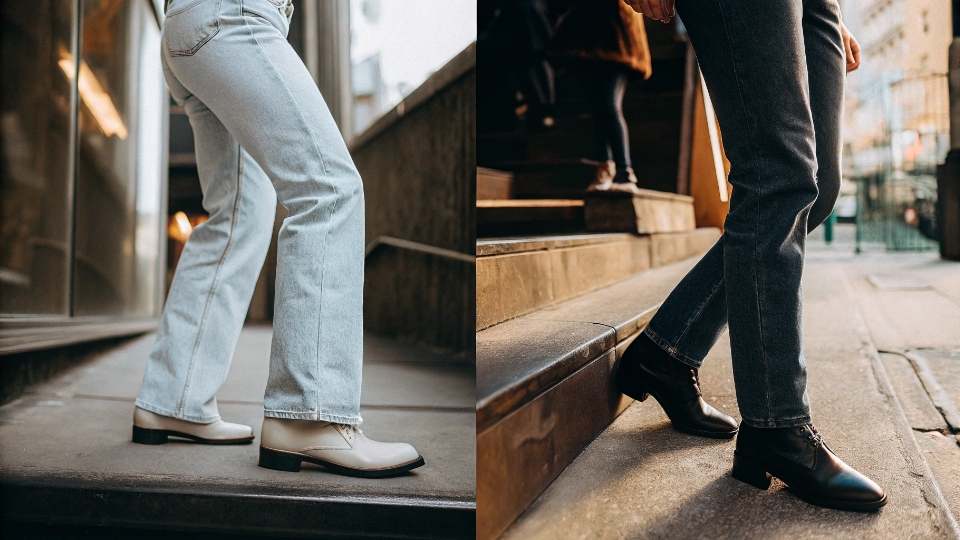
In the manufacturing world, we distinguish these by the "thigh-to-ankle ratio5."
A classic Straight Leg (think Levi's 501) is often described as "rectangular." It creates a blocky silhouette. It doesn't really touch the leg much after the hip. It is a very forgiving, traditional cut.
A Stovepipe, however, is what I call "sculpted."
It is designed to follow the body's lines much more closely.
Here is a breakdown of how we construct them differently:
- The Thigh Spec: On a straight jean, I leave extra room in the thigh. On a stovepipe, I shave that down so it touches the skin but doesn't squeeze.
- The Knee Break: Straight jeans hang loose over the knee. Stovepipe jeans lightly graze the knee.
- The Fabric: This is the biggest secret. I can make a straight jean out of 100% rigid cotton. But for a stovepipe, I almost always need to mix in 1% or 2% Lycra. Because the cut is slimmer, you need that stretch for movement.
If you are looking for comfort with a bit of room to breathe, you pick straight. If you want a sharper, more modern look that works well with heels or boots, you pick stovepipe.
| Feature | Straight Leg Jeans | Stovepipe Jeans |
|---|---|---|
| Silhouette | Boxy, Rectangular | Slim, Cylindrical |
| Fit at Thigh | Loose / Relaxed | Fitted / Close |
| Fit at Ankle | Wide Opening | Narrow / Slim Opening |
| Fabric | Often Rigid (100% Cotton) | Often Stretch (Cotton Blend) |
What body type for stovepipe jeans?
You worry that a certain cut won't suit your figure. You want to know if this specific style will flatter your proportions or work against them.
Stovepipe jeans are exceptionally versatile and flatter almost every body type, particularly benefiting petite frames and those with wider hips. The continuous vertical line elongates the legs, making you appear taller, while the slim-but-loose lower leg balances out curvy hips6 without adding bulk.
I have designed denim for 20 years, and if a friend asks me, "What jean should I buy that I won't regret?" I usually point them to the stovepipe.
Here is the logic behind it:
For Petite Body Types: This cut is a miracle worker. Because the leg is a straight, narrow column, it draws the eye up and down. It doesn't chop your leg in half like a cropped wide-leg pant might. It adds visual height.
For Curvy or Pear Shapes: Skinny jeans can sometimes emphasize the width of the hips by tapering so aggressively at the ankle (the "ice cream cone" effect). Wide-leg jeans can sometimes make you look wider overall. The stovepipe is the perfect middle ground. It fits the hip but the straight line down to the ankle balances the volume. It creates a smooth transition.
For Athletic Builds: If you have strong calves from running or lifting, skinny jeans are a nightmare. They get stuck on the calf muscle. Stovepipe jeans have just enough room in the lower leg to skim over the muscle without clinging.
The key is the hem. For this body-flattering magic to work, the hem needs to hit right at the ankle bone or just below. If it bunches up on your shoes, you lose the clean line.
What is the difference between barrel and stovepipe jeans?
Two trendy styles have taken over social media, but they have completely opposite structures. It is important not to mix them up when you are shopping.
The difference is in the shape of the leg curve; barrel jeans bow out at the knee and taper sharply at the ankle creating an "O" shape, whereas stovepipe jeans maintain a consistent "I" shape. Barrel jeans add volume and architectural structure, while stovepipe jeans focus on vertical elongation.
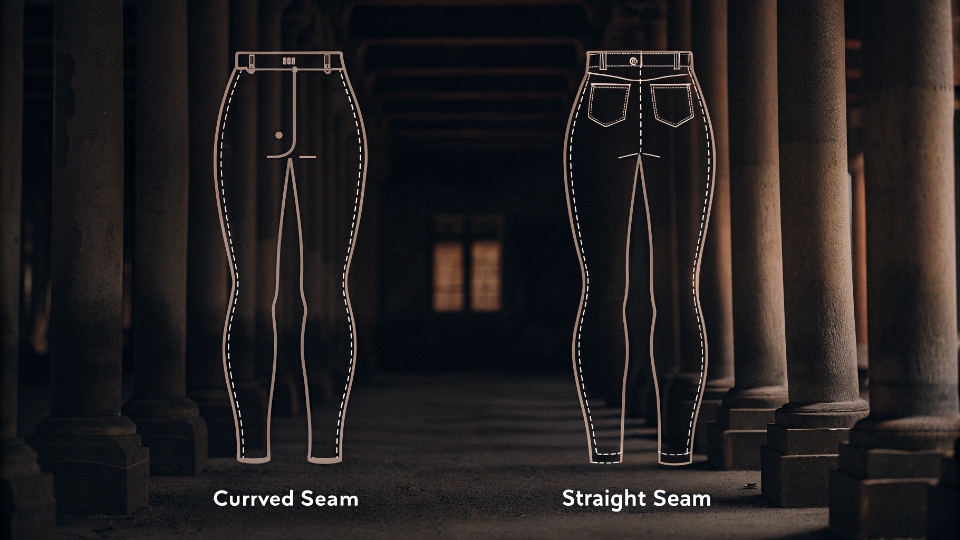
Barrel (or Balloon) jeans are what we call a "fashion forward" pattern. When we cut these in the factory, the side seams are actually curved like a banana. We often add darts (folds sewn into the fabric) at the hem to force the fabric to taper in. It is a very deliberate, architectural look. It creates volume around the knee.
Stovepipe jeans are the opposite of volume. They are about streamlining.
When I inspect a stovepipe jean on the production line, I am checking for straightness. I don't want any bowing at the knee.
- Barrel Jeans: Are a statement piece. They are baggy in the middle and tight at the bottom. They can shorten the leg visually.
- Stovepipe Jeans: Are a staple piece. They are slim all the way down. They lengthen the leg.
If you are wearing a bulky sweater or an oversized jacket, a stovepipe jean balances that out nicely. If you wear a tight top, a barrel jean can add some cool volume to your bottom half. They serve different purposes in your wardrobe.
What are stovepipe jeans American Eagle?
You see "Stovepipe" heavily advertised by mall brands like American Eagle and wonder if their version is different from the high-end designer ones.
American Eagle's stovepipe jeans are a popular mass-market version that emphasizes extreme comfort by utilizing their "Ne(x)t Level Stretch" technology. They are designed to look like vintage rigid denim7 but feel like leggings, offering the trendy stovepipe silhouette with a very forgiving, soft fit.
American Eagle (AE) has done a very smart thing with this cut. They realized that young consumers want the look of a vintage 90s jean but they refuse to sacrifice the comfort of modern athleisure.
So, the AE Stovepipe is not a traditional heavy denim. In my factory, we would call the fabric they use a "high-stretch blend." It often contains polyester and a high percentage of elastane. This means the jeans are incredibly soft and stretchy.
They design them to sit high on the waist and hug the booty, then release immediately into that straight leg.
They are essentially "training wheels" for people who want to stop wearing skinny jeans.
- The Pros: They are comfortable immediately. No break-in period required. They are affordable.
- The Cons: Because they are so stretchy, they don't hold the "pipe" structure as crisply as a 100% cotton jean would. They drape more.
If you are looking for that specific "AE Stovepipe" look, you are looking for a casual, everyday jean that creates a slim-straight line but feels soft enough to nap in. It is the accessible entry point into this style.
Conclusion
Stovepipe jeans are the ultimate hybrid, offering the polished look of a straight leg with the flattering fit of a skinny jean. They are versatile, leg-lengthening, and thanks to modern stretch fabrics, comfortable enough for daily wear.
- Explore this link to understand the unique features and benefits of stovepipe jeans. ↩
- Discover the advantages of stretchy fabric in jeans for comfort and fit. ↩
- Find out why skin-tight denim may not be the best choice for everyone. ↩
- Discover the best jean styles for those with athletic calves to ensure comfort. ↩
- Understand how the thigh-to-ankle ratio affects the fit and style of jeans. ↩
- Find out which styles of jeans flatter curvy hips for a balanced look. ↩
- Understand the differences between vintage rigid denim and contemporary options. ↩