
Ever noticed how jeans that look old and worn are often the most expensive? It's a strange contradiction. I'm here to unpack why these deconstructed styles have such a powerful hold on us.
Ripped and faded jeans are popular because they represent a story. They signal authenticity, a rebellious spirit, and individuality1. This aesthetic allows wearers to express a unique personality and stand out from the crowd, turning a simple garment into a form of self-expression.
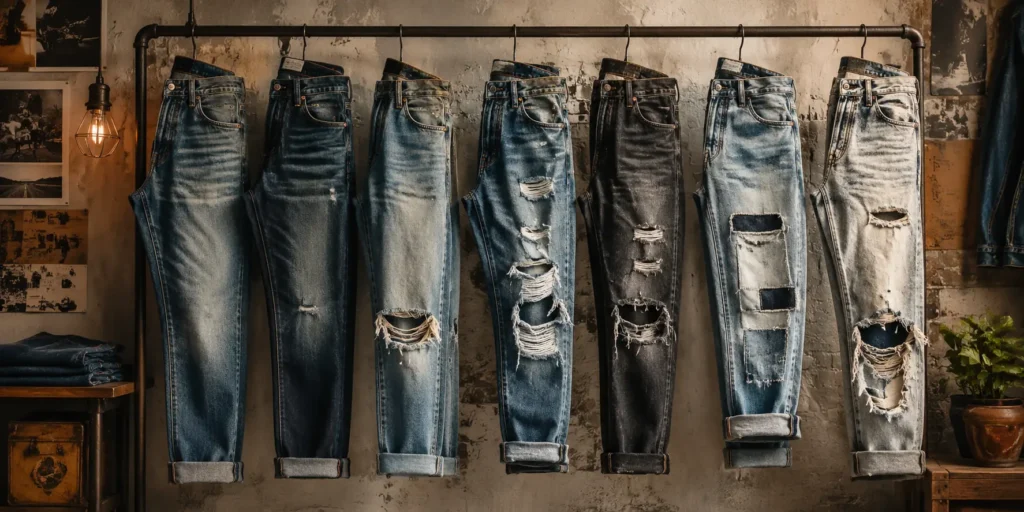
As a denim manufacturer, I've spent over two decades perfecting the art of making new jeans look old. It's a fascinating process that goes against the usual goal of making something pristine. We're not just tearing fabric; we're crafting a character for the garment before it ever reaches the customer. For a designer, understanding the 'why' behind this trend is crucial for creating authentic and desirable products. Let's explore the cultural threads that make ripped and faded jeans a lasting phenomenon.
Why did ripped jeans become popular?
You see them everywhere, but where did this trend come from? Ripped jeans seem like an odd thing to sell. Let's look at the rebellious roots that made destruction so desirable.
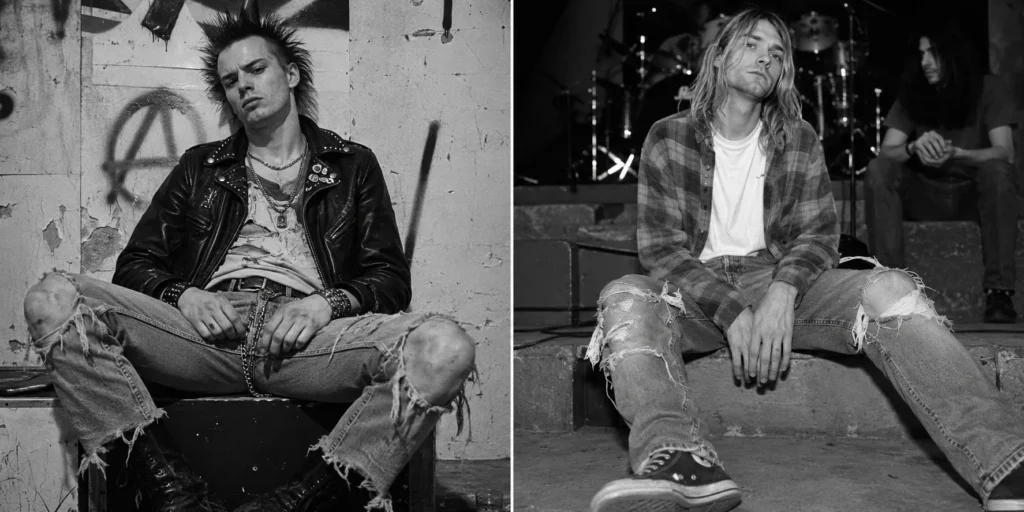
Ripped jeans became popular as a symbol of rebellion and anti-establishment sentiment2. Starting with punk rockers in the 70s who tore their own jeans, the look was adopted by grunge bands in the 90s. It was a way to reject mainstream fashion and express a non-conformist attitude.
Dive Deeper: From Protest to Product
The journey of ripped jeans from the street to the runway is a classic story of fashion evolution. It didn't start in a designer's studio. It started organically, with kids who were angry and wanted to show it. In the 1970s, punk bands like The Ramones would literally tear up their jeans as a statement against the polished, perfect look of mainstream culture. It was raw and authentic. Then, in the 90s, the grunge movement brought it back. Bands like Nirvana made torn, worn-out clothing look cool and effortless.
The fashion world noticed. Designers began to replicate this look3, and what was once a symbol of anti-consumerism became a major commercial product. As a manufacturer, this presented a new challenge for me. How do you authentically recreate something that was originally about spontaneous destruction? It requires a specific artistry. We use techniques like hand-sanding, laser-etching, and precise cuts4 to mimic years of wear and tear. The goal is to capture that original rebellious spirit in a garment that is still well-constructed and wearable.
| Era | Cultural Movement | Key Characteristics |
|---|---|---|
| 1970s | Punk Rock | Aggressive rips, safety pins, anti-fashion statement. |
| 1990s | Grunge | Natural wear and tear, flannel shirts, effortless look. |
| 2000s+ | Mainstream Fashion | Designer-distressed, specific placements, commercialized. |
Why do people like faded jeans?
A deep, dark indigo is beautiful, so why do people pay for jeans that look washed out? It seems counterintuitive. I'll explain the appeal of a good fade.
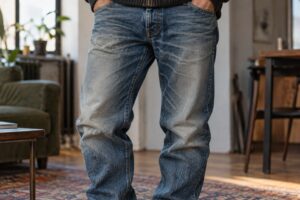
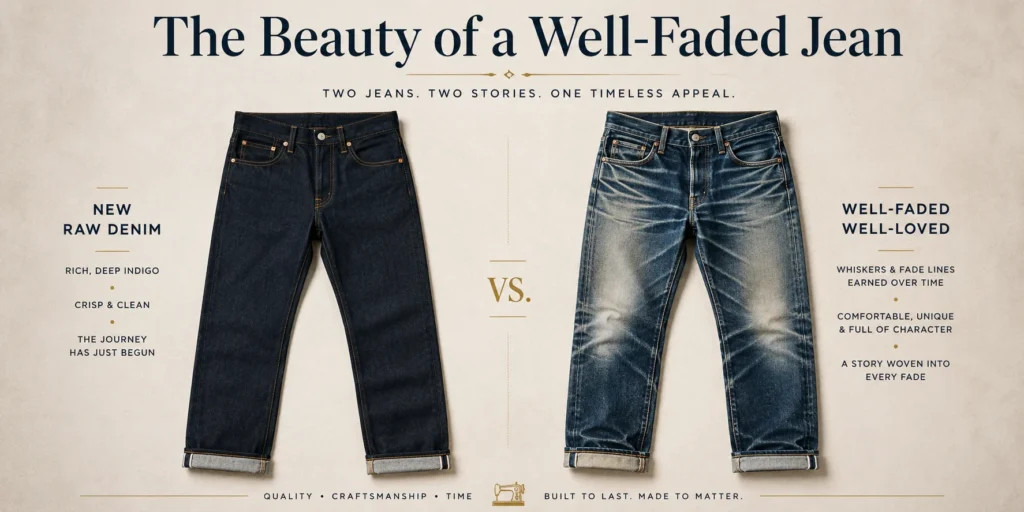
People like faded jeans because the wear patterns tell a personal story. The fades around the knees, thighs, and back pockets mimic the way jeans would naturally age with their owner. This creates a look of authenticity and gives the new garment a comfortable, lived-in character.
Dive Deeper: The Art of the Fade
As someone obsessed with denim washing, fades are my favorite part of the story. A pair of raw, dark indigo jeans is a blank canvas. Over months or years, the indigo dye chips away in high-friction areas5, creating unique patterns.
"Whiskers" form on the lap, "honeycombs" behind the knees. These patterns are like a diary of the wearer's life. This is why denim enthusiasts will spend years breaking in a single pair of raw jeans.
But most people don't have the patience for that. They want that authentic, lived-in look from day one. That's where we come in. My job at DiZNEW is to accelerate that aging process. We use a combination of techniques to create these fades artfully. We use hand-sanding to lighten the thighs, laser technology to etch intricate whisker patterns, and stone washing to soften the overall color6. It's a complex dance to make a new pair of jeans look like they've been on a long and interesting journey. It's about selling not just a product, but a feeling of authenticity and history.
| Fading Technique | Description | Desired Effect |
|---|---|---|
| Hand Sanding | Manually sanding specific areas of the jean. | Creates natural-looking wear on thighs and seat. |
| Stone Washing | Washing jeans with pumice stones. | Softens the fabric and creates an overall faded look. |
| Laser Etching | Using a laser to burn away the top layer of indigo dye. | Creates precise whiskers, honeycombs, and other patterns. |
Are ripped jeans out of style in 2026?
You're designing for the future and need to know what's next. Is the distressed look a passing fad or a permanent staple? Let's analyze the trend's staying power.
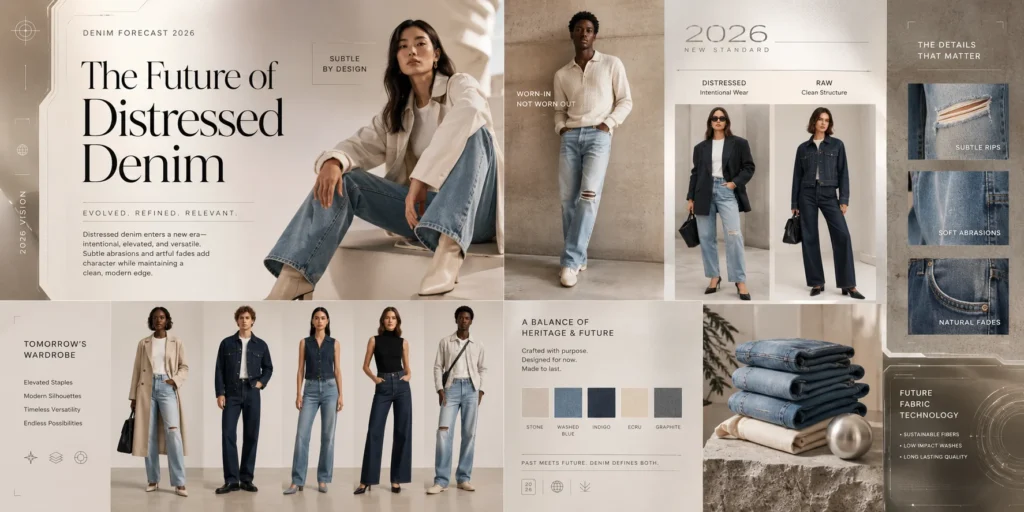
No, ripped jeans will not be "out of style" in 2026. The style has become a permanent part of the denim vocabulary. While the intensity and placement of the rips may change with trends, the overall concept of distressed denim as a form of self-expression is here to stay.
Dive Deeper: The Evolution of Expression
For over two decades, I've seen trends come and go, and ripped jeans keep coming back in different forms. Why? Because the core idea behind them is so powerful. It's about taking a standard uniform—the blue jean—and making it your own. It's a way to show personality, to add a little bit of edge to your look. In my experience, young people are always looking for ways to express their individuality and break away from the norm. Ripped jeans are an easy and accessible way to do that.
The trend itself will evolve, of course. Maybe in 2026, the dominant look will be fewer, larger rips instead of lots of small ones. Or perhaps it will be more about subtle abrasions and frayed hems rather than big holes. My factory gets ready for this by constantly experimenting with new distressing techniques. But the fundamental desire to look authentic, a little rebellious, and a little different isn't going away. Ripped jeans are one of the most effective ways to communicate that, so they will always have a place in the market.
What is the 2 finger test for jeans?
You hear customers talk about a quick fit trick, but you're not sure what it is. This simple test is a window into what people really want from their jeans: comfort.
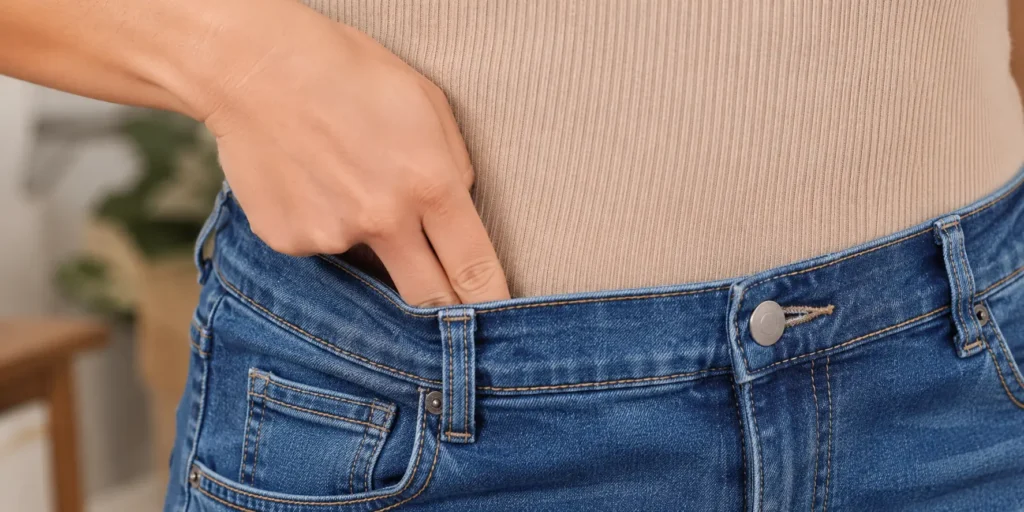
The two-finger test is a customer's way to check a waistband's fit. You should be able to slide two fingers comfortably between your waist and the waistband. It's a quick, real-world check that the jeans aren't too tight and allow for easy movement.
Dive Deeper: Why Comfort Matters, Even in Ripped Jeans
It's interesting to think about the two-finger test in the context of ripped jeans. On one hand, ripped jeans are about a rebellious, sometimes aggressive look. They are meant to be eye-catching and provocative. But on the other hand, they are still jeans. They must be comfortable to wear. No one wants to wear a pair of jeans that looks cool but feels terrible.
This simple test is a perfect reminder that no matter how wild the design or how extreme the distressing, the fundamentals of a good fit are non-negotiable. As a manufacturer, this guides our process. Even when we are creating a pair of heavily distressed jeans, we are still obsessed with getting the pattern right. We have to ensure that the waistband has the correct amount of ease, that the rise is comfortable, and that the fabric has the right amount of stretch. The most successful designs, and the ones that become truly popular, are those that manage to combine a bold aesthetic with a genuinely comfortable, wearable fit. You can't sacrifice one for the other.
Conclusion
Ripped and faded jeans are more than just clothes. They are a statement of rebellion, a mark of authenticity, and a way to express individuality in a world that loves conformity.
-
"Fast Fashion or High-End? These Ripped Jeans for Men Are Taking ...", https://dev-dining.rice.edu/info/fast-fashion-or-high-end-these-ripped-jeans-for-men-are-taking-over-7222082. A fashion-studies or museum source can support that distressed denim has been interpreted as a signifier of authenticity, rebellion, and individual identity in dress practices. Evidence role: expert_consensus; source type: paper. Supports: Ripped and faded jeans signal authenticity, a rebellious spirit, and individuality.. Scope note: Such sources usually discuss cultural meanings broadly and may not prove that every wearer intends these meanings. ↩
-
"Punk fashion - Wikipedia", https://en.wikipedia.org/wiki/Punk_fashion. A fashion-history source can document that ripped or distressed clothing, including denim, has been associated with punk and other anti-establishment styles. Evidence role: historical_context; source type: institution. Supports: Ripped jeans became popular as a symbol of rebellion and anti-establishment sentiment.. Scope note: The source may establish the association historically without measuring its importance among all consumers. ↩
-
"Jeans - Wikipedia", https://en.wikipedia.org/wiki/Jeans. A fashion-history source can support that distressed denim moved from subcultural street style into designer and commercial fashion collections. Evidence role: historical_context; source type: institution. Supports: Designers began replicating ripped and distressed jeans after the look emerged in subcultures.. Scope note: The evidence may describe the broader commercialization of distressed denim rather than identify a single point when designers began replicating it. ↩
-
"Laser Finishing for Denim - YouTube", https://www.youtube.com/watch?v=RCRkjARtTWg. A textile-engineering or apparel-manufacturing source can verify that hand sanding, laser finishing, and cutting are established methods for producing distressed denim effects. Evidence role: mechanism; source type: paper. Supports: Manufacturers use hand-sanding, laser-etching, and precise cuts to simulate wear and tear in new jeans.. Scope note: A technical source may describe the methods without addressing the article’s claim about preserving rebellious spirit. ↩
-
"DU 303: How Raw Denim Fades - FITTED Underground", https://fittedunderground.com/blogs/denim-university/how-does-raw-denim-fade?srsltid=AfmBOopd-Pgz4KFNDkNj5ue0Z7YdI4nKqzc9nXwEorh64QG-VKN467yE. A textile-science source can explain that indigo dye remains largely on the yarn surface, so abrasion and repeated wear remove color most visibly at friction points. Evidence role: mechanism; source type: paper. Supports: Indigo dye wears away in high-friction areas of denim, producing visible fades.. Scope note: The source may describe indigo dye behavior generally rather than the exact fading pattern of every pair of jeans. ↩
-
"Stone washing - Wikipedia", https://en.wikipedia.org/wiki/Stone_washing. A textile-processing source can support that stone washing, traditionally using pumice stones, abrades denim to create a softened hand and faded appearance. Evidence role: mechanism; source type: paper. Supports: Stone washing softens denim and produces an overall faded look.. Scope note: Modern processes may use enzymes or alternative abrasives, so the source may describe one common method rather than all stone-wash production. ↩