
You love vintage denim styles. You hate boring flat blue clothes. I will explain this sharp frosty fabric pattern to you today.
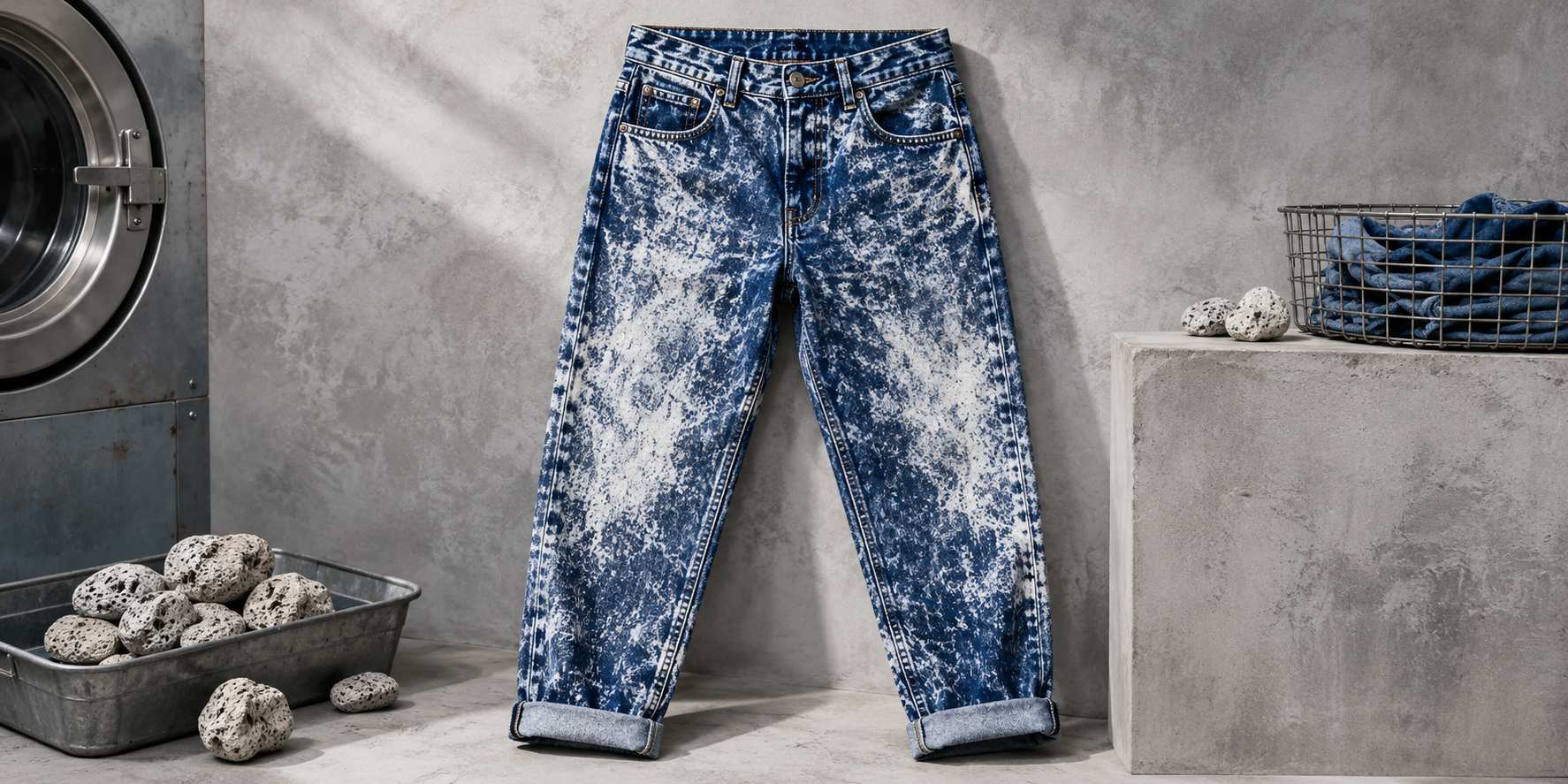
Acid wash jeans use a special chemical and physical treatment to strip away dark indigo dye.[^1] Factory workers soak rough pumice stones in strong bleach. We tumble these wet stones with the pants. This creates bright white spots and a highly contrasted retro surface.
You know the basic factory secret now. You must discover the massive street trend around these unusual spotted pants below.
Do people still wear acid wash jeans?
You worry about looking old in street clothes. You fear outdated trends. I will show you why young buyers love this spotted vintage style today.
Yes, people still wear acid wash jeans. Young people love the strong retro street style. Modern fashion brands use this heavy contrast look to create fresh vintage outfits. The bright frosted spots give modern buyers a very unique artistic look.

The Modern Vintage Trend
I run the DiZNEW denim factory. I watch global fashion trends closely. Acid wash started during the nineteen sixties. Surf culture created this bright patchy look.[^2] Big brands made it famous in the nineteen eighties. The huge trend dropped down later. Now, it is back again. Dean designs high-end jeans in New York. He asks me for more spotty wash samples every month. Young street buyers want loud clothes. They reject flat dark colors. They want deep visual contrasts. The white chemical bleach marks look very energetic. Young buyers mix these bright pants with large daily shirts. This creates a bold pure street style. You must be careful with these pants. The strong factory bleach hurts the neat cotton fibers deeply.[^3] The thin white fabric breaks faster than dark raw denim. The rough chemical surface traps daily dirt easily. The pants look dirty if you drop street food on them. You must wash them softly at home.
| Fashion Period | Denim Style Status | Buyer Action Today |
|---|---|---|
| Nineteen sixties | Surf culture pure start | Looks for old original pants |
| Nineteen eighties | Big street fashion boom | Copies the bright crazy spots |
| Modern daily life | High street return trend | Buys fresh weak cotton styles |
What is the difference between acid wash and stone wash?
You see many different faded blue pants in stores. You feel confused by complex factory terms. I will break down the true physical difference for you.
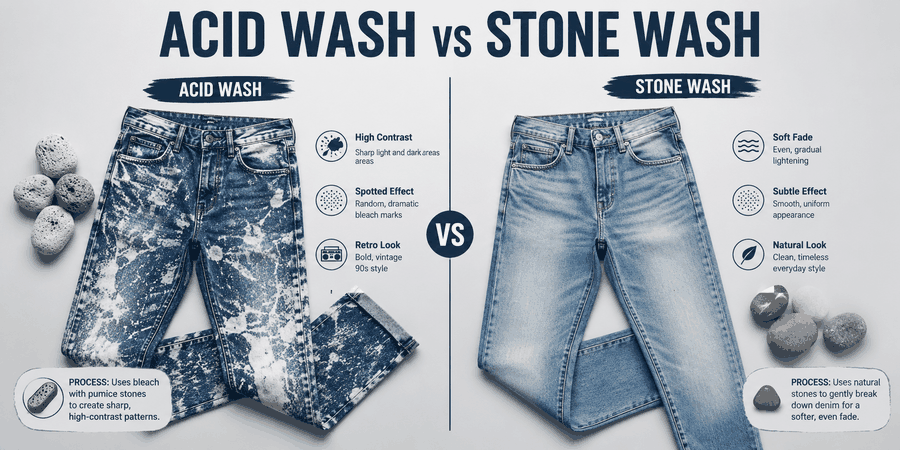
Acid wash uses strong liquid bleach soaked into stones to create sharp white spots and high contrast. Stone wash only uses dry or wet stones without heavy bleach.[^4] Stone wash creates a very soft and even fade across the entire garment.[^5]
Factory Washing Methods
I spend twenty years inside noisy factory washing rooms. I know the true difference between these two famous treatments. Stone washing is very gentle. We put dry volcanic pumice stones into large metal washing machines. We add regular blue jeans. They spin heavy circles together. The rough stones rub the blue dye softly. The pants come out looking naturally old. The color fades very evenly. Acid washing works totally differently. We use dangerous raw chemicals. We take porous rough pumice stones. We soak these dry stones in strong liquid bleach. We use harsh potassium permanganate. The stones drink the heavy wet bleach. We drop these wet toxic stones into the spinning machine with dry jeans. The wet stones hit the dry blue fabric. The strong rough bleach transfers directly to the touch points. It burns away the deep indigo dye instantly. You get bright white crazy patches. The deep inside of the pants stays dark blue. This creates a very aggressive visual picture. Dean loves this sharp bright contrast for his New York street designs.
| Wash Exact Process | Main Factory Raw Tool | Visual Fabric Result |
|---|---|---|
| Basic stone wash | Dry rough pumice stones | Soft even total color fade |
| Heavy acid wash | Wet strong bleach stones | Sharp white random local spots |
| Deep chemical wash | Hard potassium permanganate liquid | High crazy deep color contrast |
What is the purpose of acid wash?
You touch heavily damaged cotton fabric. You wonder why factories burn good expensive clothes. I will explain the precise artistic goal behind this harsh chemical treatment.
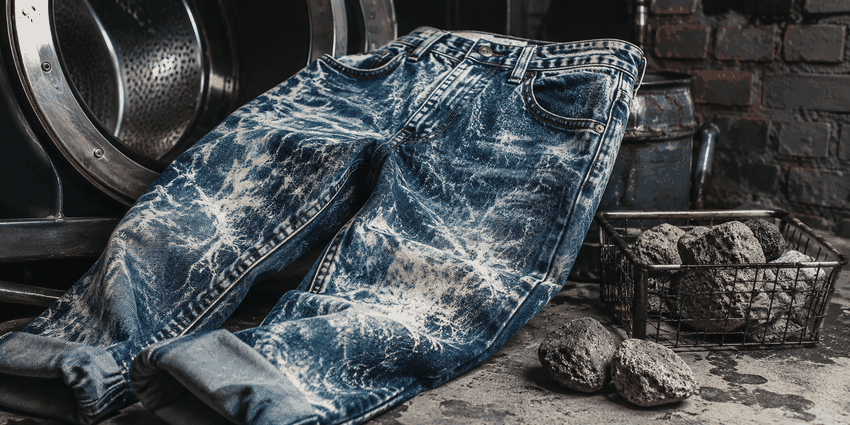
The main purpose of acid wash is to create a high-contrast distressed visual effect.[^6] This strong chemical process builds an irregular frosted pattern. Factory designers use this rough method to make new pants look naturally old and full of street attitude.
Creating Strong Visual Effects
Factory workers do not destroy clean fabric for simple fun. Every chemical step serves a clear design purpose. The true goal is pure street art. Flat clean blue denim looks very basic. Many bold young buyers want loud clothing expressions. They want pure attention on the busy city streets. Acid washing delivers this bright heavy energy. The strong chemicals strip away the top blue dye layer. The bright white inner cotton core shows completely. This intense contrast looks like rough winter frost on a dark city road. We call this the frost white effect. Dean uses this rough method to build a tough street image for young New York clients. He wants irregular bleach patches everywhere. No two beautiful pairs ever look exactly the same. The spinning wet rocks hit the long legs randomly. One pair gets big white knees. Another pair gets bright white back pockets. This random physical rubbing adds special retail value. Every happy customer buys a unique art piece. We must track the chemical process. The heavy wet chemical process harms the raw fabric base. The harsh liquid bleach weakens the small cotton threads. The finished jeans feel much thinner. They tear faster during daily hard activities. I tell my factory workers to check the strong bleach levels constantly. We balance the beautiful wild art against the safe fabric strength.
| Factory Design Goal | Chemical Process Action | Finished Fabric Result |
|---|---|---|
| High tight color contrast | Bleach burns top blue layer | Shows bright white soft cotton |
| Unique random pant pattern | Wet rocks hit fabric randomly | Drops irregular wild frost spots |
| Intense pure street style | Strips dark raw dye quickly | Creates bold vintage art clothes |
In which country are blue jeans not allowed?
You travel across the big world. You pack your favorite blue denim pants. I will warn you about a distinct country that blocks this simple clothing choice entirely.
North Korea heavily restricts simple blue jeans. The local government views blue denim as a strong symbol of American imperialism and Western cultural ideas. Citizens must wear basic approved clothing styles to avoid strict police punishment.

The Strict Clothing Ban
I ship my DiZNEW factory denim to almost every global country. I know global pure clothing laws deeply. North Korea completely rejects classical pure blue jeans. The ruling government hates this specific bright color and cotton style. Blue heavy denim represents the pure United States culture to them. They see basic blue pants as dangerous Western thought poison. The local strict government controls daily life strongly. They order regular citizens to follow strict national fashion rules. You cannot pick your own casual bright clothes freely there. Black dark denim is sometimes acceptable in the city. The classic blue dye color triggers immediate legal trouble with local city police. I find this global sharp politics totally fascinating. A simple soft cotton pant can scare a whole strong national leadership team. Dean talks about this wild fact during our New York busy design meetings. Daily fashion carries real heavy political power. We sew simple small pockets and metal zippers together inside the factory. We actually build strong global cultural symbols. The bright blue dye means personal freedom in many dark tough places. My factory workers make these basic blue pants every single day. We never think about global strict country bans. We just build strong great pants. You should feel very happy about your simple daily clothing choices.
| Country Ban Main Target | Strict Government Reason | Citizen Pure Clothing Rule |
|---|---|---|
| Classic clean blue jeans | Represents pure American wild culture | Must wear safe approved dark clothes |
| Western daily style symbols | Fears foreign soft cultural spread | Follows strict dull national dress codes |
| Bright simple casual clothes | Rejects pure personal daily freedom | Hides basic personal clean fashion identity |
Conclusion
Acid wash jeans use rough stones and wet bleach to create loud vintage spots. You should wear these unique patched street styles with total personal confidence today.
---

[^1]: "Analysis Of Different Types Of Washing Effect On Denim Fabric ...", https://www.academia.edu/63177226/Analysis_Of_Different_Types_Of_Washing_Effect_On_Denim_Fabric_Using_Different_Concentration_Or_Parameters_And_Find_Out_The_Best_Concentration_Or_Parameter_Which_Gives_Best_Aesthetics_Look_and_Also_Evaluate_The_Strength_Of_Denim_Goods_According_To_The_Physical_and_Wet_Test_Result. A textile-finishing source describing acid washing as a garment-finishing process that removes or lightens indigo dye through chemical action and abrasion would support this definition. Evidence role: definition; source type: education. Supports: Acid wash jeans are produced by a chemical and physical treatment that removes dark indigo dye..
[^2]: "Stone washing - Wikipedia", https://en.wikipedia.org/wiki/Stone_washing. A fashion-history source tracing acid-wash or snow-wash denim to 1960s surf or countercultural experimentation would provide historical context for this origin claim. Evidence role: historical_context; source type: institution. Supports: Acid wash denim has historical roots associated with 1960s surf culture.. Scope note: Fashion-origin claims can vary by source and may describe precursors rather than a single documented invention point.
[^3]: "Industrial washing conditions as factor that influence the cellulose ...", https://pmc.ncbi.nlm.nih.gov/articles/PMC10374651/. A textile-chemistry source showing that chlorine bleach or strong oxidizing agents can degrade cellulose fibers would support the claim that harsh bleaching can weaken cotton denim. Evidence role: mechanism; source type: paper. Supports: Strong bleach can damage or weaken cotton fibers in denim.. Scope note: The evidence would support the chemical mechanism generally, not necessarily the severity in a specific pair of jeans.
[^4]: "Stone washing - Wikipedia", https://en.wikipedia.org/wiki/Stone_washing. A textile-finishing reference distinguishing stone washing from acid washing would support the claim that stone washing relies primarily on abrasive stones rather than heavy bleaching. Evidence role: definition; source type: education. Supports: Traditional stone washing uses stones for abrasion and differs from acid washing by not relying on heavy bleach.. Scope note: Some modern stone-wash variants may combine enzymes or chemicals, so the support should be framed as the basic or traditional distinction.
[^5]: "Stone washing - Wikipedia", https://en.wikipedia.org/wiki/Stone_washing. A denim-finishing source explaining that stone washing abrades denim to produce a worn, faded appearance would support this description of the resulting finish. Evidence role: mechanism; source type: education. Supports: Stone washing produces a softened, faded appearance across denim garments.. Scope note: The degree of softness and evenness can vary with processing time, stones, fabric, and added enzymes.
[^6]: "Stone washing - Wikipedia", https://en.wikipedia.org/wiki/Stone_washing. A textile or fashion reference defining acid washing as a denim-finishing method used to create a faded, mottled, high-contrast appearance would support this purpose statement. Evidence role: definition; source type: education. Supports: Acid wash is primarily used to create a high-contrast distressed visual effect on denim..