
Your once-sharp denim jacket is now a shapeless mess. It's frustrating when a classic piece loses its edge. I’ll explain why this transformation happens and how you can stop it.
A jean jacket transforms because its cotton fibers get stretched out and the factory-applied sizing washes away1. Improper washing with hot water and harsh machine cycles permanently breaks down its structure and shape, causing it to lose its form.
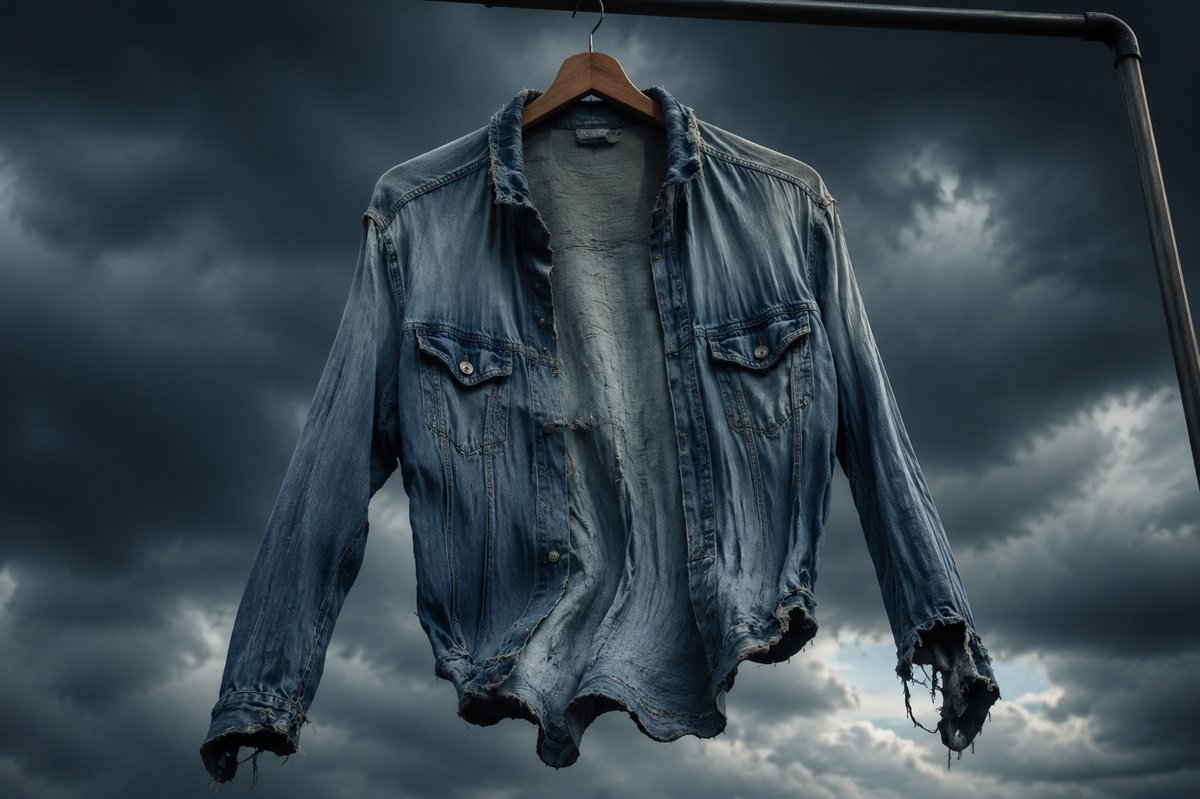
Okay, let's talk about the UFO in the room. Jordan Peele's movie "Nope" featured a territorial alien predator that people called "Jean Jacket." It was a fascinating creature that unfolded and transformed in terrifying ways. As a denim guy who has spent over twenty years in this industry, the name made me think about a different kind of transformation. It’s one I see every day at my factory, DiZNEW: how a perfect, crisp denim jacket turns into a limp, shapeless garment. Let's look at what really causes a real 'Jean Jacket' to lose its power and form.
What really kills a jean jacket's perfect shape?
You threw your jacket in the wash, hoping to freshen it up. Instead, it came out looking shrunken, twisted, and distorted. Here's what actually kills a jacket's structure and why that happens.
The number one killer of a jean jacket’s shape is heat and intense friction. Hot water shrinks the cotton fibers2 and destroys any elastic content3. The violent spinning of a machine wash and dry cycle physically breaks down the fabric's weave, causing it to deform permanently.
Dive Deeper: The Enemies of Denim
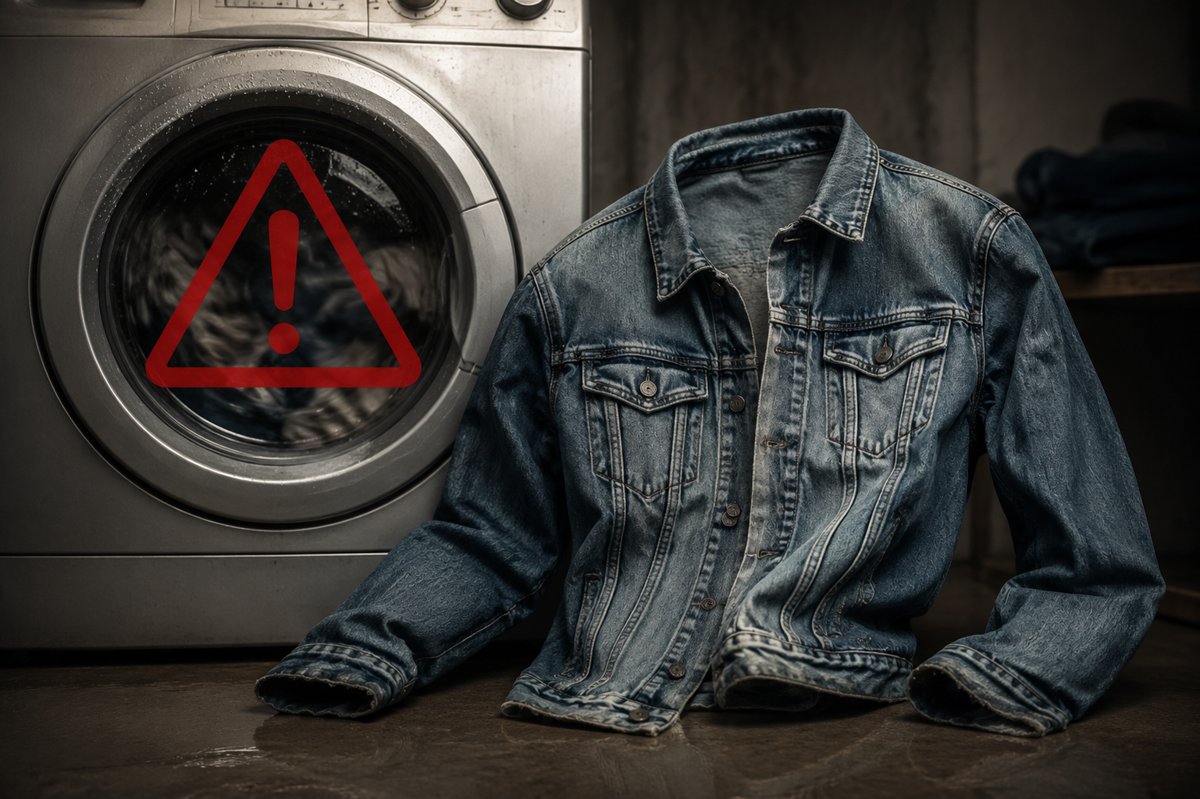
In "Nope," Jean Jacket was killed by making it consume something it couldn't digest. In the world of denim, the killers are heat and agitation. Inside my factory, we use controlled applications of water and heat to shape and finish denim. But uncontrolled, they are destructive.
The Problem with Heat
Hot water is a disaster for denim. Cotton fibers naturally constrict when exposed to high temperatures. This causes the entire garment to shrink unevenly. If your jacket has any stretch—meaning it contains spandex or Lycra—the heat will melt and break those delicate elastic fibers. They will never bounce back, leaving your jacket baggy and misshapen forever.
The Problem with Agitation
A washing machine is a brutal environment. The powerful tumbling action pulls and twists the fabric. For a heavy garment like a jean jacket, this puts immense stress on the seams, especially at the shoulders and collar. Then, the spin cycle and a hot dryer are even worse. The intense force and tumbling action are like beating the jacket against a wall for an hour. This aggressive process is what causes the fabric to become soft, twisted, and ultimately lose the sharp lines you loved.
What does a jean jacket's structure really represent?
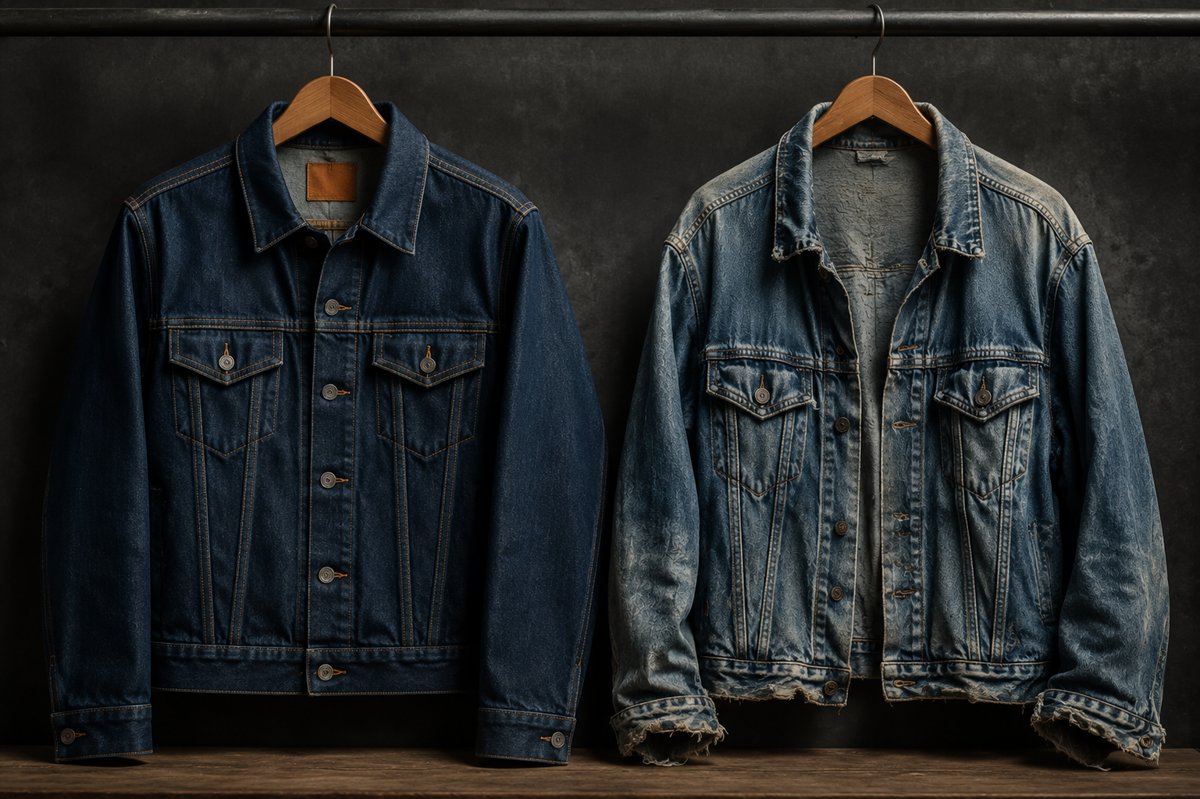
A new jean jacket feels invincible, with a crisp, structured fit. Over time, it can become soft and floppy. You miss that original sharp silhouette and want it back. So what is that structure?
A jean jacket's structure represents the integrity of its cotton weave and the factory-applied "sizing." Sizing is a starch-like coating that gives new denim its initial stiffness and shape4. As this washes away and the cotton fibers stretch, the jacket loses its original form.
Dive Deeper: The Anatomy of Stiffness
The alien Jean Jacket's structure was its form and its weapon. For a real jean jacket, its structure is its style and its soul. This structure comes from two main things.
The Natural State of Cotton
First is the cotton itself. When we weave denim fabric, the cotton threads are held under tension, creating a tight, stable grid. The fibers are aligned and ordered. This is what gives new denim its almost paper-like feel. But cotton is a natural fiber, and it has a limited ability to stretch and recover5. When you wear the jacket, your movements at the elbows and shoulders slowly pull these fibers apart. Without the support system, they don't fully bounce back.
The Role of Factory Sizing
The second, and more immediate, component is sizing. Sizing is a starchy finish we apply at the factory. It coats the fibers, adding stiffness and giving the jacket that "brand new" crispness. It helps the jacket hold its shape on the hanger and during its first few wears. However, sizing is designed to be temporary. With each wash, more and more of it rinses away, revealing the softer, more pliable cotton underneath. Once the sizing is gone, you are left with only the natural structure of the cotton, which is much more prone to stretching and deforming.
How can you stop your jean jacket from transforming?
You love your favorite jacket, but you're a bit afraid to wash it. You are right to be cautious, as you don't want to ruin it. But there is a safe way to clean it and keep its shape.
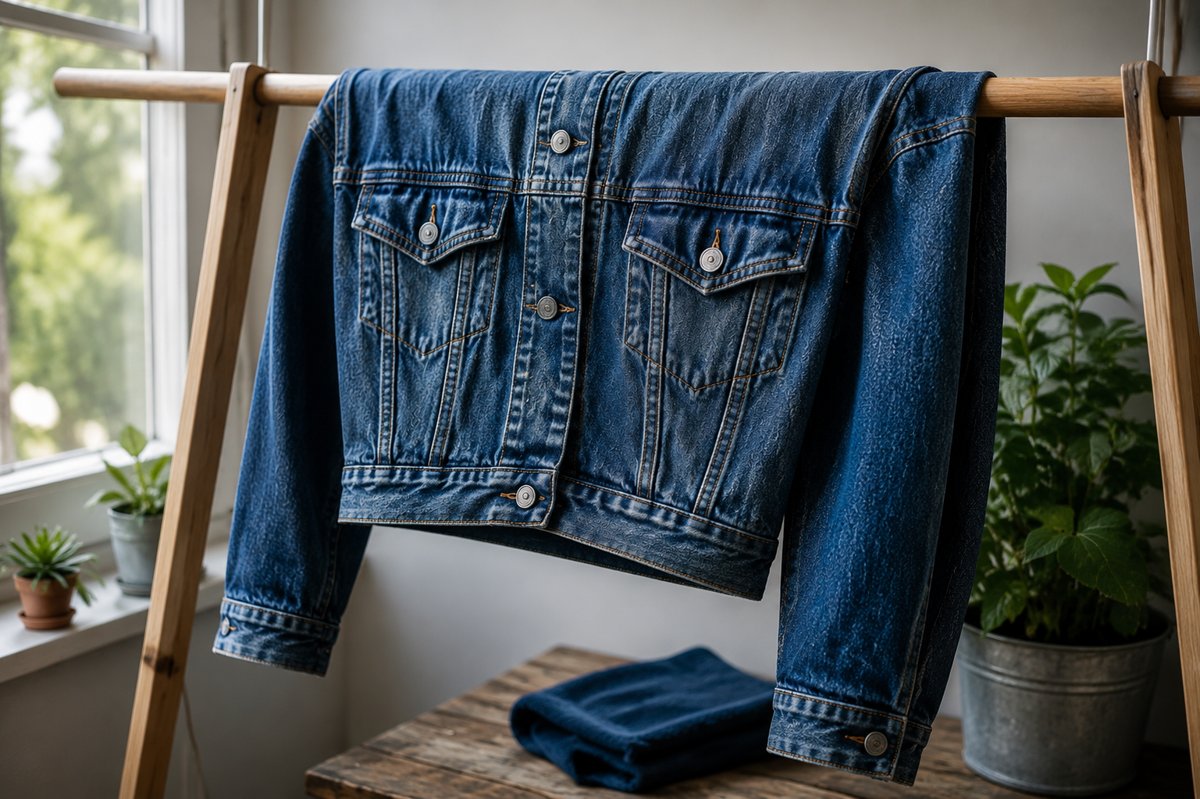
Stop your jacket from transforming by washing it as little as possible. When you must wash, use cold water on a gentle cycle, with the jacket turned inside-out. The most important step is to avoid the dryer. Reshape it by hand and let it air dry.
Dive Deeper: A Practical Guide to Preservation
You can't stop the transformation completely, but you can manage it. Think of it less like fighting a monster and more like caring for a classic car. It requires specific maintenance.
The Golden Rules of Washing
- Wash Less: A jean jacket is not a t-shirt. It doesn't need to be washed after every wear. Spot clean small stains with a damp cloth. Air it out between wears. Only wash it a few times per year.
- Wash Cold and Gentle: When it's time, always use cold water (below 30°C). Turn the jacket inside out and zip it up. Use a neutral, gentle detergent. If your machine has a "hand wash" or "delicates" cycle, use that.
The Art of Drying and Storing
Drying is the most critical step. Never use a machine dryer.
- Reshape and Air Dry: After washing, do not wring it out. Gently squeeze out the excess water. Lay it on a towel and roll it up to absorb more moisture. Then, lay it flat or fold it over the central bar of a sturdy hanger. Do not hang it from the shoulders, as the weight of the water will stretch it out.
- Store Correctly: Avoid hanging a heavy jacket on a thin wire hanger for months. This can create "shoulder bumps." It's better to fold it or use a wide, padded hanger.
If your jacket has already lost its shape, you can try a rescue mission. While it's slightly damp, use a steam iron on a low setting (with a cloth between the iron and the jacket) to press it back into shape. For a boost of stiffness, a light mist of starch spray before ironing can work wonders.
Conclusion
A jean jacket's shape is fragile. Protect it with cold washes, air drying, and less frequent cleaning. This preserves the fabric's integrity and honors the jacket's intended design.
-
"(PDF) Textile Sizing", https://www.academia.edu/43406749/Textile_Sizing. Textile finishing literature describes sizing agents as temporary coatings that add stiffness and handling body to woven fabrics, while cotton fibers and yarns can deform under use; this supports the mechanism for gradual loss of garment structure. Evidence role: mechanism; source type: paper. Supports: A jean jacket loses shape because cotton fibers stretch and factory-applied sizing washes away.. Scope note: This would support the material mechanism generally, not prove the condition of any specific jacket. ↩
-
"7+ Tips: How to Wash 100% Cotton (Safely!)", https://bigblue.atlantisuniversity.edu/how-to-wash-100-cotton/. Textile-care and fiber-science references document that cotton fabrics commonly shrink during laundering, especially when exposed to heat and moisture, supporting the claim that hot washing can reduce garment dimensions. Evidence role: mechanism; source type: education. Supports: Hot water can shrink cotton fibers or cotton fabric in a jean jacket.. Scope note: Shrinkage varies by fabric construction, finishing, preshrinking, and wash conditions. ↩
-
"Effect of Laundering on Dynamic Elastic Behavior of Cotton ...", https://jtatm.textiles.ncsu.edu/index.php/JTATM/article/viewFile/2593/1790. Textile and elastane-care references explain that spandex/elastane fibers are sensitive to high heat and can lose elasticity under excessive laundering or drying temperatures, supporting the claim that heat can impair stretch recovery. Evidence role: mechanism; source type: paper. Supports: High heat can damage elastic fibers such as spandex or Lycra in stretch denim.. Scope note: The source may discuss thermal degradation or elasticity loss generally rather than a denim-jacket-specific test. ↩
-
"Stiffness in Fabrics Produced by Different Starches and ...", https://ageconsearch.umn.edu/record/157334/files/tb108.pdf. Textile manufacturing references define sizing as the application of starch or synthetic polymers to yarns or fabrics to improve handling, stiffness, and weaving performance, supporting the description of sizing as a stiffness-giving coating. Evidence role: definition; source type: encyclopedia. Supports: Sizing is a starch-like textile coating that contributes to stiffness and shape.. Scope note: Some sizing is applied to yarn before weaving rather than as a final garment coating, so the source may require wording that distinguishes warp sizing from finishing starches. ↩
-
"Elastic recovery properties of polyester-cotton blended Eli- ...", https://www.academia.edu/64425203/Elastic_recovery_properties_of_polyester_cotton_blended_Eli_Twist_yarns. Fiber-property references list cotton as having relatively low elastic recovery compared with elastomeric fibers, supporting the claim that cotton garments do not fully recover from repeated stretching. Evidence role: expert_consensus; source type: education. Supports: Cotton has limited stretch and elastic recovery compared with elastic fibers.. Scope note: Actual garment recovery also depends on yarn twist, weave, finishing, and blended fibers. ↩