
You spill hot oily food on your favorite thick pants. You feel completely frustrated and angry. I will show you exact clean steps to fix this bad mess today.
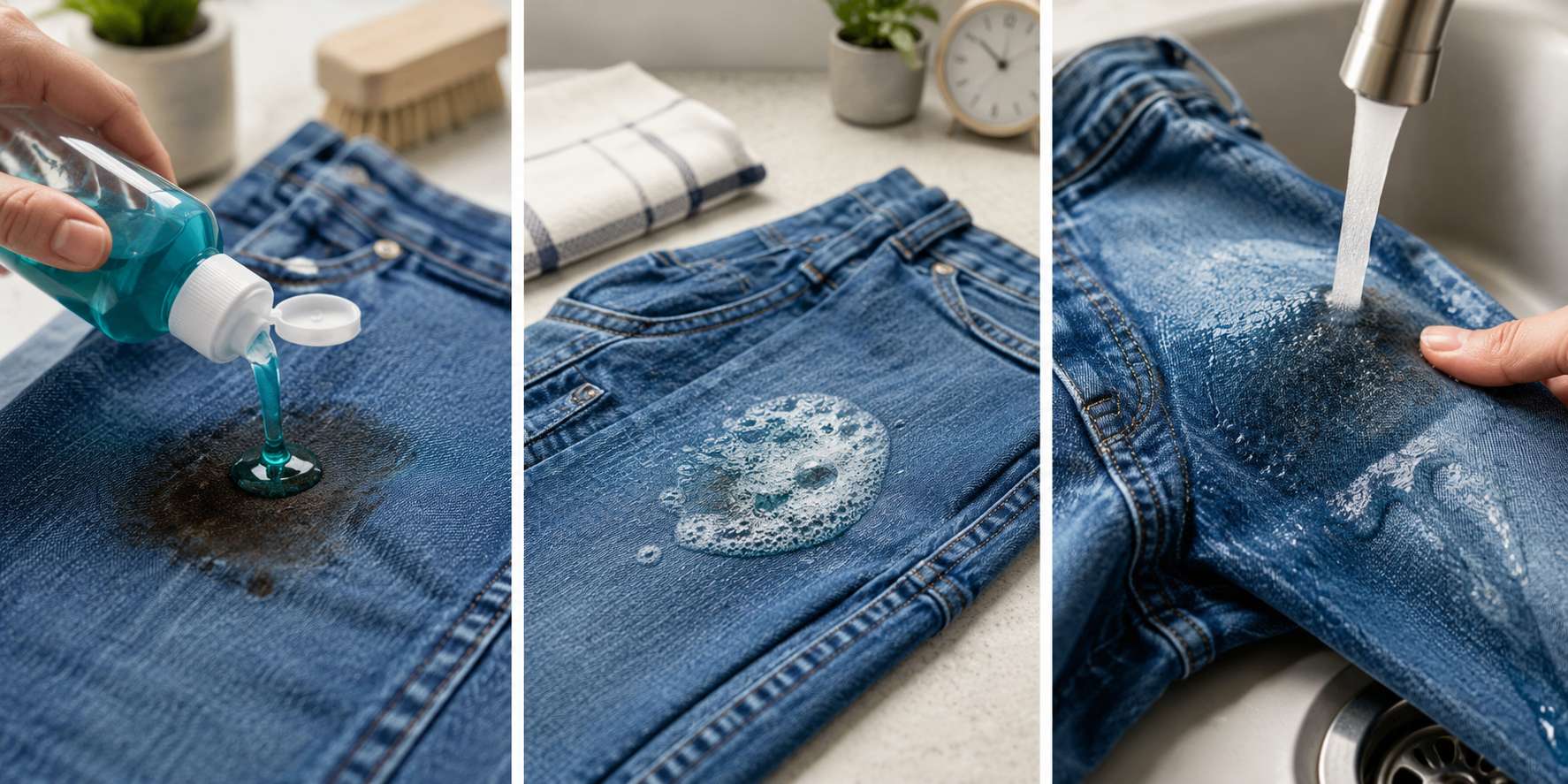
You get a grease stain out of blue jeans using simple liquid dish soap and warm water easily. You apply the dish soap thickly directly onto the dry dirty spot. You wait thirty minutes quietly. You wash the spot gently with warm clean tap water.
I deal with heavy dangerous machine oils inside my factory constantly. You really must act very quickly before the bad wet oil dries completely.[^1]
How to get grease stains out of jeans that have already been washed?
You pull your clean pants from the machine unhappily. You see a dark dirty spot clearly still there. I will give you my rescue plan completely now.
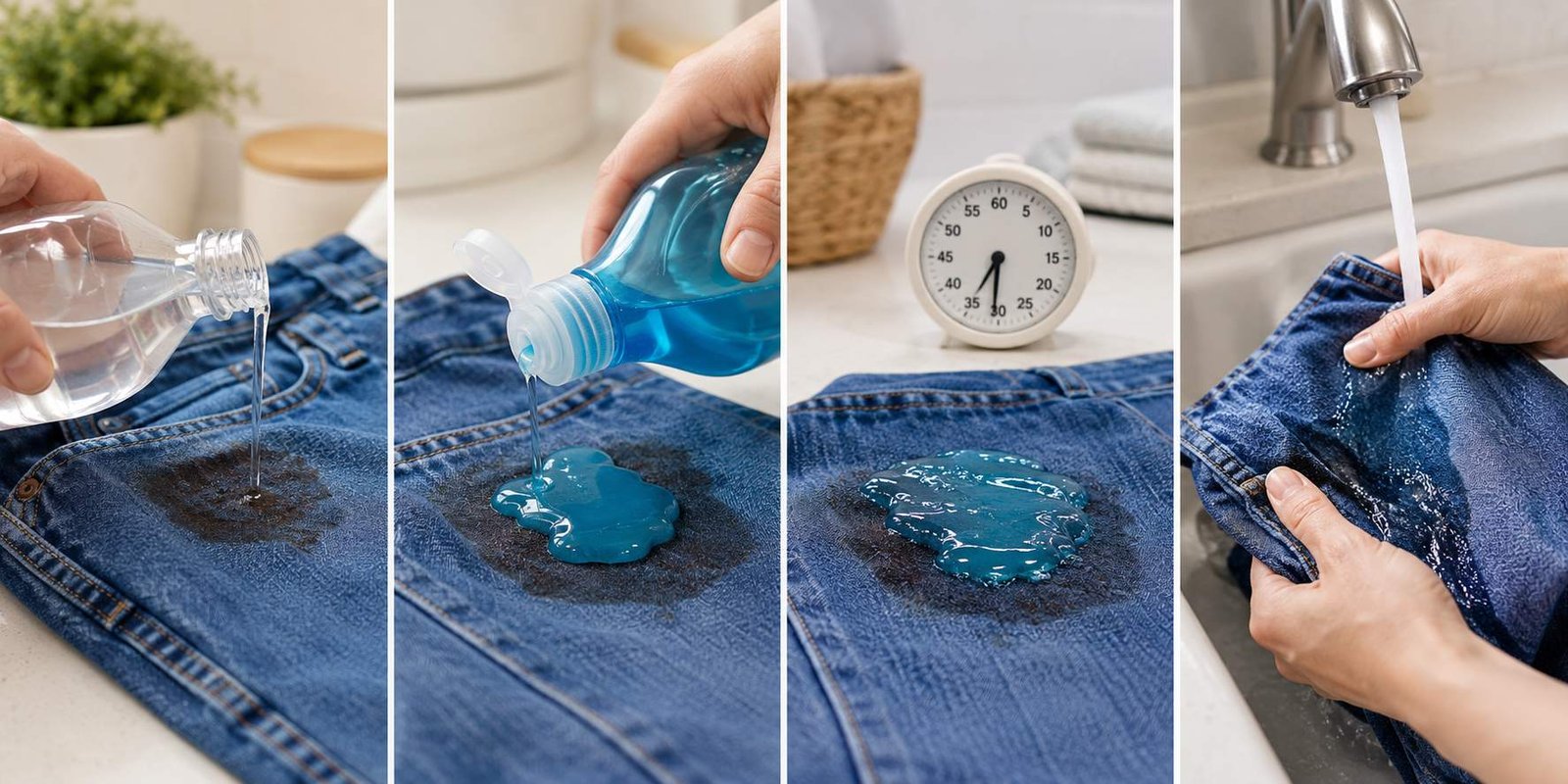
You get washed grease stains out using clear rubbing alcohol first to soften the hard mark. You cover this wet spot with heavy liquid dish soap directly. You wait thirty minutes patiently. You wash the thick pants with warm water again perfectly.
The Second Wash Rescue
You made a big mistake earlier. You put the stained pants into the hot drying machine directly. The hot machine air bakes the bad oil deep into the soft cotton tightly.[^2] The oil becomes permanently hard inside the cloth heavily. You must strictly soften this hard old oil again. I see this exact stubborn problem often inside DiZNEW. Dean brings me badly washed sample pants frequently. They have deep dirty machine oil spots. I use a smart wet trick immediately. I spray cheap clear rubbing alcohol directly onto the bad dry spot heavily. You can use standard hairspray too safely.[^3] The strong alcohol melts the hard baked oil very quickly. You wait ten short minutes quietly. You apply simple heavy liquid dish soap onto the wet spot directly next. You take a soft small brush smoothly. You tap the wet spot gently and repeatedly. You must never scrub the wet cloth hard. Hard brushing breaks the pure blue cotton fibers terribly.[^4] You wait thirty minutes fully. You wash the treated pants in warm water finally. You check the wet spot carefully before you dry it again.
| Action Step | Exact Tool Needed | Physical Purpose |
|---|---|---|
| Soften hard stain | Clear rubbing alcohol | Melts the baked old dry oil |
| Treat the wet spot | Liquid dish soap | Breaks the solid fat apart safely |
| Final clean wash | Warm pure tap water | Rinses all bad loose oil away |
Can old grease stains be removed?
You find an old dirty jacket deeply packed away loosely. You hate the ugly dark spots strongly. I will explain how to beat old thick stains totally cleanly.
Yes, old grease stains can be practically removed entirely. You use simple dry baking soda powder to pull the wet oil out slowly. You apply clear rubbing alcohol directly to melt the deep fat. You wash the cloth in warm water thoroughly.
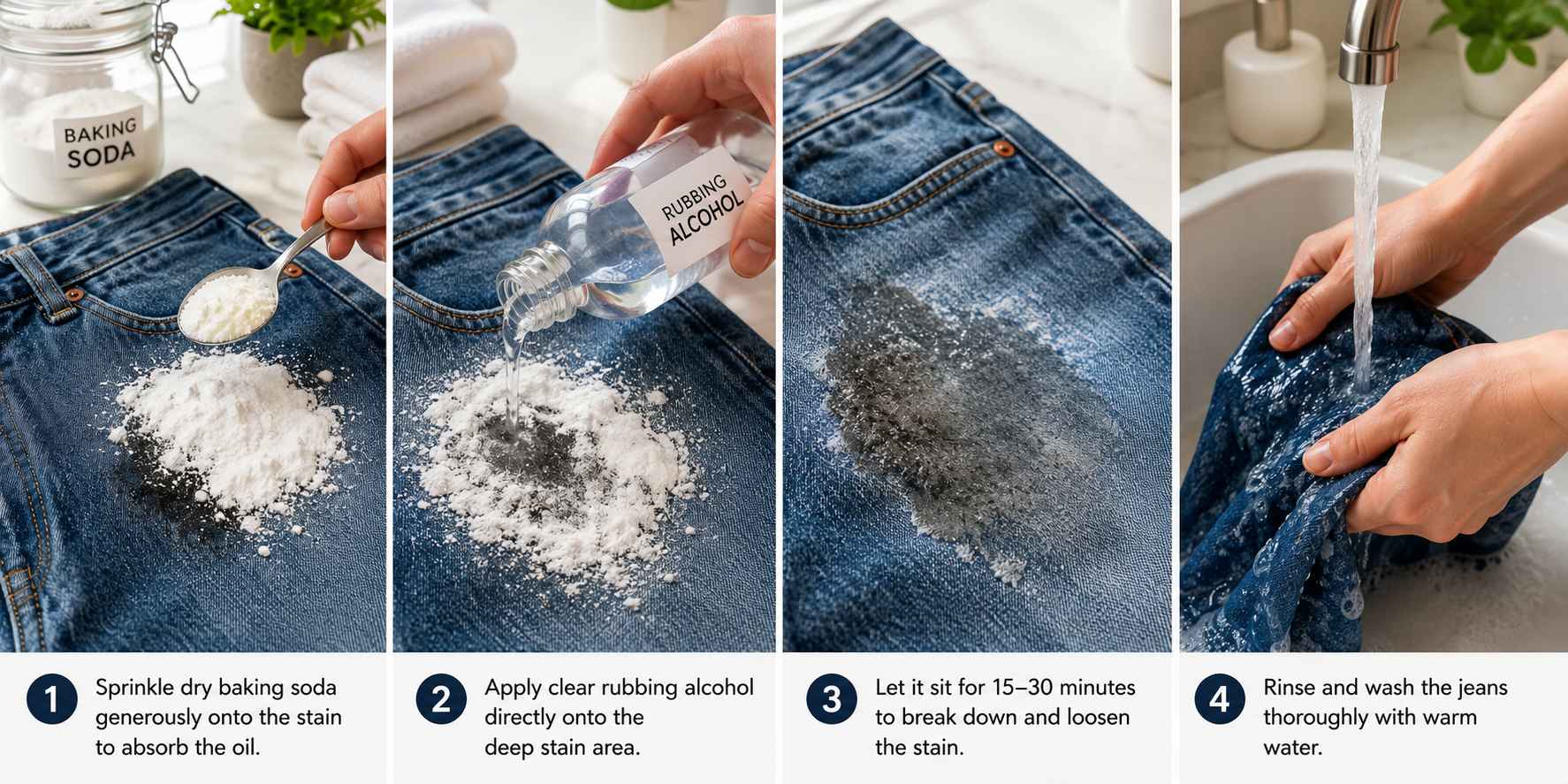
The Dry Powder Secret
Old grease stains act very stubbornly purely. The thick fat sits inside the tight cotton fibers firmly for many long months. You need a strong physical extraction method cleanly.
I use basic dry kitchen powders directly. You find dry plain baking soda or white cornstarch easily. You can use plain simple baby powder too perfectly. You place the dirty dry pants flat on a clean table gently. You completely cover the old ugly spot with your dry white powder thickly. You leave the raw powder alone for one full hour quietly.
The dry fine powder deeply pulls the bad heavy oil up physically. The powder absorbs the deep fat out of the pure blue cotton slowly.
You take a soft dry clothes brush gently after one hour passes completely. You brush the dirty white powder away completely into the trash cleanly. You apply cheap clear liquid dish soap next tightly. You drop hot plain salt on top directly. The raw rough salt grabs the broken loose oil perfectly safely. You rinse the salt away smoothly.
| Powder Choice | Good House Location | How It Works Physically |
|---|---|---|
| White cornstarch | Kitchen food cabinet | Sucks deep fat directly up |
| Pure baking soda | Cold fridge shelf | Absorbs heavy old deep oil |
| Plain baby powder | Hot bathroom cabinet | Pulls dark wetness out perfectly |
What is the best grease stain remover for clothes?
You fear ruining your expensive dark pants blindly. You want a safe exact chemical solution widely immediately. I will show you total cleaning power clearly heavily.
The best grease stain remover for clothes is plain liquid dish soap directly. Dish soap contains highly active surface chemical agents safely.[^5] These smart agents instantly break thick heavy oil molecules apart fast. You rub it gently into dry dirty cloth easily.
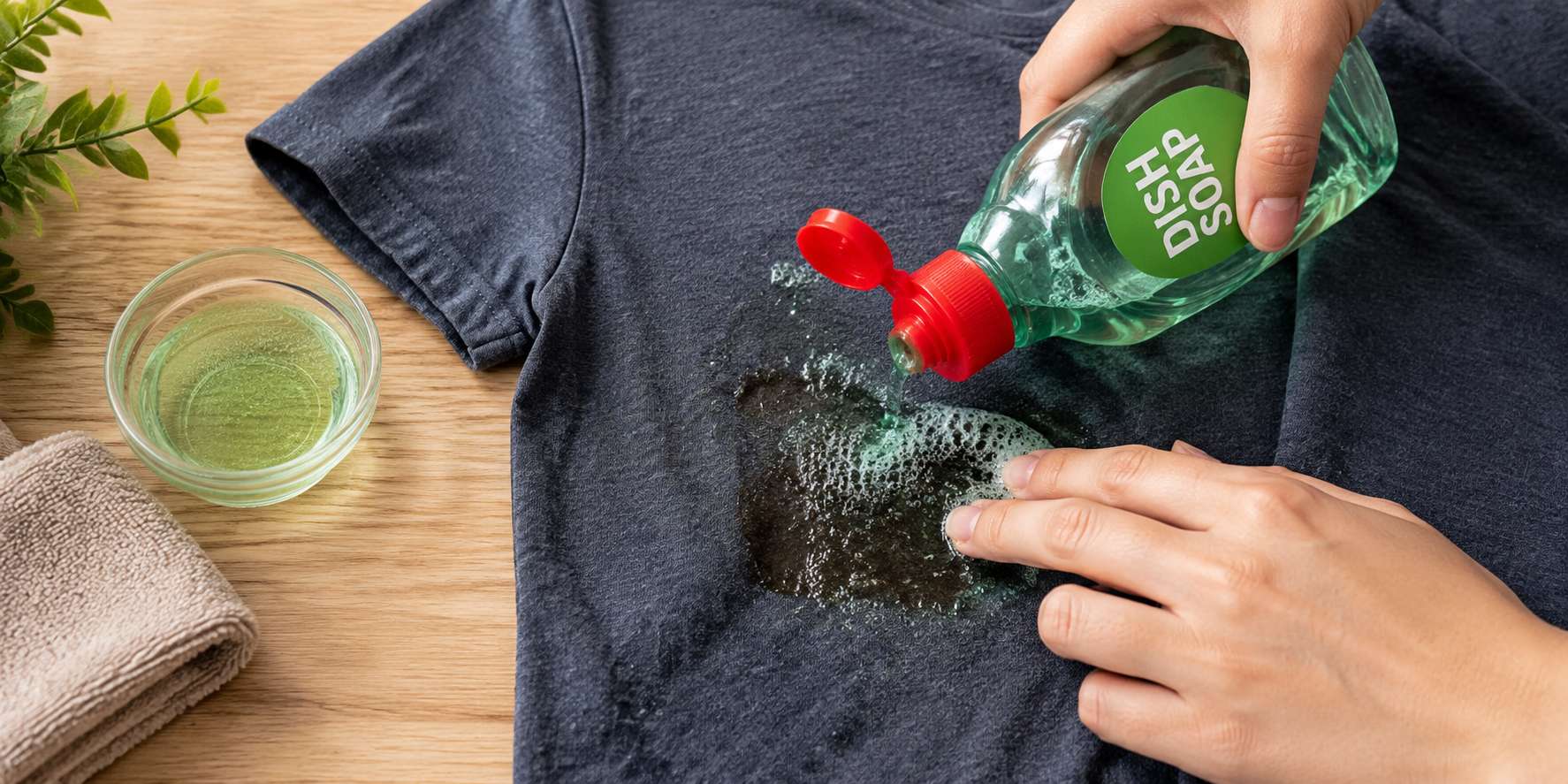
The Best Chemical Solution
People often buy very expensive stain products wastefully entirely. I run a huge professional denim washing factory daily. I test every strong heavy chemical fully. Simple kitchen liquid dish soap effectively wins every single time clearly. Factory machine oil heavily drops on my new pure sample pants frequently.
I walk straight to the basic factory kitchen immediately. Kitchen dish soap totally focuses on fighting heavy hot cooking fat successfully. The factory uses highly similar active surface agents widely. These smart invisible agents grab the bad dark oil forcefully.
They surround the exact small fat cells closely. They separate the thick fat from the pure blue cotton peacefully. You put the thick soap directly on the completely dry dirty pants purely.[^6] You never make the fresh cloth wet first wrongly. Pure water blocks the pure soap from the bad heavy oil entirely.
You tap the thick exact soap softly into the cloth lightly. You let it sit steadily for thirty plain minutes fully. You rinse the broken fat away smoothly with warm water eventually.
| Remover Type | Stain Used For | Physical Chemical Method |
|---|---|---|
| Liquid dish soap | Fresh new wet dirty fat | Surrounds and breaks fat easily |
| Clear pure alcohol | Very old dry hard spots | Melts hard fat sharply easily |
| Raw dry thick salt | Mixed wet food wet spots | Grabs loose soft oil physically |
Can jeans be saved from oil stains?
You splash hot wet oil largely over your plain legs entirely. You think the heavy pants are truly dead now. I will safely guide your fast rescue absolutely.
Yes, heavy jeans can definitely be perfectly saved from liquid oil stains closely. You press the fresh wet oil fast with clean flat dry paper. You never rub the wet cloth wildly. You treat the remaining spot heavily with simple warm water.
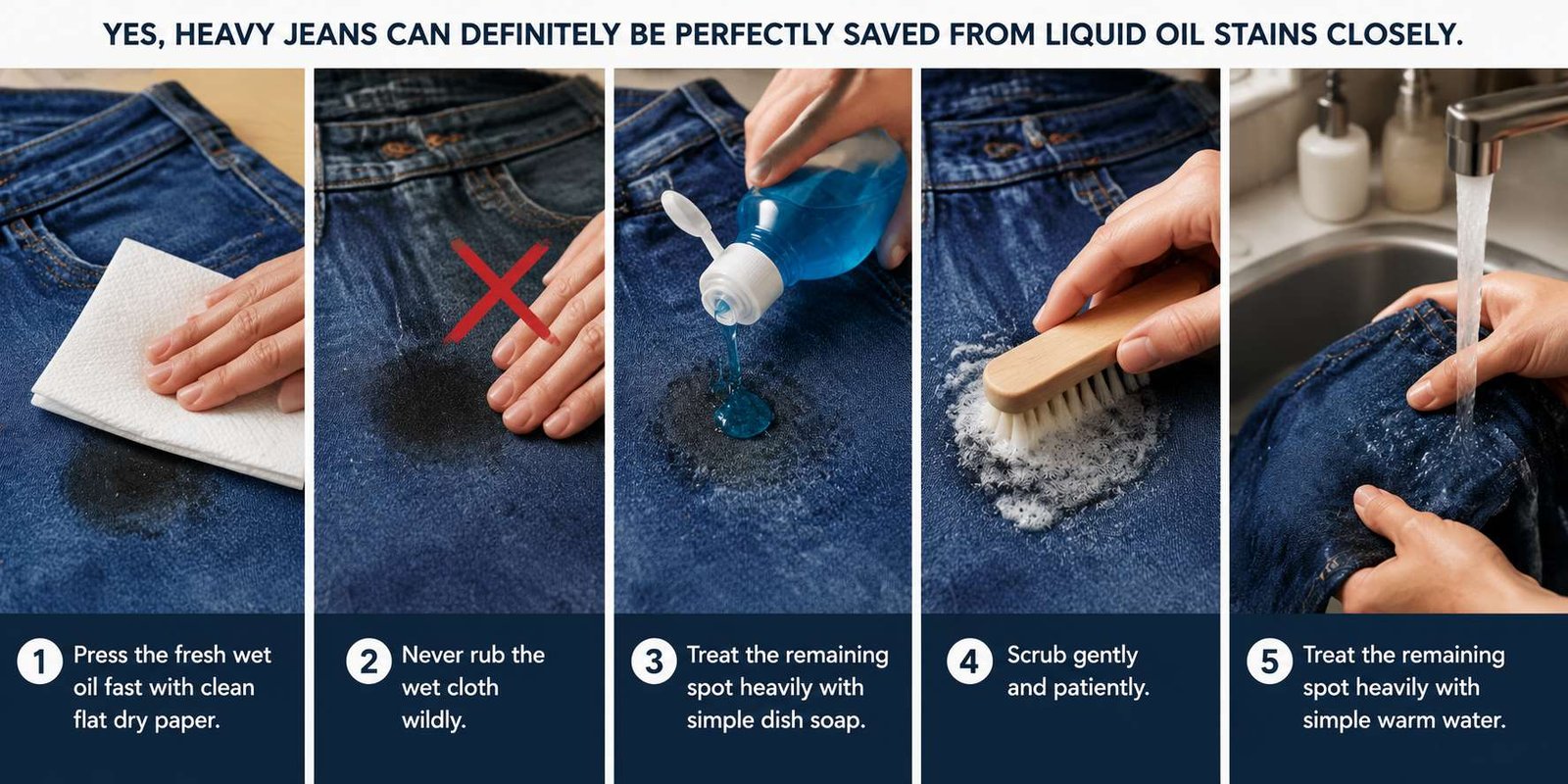
The Fast Emergency Action
Your fast urgent actions simply save the dark pure fabric entirely cleanly. You spill hot fast oil on yourself accidentally poorly.
You must grab a dry clean flat tissue very quickly. You push the dry tissue forcefully and straight down firmly onto the fresh wet spot directly. You just press it steadily physically. You must never wipe the bad wet spot largely.
Wiping physically pushes the hot dark oil tightly into clean heavy cotton wide areas quickly. You simply pull the top loose oil out perfectly directly. You repeat this flat hard pressing trick slowly with many clean dry tissues repeatedly. The plain tissue stays completely clean eventually.
I tell my factory floor workers this exact strict rule firmly daily. They save many pure blank cotton rolls easily from terrible heavy machine fluid leaks. You finish the flat hard pressing step completely absolutely first.
You put the thick plain dish soap next directly entirely. You finish by putting the wet pants directly into a very warm wash machine closely. Warm water dissolves bad fat easily.
| Emergency Action | Clean Human Result | Bad Mistake Result |
|---|---|---|
| Press spot flatly down | Removes loose top outer fat | Saves the thick cloth entirely |
| Wipe cloth wide completely | Pushes dark fat everywhere | Ruins the whole long pants |
| Use hot pure clean water | Dissolves remaining deep oil | Washes perfectly completely clean easily |
Conclusion
You remove terrible bad oil from heavy dark jeans very easily safely. You apply dry physical powder slowly, press wet spots flatly entirely, and use basic active dish soap completely safely.
---

[^1]: "Illinois Pesticide Review Volume 32, No. 5", https://extension.illinois.edu/sites/default/files/ipr_volume_35_issue_1_jan_feb_final.pdf. Textile-care guidance from extension or laundry-science sources notes that oily stains are generally easier to remove when treated promptly before they spread, oxidize, or become further embedded in fibers. Evidence role: expert_consensus; source type: education. Supports: Grease and oil stains on jeans should be treated quickly before the oil dries or becomes more difficult to remove.. Scope note: This supports prompt treatment in general; removal success still depends on the oil type, fabric finish, prior washing, and heat exposure.
[^2]: "The Nitty Gritty of Stains and Stain Removal", https://4h.tennessee.edu/wp-content/uploads/sites/47/2020/04/Nitty-gritty-of-stains.pdf. Laundry and textile-care references commonly state that dryer heat can set stains, including oily residues, making later removal more difficult. Evidence role: mechanism; source type: education. Supports: Dryer heat can set an oil stain in cotton denim and make it harder to remove.. Scope note: The source would support the general effect of heat setting stains, not necessarily quantify how deeply oil penetrates denim cotton.
[^3]: "REMOVING STAINS AT HOME - Cornell Cooperative Extension", https://hamilton.cce.cornell.edu/resources/stain-removal-guide. Some stain-removal guidance notes that alcohol-containing products may help with certain stains, but modern hairsprays vary widely in formulation and may contain resins, fragrances, or other additives. Evidence role: general_support; source type: education. Supports: Alcohol-containing hairspray may sometimes function similarly to rubbing alcohol, but its safety and usefulness depend on formulation and fabric.. Scope note: Support is indirect and conditional because hairspray formulations differ and may leave residues or damage dyes; this does not prove universal safety on jeans.
[^4]: "Understand Your Fibers | Textiles", https://site.extension.uga.edu/textiles/textile-basics/understand-your-fibers/. Textile-care and conservation sources caution that abrasive mechanical action can damage cotton fibers and fabric surfaces, especially when repeated or forceful. Evidence role: mechanism; source type: institution. Supports: Aggressive scrubbing or brushing can damage cotton denim fibers.. Scope note: This supports the general risk of abrasion; it does not establish that a single hard brushing will necessarily break denim fibers.
[^5]: "When Water Won't Work – Broader Impacts Group", https://web.whoi.edu/big/when-water-wont-work/. Surfactant chemistry references describe dishwashing liquids as formulations containing surface-active agents that reduce surface tension and help disperse oils and fats in water. Evidence role: definition; source type: encyclopedia. Supports: Liquid dish soap contains surfactants that help act on oils and fats.. Scope note: This supports the presence and function of surfactants in dish soaps generally, not the safety of every dish soap on every dyed denim garment.
[^6]: "How to Remove Old Grease Stains from Clothes Successfully", https://staging.southernwv.edu/how-to-remove-old-grease-stains-from-clothes/. Several laundry-care guides recommend applying detergent or dish soap directly to an oily stain before laundering so the surfactants contact the oil residue at high concentration. Evidence role: expert_consensus; source type: education. Supports: Directly applying dish soap or detergent to an oily stain before washing can improve contact with grease.. Scope note: This supports direct pretreatment generally; it does not prove that dry application is always superior to wetting for every detergent or fabric.