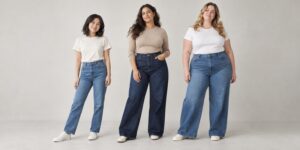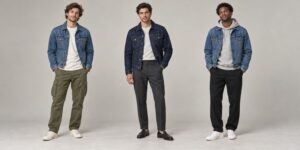

Why Should You Choose Low Stretch Jeans?
A Denim Expert’s Take on Structure Over Stretch
Your comfortable stretch jeans lose their shape after just a few wears. This sagging ruins the sleek silhouette you wanted, making your investment feel cheap and disappointing.
Low stretch jeans, with 1-3% spandex[^1] or even 100% cotton, are bought for their superior structure and durability[^2]. They hold their shape, prevent bagging at the knees[^3], and create a sharp, sculpted look that high-stretch fabrics simply cannot match, making them a smarter long-term choice.
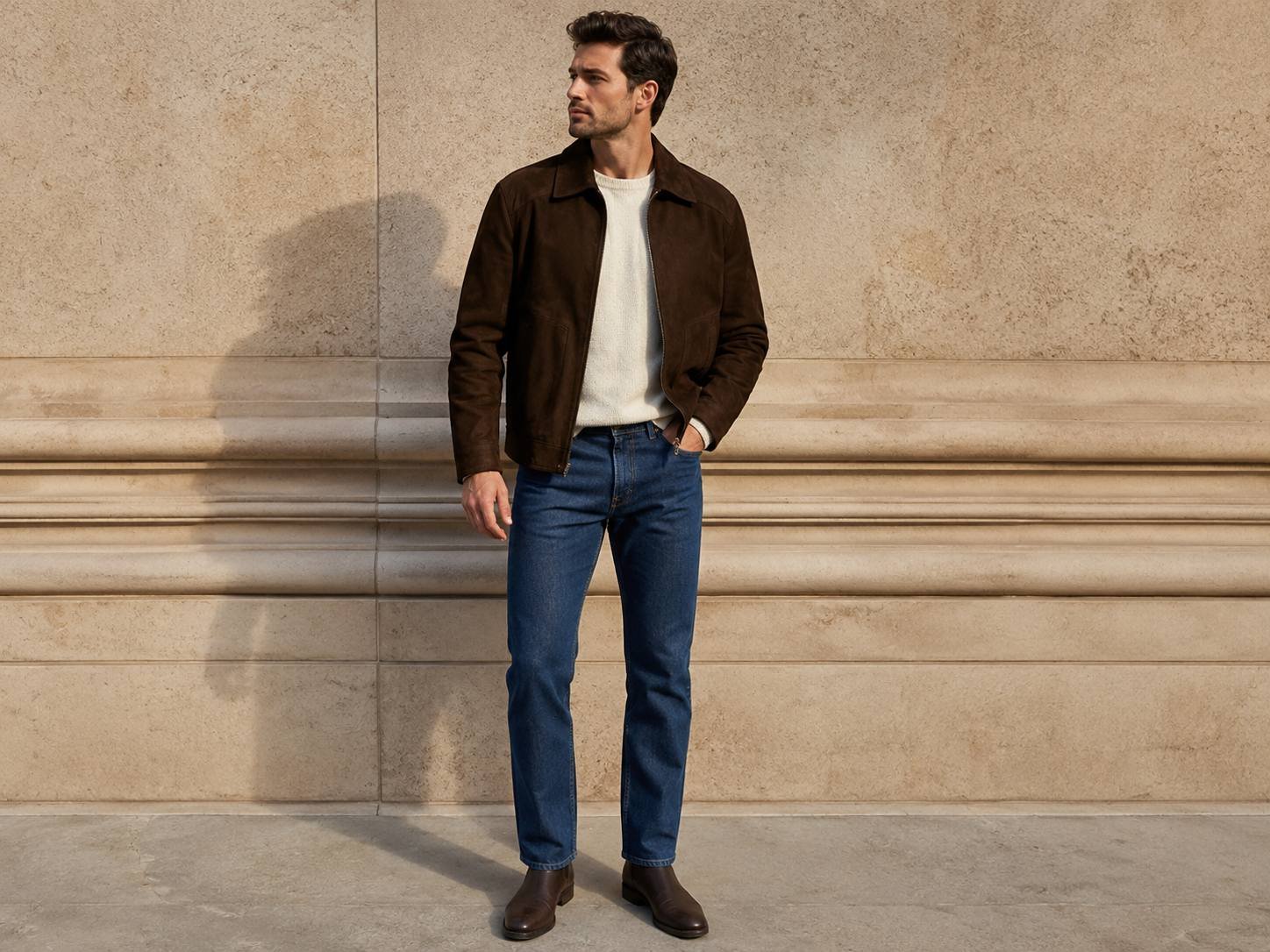
This choice often begins with classic brands. So, let's start there. Then, we'll cover the specific downsides of high-stretch jeans, explore if no-stretch is truly better, and finally, touch on which body types suit a different kind of fit challenge: low-waisted jeans.
Which is better for a classic brand like Levi's: no stretch or low stretch?
You're standing in front of two pairs of classic jeans. One is 100% cotton, the other has a hint of stretch. Choosing wrong means you either suffer through stiffness or lose that authentic vintage feel.
For most people, a low-stretch (1-3% spandex) blend is better for daily wear, as it balances authentic structure with a touch of modern comfort. True no-stretch (100% cotton) is for the purist seeking maximum durability[^4] and a shape that molds perfectly to their body over time.
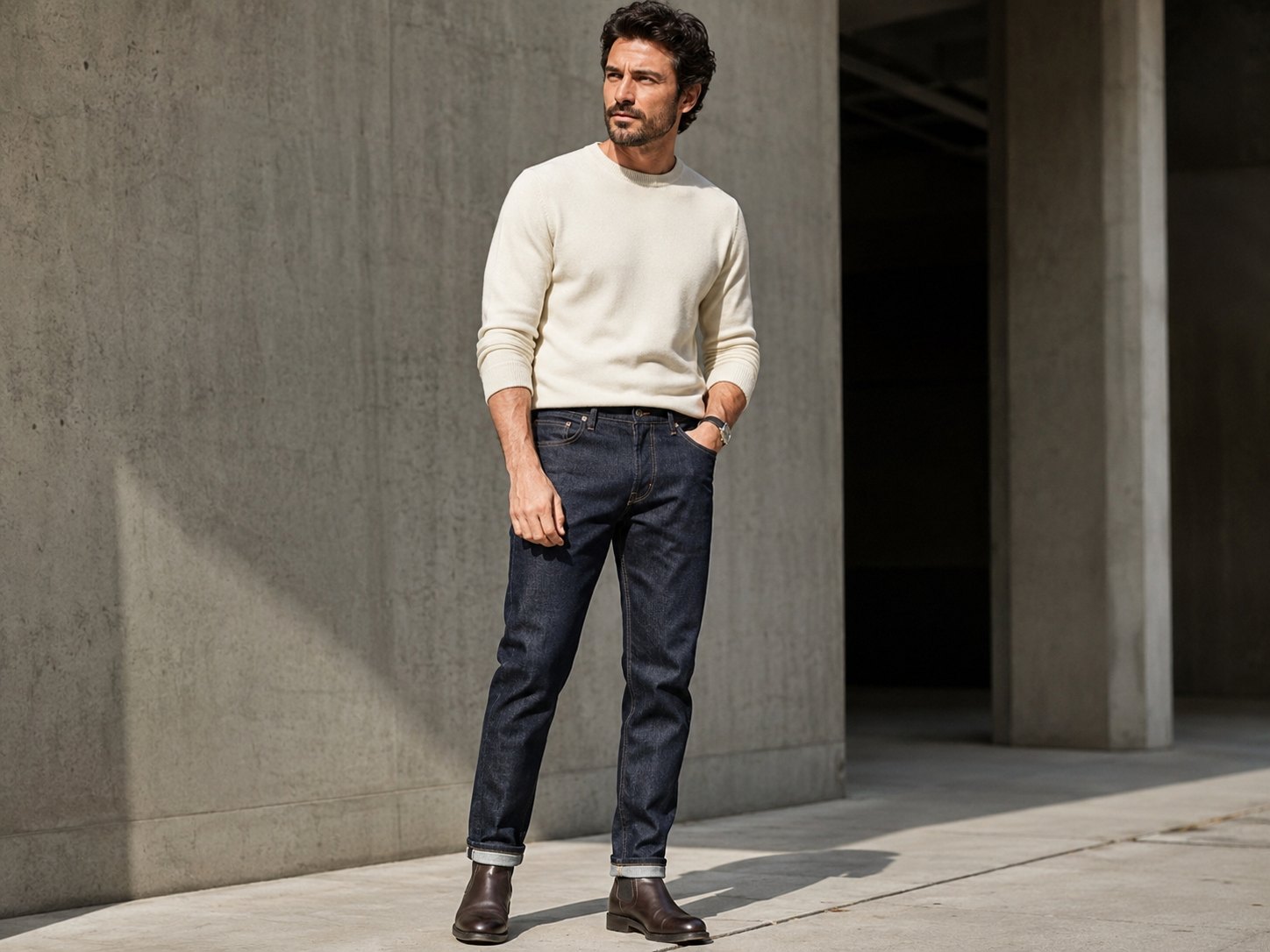
In my two decades of working with denim, this is one of the most common questions I get. The truth is, the "better" option depends entirely on your goal. Low-stretch is a modern compromise. It gives you about 80% of the structured look of pure cotton while saving you from the tough break-in period. This "micro-stretch" is just enough to let you squat and sit without feeling overly restricted.
No-stretch, however, is the gold standard for heritage styles. It’s what I recommend for designers aiming for a true vintage or American workwear aesthetic. This fabric has what I call a "skeleton"—it creates a shape independent of your leg, hiding imperfections and building a clean line. It requires commitment, but the payoff is a pair of jeans that becomes uniquely yours.
Here’s a simple breakdown for making the choice:
| Feature | No Stretch (100% Cotton) | Low Stretch (1-3% Spandex) |
|---|---|---|
| Initial Feel | Stiff, armor-like | Structured but forgiving |
| Shape Retention | Excellent, never bags out | Very good, minimal bagging |
| Best For | Authentic fades, durability | Daily comfort, sharp look |
| Break-in Period | Yes, can take weeks | Minimal to none |
For a brand like Levi's, their iconic 501s started as 100% cotton work pants[^5]. To get that original experience, no-stretch is the only way. But for their modern fits, a low-stretch blend delivers the classic look with the practicality we need today.
What are the disadvantages of stretch jeans?
You love the instant comfort of your high-stretch jeans. But after a few hours of sitting, the knees are baggy and the seat is sagging. The sleek fit you left the house with is gone.
The main disadvantages of high-stretch jeans are poor shape retention, leading to bagging at the knees and seat. They also wear out faster due to the tension on elastic fibers and often lack the premium, textured appearance of more rigid, cotton-rich denim.
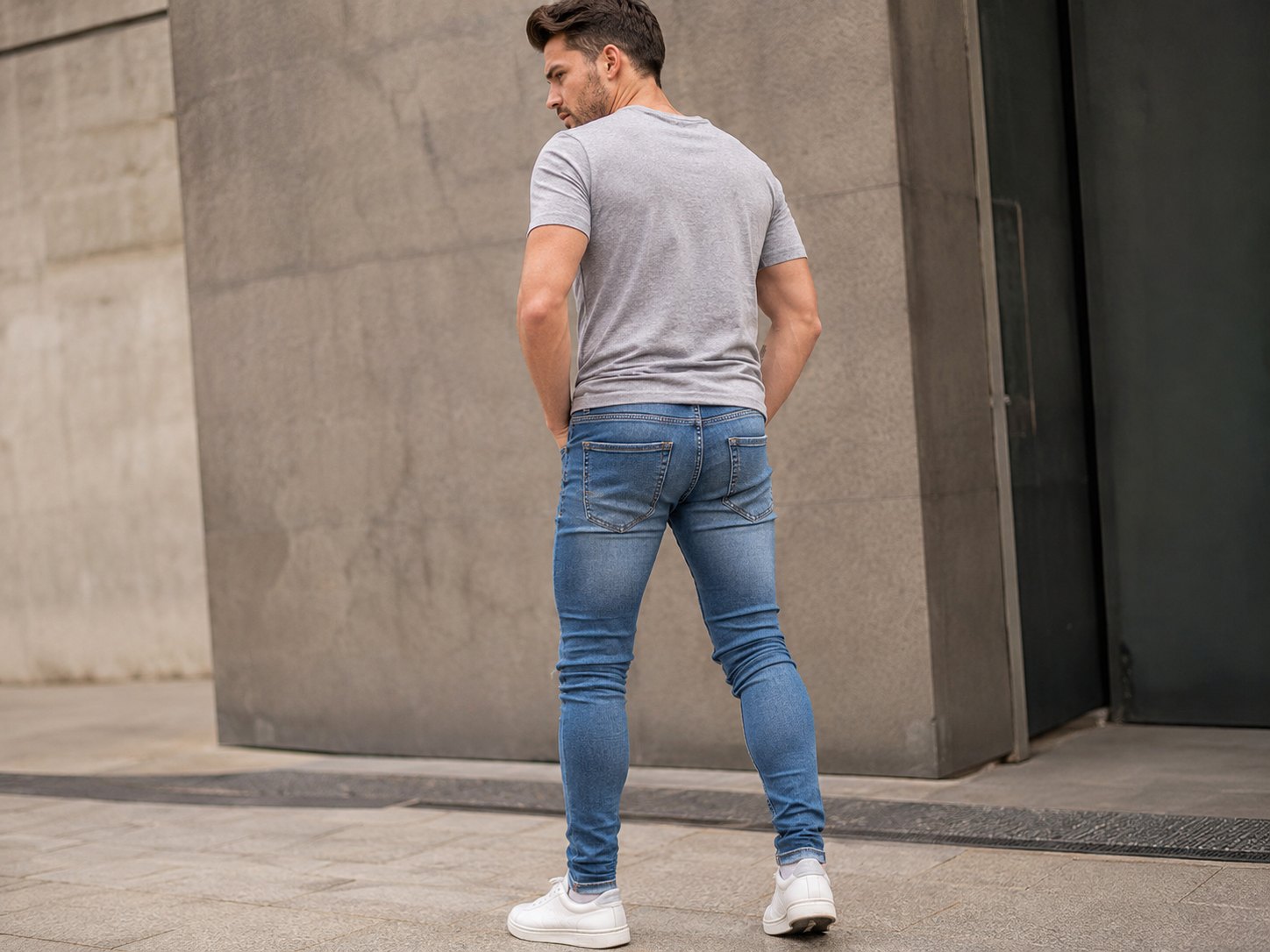
From a manufacturing standpoint, the problem with high-stretch denim (anything over 3% spandex) is fiber memory. When you bend your knee, the elastic fibers stretch.[^6] In a quality low-stretch fabric, they snap back. In high-stretch fabric, they get tired and don't fully recover. This is what causes that dreaded "knee bubble." For a designer like Dean, this is a disaster, as it completely destroys the intended silhouette of his design.
This issue goes beyond just bagging. The constant tension also wears the fabric out faster, especially around the seams and pockets. And visually, high-stretch denim often looks flat. It clings to the body, highlighting every curve and dip, rather than creating a shape of its own. Rigid denim is superior for "penciling" the leg line—it smooths and sculpts.
Let's compare them directly:
| Disadvantage | High Stretch Jeans (>3% Spandex) | Low Stretch Jeans (<3% Spandex) |
|---|---|---|
| Shape After Wear | Easily bags out at knees and seat. | Stays flat and maintains its shape. |
| Durability | Elastic fibers can break down quickly. | High cotton content makes it very durable. |
| Visual Texture | Can look flat and less premium. | Rich, textured, and ages beautifully. |
| Leg Shaping | Clings and reveals leg shape. | Sculpts a clean, straight line. |
Essentially, high-stretch jeans trade long-term structure for short-term comfort. If you're designing or buying jeans to last and look sharp for years, stepping down the stretch percentage is one of the smartest decisions you can make.
Are jeans with no stretch better?
You hear denim purists claim that 100% cotton is the only "real" denim. But you imagine wearing a pair of jeans that feel like cardboard and wonder if the pain is truly worth the gain.
"Better" depends on the priority. For achieving a perfect, sculpted fit that molds to your body, authentic vintage aging, and maximum durability, no-stretch jeans are unmatched. They provide a structural integrity that creates a superior silhouette, especially for classic straight-leg or workwear styles.
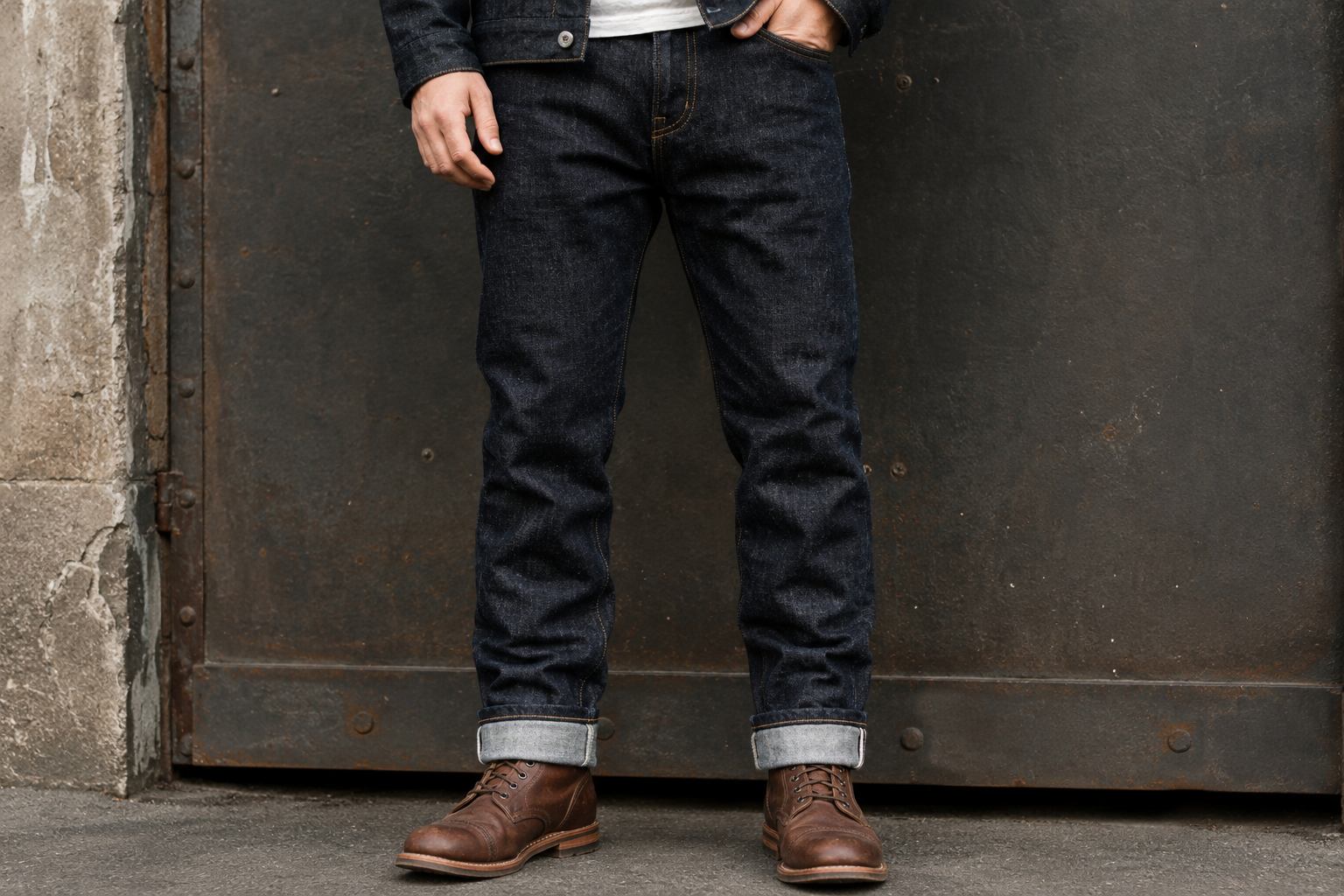
In my factory, we handle all types of denim, but my passion lies with 100% cotton, especially mid-to-heavyweight fabrics (12oz-16oz). Why? Because this material has a life of its own. When a client wants a true "raw denim" project, this is where we start. No-stretch denim is like a blank canvas. It’s stiff at first because the cotton fibers are tightly woven and untouched by artificial distressing.
As you wear them, your body heat, movements, and daily life act as the artist. The fabric softens in specific places, creases form around your hips and behind your knees, and the indigo dye fades in high-friction areas. After months, you have a pair of jeans with a wear pattern that is 100% unique to you. This is the "sartorial reward" that stretch denim can never offer.
The structural benefit is also undeniable. These jeans don't just hang; they sculpt.
Key Benefits of No-Stretch Denim:
- The "Molding" Effect: Over time, they conform perfectly to your body shape.
- Superior Fades: The rigid fabric creates high-contrast whiskers and honeycombs.
- Unmatched Durability: Dense, heavy cotton is incredibly resistant to tears and abrasion.
- Authenticity: This is the fabric of legendary workwear and vintage styles.
So, are they "better"? If you value a garment that tells a story and offers an unparalleled architectural fit, then yes, they absolutely are. They are a commitment, not a convenience.
What body type should wear low-waisted jeans?
The low-rise trend is back, but it's notoriously tricky. You try on a pair, and they either dig into your hips uncomfortably or create a dreaded "muffin top," leaving you frustrated.
Low-waisted jeans are most flattering on body types with a longer torso and a relatively straight or athletic build. Because they sit on the hips, they can visually shorten the legs, so they often work best for those who are taller or have balanced proportions.
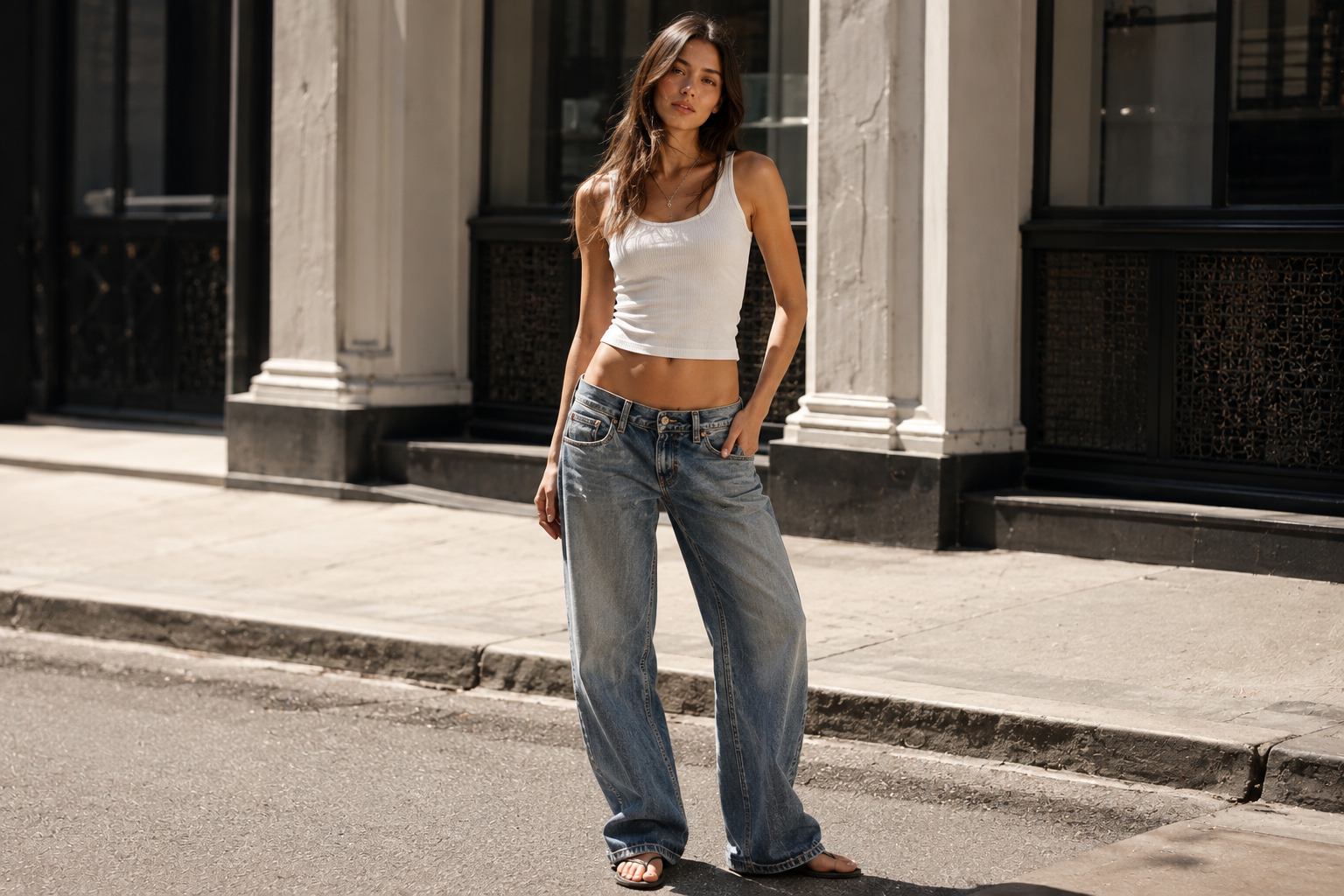
Unlike high-waisted jeans that define the natural waist, low-rise styles draw attention directly to the hips. This is why body shape is so crucial. A person with a long torso can "afford" to have the visual line of their pants start lower without looking disproportioned. Someone with an athletic or "boyish" frame—meaning less difference between their waist and hip measurements—can also wear them well, as the jeans will sit neatly on the hip bones without pinching.
The choice of fabric stretch becomes critical here. A pair of low-waisted jeans in a high-stretch fabric might seem comfortable, but it offers no support and can exacerbate spillage over the waistband. Conversely, a no-stretch or low-stretch pair can offer a firm, "held-in" feeling, but the fit must be absolutely perfect. If it's too tight, it will dig in painfully.
Here's a quick guide:
| Body Trait | Best Jean Rise | Why It Works |
|---|---|---|
| Long Torso | Low or Mid Rise | Balances proportions, highlights hips. |
| Short Torso | High Rise | Elongates the legs, creates a waistline. |
| Curvy / Hourglass | High or Mid Rise | Follows and defines the natural waist. |
| Athletic / Straight | Low or Mid Rise | Adds the illusion of curves at the hip. |
Ultimately, confidence is key. But from a technical fit perspective, low-rise jeans are a specific tool for a specific job. For many body types, a mid-rise (sitting just below the navel) offers a more versatile and forgiving starting point, especially when working with low-stretch denim.
Choosing low-stretch denim is a powerful decision. You're trading instant flexibility for lasting structure, superior durability, and a truly timeless style that holds its shape and integrity.
---

[^1]: "Fabrication and characterization of stretchable denim fabric using core ...", https://pmc.ncbi.nlm.nih.gov/articles/PMC8646987/. A neutral textile reference defining elastane/spandex use in denim blends can support the classification of small elastane percentages as low-stretch, but exact commercial thresholds vary by manufacturer and market. Evidence role: definition; source type: institution. Supports: Low-stretch denim is commonly described as containing about 1–3% spandex/elastane.. Scope note: The 1–3% boundary is an industry convention rather than a universal scientific standard.
[^2]: "Permeability and Moisture Management Properties of ...", https://ui.adsabs.harvard.edu/abs/2022JIEIE.103..253A/abstract. A textile-science source on denim fabric construction and elastane blends can support the general relationship between cotton-dominant denim structure and durability, though it may not evaluate this specific jean category as a consumer purchase choice. Evidence role: general_support; source type: paper. Supports: Low-stretch or cotton-rich jeans are bought for superior structure and durability.. Scope note: Contextual support only; fabric-level findings may not prove superiority for every finished garment.
[^3]: "Low-bagging (growth) stretch denim yarn production by spinning ... - PMC", https://pmc.ncbi.nlm.nih.gov/articles/PMC9988486/. Research on elastic recovery and dimensional stability in elastane-containing woven fabrics can substantiate why some denim blends retain shape better than others, although knee bagging in finished jeans also depends on pattern, fit, yarn, and laundering. Evidence role: mechanism; source type: paper. Supports: Low-stretch jeans hold their shape and reduce bagging at the knees.. Scope note: Evidence is likely fabric-mechanical rather than a direct wear trial of knees in jeans.
[^4]: "Fabrication and characterization of stretchable denim fabric using core ...", https://pmc.ncbi.nlm.nih.gov/articles/PMC8646987/. Textile testing literature on cotton denim weight, yarn construction, and abrasion or tear resistance can support the claim that heavier cotton denim can be durable, while not proving that every 100% cotton jean outlasts every stretch jean. Evidence role: general_support; source type: paper. Supports: No-stretch 100% cotton jeans can offer high durability.. Scope note: Durability depends on fabric weight, weave, yarn quality, finishing, seams, and care practices.
[^5]: "Levi Strauss & Co. - Wikipedia", https://en.wikipedia.org/wiki/Levi_Strauss_%26_Co.. A historical source on Levi Strauss & Co. and the 501 jean can document the garment’s origins as riveted workwear made from cotton denim, though it may not address modern stretch variations. Evidence role: historical_context; source type: encyclopedia. Supports: Levi’s 501 jeans originated as cotton denim work pants.. Scope note: Supports historical origin, not current product construction across all 501 versions.
[^6]: "Modelling Heat-Setting of Cotton/Elastane Knitted Fabrics ...", https://jtatm.textiles.ncsu.edu/index.php/JTATM/article/download/6663/3584/29538. A polymer or textile reference on elastane fibers can verify that elastane extends under mechanical strain and recovers after release, though it does not by itself prove long-term jean bagging. Evidence role: mechanism; source type: education. Supports: Elastic fibers in denim stretch during body movement such as knee bending.. Scope note: Supports the basic fiber mechanism, not the full durability outcome in jeans.