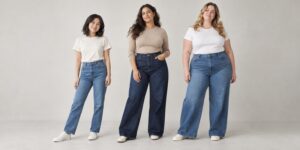

Your favorite blue jeans smell very bad today. You want to throw them into the washing machine. I will show you the exact procedure to machine wash denim safely.
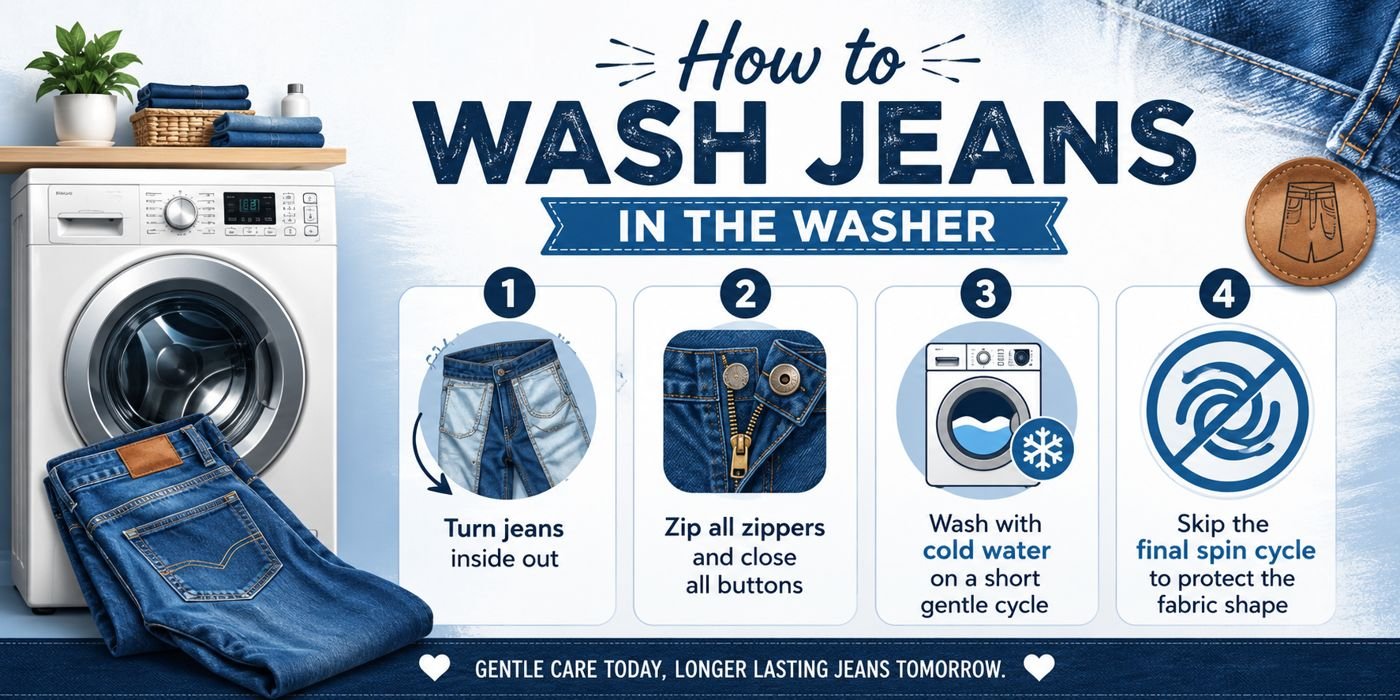
You wash jeans in the washer using cold water and a short gentle cycle. You must turn the pants inside out first. You must zip all zippers and close all buttons. You skip the violent final spin cycle completely to save the fabric shape.
Many people destroy good pants inside normal home washing machines. I see these sad mistakes at my denim factory every single week. I deal with high-end brands. I know the true science of cotton fabric care. I will teach you my best washing secrets right now.
Is it okay to wash jeans in a washing machine?
You stare at your dirty thick clothes. You hear rumors about strict machine washing bans. I explain the true scientific facts about home washing machines clearly here.
Yes, it is okay to wash jeans in a washing machine. You must avoid violent machine cycles. Harsh agitation pulls wet threads apart. Strong spinning breaks the raw cotton shape. You can use a machine safely if you pick gentle settings.
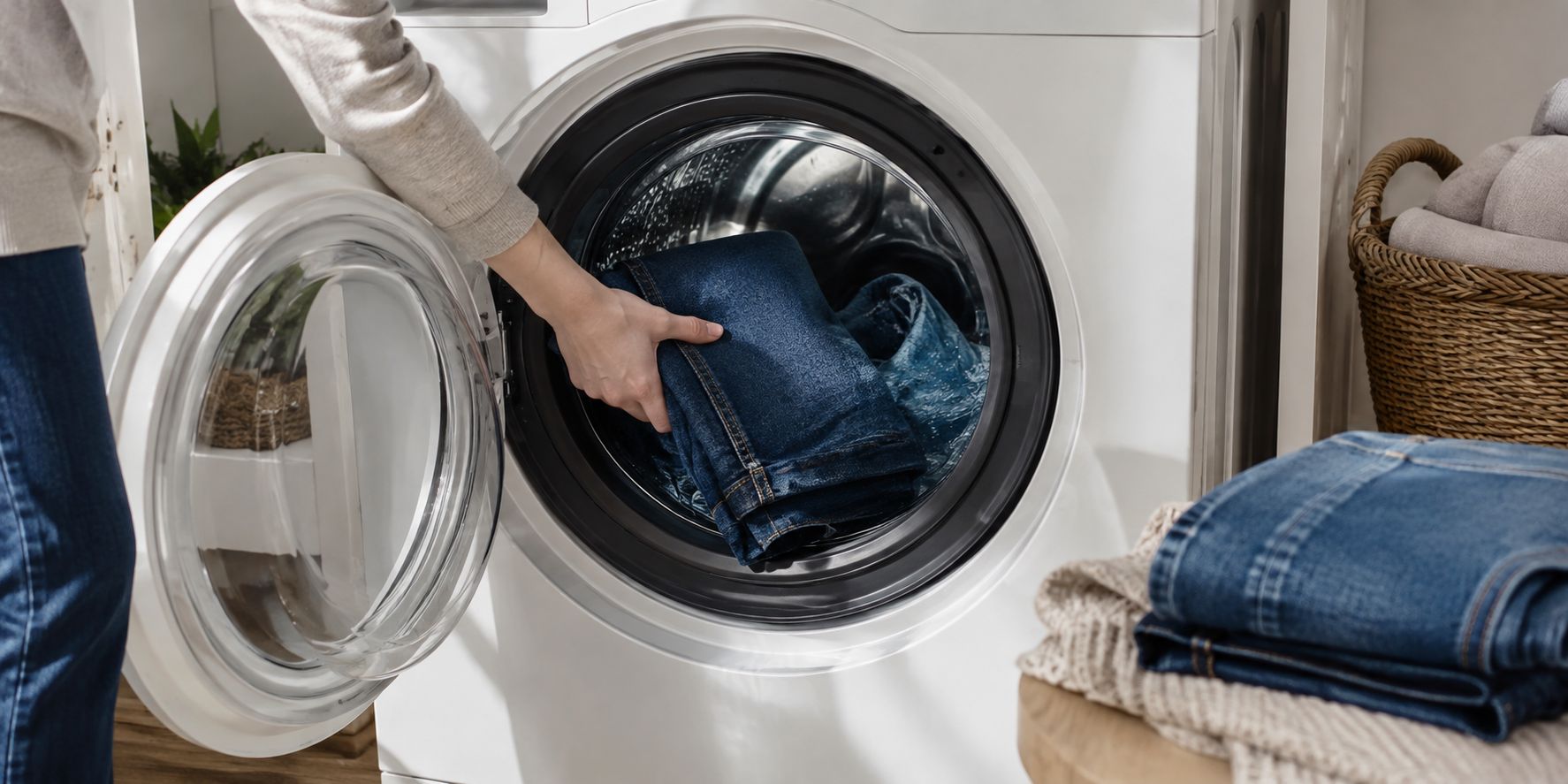
I run the DiZNEW denim factory. I talk to Dean from New York often. He designs beautiful expensive raw denim. He asks me about home washing rules. People say you cannot machine wash jeans. This is mostly a myth. I study the deep science of blue fabric.
The blue dye sticks to the outside of the cotton fibers physically. It does not go inside the thread. A strong washing machine uses high water agitation. The machine flips and beats the clothes violently.
This strong hitting forces the blue color to fall off fast.[^1] Also, denim uses a thick diagonal twill structure.[^2] The vertical and horizontal threads weave tightly.
They hold their straight shape using physical tension. The rough machine drum produces massive stretching force. This shear force breaks the strict yarn balance directly. The fabric stress fails.
Your pants look messy. You can use a machine safely. You just must avoid this violent hitting action always.
The Science of Fabric Damage
| Denim Trait | Violent Machine Action | Result on Pants |
|---|---|---|
| Surface blue dye | Heavy water beating | Fast color loss |
| Twill weave tension | Strong fabric stretching | Broken thread balance |
| Stiff yarn structure | Random twisting forces | Messy cloth shape |
What is the best way to wash jeans in the washing machine?
You pull out a dirty pair of pants. You want a safe cleaning method. I guide you through the perfect professional machine wash process step by step.
The best way to wash jeans in the washing machine requires cold water and a short cycle. You turn the jeans inside out. You zip the zippers and close the buttons. You wash them with dark clothes. You never use the final spin cycle.
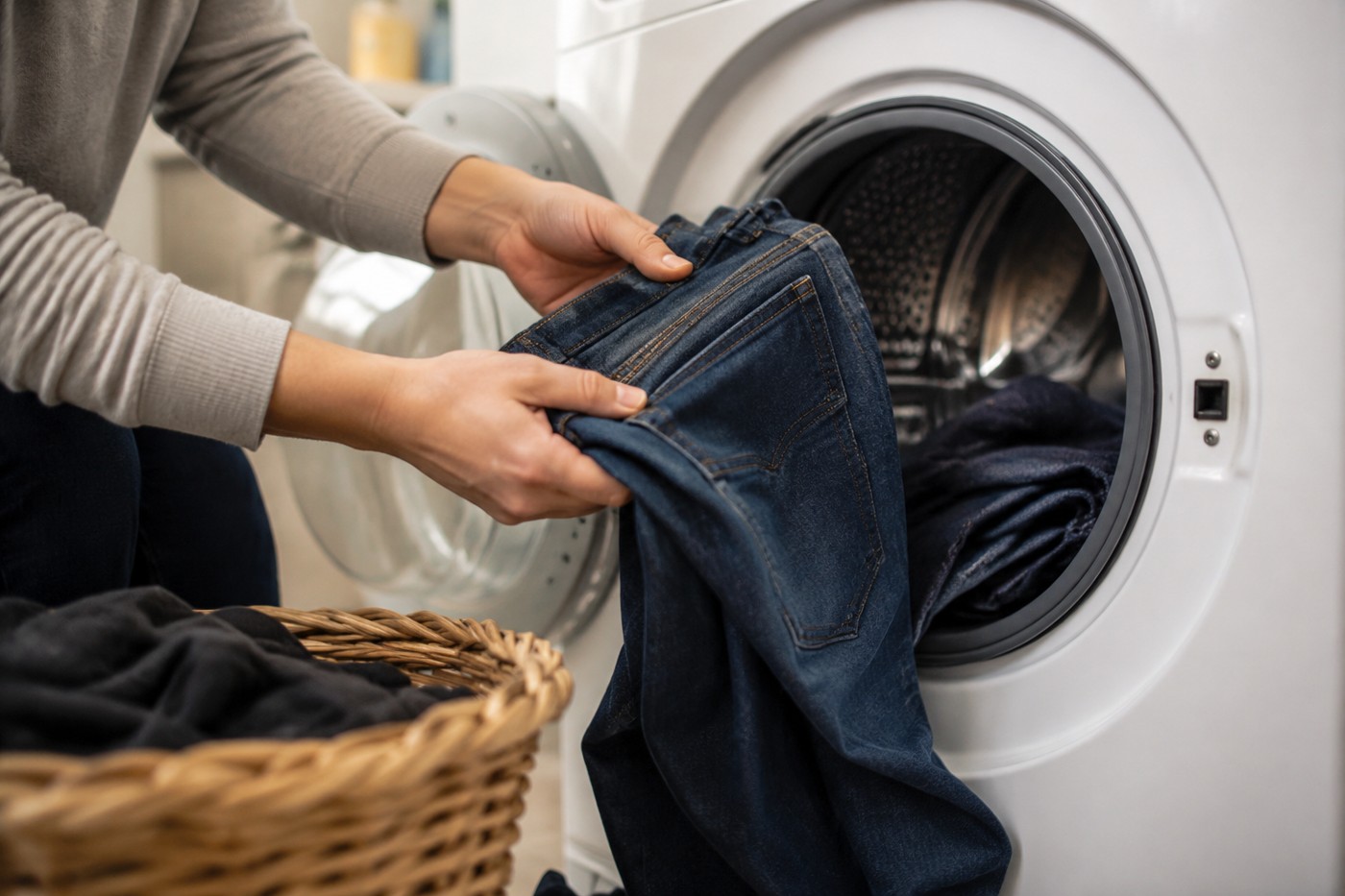
You must handle wet cotton very carefully. I teach Dean the proper washing steps for his New York boutique clients. Dry cotton feels strong. Wet cotton becomes very weak.[^3]
The pure cotton fibers absorb the wash water fast. They swell up[^4] and lose true physical strength. The wet fabric stretches very easily. You must stop the washing machine before the final spin cycle. The spin round spins very fast. It creates massive centrifugal force.
This flying force pulls the heavy wet legs outward. It stretches the wet waistline permanently. Your nice pants get wide ankles and a crooked waist. You pull the wet items out early. You shape the legs straight with your hands. You hang the pants in cool shade outside.
You avoid the hot bright sun. The extreme hot sun bakes the fabric. I tell everyone to use less chemical fabric softener. Fabric softener makes the dark color unstable. It ruins the perfect firm cotton hand feel.
The Professional Wash Routine
| Safe Wash Step | Direct Function | Fabric Benefit |
|---|---|---|
| Turn inside out | Guards the blue surface | Stops fast color fading |
| Skip spin cycle | Avoids centrifugal force | Keeps exact original shape |
| Hang in shade | Misses direct hot sun | Protects the deep dye |
Can I use Dawn to wash my jeans?
You see a big grease spot on your leg. You consider using strong kitchen soap. I outline the real facts about dish soap and heavy clothing.
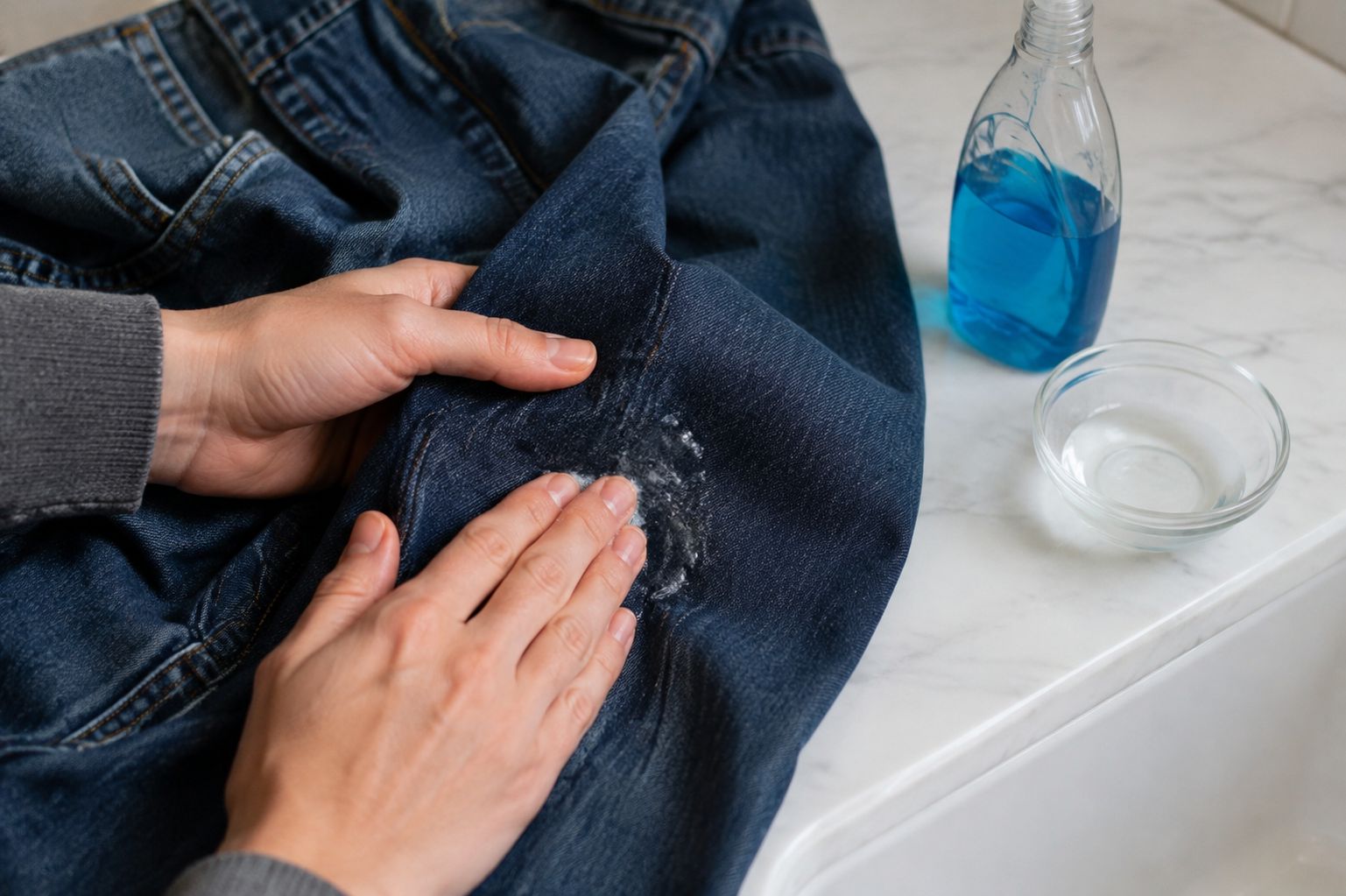
Yes, you can use Dawn dish soap to wash spot stains on jeans. You put a small drop directly on the dirty mark. You rub the area softly. You must not put a large amount of Dawn inside the washing machine drum.
I see many chemical mistakes during my long factory career. Kitchen dish soap is a very powerful grease cleaner.[^5] Dawn removes fresh food oils perfectly. You get an oil spot on your pants.
You take the pants to the sink. You apply one single drop of Dawn to the wet mark. You rub the blue cotton gently. The oil breaks apart fast. This spot cleaning works great. You must never pour Dawn directly into the big clothes washer. Dish soap creates massive thick foam bubbles.
The washing machine cannot rinse heavy foam away easily. The thick soap stays hidden deep inside the cotton weave. The dried soap makes the pants feel stiff and scratchy. You must use a very mild liquid laundry detergent for the main wash. You use a small amount of laundry soap only. If you want to remove strange smells without washing, you can hang the pants outside in the open wind. You can also blow hot steam over the cloth. Hot steam removes odors fully.
Soap Types and Proper Use
| Soap Product | Best Use Case | Risk Warning |
|---|---|---|
| Dawn dish soap | Spot cleaning small oil marks | Creates too much machine foam |
| Regular laundry liquid | Full general machine wash | Using too much causes stiffness |
| Thick fabric softener | Better used on soft towels | Ruins the firm denim feel |
Is it better to wash jeans in a bucket or washing machine?
You stare at an empty bucket and your washer. You want the absolute safest method. I compare the plastic hand bucket against the electric metal machine.
It is better to wash expensive jeans in a bucket for maximum safety. A bucket gives you zero violent water agitation. You control the pulling force directly. A washing machine is faster but risks pulling the weak wet cotton threads out of shape.
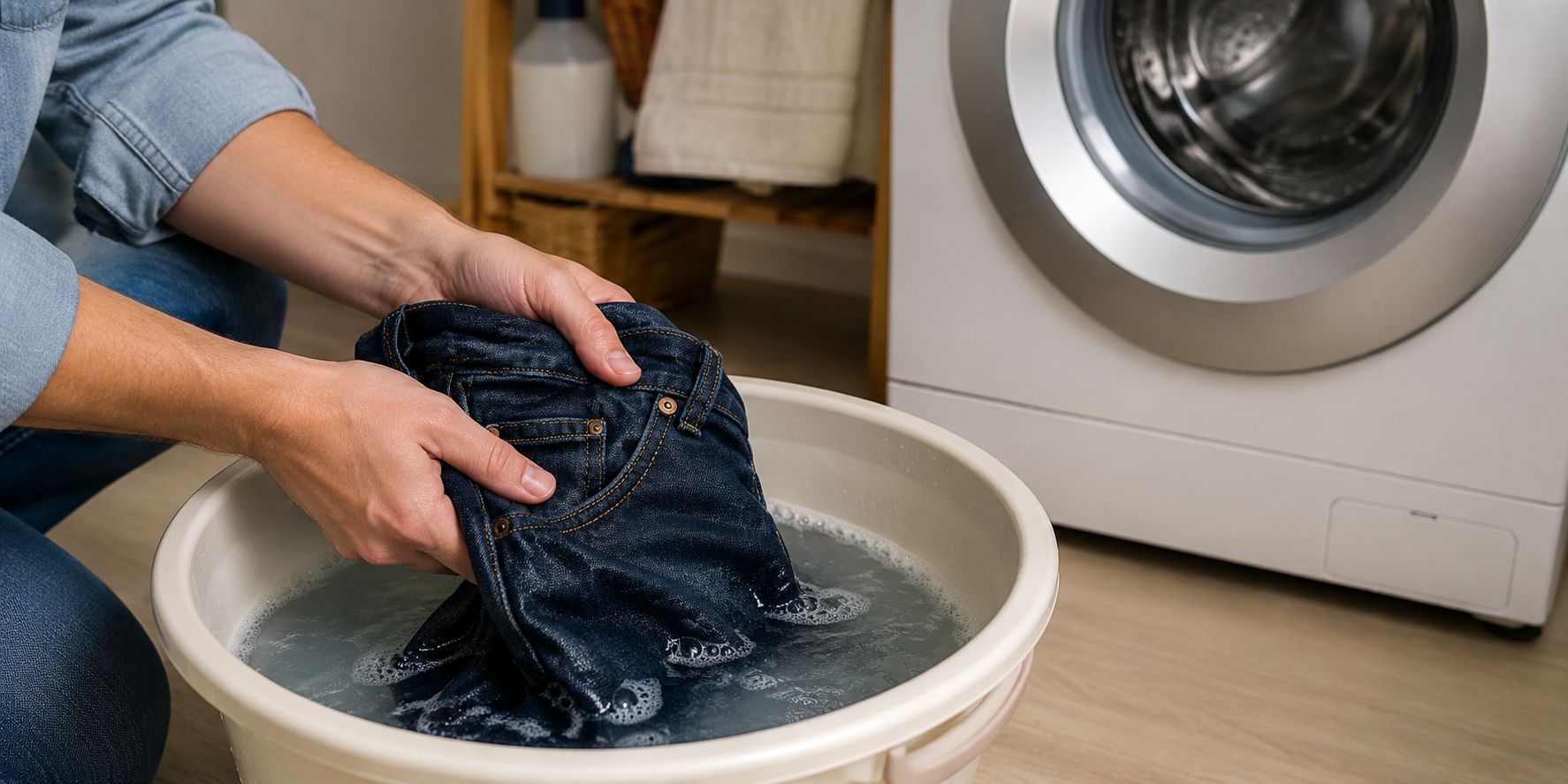
Both washing methods have good points. I prefer the gentle hand bucket for very expensive designs. Dean sells rich custom pants to high-end clients. He tells his buyers to use a large plastic bucket. You fill the bucket with cold water.
You drop the pants inside. You press the fabric down with your flat hands softly. The bucket method creates zero random machine agitation. The cotton yarn tension stays perfectly safe. The wet fabric never feels severe cutting or pulling forces.
A washing machine saves a lot of time. You can use the machine if you pick the shortest gentle cycle. You must remember that wet cotton expands and loses deep strength. Even a short machine cycle pulls the weak wet threads slightly. Many people try a strange trick to avoid washing completely.
They put dirty smelling pants into a cold kitchen freezer. I must tell you the truth. Freezing only reduces the smell for a short time. Freezing does not kill the bad bacteria.[^6]
Bucket vs Machine Comparison
| Cleaning Tool | Main Advantage | Core Weakness |
|---|---|---|
| Hand wash bucket | Protects weak wet fabric tension | Takes extra physical energy |
| Gentle machine wash | Cleans deep dirt very fast | Pulls wet threads slightly |
| Kitchen freezer | Cools the fabric down | Never kills odor bacteria |
Conclusion
You can machine wash jeans safely using cold gentle cycles. You protect the weak wet cotton shape. You skip the final spin and dry them in pure shade.
---

[^1]: "6+ Tips: How to Fade Jeans the Right Way!", https://bigblue.atlantisuniversity.edu/how-to-fade-jeans/. A textile-care or denim-fading study can support that mechanical abrasion and agitation accelerate indigo loss from denim surfaces during laundering. Evidence role: mechanism; source type: paper. Supports: Mechanical agitation during washing can accelerate indigo color loss from denim.. Scope note: The evidence would describe the general role of abrasion and laundering in color loss, not quantify fading under every washing-machine model or cycle.
[^2]: "Denim - Wikipedia", https://en.wikipedia.org/wiki/Denim. An encyclopedia or textile reference supports that denim is a sturdy cotton fabric commonly woven as a warp-faced twill, producing the diagonal rib characteristic of jeans fabric. Evidence role: definition; source type: encyclopedia. Supports: Denim is typically a thick cotton twill fabric with a diagonal weave structure..
[^3]: "Mechanical Factors Affecting the Wet Strength of Paper", https://repository.gatech.edu/bitstreams/096798d1-5cad-4365-a8d3-2e45e3511f18/download. A fiber-science reference should be used to verify the tensile behavior of cotton when wet; cotton is often reported to retain or even increase tensile strength when wet, so the article’s claim requires careful qualification or correction. Evidence role: expert_consensus; source type: education. Supports: The article claims wet cotton becomes physically weak compared with dry cotton.. Scope note: The likely evidence may contradict the article’s wording; it may support wet swelling and dimensional change rather than a simple loss of strength.
[^4]: "Swelling of cellulosic fibers in aqueous systems: A Review ...", https://bioresources.cnr.ncsu.edu/resources/swelling-of-cellulosic-fibers-in-aqueous-systems-a-review-of-chemical-and-mechanistic-factors/. A textile-fiber source supports that cotton is hydrophilic and absorbs water, causing fiber swelling during wet processing or laundering. Evidence role: mechanism; source type: education. Supports: Cotton fibers absorb water and swell during washing.. Scope note: This supports the fiber-level water absorption and swelling mechanism, not every downstream claim about garment deformation.
[^5]: "DIY Dishwashing Liquid: 11 Natural Recipes That Cut Grease & ...", https://imba.missouri.edu/diy-dishwashing-liquid-1516736805.html. A chemistry or consumer-product source can support that dishwashing liquids are formulated with surfactants that emulsify fats and oils, explaining their effectiveness on greasy stains. Evidence role: mechanism; source type: education. Supports: Dish soap removes grease because surfactants emulsify oils.. Scope note: This supports the grease-removal mechanism of dish soap generally, not the safety of any specific brand or dyed denim finish.
[^6]: "FSM 268: Separating Truth from Myth: Does Freezing Kill ...", https://news.cahnrs.wsu.edu/podcasts/fsm-268-separating-truth-from-myth-does-freezing-kill-harmful-bacteria-in-food/. A microbiology or hygiene source can support that domestic freezer temperatures generally inhibit bacterial growth but do not reliably sterilize materials, so odor-causing bacteria may survive and become active again after warming. Evidence role: mechanism; source type: education. Supports: Freezing jeans is unlikely to reliably kill odor-causing bacteria and may only temporarily reduce smell.. Scope note: This supports the general microbiological principle; survival varies by bacterial species, freezer temperature, moisture, and exposure duration.