Skip to content

You remember when waistbands sat comfortably at the natural waist. Now, the hip-hugging, belly-baring low-rise jean is back, leaving many wondering how this controversial style ever took over the world.
Low-rise jeans1 became popular in the early 2000s as the defining look of the Y2K era. Championed by pop stars, the style was a symbol of rebellion and body confidence that put the hips and midriff on full display.
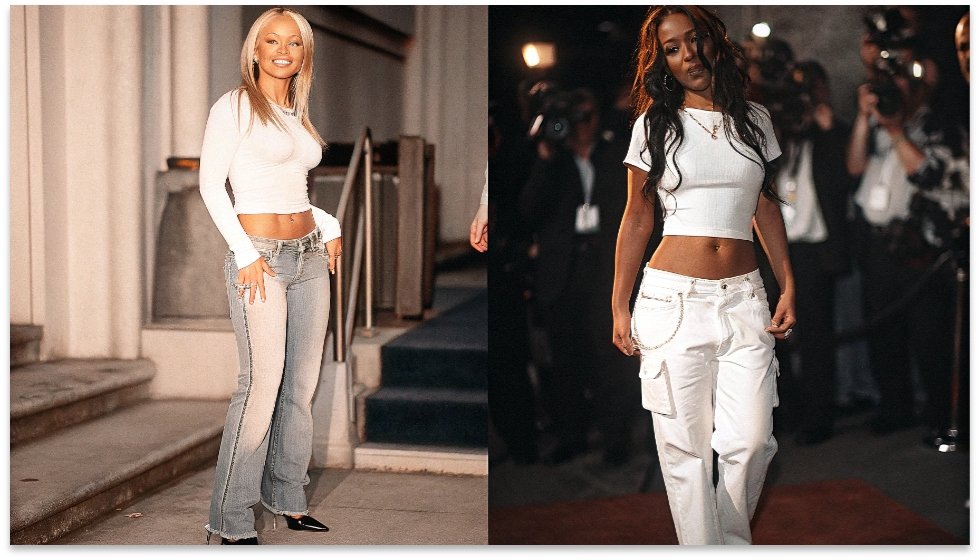
Dean, you and I lived through the first wave of this trend. It was a radical departure from the high-waisted jeans2 of the 80s and 90s. In my factory, we had to completely rethink our patterns.
The front rise measurement kept getting shorter and shorter. Zippers went from a standard 7 inches down to 3. It was a wild time for denim construction3. It's fascinating to see it all coming back around now, though with a few key differences. Let's break down exactly why it happened and what it means today.
Why Were Low-Rise Jeans So Popular?
You're a designer who understands form and function. So you're probably wondering what made such a daring and revealing silhouette the absolute must-have item for an entire generation.
Low-rise jeans became so popular because they perfectly captured the confident, body-centric spirit of Y2K fashion. They highlighted the hips and stomach, a look made iconic by the era's biggest pop stars, becoming a symbol of youthful rebellion.
The popularity was driven by a perfect storm of factors. First, you had the massive influence of pop culture4. Every music video and red carpet featured stars like Britney Spears and Paris Hilton in jeans that sat impossibly low. This created enormous demand.
For us in the manufacturing world, this meant a total focus on fit around the hips, not the waist. Second, it was a reaction against the high-waisted "mom jeans" of the previous decade. It felt new, daring, and a little dangerous.
It was a way for young people to show off their bodies and their confidence. Finally, it was surprisingly versatile. We produced them in every fit imaginable—bootcut, flare, straight-leg—so they could be adapted to different looks, even if the rise itself was the main statement.
Does Gen Z Wear Low-Rise Jeans?
You see the trend returning and need to know if the next generation of consumers is actually buying in. Is this just nostalgia, or is Gen Z truly embracing the low-rise look?
Yes, Gen Z is wearing low-rise jeans, but with a modern twist5. They are a key part of the Y2K fashion revival, but are often styled with a baggier, more relaxed fit compared to the ultra-tight versions of the 2000s.
Gen Z is definitely driving the comeback, but they're doing it on their own terms. When I look at the new orders coming into my factory, the rise measurement is low again, but the leg silhouette is completely different.
In the 2000s, the most popular low-rise styles were tight bootcuts or flares. Today's demand is for low-rise jeans with a much looser, baggier, or straight-leg fit.
The focus is less on a purely sexy, body-hugging look and more on a relaxed, cool, and comfortable vibe that aligns with their streetwear sensibilities6.
They are reclaiming the trend but filtering it through their own style lens. It’s less about the "whale tail" and more about a casual-cool slouch. It's a fascinating evolution for us to produce.
Was Low-Rise a Thing in the 80s?
As a designer, you know that trends are cyclical. You might be wondering if the Y2K craze was the first time this silhouette appeared, or if it has deeper roots.
No, the extreme low-rise style was not a thing in the 80s. The 1980s were dominated by high-waisted styles. The precursor to low-rise jeans was the "hip-huggers" of the late 1960s and 1970s.
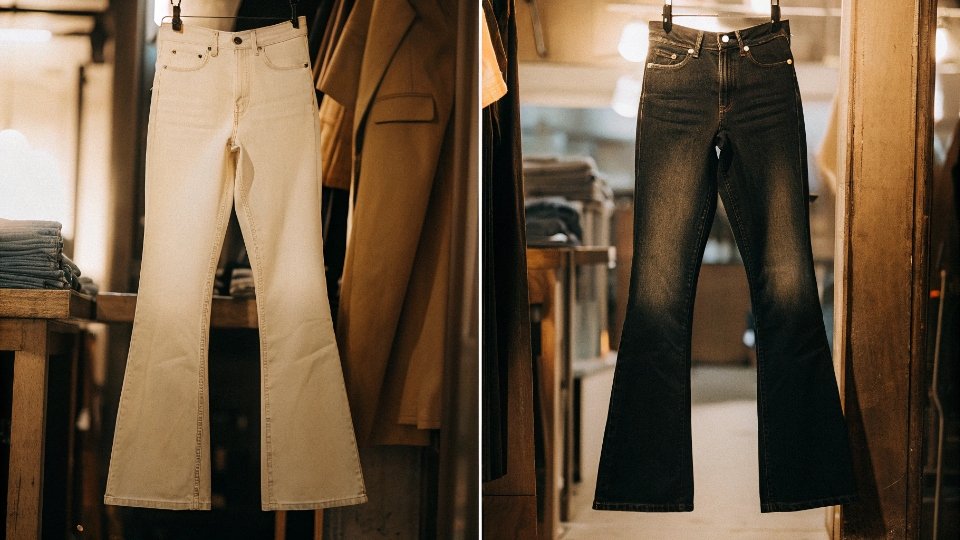
This is an important historical distinction. The 1980s were the decade of the "mom jean." Think high rises, pleated fronts, and tapered legs. The silhouette was all about defining the natural waist.
However, the concept of a lower-slung jean didn't come from nowhere. The true ancestor of the low-rise is the "hip-hugger" from the late 60s and 70s hippie movement. Those jeans sat on the hips, not the waist, and were often paired with bell bottoms.
But even they weren't as extreme as what we saw in the Y2K era. The early 2000s low-rise was unique in how low it went—often with a rise of just 3-5 inches—and its mainstream, pop-culture-driven dominance. The 70s version was counter-culture; the 2000s version was pop-culture.
What Body Type Should Wear Low-Waisted Jeans?
You have to design for real people and advise your clients. So, who does this challenging silhouette actually flatter, and how can you make it work for different shapes?
Low-waisted jeans are traditionally best suited for body types with a defined waist-to-hip ratio, a flatter stomach, and balanced proportions. However, modern styling and fits have made them more accessible for various shapes.
From a design and pattern-making perspective, this cut is all about celebrating the hip line. Traditionally, it works well for people with a naturally long torso and a flat midsection, as it draws all the attention there.
However, the advice I give brands now is different from what it was in 2002. The key is in the cut and styling. By moving away from the super-tight skinny fit, low-rise becomes much more forgiving.
A wider, more relaxed leg can balance out the hips, and choosing the right top can change everything. You don't have to pair it with a tiny crop top.
Styling it with a slightly longer, waist-skimming top or even an oversized shirt can give the cool, low-slung vibe without requiring a specific body type.
How to Style Low-Rise for Different Shapes
| Body Shape | The Challenge | The Solution |
|---|---|---|
| Apple Shape | Tends to carry weight in the midsection. | Pair with a top that is not a crop top. A loose, blousy shirt that ends at the hip can create a flattering line and conceal the mid-drift. |
| Pear Shape | Wider hips and thighs. | Choose a wide-leg or flare low-rise jean. The volume at the bottom balances the hips, creating an hourglass illusion. |
| H-Shape (Athletic) | Straighter, less defined waist. | Use a statement belt to create a focal point and the illusion of a more defined waistline. This breaks up the straight line from shoulder to hip. |
Conclusion
Low-rise jeans, a Y2K staple, became popular by celebrating the body and rebelling against high-waisted styles. Now back in fashion, modern relaxed fits make them accessible to more people than ever before.
-
Explore the fascinating history and cultural impact of low-rise jeans, a staple of Y2K fashion. ↩
-
Investigate the decline of high-waisted jeans and the rise of low-rise styles in fashion history. ↩
-
Explore the evolution of denim construction and how it adapts to changing fashion trends. ↩
-
Understand the significant impact of pop culture on fashion trends and consumer behavior. ↩
-
Discover how classic styles are being reinterpreted for contemporary fashion sensibilities. ↩
-
Dive into the world of streetwear and see how it influences modern fashion trends. ↩