
leading paragraph:
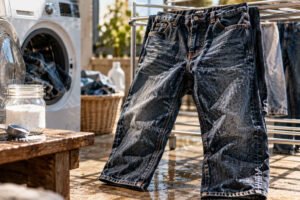
You wanted to give your old jeans a new life with some dye. But instead of a fresh new color, you got a splotchy, uneven mess. Now you’ve just ruined your favorite pair.
snippet paragraph:
You can't dye certain jeans because their fabric isn't 100% cotton. If your jeans contain a high percentage of synthetic fibers like polyester, the dye won't stick.1 Special coatings and the original dark color can also block the dye2, leading to a failed project.
Transition Paragraph:
In my two decades running a denim factory, I've seen every kind of dyeing success and failure. A designer like Dean knows that fabric selection is everything. Handing him a fabric that can't be properly treated is a non-starter. Trying to dye the wrong pair of jeans at home is the same problem on a smaller scale. You're fighting against the fabric's chemistry.
Is it difficult to dye jeans?
leading paragraph:
You think dyeing jeans is a simple, fun project. But the results can be so unpredictable, and the risk of ruining them is high. It feels more like a gamble than a craft.
snippet paragraph:
It is easy to dye jeans that are 100% cotton. It becomes very difficult when you're working with denim that has a high blend of polyester or spandex. The success of your project depends almost entirely on the fabric composition, which many people overlook.
Dive deeper Paragraph:
The difficulty isn't in the process; it's in the materials. At my factory, DiZNEW, we match the dye to the fabric perfectly. You have to do the same at home.
The Fabric Factor
Standard fabric dyes you buy at a store are made for natural fibers like cotton.3 They physically bond with the cellulose in the cotton.4 However, they cannot bond with synthetic, plastic-based fibers like polyester.5 If your jeans are a 60% cotton/40% polyester blend, the dye will only stick to 60% of the fabric. The result is a weak, heathered, and uneven color. Jeans with spandex (Lycra) are even trickier. The hot water required for most dyeing processes can destroy the elastic fibers6, leaving your jeans saggy and misshapen.
The Color Problem
Dye is translucent; it adds color, it doesn't cover it. You cannot dye a black pair of jeans yellow. All you will get is slightly blacker jeans. To go from a dark color to a light one, you would first need to use a chemical color stripper. This is an aggressive process that severely weakens the cotton fibers7 and often results in the jeans tearing easily afterward.
What country doesn't allow blue jeans?
leading paragraph:
You hear urban legends about places where blue jeans are illegal. It seems unbelievable in a world where denim is everywhere. Is there any truth to this strange idea?
snippet paragraph:
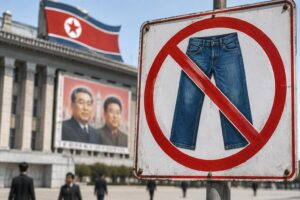
Yes, it's true. North Korea is famous for its ban on blue jeans.8 The government views them as a symbol of American imperialism and Western culture, and they are therefore forbidden. Black jeans, however, are generally permitted as they are not seen as symbolic.
Dive deeper Paragraph:
This is a fascinating example of how a simple piece of clothing can carry huge political meaning. For the North Korean regime, cultural control is critical. They actively try to insulate their citizens from outside influences9, especially from South Korea and the United States. Blue jeans, more than almost any other garment, represent American casual culture, freedom, and capitalism. By banning them, the government is making a clear statement against those values.
It shows that the "rules" of jeans aren't always about fashion or function. In this case, the color itself is a political symbol. While in my world, we are bound by the chemical rules of dye and fiber, some places are bound by political rules. It's a powerful reminder that even a garment as universal as blue jeans has a complex story and can mean very different things to different people.
Can you get jeans professionally dyed?
leading paragraph:
Your DIY dye project failed, leaving you with blotchy jeans. You don't want to give up on the color, but you're not going to try it yourself again. Is there a professional option?
snippet paragraph:
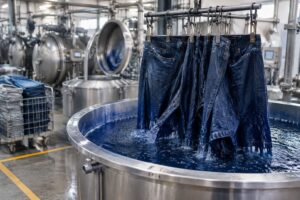
Yes, you can absolutely get jeans professionally dyed. Many specialized dry cleaners and fabric care experts offer dyeing services. They use industrial-grade equipment and the correct types of dyes for different fabric blends, ensuring a far superior and more even result than you can get at home.
Dive deeper Paragraph:
Turning to a professional is the smartest move if the jeans are valuable to you. They have knowledge and tools you simply don't.
Why Professionals Succeed:
A professional dyer has an arsenal of different dye types. They'll use a fiber-reactive dye for cotton, but they will switch to a "disperse dye10" for the polyester in a blend, applying it at the correct high temperature. This ensures all parts of the fabric get colored evenly. They also have large, temperature-controlled vats that keep the garment moving freely, preventing the streaks and splotches that are common in a small home bucket.
The Hidden Risks of DIY:
Besides a bad color job, dyeing at home can cause other damage. The chemicals and heat can:
- Damage Hardware: Corrode metal rivets and zippers.
- Destroy Patches: Melt or discolor the leather patch on the waistband.
- Change Thread Color: The polyester thread used to sew most jeans won't take the cotton dye, leaving you with contrast stitching you didn't want.
A professional knows how to protect these elements or warn you about the risks.
Can denim jeans be dyed?
leading paragraph:
You want to change your jeans' color, but you're getting mixed signals. Some people say it's easy, others say it's impossible. What is the final, simple answer for denim?
snippet paragraph:
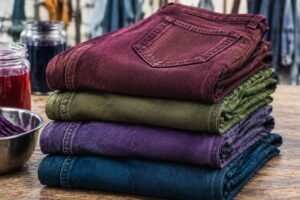
Yes, denim can be dyed, but only the right kind of denim. Classic, 100% cotton jeans dye beautifully. Denim blended with synthetics, or jeans with special coatings, will resist the dye and give poor results. Always check the label before you start.
Dive deeper Paragraph:
So, can you dye them? Use this checklist I'd give to any young designer before they plan a project.
Checklist Before You Dye:
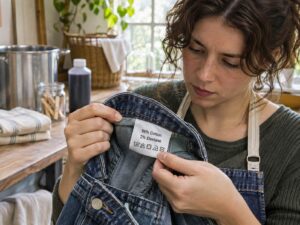
- Read the Label First: This is the most important step. If the tag says "100% Cotton," you are good to go. If it says "90% Cotton, 8% Polyester, 2% Spandex," you should probably not try it at home. As a general rule, you need at least 85% cotton for a decent result with home dyes.
- Look for a Coating: Does the fabric feel waxy, plasticky, or have a sheen? Some jeans have water-repellent or fashion coatings. Dye cannot penetrate these layers.
- Consider the Original Color: Remember, you can only go darker. Dyeing a medium blue pair navy blue will work. Dyeing them yellow will not.
- Do a Test: If you're still unsure, do a swatch test. Snip a tiny piece of fabric from an inside seam or the hem. Test your dye on that tiny piece to see what happens before you commit the whole garment.
Conclusion:
You can't dye certain jeans due to synthetic fibers and coatings. For a successful outcome, use 100% cotton jeans or trust valuable pairs to a professional dyeing service.
-
"One-bath dyeing of polyester/cotton blend with reactive ...", https://www.academia.edu/23213912/One_bath_dyeing_of_polyester_cotton_blend_with_reactive_dye_after_alkali_and_chitosan_treatment. A textile-dyeing reference should document that common cotton dyes have low affinity for polyester and that polyester typically requires different dye classes and processing conditions; this supports the claim that high-polyester jeans may resist ordinary dyeing. Evidence role: mechanism; source type: education. Supports: Jeans with a high percentage of polyester or other synthetic fibers may not accept ordinary fabric dye well.. Scope note: The source may describe fiber–dye compatibility generally rather than testing consumer jeans specifically. ↩
-
"Textile Coating Guide: Fabrics, Chemicals, Methods, and ...", https://skychemi.com/textile-coating-guide/. A textile-finishing or dyeing source should explain that surface finishes can inhibit dye penetration and that dyeing generally adds color rather than making a dark substrate lighter; this provides contextual support for why coated or dark jeans can produce poor results. Evidence role: mechanism; source type: education. Supports: Coatings and dark original colors can interfere with successful overdyeing of jeans.. Scope note: The source is likely to support the underlying mechanisms rather than the exact outcome for every jeans brand or finish. ↩
-
"Dyeing and Characterization of Cellulose Powder Developed ...", https://pmc.ncbi.nlm.nih.gov/articles/PMC6960988/. A consumer or educational textile-dyeing source should identify the fiber types targeted by common all-purpose or fiber-reactive fabric dyes, including their suitability for cotton and other cellulose fibers. Evidence role: definition; source type: education. Supports: Many standard consumer fabric dyes are formulated primarily for natural fibers such as cotton.. Scope note: Some retail dye lines include separate synthetic-fiber products, so the support should distinguish standard cotton-oriented dyes from synthetic-specific dyes. ↩
-
"Mechanism of Bonding Reactive Dyes with Copolymer ... - PMC", https://pmc.ncbi.nlm.nih.gov/articles/PMC9267366/. A textile chemistry source should explain that fiber-reactive dyes form covalent bonds with cellulose fibers such as cotton, supporting the mechanism by which cotton accepts certain dyes. Evidence role: mechanism; source type: paper. Supports: Certain dyes bond with cellulose in cotton, enabling effective dyeing of cotton denim.. Scope note: The word “physically” may be imprecise if the source describes covalent chemical bonding rather than physical adhesion. ↩
-
"Can Novel Synthetic Disperse Dyes for Polyester Fabric ...", https://pmc.ncbi.nlm.nih.gov/articles/PMC10141181/. A textile dyeing reference should state that polyester is hydrophobic and is normally dyed with disperse dyes rather than cellulose-reactive dyes, supporting the claim that cotton-oriented dyes do not bond effectively to polyester. Evidence role: mechanism; source type: research. Supports: Dyes designed for cotton generally do not bond effectively with polyester fibers.. Scope note: Some dyes and industrial methods can color polyester, so the support should be framed as applying to dyes intended for cotton rather than all possible dyeing systems. ↩
-
"Impact of the Elastane Percentage on the Elastic Properties of ...", https://pmc.ncbi.nlm.nih.gov/articles/PMC9570736/. A textile materials source should describe the heat sensitivity and degradation behavior of elastane/spandex fibers, supporting the caution that high-temperature dyeing can damage stretch components in denim. Evidence role: mechanism; source type: paper. Supports: High-temperature dyeing can damage spandex or elastane fibers in stretch jeans.. Scope note: Damage depends on temperature, exposure time, dye chemistry, and the elastane formulation, so the evidence may not prove failure in every home dyeing attempt. ↩
-
"Commercial Cotton-Bleaching Processes and Their Effect on ...", https://ageconsearch.umn.edu/record/170048/files/tb941.pdf. A textile conservation or chemistry source should explain that bleaching or color-stripping agents can degrade cellulose fibers, supporting the caution that removing color from cotton denim may weaken the fabric. Evidence role: mechanism; source type: research. Supports: Chemical color removal can weaken cotton fibers.. Scope note: The degree of weakening depends on the chemical used, concentration, exposure time, and washing conditions. ↩
-
"US Travel Ban: New Rhetoric, Same Old Prejudice", https://www.hrw.org/news/2025/06/06/us-travel-ban-new-rhetoric-same-old-prejudice. A neutral country-profile, human-rights, or encyclopedia source should document reported restrictions on blue jeans in North Korea, supporting the claim as a cultural and political restriction. Evidence role: case_reference; source type: institution. Supports: North Korea has been reported to restrict or ban blue jeans.. Scope note: Information about North Korean social regulations is often based on reports and may vary by location, enforcement period, and source access. ↩
-
"Democratic People's Republic of Korea", https://www.state.gov/report/custom/480b27c140. A human-rights or academic source should describe North Korea’s restrictions on foreign media, culture, and information flows, supporting the broader claim that the state seeks to limit outside influence. Evidence role: expert_consensus; source type: institution. Supports: North Korea maintains policies intended to limit citizens’ exposure to foreign cultural and informational influences.. Scope note: This supports the general information-control context and does not by itself prove the specific blue-jeans policy. ↩
-
"Understanding Disperse Dyes: Mechanisms, Applications ...", https://www.alfa-chemistry.com/dyes/resources/understanding-disperse-dyes-mechanisms-applications-and-innovation-in-synthetic-textile-chemistry.html. A textile chemistry source should define disperse dyes as a major dye class used for hydrophobic synthetic fibers such as polyester, often applied under elevated-temperature conditions. Evidence role: definition; source type: encyclopedia. Supports: Disperse dyes are used to dye polyester components in textile blends.. Scope note: The source may describe industrial best practice rather than the feasibility of professional dyeing for a finished pair of jeans. ↩