
leading paragraph:
Your jeans get baggy at the knees and hold onto every crease. It looks sloppy, ruining their sharp look. Understanding why this happens is the key to preventing it.
snippet paragraph:
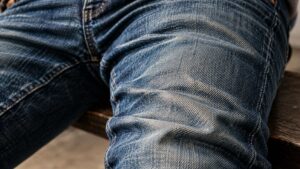
Jeans get marks because cotton, their main fiber, lacks natural elastic memory1. When you bend or sit, the fibers shift and don’t bounce back. The denim's twill weave can lock these wrinkles in place2, especially if the jeans are washed or stored improperly.
Transition Paragraph:
As a denim manufacturer, I see this problem from a fiber and weave perspective. When a designer like Dean brings me a concept, we discuss how the fabric will behave in real life. Those marks and baggy knees aren't random. They are a direct result of the material's properties. Let’s look deeper into what’s happening at the fiber level.
How to get rid of wrinkle lines on jeans?
leading paragraph:
You have ugly wrinkle lines on your favorite jeans. Ironing them feels risky, and washing them constantly is a pain. There has to be an easier, safer way to make them look sharp.
snippet paragraph:
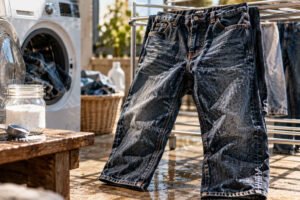
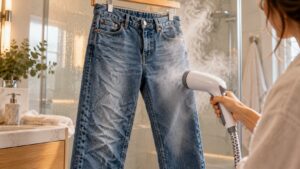
The best way to remove wrinkle lines is with steam. Use a clothes steamer or simply hang the jeans in the bathroom while you take a hot shower.3 The moisture relaxes the cotton fibers4, allowing the wrinkles to fall out naturally without the harsh heat of an iron.
Dive deeper Paragraph:
At my factory, DiZNEW, we use industrial steamers to finish garments for this very reason. You can use the same principle at home. The "marks" in your jeans are cotton fibers locked into a new shape. Heat and moisture are what unlock them, and steam provides both in the gentlest way possible.
The Power of Steam
Directly ironing jeans, especially dark ones, can create shiny patches called "scorching" and damage the fabric.5 Steam, however, penetrates the fibers without pressing them flat. This moisture gently relaxes the hydrogen bonds within the cotton6 that are holding the wrinkle in place. Once relaxed, gravity helps pull the fabric straight again as it hangs.
Prevention is Better Than a Cure
Your laundry habits also play a huge role.
- Washing: When you wash your jeans, don't wring them out tightly7. This just twists the fibers into a stiff, wrinkled mess.
- Drying: After washing, shake them out and smooth the legs by hand. Hang them by the waistband to air dry.8 This lets gravity do half the work for you.
- Storage: Don't fold them and stack heavy clothes on top. I always tell people to roll their jeans for storage. This prevents sharp, permanent creases from forming along a fold line.
Why do my jeans leave marks?
leading paragraph:
You sit down for five minutes, and your jeans get baggy knees. It instantly ruins a clean, sharp silhouette. This frustrating problem makes you wonder if your jeans are just poor quality.
snippet paragraph:
Jeans leave marks mainly because cotton fibers don't have good "elastic recovery." When you bend your knee, the fibers are stretched and shift. They don't have the natural ability to snap back into place. The tight twill weave of denim then locks these shifted fibers where they are.
Dive deeper Paragraph:
This is a conversation I have constantly with designers. The choice of fabric directly predicts how it will perform. It's a balance between authentic feel, comfort, and structure. The core issue is the nature of cotton itself.
Cotton fibers are strong and durable but not elastic. Think of them like paper: you can fold it easily, but it won't unfold itself. When a fabric is made with a bit of spandex, it's like adding tiny rubber bands into the weave.9 This gives the fabric "recovery," allowing it to bounce back. But even this isn't a perfect solution. If there's too much spandex, or if it isn't blended with the right supporting fibers (like polyester), it can get stretched out permanently over time. It loses its snap-back ability. We spend a lot of time testing fabric blends to find the perfect mix.
| Fabric Blend | Wrinkle Resistance | Pro | Con |
|---|---|---|---|
| 100% Cotton | Low | Authentic feel, durable | Gets baggy and wrinkled easily |
| 98% Cotton/2% Spandex | Medium | Good comfort, better recovery | Can still bag out over time |
| Cotton/Poly/Spandex | High | Excellent shape retention | Can feel less like 'real' denim |
Do people still put creases in their jeans?
leading paragraph:
You see old photos of people with sharp, ironed creases down their jeans. It's a look that feels both classic and dated. You wonder if this is a style that is ever coming back.
snippet paragraph:
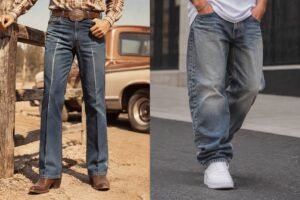
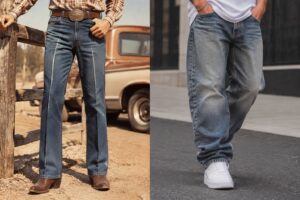
No, for the most part, people do not put sharp, ironed-in creases in their jeans anymore. This was a popular style from the '70s through the '90s, especially in Western wear.10 Today, fashion favors a more natural, relaxed look where wrinkles are part of the aesthetic.
Dive deeper Paragraph:
The ironed crease had its day. The goal was to make a casual garment look sharper and more formal. It creates a long, clean line down the leg that can look very polished. In my early days in the business, this was a much more common request for certain markets. It was a way to look "put-together" in denim.
However, mainstream fashion has moved far away from this. The trend for the last decade has been towards authenticity and a "lived-in" feel. A sharp crease looks intentional and, to many people today, a bit unnatural and stiff. It works against the relaxed, effortless vibe that most people want from their jeans. While you might still see it in some specific subcultures, like parts of the Western scene or in retro-themed fashion, it is not a mainstream style. Most people today would see a sharp crease as something to get rid of, not something to add.
Are wrinkled jeans okay?
leading paragraph:
You pull your jeans from a pile of clothes, and they're wrinkled. You don't have time to steam them. You wonder if you can get away with it or if you just look sloppy.
snippet paragraph:
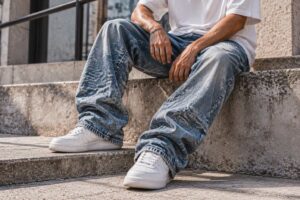
Yes, wrinkled jeans are perfectly okay and are often part of the intended style. In modern fashion, natural wrinkles signify a relaxed, effortless, and authentic look. It's about comfort and character, not a lack of care. A few creases are not a fashion mistake.
Dive deeper Paragraph:
This is a key difference between denim and, say, a pair of dress slacks. Dress pants are meant to be smooth and perfect. Jeans are meant to be lived in. The fashion world now fully embraces this. Natural wrinkles, folds, and even some light creasing are seen as part of the fabric's character. It shows that the jeans are being worn and loved. A rumpled pair of jeans paired with a clean t-shirt or a crisp button-down shirt is a classic, cool look. It suggests you're comfortable and confident.
The key is the type of wrinkle. General, all-over rumples look intentional and stylish. The one exception is the dreaded "baggy knee" on a pair of skinny or slim jeans. This can look less deliberate and more like the jeans are just worn out. But for straight-leg, relaxed, or wide-leg fits, some wrinkles just add to their charm. So, unless you're headed to a very formal event where jeans are already a stretch, don't stress about a few wrinkles.
Conclusion:
Jeans mark because cotton fibers don't bounce back. Steam is your best tool for fixes. Embrace natural wrinkles as style, but control unwanted bagginess with proper care.
-
"(PDF) Cotton Fibers", https://www.academia.edu/6667052/Cotton_Fibers. A textile-science source on cotton fiber properties can support that cotton has limited elastic recovery compared with elastomeric fibers, helping explain why cotton denim retains deformation after wear. Evidence role: mechanism; source type: education. Supports: Jeans wrinkle and bag at stress points partly because cotton has limited natural elastic recovery.. Scope note: The source would support cotton’s general fiber behavior rather than testing the specific jeans discussed in the article. ↩
-
"Artistic-Clothing-Textile-Types-Selections-Supplement.pdf", https://co4h.colostate.edu/wp-content/uploads/sites/27/2025/11/Artistic-Clothing-Textile-Types-Selections-Supplement.pdf. A textile reference describing denim as a cotton twill fabric and explaining twill interlacings can provide context for how denim structure affects drape, deformation, and visible creasing. Evidence role: mechanism; source type: education. Supports: Denim’s twill structure contributes to how wrinkles and crease marks form and remain visible.. Scope note: Such a source would usually explain weave structure and fabric behavior generally, not prove that every twill weave permanently locks wrinkles. ↩
-
"Life Skills in a Minute: Ironing versus Pressing - Ask IFAS", https://ask.ifas.ufl.edu/publication/4H415. A garment-care or textile-care source from an extension service or museum conservation guide can support that steam and moisture relax wrinkles in cotton garments without direct iron pressure. Evidence role: general_support; source type: education. Supports: Steam can be used as a low-pressure method to reduce wrinkles in cotton jeans.. Scope note: Bathroom steam is a household adaptation and may be less controlled than a dedicated steamer, so the evidence is contextual rather than a direct comparison of methods. ↩
-
"Chemical Bonding and Reaction Rates of Wrinkle-Resistant ...", https://hero.epa.gov/reference/6195547/. A polymer or textile-science source can support that moisture affects hydrogen bonding and flexibility in cellulose fibers such as cotton, which helps explain wrinkle relaxation during steaming. Evidence role: mechanism; source type: paper. Supports: Moisture helps relax cotton fibers by changing fiber interactions, making wrinkles easier to release.. Scope note: The evidence would explain the underlying cellulose behavior and may not specifically evaluate denim jeans under home steaming conditions. ↩
-
"The Art of a Perfect Press: How To Iron A Shirt Like a Pro", https://www.news.climate.columbia.edu/ironing-techniques. A textile-care guide can support that excessive iron heat or pressure can scorch, glaze, or create shine on fabrics, particularly on dark garments where surface changes are more visible. Evidence role: general_support; source type: education. Supports: Direct ironing can damage fabric surfaces and produce shiny or scorched areas, especially on dark clothing.. Scope note: The source may discuss ironing damage across fabrics generally rather than denim jeans specifically. ↩
-
"Chemical Bonding and Reaction Rates of Wrinkle-Resistant ...", https://hero.epa.gov/reference/6195547/. A textile chemistry source can support that cotton is composed largely of cellulose and that hydrogen bonding in cellulose contributes to fiber structure and wrinkle behavior. Evidence role: mechanism; source type: paper. Supports: Wrinkles in cotton can be understood partly through hydrogen bonding within cellulose fibers.. Scope note: This supports the chemical mechanism behind wrinkling and relaxation, not a direct consumer test of steaming jeans. ↩
-
"Understand Your Fibers | Textiles", https://site.extension.uga.edu/textiles/textile-basics/understand-your-fibers/. A laundry-care source can support that wringing garments can twist fibers, distort shape, and create creases, making gentler water removal preferable for reducing wrinkles. Evidence role: general_support; source type: education. Supports: Avoiding tight wringing helps reduce distortion and wrinkles in washed jeans.. Scope note: Most sources will address garment care broadly and may not isolate denim jeans in controlled testing. ↩
-
"What Tumble Dry Means & How To Use It", https://epm.cnc.stanford.edu/what-tumble-dry-means-and-how-to-use-it. A garment-care guide can support that hanging garments to dry after smoothing them can reduce wrinkles by allowing the fabric to dry under its own weight. Evidence role: general_support; source type: education. Supports: Hanging jeans to air dry after smoothing can help reduce wrinkles.. Scope note: The evidence would support the general wrinkle-reduction principle; drying results vary with denim weight, humidity, and garment construction. ↩
-
"Polyurethane vs. Spandex: Best Stretch Recovery for Fabrics", https://eureka.patsnap.com/report-polyurethane-vs-spandex-best-stretch-recovery-for-fabrics. A textile reference on elastane/spandex can support that spandex fibers are highly elastic and are blended into fabrics to increase stretch and recovery. Evidence role: definition; source type: encyclopedia. Supports: Adding spandex to denim improves stretch and elastic recovery.. Scope note: The “tiny rubber bands” phrasing is an analogy; the source would support the functional role of spandex rather than the metaphor itself. ↩
-
"r/mensfashion - Creased Jeans", https://www.reddit.com/r/mensfashion/comments/1pbi5xi/creased_jeans/. A fashion-history or dress-history source can provide context that creased jeans and pressed denim have been associated with Western wear and past styling conventions. Evidence role: historical_context; source type: institution. Supports: Sharp creases in jeans were historically associated with Western wear and older denim styling practices.. Scope note: Evidence for exact popularity across the 1970s through 1990s may be regional and based on fashion-history context rather than comprehensive market statistics. ↩