Skip to content

You love the look of your skinny jeans, but you spend the entire day yanking them up. It's frustrating when pants that seem to fit perfectly just won't stay in place.
Skinny jeans fall down for three main reasons: the fit is too tight in the legs, pulling the waist down as you move; the elastic fibers1 have stretched out and lost their recovery; or you've bought a size that's actually too small, overstretching the fabric from the start.
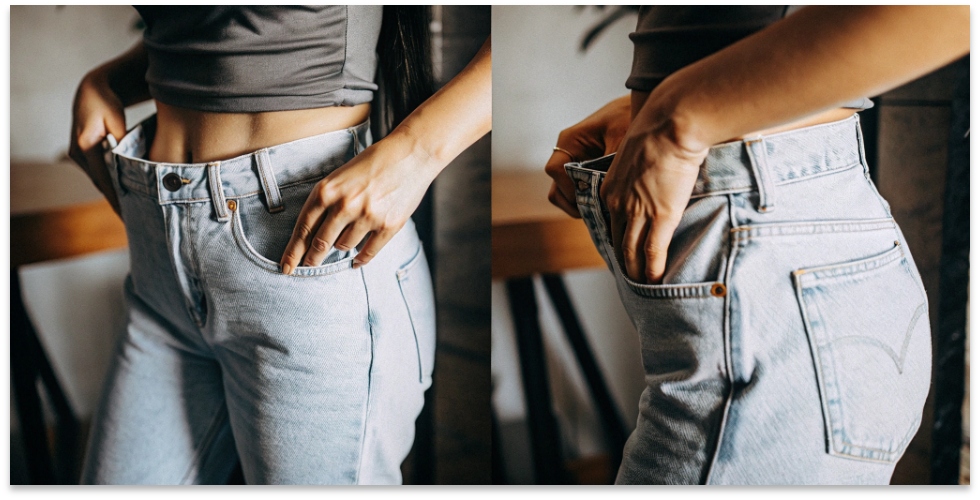
In my 20 years of manufacturing jeans, this is one of the most common complaints I hear from brands and customers. It seems like a paradox: how can something so tight also fall down? The answer lies in the science of the fabric and the geometry of the pattern.
It is not just about the waist size. It is about how the entire garment interacts with your body as you walk, sit, and move. Let's break down the engineering behind why your favorite jeans are letting you down.
Why do I constantly have to pull my jeans up?
You bought jeans that fit snugly at the waist, yet you are still doing the "denim dance2" every five minutes. It is annoying and makes you question the fit of all your clothes.
You constantly pull up your jeans because they are likely too tight on your thighs or calves. As you walk, the fabric grips your legs, and with every step, it pulls the entire garment down, regardless of how well the waist fits.
This is a classic problem of physics in clothing design. Imagine your jeans as a tube of fabric. If that tube is too narrow around your legs, it creates friction. When you bend your knee or your thigh muscle flexes, the fabric catches. Instead of sliding with you, it gets pulled downward. Your body's natural movement becomes a machine for pulling your pants off.
In my factory, when we design a skinny jean pattern, we have to find a perfect balance. We need it to be slim, but not so tight that it restricts movement and causes this downward slide.
The Downward Pull Effect
- The Thigh Anchor: Your thighs are the widest part of your leg. If the jeans are too tight here, they get "anchored" in place.
- The Knee Action: When you walk, your knee bends, creating tension. This tension pulls the fabric down from the waist.
- Gravity Wins: With each step, the waistband slips a little lower, and you're forced to pull them up again.
The simplest, short-term fix is a good belt. It creates a solid anchor at your waist to fight against the downward pull from your legs. But the real solution is finding a pair with a little more room in the legs.
Why do my skinny jeans sag?
They fit like a glove when you first put them on. But after a few hours of sitting and walking, the knees are baggy and the seat is drooping.
Skinny jeans sag because the elastic fibers (like spandex or Lycra) in the fabric have poor "recovery." They stretch out to fit your body's movements but fail to snap back to their original shape, leading to sagging in high-stress areas like the knees and seat.
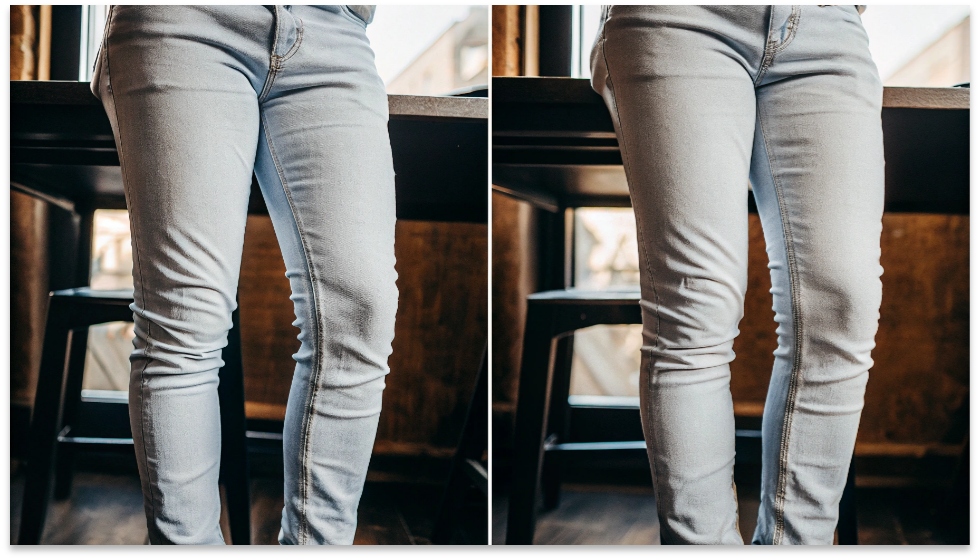
This is a fabric quality issue. When a client asks me to produce a skinny jean, the first thing we discuss is the denim itself. All stretch denim is not created equal. The magic ingredient is elastane (the generic term for Lycra or spandex). Cheap denim might use a low-grade elastane that gives up easily.
Think of it like a cheap rubber band versus a high-quality one. You can stretch both, but the cheap one stays a little stretched out each time. The good one snaps back perfectly. This "snap-back" quality is what we call "recovery" in the industry.
Over time, even good elastic fibers can break down. This happens from wear and tear, but also from improper washing. High heat from a dryer is the number one enemy of elastane. It literally cooks the elastic, making it brittle and weak. Once those fibers are broken, the fabric loses its ability to contract, and the sagging becomes permanent.
How to tell if skinny jeans are too small?
You are aiming for that perfect, painted-on look, so you grab a smaller size. But how do you know if you have gone from "snug" to "dangerously tight"?
Skinny jeans are too small if they create a "muffin top3," feel restrictive when you squat, or leave deep red marks on your skin after you take them off. Another key sign is horizontal wrinkles4 across the thighs and crotch, which indicate the fabric is over-stretched.
Many people make this mistake. They believe that buying a smaller size will make them look slimmer. In reality, it often has the opposite effect. When jeans are too small, they constrict your body in unnatural ways.
From a manufacturing standpoint, this is a disaster for the garment. My insight is that buying a size too small5 is a fast way to ruin your jeans. When you force your body into a pair that is too tight, you are putting extreme tension on the elastic fibers. You are stretching them beyond their limit.
This does two things:
- It Destroys the Elasticity: You are essentially breaking the elastic fibers on the very first wear. The jeans will never fully recover.
- It Causes Them to Fall: Paradoxically, by over-stretching the waist and seat, you are permanently enlarging those areas. After you wear them for a bit, the now-damaged waistband is too loose to hold on, and the jeans start to slide down.
A well-fitting skinny jean should feel like a firm hug, not a vise grip. You should be able to sit down comfortably and fit two fingers between the waistband and your stomach.
Why do my jeans not hold their shape?
You invest in a good pair of jeans, but after a few washes, they seem like a completely different garment. They feel loose, baggy, and shapeless.
Your jeans don't hold their shape because the core cotton and elastic fibers of the denim are low-quality or have been damaged. This can be a flaw in the fabric itself, or it can be caused by heat from the washer and dryer breaking down the spandex.
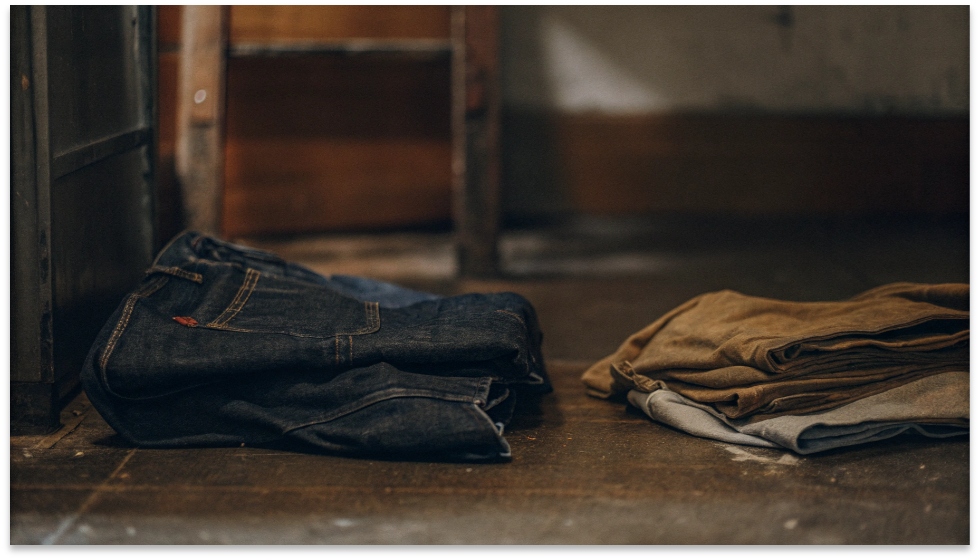
This comes down to the foundation of the garment: the fabric. In the denim world, we talk about "growth" and "recovery." "Growth" is how much the fabric stretches out during wear. "Recovery" is how much it shrinks back. A good stretch denim will have low growth and high recovery.
When a designer like my client, Dean, comes to me, we spend a lot of time selecting the right denim. A cheap fabric6 might feel soft in the store, but it often has high growth and low recovery. This means it will lose its shape almost immediately.
The Enemies of Jean Shape
| Enemy | How It Damages Jeans | Solution |
|---|---|---|
| High Heat | "Cooks" and breaks the delicate spandex fibers. | Wash in cold water, hang to dry. |
| Cheap Fabric | Uses weak cotton and low-grade elastane that bags out. | Invest in brands known for quality denim7. |
| Over-Washing | Each wash cycle is a stress test on the fibers. | Wash jeans only when they are visibly dirty or smelly. |
| Fabric Softener | Coats the fibers, reducing their natural ability to contract. | Use a bit of vinegar in the wash instead. |
Ultimately, a jean's ability to hold its shape is a direct reflection of the quality of its raw materials. You can't build a strong house on a weak foundation.
Conclusion
Your skinny jeans fall down8 due to a combination of fit and fabric science. Ensure the legs aren't too tight, choose high-recovery denim, and avoid washing in hot water to keep them in place.
-
Learn about the role of elastic fibers in denim to make informed choices for your jeans. ↩
-
Explore the concept of the 'denim dance' and how to avoid it with better-fitting jeans. ↩
-
Understanding the muffin top phenomenon can help you find jeans that fit better. ↩
-
Learn what horizontal wrinkles mean for the fit of your jeans and how to avoid them. ↩
-
Identifying the signs of too-small jeans can save you from discomfort and wardrobe malfunctions. ↩
-
Identifying cheap fabric can help you invest in quality jeans that last longer. ↩
-
Discover the characteristics of quality denim to make informed purchasing decisions. ↩
-
Understanding the reasons behind falling skinny jeans can help you choose better-fitting options. ↩